
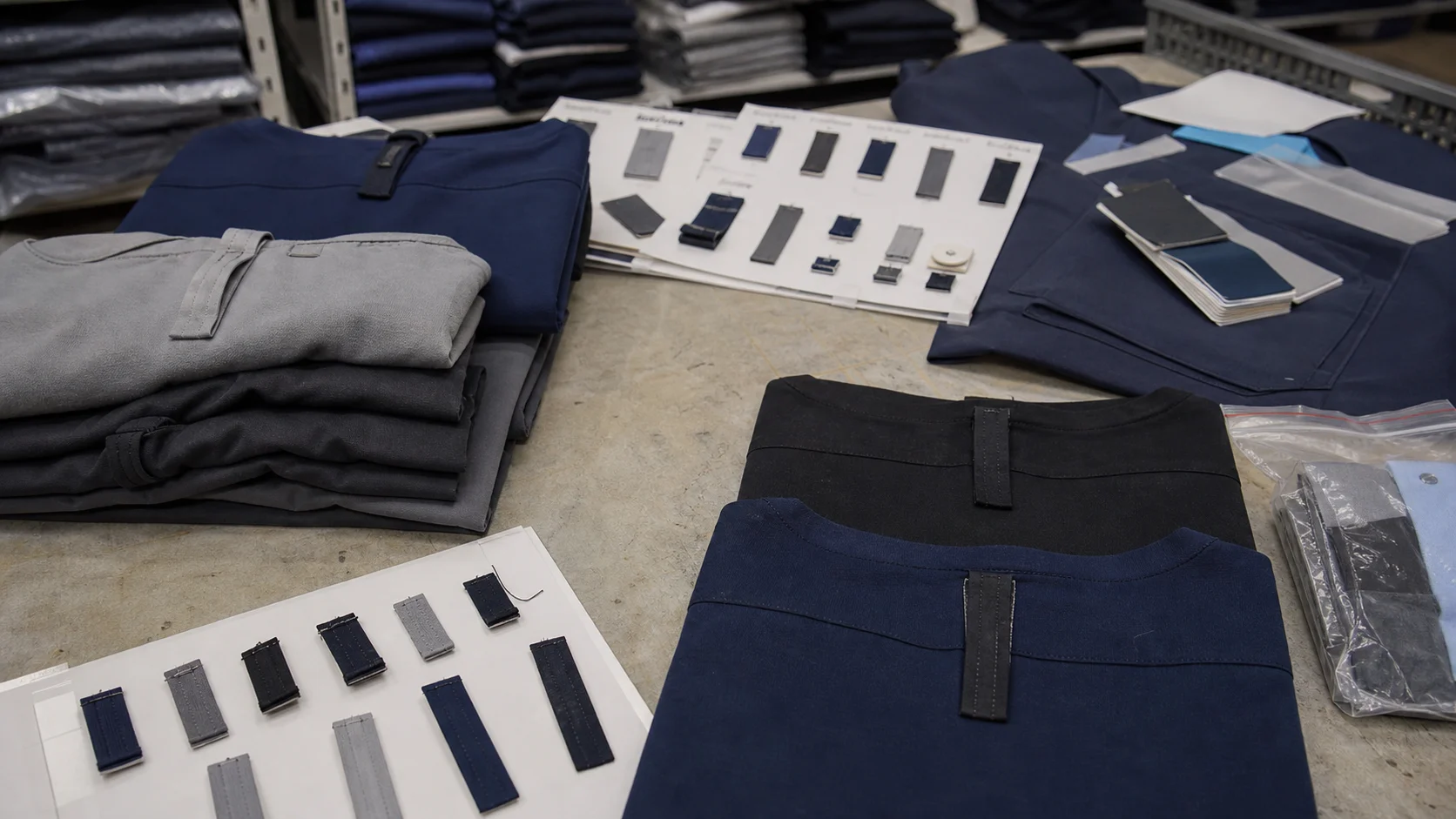
A product-focused review of back neck tab trim sourcing for clinic purchasing teams, covering construction specs, laundering performance, comfort,...
Clinic purchasing teams tend to treat trim as a minor detail until it becomes a repeat complaint. Back neck tab trim is one of those small components that can quietly affect comfort, branding, wash performance, and perceived garment quality. On scrubs, lab coats, tunics, and patient-facing uniforms, a poorly chosen neck tab can irritate skin, distort after laundering, or crack under repeated heat and chemical exposure. A well-specified trim, by contrast, supports durability and gives the garment a cleaner finish without adding unnecessary cost.
This review is written for buyers who need a practical sourcing view rather than a fashion description. The focus is on what to specify, where the risks sit, how suppliers usually quote, and which compromises are worth accepting in clinic programs. Back neck tab trim sourcing is not difficult, but it does reward disciplined documentation. If the buying team does not define material, fold direction, stitch count, color tolerance, and wash standard, the sample stage becomes vague and the bulk order inherits that vagueness.
For clinics, hospitals, dental groups, and other healthcare programs, the best trim choice is usually the one that balances comfort, cleanability, and repeatability. That means asking slightly more detailed questions upfront and insisting on sample approval before production starts. If your team is still building sourcing controls, it can help to align the trim discussion with broader garment development resources from Fabrikn services, company background at about us, or a direct project inquiry through contact us.
Back Neck Tab Trim Sourcing Review for Clinic Buyers - Decoration & Printing manufacturing guide
Back neck tab trim is a small label, loop, reinforcement tab, or decorative-functional piece located at the inside back neckline of a garment. In clinic apparel, it may serve several purposes at once. Some versions provide a hanging point for storage. Some cover seam bulk or stabilize the neckline. Others carry branding, size information, or a soft binding finish that improves comfort against the neck.
In sourcing terms, the phrase covers a few different constructions:
Clinic buyers should not assume every supplier means the same thing by “back neck tab.” One factory may quote a folded woven loop. Another may quote a self-fabric hanger loop stitched into the collar seam. A third may propose a printed label with a stabilizing insert. The naming overlap is a source of errors, so the product brief should include a sketch or reference sample whenever possible.
In a healthcare setting, a small trim detail can influence daily wear more than it does in a casual garment. Staff often wear uniforms for long shifts, move constantly, and wash garments frequently. The neck area sees repeated friction from skin, hair, lanyards, and layers worn underneath. A trim that feels harmless in a showroom can become irritating after multiple washes or during a long shift.
There are four reasons procurement teams should treat this item as a controlled component rather than a generic add-on.
Clinical staff notice scratchy or stiff trims quickly. If the back neck tab is made from rough woven tape, exposed edges, or overly thick folded fabric, it can cause discomfort. That leads to wear complaints, alteration requests, or avoidance of the garment altogether. For buyer teams, comfort complaints often show up later than factory inspection issues, which makes prevention more efficient than correction.
Many clinics use color-coded programs and standardized uniforms to maintain a professional appearance. A visible neck tab may be a small feature, but it can still affect brand perception if the color, size, or placement varies from batch to batch. If the trim is meant to be seen, the tolerance needs to be controlled. If it is meant to be hidden, the construction still needs to be tidy because the wearer will notice the inside finish even when patients do not.
Healthcare garments are washed often and sometimes under harsher conditions than standard apparel. The trim should survive repeated laundering, heat exposure, and, where relevant, disinfectant residue or finishing processes. Cotton tapes can shrink if not pretreated. Some synthetic edges can distort if the heat setting is too aggressive. Printed text can fade or crack. Buyers should define the expected wash cycle instead of assuming a generic garment-care label is enough.
Loose stitches, twisting tabs, off-center placement, and visible adhesive residue are all minor defects in isolation. In clinic programs, small defects create a cumulative quality impression and can trigger large rework costs if they appear across a shipment. Trim issues also complicate size runs because a defect in a low-value component can still require reinspection of the full garment lot.
Back neck tab trim is usually simple, but there is no single best material. The right choice depends on the garment’s purpose, wash load, comfort requirement, and branding method.
Option Strengths Typical Risks Best Use Self-fabric tab Comfortable, consistent with garment body, simple appearance May fray if not finished well, depends on base fabric behavior Mid-range scrubs and everyday clinic uniforms Woven tape tab Stable shape, good for branding or reinforcement Can feel stiff if gauge is too heavy Uniforms needing a clean hanger loop or branded detail Satin or twill hanger loop Smoother hand feel, premium appearance Slippery construction can twist during sewing Higher-end clinical wear or presentation garments Printed neck tab No extra bulk, good for minimalist branding Print durability varies by method and fabric type Garments where low-profile comfort is the priority Folded binding tab Clean finish, can reinforce seam area Requires careful folding and stitch control Lab coats, tunics, and garments with a neat interior finishMaterial selection should follow garment use, not supplier convenience. A factory may push a woven loop because it is easy to source in bulk. That does not mean it is the right choice for light, close-to-skin clinic wear. Likewise, a self-fabric tab may seem efficient, but if the base fabric is thin or unstable, the tab may curl, stretch, or show seam imprints after washing.
Trim width is another practical issue. Narrow tabs can disappear into a garment, but they can also twist or become difficult to stitch cleanly. Wider tabs are easier to sew and more visible for branding, yet they add bulk in the neckline area. For most clinic programs, moderate widths are the safest default, provided the construction team can keep the fold neat and the seam allowance stable.
Good trim sourcing starts with measurable specs. The buyer team does not need an overly technical engineering document, but it does need enough detail to prevent interpretation drift. A supplier should be able to quote against the same assumptions every time.
State whether the tab is self-fabric, polyester woven tape, cotton twill, satin, or another material. If the garment uses blended fabric, clarify whether the trim should match the body fabric blend or intentionally differ. In healthcare programs, polyester-based trims are often preferred when wash durability and dimensional stability matter more than a fully natural hand feel.
Specify finished width, unfolded width if relevant, finished length, and placement from the collar seam. If the tab is decorative, note how far it should extend above the neckline. If it is functional, indicate the intended use, such as hanger support only. Dimension disputes often arise because factories quote cut size while buyers approve finished size. That mismatch creates avoidable confusion.
State stitch type if the construction is important, such as topstitch, bartack, or folded stitch. If the trim is sewn into a seam, say whether the edges must be fully enclosed. If the tab will carry repeated pull force, ask for reinforcement at stress points. A neck tab that looks neat but tears after a few use cycles is not a successful sourcing outcome.
Color drift is common in trim sourcing, especially when the tab is dyed separately from the main garment. The buyer should define Pantone reference, acceptable shade tolerance, and whether the trim must match the body fabric exactly or sit within a contrast range. When dark clinic colors are involved, small mismatches are visible. White and pale colors can yellow or show contamination more easily, so packaging and handling also matter.
If the back neck tab includes a logo or text, specify whether the mark is woven, printed, embroidered, or heat transferred. Each method has tradeoffs. Woven branding is durable but less flexible on detail. Printed branding can deliver fine text but may lose clarity after laundering if the ink system is weak. Embroidery gives a tactile look but can be too bulky for the neck area. For clinic use, the lowest-profile option that still survives washing is usually the better choice.
The trim spec should follow the expected laundering condition of the garment program. If the garments are likely to see high-temperature industrial wash, the trim needs to be tested at that level. If only home laundering is expected, the performance target can be adjusted, but the buyer should not leave that open to interpretation. Trim failures often trace back to wash assumptions that were never written down.
Back neck tab trim is usually not the main cost driver in a garment program, but the commercial terms still matter. Minimum order quantities vary depending on whether the trim is custom made or selected from stock. As a practical range, stock-like or simple self-fabric tabs may be available with lower minimums, while custom woven branded tabs often require larger runs. For many suppliers, a reasonable planning range is a few hundred pieces for simple trims and several thousand pieces for custom branded options. Exact thresholds depend on material type, factory setup, and color count.
Sampling is where many clinic programs lose time. The first sample should confirm shape, hand feel, placement, and sewing feasibility. A second sample is often needed once branding, color, or stitch adjustments are introduced. If the neck tab is integral to the garment pattern, the sample approval should happen alongside the overall fit sample. Waiting until after bulk fabric approval to sort out trim issues creates unnecessary delay.
Lead time depends on three variables: raw material availability, custom branding method, and production queue. Stock tape or self-fabric versions can move quickly. Custom woven branding or dyed-to-match trims take longer, especially if lab dips, weave approvals, or color matching are required. Buyers should assume additional time for revision cycles. A simple trim can still add one to two weeks if the first sample is rejected and reworked.
The cleanest way to manage timing is to separate approval stages clearly:
When these steps are mixed together, suppliers make assumptions, and buyers lose leverage. For teams that need broader project coordination or a managed quotation process, the service structure at https://fabrikn.com/services/ can help align the trim work with the rest of the uniform program.
Inspection for back neck tab trim should be straightforward, but it should not be casual. The issues that matter are the ones that affect appearance, comfort, or durability after wash.
Placement is one of the easiest defects to miss. A tab can be technically attached but still sit off-center enough to look careless. In clinic uniforms, that kind of defect undermines the professional finish the program is trying to achieve. Buyers should ask the factory to define a measurement tolerance for center alignment and height from the neckline seam.
Bulk and comfort deserve special attention. Some trims are structurally fine but unpleasant to wear. A stiff woven loop positioned directly against the skin can create recurring complaints even if it passes factory inspection. The sample wear test should include movement, repeated sitting and standing, and a wash cycle if possible. If the garment is for long shifts, the wearer will find the problem quickly.
Inspection also needs to cover packaging and contamination risk. Light-colored trims can pick up dirt, lint, or oil during handling. If the trim is visible when the garment is unpacked, warehouse hygiene and packing methods matter. This is especially true in healthcare, where presentation standards are closely watched.
Back neck tab trim is a low-cost item with outsized sourcing consequences. A buyer can usually save a little by simplifying construction, but the wrong simplification can create hidden cost elsewhere. The useful question is not “What is the cheapest trim?” It is “Which trim creates the lowest total cost for the program?”
Here are the most relevant tradeoffs:
Clinic purchasing teams should avoid over-specifying a hidden component unless the brand or wear experience demands it. A trim that nobody sees should not consume premium budget unless it solves a genuine performance issue. At the same time, buyers should not cut quality so aggressively that the garment becomes a complaint item. The right threshold is usually the simplest trim that passes wash, comfort, and appearance standards without special handling.
For teams comparing suppliers, ask them to quote at least two versions: a baseline version and an upgraded version. That makes the cost of branding, finishing, or premium material visible. It also helps identify whether the supplier is pricing fairly or padding a custom feature. When there is uncertainty about supplier capabilities or communication reliability, a direct conversation through https://fabrikn.com/contact-us/ is often faster than pushing questions through layered email threads.
A clear RFQ prevents 80 percent of the avoidable trim problems. The checklist below is intentionally practical rather than exhaustive.
Item Buyer Decision Trim type Self-fabric, woven tape, twill, satin, or printed Function Decorative, hanger loop, reinforcement, branding, or mixed use Size Finished width, finished length, and placement position Color Pantone reference and tolerance range Branding Woven, printed, embroidered, or none Wash standard Home wash, commercial wash, or industrial wash target MOQ Stock option or custom order threshold Approval stage Swatch, sample, pre-production sample, bulk releaseSample approval should not stop at a visual check. Buyers should confirm hand feel, placement accuracy, edge finish, and behavior after the first wash test if the program allows it. If the trim is integrated into the collar seam, the sample should be reviewed in the context of the full garment, not in isolation. A standalone tab can look acceptable on a desk and still perform poorly once sewn into the final product.
It is also worth asking suppliers how they handle rework if the trim misses approval. Some factories are disciplined about resubmission and documentation. Others rely on informal adjustments that create version confusion. A proper approval trail reduces this risk.
The best sourcing decisions are usually the boring ones. For back neck tab trim, that means choosing a construction that is stable, low-profile, and easy to repeat across lots. In most clinic programs, the trim should support the garment rather than become a feature that needs explanation.
A practical rule is this: if the neck tab is only there to tidy the neckline, keep it simple and soft. If it carries branding or a functional hanging role, make sure the commercial and durability requirements justify the added complexity. If the product is a premium clinic item, you can spend more on finish quality, but the spending must still be tied to a measurable benefit.
Buyer teams should also consider how the trim behaves across size ranges. On smaller garments, a tab can look oversized if the proportion was designed around a medium sample only. On larger garments, the same tab can seem too short or visually weak. Size grading needs to preserve proportion, not simply duplicate the same detail across every size without review.
Supplier communication matters as much as technical specification. A factory that answers clearly on material, seam construction, and wash tolerance is usually easier to work with than one that promises “same as sample” without explaining how it will be controlled in bulk. In a clinic program, vague answers create actual operating risk.
For buyers building long-term sourcing relationships, the trim discussion is also a useful test of supplier discipline. If a supplier can manage a small component well, they are more likely to manage the rest of the garment with consistency. If they struggle with trim clarity, expect similar issues in labels, stitching, color matching, and packing.
In clinic apparel, back neck tab trim is a minor line item with major signaling value. If it is specified cleanly, it disappears into the garment. If it is specified loosely, it becomes visible for all the wrong reasons.
That is why purchasing teams should treat the item as part of the quality system, not as an afterthought. The decision should be guided by wear comfort, wash durability, and the amount of coordination the team can realistically support. When the brief is clear, suppliers can quote accurately and production runs become easier to control.
Get a free quote from Fabrikn — your trusted B2B clothing manufacturer with 10+ years of experience. MOQ as low as 200 pieces.
Get a Free Quote →There is no universal best option. For most clinic uniforms, a soft self-fabric tab or a low-profile woven tape is the safest choice because it balances comfort and durability. The final decision should depend on wash standard, garment weight, and whether the tab is decorative or functional.
MOQ depends on the construction. Simple stock-like trims may be available in low hundreds, while custom branded woven tabs often require several thousand pieces. Buyers should ask suppliers to quote both stock and custom versions if they are comparing cost structures.
Not always. Exact matching looks polished, but it can raise cost and extend lead time. A close tonal match is often acceptable if the trim is mostly hidden. When the tab is visible, the color tolerance should be written into the approval standard.
One to two sample rounds are common for a simple trim. More rounds may be needed if the design includes custom branding, strict color matching, or special wash performance requirements. The best way to reduce revisions is to give the supplier a clear spec sheet and a reference sample early.
The main risks are misplacement, exposed raw edges, loose stitches, incorrect shade, and poor post-wash performance. Comfort is also important. A trim that passes visual inspection but irritates the wearer is still a sourcing failure in a clinic setting.
Yes, if the styles share similar fabric weight, neckline shape, and wash requirements. Buyers should still verify proportional fit on each style and size range. A trim that works on a scrub top may not work as well on a lab coat or tunic with a different collar build.
Start with a clear specification and a supplier capable of discussing construction, sampling, and wash durability without guesswork. If the program needs broader coordination, a general service overview at https://fabrikn.com/services/, company background at https://fabrikn.com/about-us/, or direct inquiry through https://fabrikn.com/contact-us/ can help align the project with the right production path.