
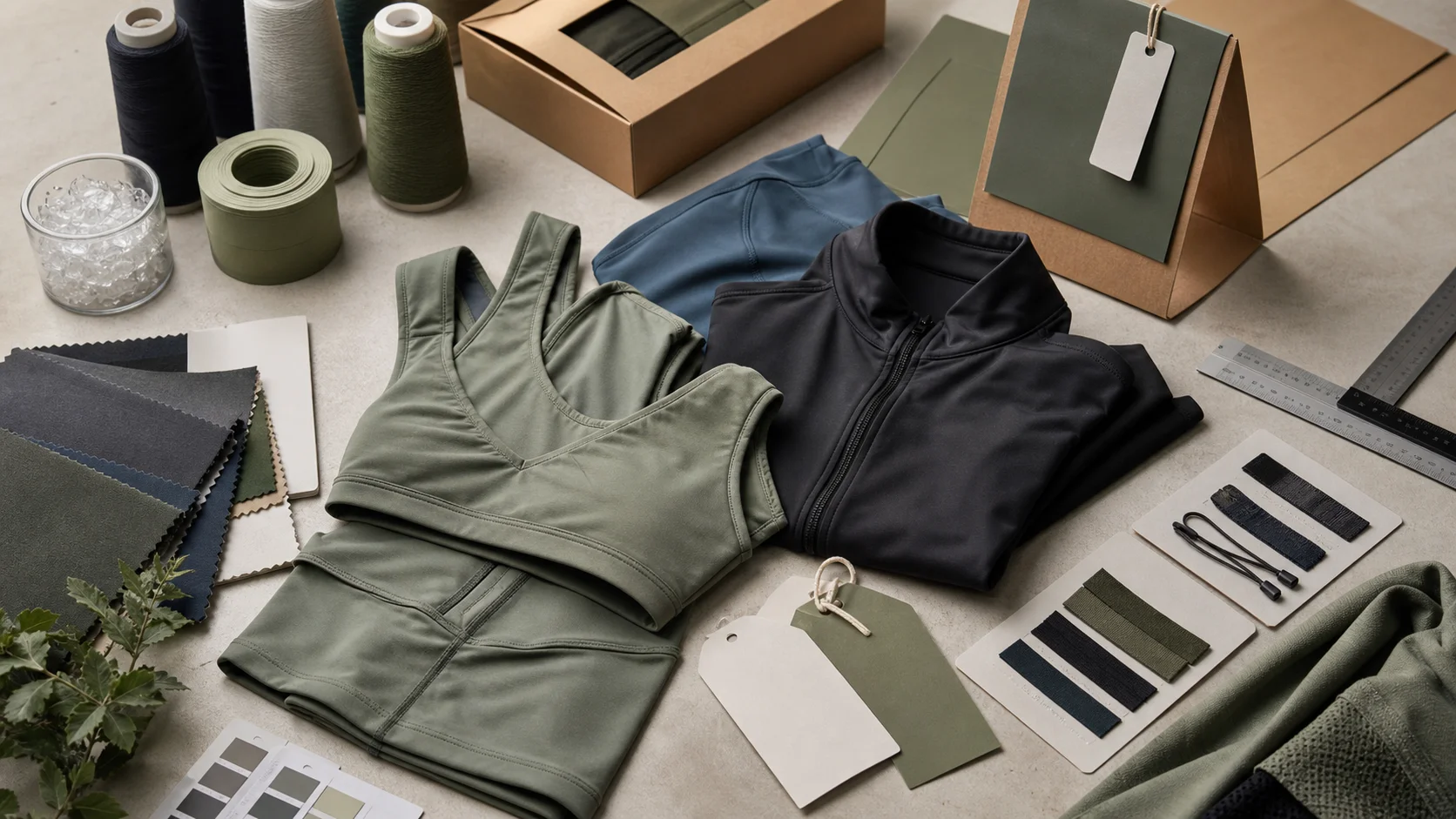
Barcode Labels for Clothing Packaging with checks for samples, fit, MOQ, QC evidence, pricing terms, and delivery risk.
Fast answer: Barcode Labels for Clothing Packaging: Costs, Specs, Buyers should be judged by production evidence, not by a generic sourcing promise. The buyer needs sample proof, cost breakdowns, QC checkpoints, and delivery buffers in writing.
Ask for recent sample photos, measurement tolerances, fabric or print test assumptions, decoration test notes, packing examples, and a named inspection checkpoint. These details show whether the team can repeat an approved sample at bulk volume.
Separate garment cost, decoration, labels, packaging, sampling, testing, freight, and rush charges. When every cost line is visible, it becomes easier to reduce colorways, adjust size depth, or reserve more time for sampling.
Hot presses. Ceiling fans. Lint on everything. That is where barcode labels for clothing packaging get exposed. On a packing table pushing 300 polybags an hour, weak adhesive gives itself away fast. The sample sheet never tells the truth. Sealed cartons do. And no one on the line has time to babysit a peeling sticker.
Across Guangzhou, Tiruppur, and Central America, the same mess kept repeating: a clean-looking label at dispatch, then curling after 48 hours, then scuffing under pallet wrap, then failing at retail receiving. In export factories moving 20,000 to 80,000 units a day, I saw misread and reprint rates close to 3.5% when low-grade paper stock was used. Smaller domestic packers, handling 2,000 to 6,000 units daily, sometimes did worse. One bad roll was enough. Defect rates jumped above 6% when line discipline slipped and backup scanners were missing. In Dhaka and Ho Chi Minh City plants that depend on humid heat, I watched brands burn through three adhesives before landing on a 3M 200MP formulation that could last through 14-day shipping cycles.
The edge goes first. Always the edge. Weak adhesive lifts on polybags. Thin face stock rubs off against a carton wall. Bars fade after 72 hours in humidity, especially on routes that go from 20°C packing rooms to 35°C loading docks. And the receiving team slows down. A single unreadable carton can cost 10 to 15 minutes of manual lookup. Multiply that by a whole shipment and the damage gets ugly. In Istanbul packing hubs, moisture-laden sea air let synthetic PP labels survive where paper had already delaminated.
Not decoration. Not trim. Not “just a sticker.”
These labels decide chargebacks, returns, and labor time. I watched a brand lose two hours at a distribution center because 1,200 labels shifted by just 2 mm on glossy mailers. And that is why barcode labels for clothing packaging deserve the same scrutiny as fabric specs or trim approvals. A label that survives a 14-day transit cycle is a different product from one that merely passes a desk check.
Before any scanner reads anything, the label has already done half the job. It has to identify the SKU, separate sizes and colors, track cartons, and stay alive through warehouse handling long enough for the code to reach the dock intact. I judge labels by what they survive after folding, stacking, and a few ugly hands-on touches, not by how they sit on a white proof sheet.
Buyers need to nail five things: print resolution, label size, adhesive strength, scannability grade, and resistance to moisture or abrasion. For most apparel programs, I prefer 203 dpi at minimum, with 300 dpi for small GS1 DataMatrix or dense UPC content. Label widths usually run from 25 mm to 100 mm, depending on whether the code sits on a hangtag loop, polybag, or carton face. Retail compliance checks often expect a scan success benchmark of 95% to 98% on the first pass. Tight artwork makes that standard hurt.
Packaging surface matters more than most sourcing teams admit. Folded cartons are forgiving. Polybags are not. Tissue wraps can take a label if the adhesive is balanced, but the surface shifts under pressure. Hangtag loops need narrow dies and crisp edges. Outer mailers need enough tack to stay put through friction and condensation. Gloss can backfire too. A shiny topcoat throws light back into the scanner and breaks a code that is technically correct. I have seen matte synthetic labels beat a beautiful varnished version by 18% in dockside scan tests. When I audit setup rooms I watch whether operators preheat the press, run a 15 kg nip roller, and confirm UV curing at 40 m/min to lock in the ink before die-cutting.
According to GS1, barcode quality and data structure are tied together; a correct number with poor print quality still fails in practice. That is why barcode labels for clothing packaging buyers should request verification reports, not just artwork approval. The label is a machine-readable compliance tool, not a design detail.
Paper keeps the sticker cheap, synthetic survives the abuse, and thermal is the fastest route when variable data needs to move without a plated press job. All three can work. All three can fail. The right choice depends on garment type, transit time, and how many reprints your team can survive before margins start leaking.
For small runs of 5,000 labels, coated paper pressure-sensitive stock can land around $0.015 to $0.04 per piece, depending on size and whether the print is one-color or serialized. Direct thermal sits in a similar range for plain black barcodes, but the face stock degrades sooner. Thermal transfer, with ribbon, usually costs 10% to 25% more per unit than direct thermal, yet it gives sharper bars and longer shelf life. Synthetic PP or PET labels usually start higher, often $0.03 to $0.09 per piece, but they resist humidity, oil, and scuffing far better than paper.
At 50,000 units, the spread gets more interesting. Paper still wins on raw price for dry inland deliveries. Synthetic starts to pull ahead once labels move through export ports, cold storage, or high-friction routes. At 500,000 units, even a $0.008 difference matters. A label that costs 10% more can still be cheaper if it cuts two reprints per 1,000 units or reduces receiving errors at the distribution center. Not theory. I watched brands spend $220 more on synthetic stock and save $1,400 in rework over a six-week replenishment cycle.
Garment category changes the math. Basics in folded tees and French terry 320 GSM hoodies can often use paper if the pack-out is dry and the cartons move fast. Premium apparel benefits from cleaner print on thermal transfer, especially if the brand also sells through private label clothing channels where presentation and traceability matter. Kidswear needs adhesives that survive handling by store staff and parents. Sportswear and swimwear demand synthetic stock because sweat, moisture, and abrasion punish weak labels. Swimwear is the worst case. Saltwater exposure and plastic packaging can wreck a cheap label in under 7 days.
Direct thermal suits short shelf-life programs and basic carton labels. Thermal transfer suits longer warehouse dwell times and sharper branding. Pressure-sensitive labels fit almost everything if the adhesive matches the surface. For premium packaging and gift-box formats, I lean toward synthetic face stock with a matte finish. It costs more up front. It usually costs less in the end.
Artwork approval comes first. Slitting and batch coding come last. In between sits a pressroom full of small ways to waste money. I have stood beside machines where the operator ran test strips at 6:00 a.m., got approval by 6:20 a.m., and then lost the first 300 labels to poor die alignment because nobody checked rewind tension. Small mistakes get expensive very quickly.
Digital printing works best for short runs, variable data, and fast proofs. Flexographic printing makes sense for high-volume repeat orders, especially 50,000 units and up, because setup cost gets diluted across the run. Thermal transfer sits in the middle for many apparel teams because it supports serial numbers, size codes, and carton identifiers without long press prep. Lead time shifts with the method. Digital can turn around in 2 to 4 days. Flexo often needs 7 to 12 days. Thermal transfer repeat orders may ship in 3 to 5 days if the artwork is stable.
Quality control should include barcode verification, peel tests, and a quick check of rewind tension before the roll heads off to the shipping dock. I keep a basket of rejected rolls on the press-room floor so the team remembers that a faint code or a crooked die cut can cost the receiving team an hour. It is ugly when a shipment gets held up for a bad label, but it is worse to ignore the warning signs and let the next order leave with the same flaw.
A strong brief makes the supplier's job narrower and the quote more reliable. For barcode labels for clothing packaging, include the target customer, sales channel, expected order quantity, size range, decoration needs, packaging requirements, and delivery market. Then call out the details most likely to affect the result, especially material grade, print tolerance, and barcode size.
The brief should also explain what cannot change. Some brands care most about hand feel, some about price, some about launch timing, and some about retail compliance. When those priorities are not written down, suppliers tend to optimize for whatever is easiest to quote. Clear priorities help the factory make better tradeoffs before the first sample is cut or printed.
Ask the supplier to respond with assumptions, not just a price. A useful reply states MOQ, sample route, production capacity, inspection plan, packing method, and freight handoff. If the answer is vague, the project may still work, but it needs a tighter pre-production stage before money and calendar pressure build up.
The best time to catch problems is before the pre-production sample is approved. Check measurements, color, placement, material behavior, shrinkage, construction, labels, and packaging in the same review instead of approving each item in isolation. Many bulk issues are not caused by one dramatic mistake; they come from several small unchecked assumptions.
For barcode labels for clothing packaging, pay special attention to folding method, pack-out sequence, and retail compliance. These details often look minor in an email but become expensive once cutting, printing, sewing, packing, or shipping begins. A simple checklist with owner, due date, and approval status keeps the brand team and factory aligned.
Bulk production should not start until the supplier can explain how the approved sample becomes a repeatable production standard. That means reference sample storage, line instructions, inline checks, final inspection, and defect handling. A factory that can describe this process clearly is usually safer than one that only promises speed.
Price differences are useful only when the quotes cover the same work. Compare sample cost, material source, trims, decoration, packaging, testing, inspection, and freight assumptions. A low unit price can become expensive if it excludes items the brand needs before launch.
Timeline promises deserve the same scrutiny. Ask what happens if the first sample needs revision, whether materials are in stock, when the production slot is reserved, and how export packing is handled. The most reliable supplier is often the one that gives a realistic calendar instead of the fastest optimistic answer.
Before making the final decision, write down the specification, approval owner, delivery expectation, and the one or two risks that would cause the most trouble if missed. For barcode labels for clothing packaging, this usually means checking material grade, print tolerance, barcode size, and the support process after the order is placed.
This last review does not need to be complicated. It simply makes the decision easier to repeat, easier to explain, and easier to verify when the finished product or jewelry arrives.
One useful way to pressure-test the decision is to ask what would happen if the order had to be repeated in six months. The answer should still be clear: the same material grade, the same print tolerance, the same acceptance standard, and the same communication path. If a second order would depend on memory or guesswork, the first order is not documented well enough yet.
Another useful check is to separate preference from requirement. Preference is the look, wording, or finish the brand likes. Requirement is the measurement, tolerance, certificate, material, or delivery condition that cannot fail. Good buying decisions keep both visible, so the final choice is not pushed around by the last email, the cheapest quote, or the prettiest sample photo.
Finally, ask who owns each approval. A project with one accountable owner for sample review, one owner for final content or artwork, and one owner for delivery sign-off usually moves faster than a project where every decision is shared loosely across a team. Clear ownership reduces delays and makes the finished result easier to judge.