
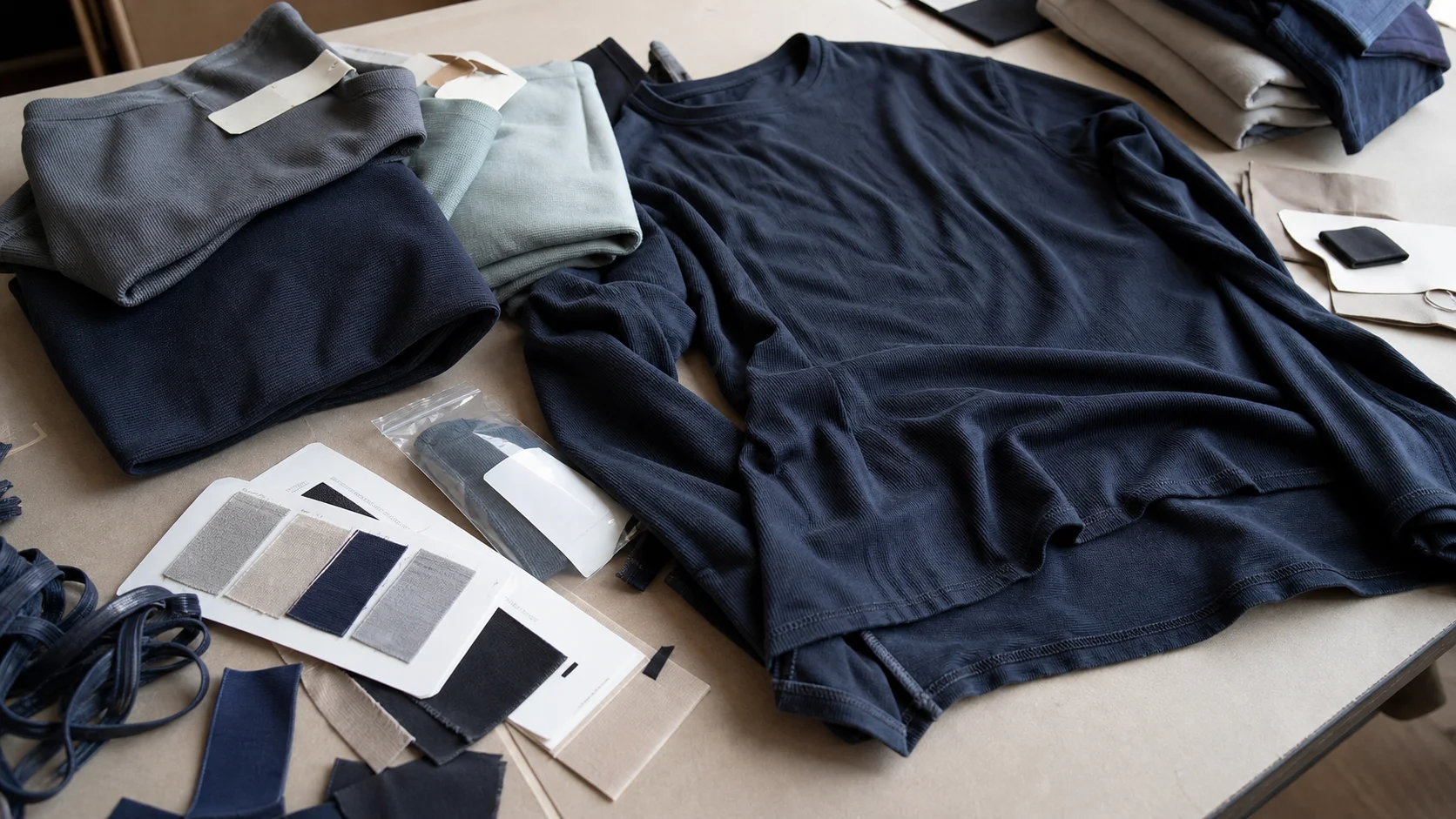
A quality and inspection focused outline for resort uniform buyers ordering base layer sets in bulk, covering fabric specs, fit grading, thermal...
Base Layer Set Bulk Order Guide for Resorts - Fabrikn production reference
For resort uniform buyers, a base layer set is not a fashion basic. It is a performance garment that sits directly against the skin, works through long shifts, and affects how staff feel in cold, wet, windy, or variable resort environments. A poor base layer program creates complaints quickly: itch, overheating, seam rubbing, shrinkage, odor retention, inconsistent sizing, and visible garment failure after laundry.
This guide is written for resort purchasing teams sourcing base layer sets in bulk for ski resorts, mountain lodges, winter activity operators, alpine hospitality teams, spa and wellness resorts in cooler climates, and outdoor service staff. The focus is quality and inspection, because base layers are deceptively technical. They look simple on a purchase sheet, but small fabric and construction decisions can decide whether the order performs well for a full season.
Use this as a sourcing checklist before sending an RFQ, approving samples, or releasing production. The goal is not to buy the cheapest thermal set. The better target is a stable product that fits the role, survives your laundry process, matches your brand standards, and can be reordered without surprises.
Base layer sets are often hidden under jackets, softshells, fleece uniforms, or outerwear. That makes some buyers treat them as a secondary item. In practice, they have a direct impact on staff comfort and operational consistency. A lift attendant standing outdoors, a ski school instructor moving between activity levels, a maintenance worker starting before sunrise, and a guest services employee walking between buildings may all need different thermal performance.
The main sourcing mistake is treating one fabric weight and one fit profile as suitable for everyone. That can work for small teams in mild climates, but larger resort operations usually need more disciplined planning. Staff roles, indoor-outdoor movement, expected layering, gender fit requirements, laundry method, and issue frequency should all be defined before the factory quotes.
Base layer sets also have a high complaint risk because the garment contacts the body. Any scratchy label, abrasive seam, poor gusset shape, tight waistband, loose cuff, or chemical odor will be noticed. These issues are harder to fix once hundreds or thousands of units arrive.
Purchasing judgment: if your resort has high staff turnover, seasonal hires, and centralized laundry, prioritize durable construction, easy sizing, and repeatable quality over highly specialized fabric claims. If your team includes technical outdoor staff in severe cold, invest more in fabric performance and fit testing before bulk approval.
A clear use case helps suppliers recommend fabric, GSM, trims, seams, and sizing with fewer assumptions. It also keeps quotations comparable. If one vendor quotes a 160 GSM polyester-spandex set and another quotes a 240 GSM brushed thermal set, the prices are not directly comparable even if both are called “base layer sets.”
For resort uniform buyers, it may be more practical to specify two fabric weights instead of one universal base layer. A lightweight or midweight set can serve active staff, while a warmer set can be issued to less mobile outdoor roles. This increases SKU complexity, but it can reduce comfort complaints and reduce the tendency for employees to supplement uniforms with non-approved personal garments.
Temperature range matters, but it is not the only variable. Wind exposure, humidity, snowfall, exertion level, and outer uniform layers all change what the base layer needs to do. A resort in a dry cold climate may prioritize thermal retention and soft hand feel. A wet, coastal, or rainy environment may need better moisture movement and faster drying. Indoor heat also matters. A heavy brushed set may feel good outside, then become uncomfortable during indoor tasks.
Before requesting quotes, provide suppliers with a practical wearing brief:
Fabric is the core decision in any base layer set bulk order. It affects comfort, price, shrinkage, drying speed, pilling, odor retention, and inspection criteria. The best option depends on the resort’s working conditions and budget. There is no single “best” fabric for all resort uniforms.
For most resort uniform buyers, polyester-spandex or brushed polyester-spandex gives the best balance of cost, availability, wash performance, and lead time. Merino blends can be excellent for premium programs, but they require tighter quality control, clearer laundry instructions, and more budget. A wool-rich base layer is not always the right choice for seasonal staff if garments are washed aggressively or issued without care guidance.
GSM, or grams per square meter, is one of the simplest ways to compare fabric weight. It does not tell the whole performance story, but it is essential for specification control.
A heavier GSM is not automatically better. If staff sweat, then stop moving, poor moisture management can make them colder. Buyers should ask for wicking test data when performance claims are important, but should also conduct practical wear trials. A simple staff trial in actual working conditions often reveals issues that a spec sheet does not show.
Base layer sets need stretch, but recovery is just as important. A fabric that stretches easily but bags out at the knees, elbows, seat, or waistband will look poor and feel unstable. For resort uniforms, spandex content often sits around 5% to 12%, depending on fabric type and desired compression. Higher spandex may improve fit and mobility, but it can raise cost and increase sensitivity to heat damage in laundering.
Ask suppliers to confirm stretch percentage in both length and width, then check recovery after repeated extension. If the garment is intended for skiing, snowboarding, climbing, or active outdoor work, poor recovery should be treated as a serious risk. Base layers that sag under uniform pants or bunch inside sleeves will not be welcomed by staff.
Wicking finishes help move sweat away from the skin. Some are durable through many washes; others decline quickly. Odor-control finishes may be offered, but buyers should be careful with broad claims. Ask what technology is used, whether it is suitable for the destination market, and what wash durability is expected. Compliance requirements can vary by market, especially when antimicrobial claims are involved.
For conservative purchasing, specify measurable performance rather than marketing language. Terms such as “quick dry,” “anti-odor,” or “thermal” should be supported by fabric composition, construction, finish details, and testing expectations. If the supplier cannot explain the finish or its durability, treat the claim as unverified.
A base layer set usually includes a long-sleeve top and long john or legging-style bottom. The purchase order should specify both pieces clearly. Ambiguity leads to inconsistent production, especially when several sizes and colors are involved.
Crew neck tops are usually the easiest for bulk uniform programs. Mock necks add warmth but can cause fit complaints if the neck is too tight. Quarter zips add ventilation and a more technical look, but they increase cost, introduce trim failure risk, and may be uncomfortable under some outer layers. For a hidden base layer, a simple crew neck or mock neck often delivers better value.
The waistband is a frequent complaint point. Too tight, and staff reject the garment. Too loose, and the bottom slides under uniform pants. A covered elastic waistband can be cost-efficient, while a jacquard branded waistband may look more premium but adds MOQ and color matching complexity. For resort issue programs, comfort and durability usually matter more than visible waistband branding.
Flatlock seams are common in performance base layers because they reduce bulk and rubbing. They are not automatically flawless. Poor flatlock tension can create skipped stitches, wavy seams, or weak joins. Overlock plus coverstitch may be acceptable for lower-cost programs if seam placement avoids high-friction areas. For staff wearing base layers all day, seam position should be reviewed carefully at the shoulder, underarm, crotch, waistband, and ankle.
A gusseted crotch is worth considering for active roles. It improves mobility and can reduce seam stress. It may add pattern and sewing complexity, but the benefit is real for staff who bend, climb, ski, or handle equipment.
Black, charcoal, navy, and dark grey are common choices for resort base layers because they hide wear and coordinate with outer uniforms. White and light colors can show stains and may become translucent when stretched, depending on fabric weight. If the base layer may be visible at collars or cuffs, align it with the broader uniform palette.
Branding can be applied through heat transfer, screen print, woven label, or jacquard trim. For garments worn directly on skin, avoid scratchy labels. Heat-transfer care labels are often preferred, but they must be tested for wash durability. A peeling neck label after a few washes creates a poor impression even when the garment itself is still usable.
If you need help organizing a specification package for a custom uniform project, review the manufacturing support described at Fabrikn services.
Minimum order quantity depends on fabric availability, color, customization, size range, and factory capacity. Buyers should expect different MOQs for stock fabric versus custom-dyed fabric. A simple black polyester-spandex set using available fabric may be easier to source at lower quantities. A custom color, branded waistband, special finish, or merino blend may require a higher commitment.
These ranges are typical planning references, not fixed rules. Some suppliers may accept lower quantities with stock materials and a surcharge. Others may require higher MOQs if they need to knit, dye, brush, or finish fabric specifically for the order.
The main cost drivers are fabric composition, GSM, fabric finish, garment construction, trim quality, size range, logo method, packaging, testing, and inspection level. A base layer set with flatlock seams, brushed interior, heat-transfer labels, custom packaging, and inclusive extended sizing will cost more than a basic thermal set. That price difference may be justified if the garment is issued to staff for a full season and expected to maintain appearance.
Buyers should be cautious when one quote is far lower than the market. It may be based on lighter fabric, lower spandex content, weaker stitching, cheaper elastic, incomplete size grading, or limited inspection. Ask for the exact fabric composition, GSM tolerance, seam type, trims, packing method, and sample basis before comparing.
Resort staff sizing can vary widely, especially with seasonal hiring. A poor size curve creates shortages in common sizes and excess in slow sizes. Start with previous uniform issue data if available. If not, use a conservative size distribution and hold a buffer in the most common sizes.
For unisex base layers, fit testing is essential. Unisex can simplify inventory but may not fit all employees well, particularly in bottoms. Many resort buyers choose men’s and women’s cuts for better comfort, then manage size ratios separately. This increases SKU count but can improve adoption and reduce staff complaints.
Sampling is where buyers catch most preventable problems. A base layer set should not move to bulk production after only a visual approval. The sample should be measured, worn, washed, stretched, and reviewed under the same conditions expected in resort use.
The pre-production sample is the most important approval before mass production. It should represent what the factory will actually make in bulk. If the PPS uses substitute fabric or approximate trims, it is not a reliable approval sample. Buyers should clearly state that bulk production cannot proceed until the final fabric, trims, logo, labels, and measurements are approved.
Measurements should include chest, waist, hem, sleeve length, body length, shoulder or raglan length, inseam, rise, thigh, knee, ankle opening, waistband relaxed and extended, and key cross-width points. For stretch garments, measuring technique matters. The garment should be laid flat without over-stretching. A measurement tolerance that is too tight may be unrealistic for knits, while a tolerance that is too loose can create fit inconsistency.
Common tolerances for knit base layers may range around plus or minus 1 cm for smaller points and plus or minus 1.5 cm to 2 cm for larger body measurements, depending on the measurement location and size. The tolerance should be agreed in the tech pack before production.
A wear trial does not need to be complicated, but it should be structured. Select staff from relevant roles and body types. Ask them to wear the set during normal work, then collect feedback on warmth, moisture, waistband comfort, sleeve length, neckline, seam rubbing, transparency, and movement. A one-hour office try-on will not reveal the same issues as a shift outdoors.
Wash trial samples according to the intended care method. If centralized laundry uses high heat, confirm whether the garment can tolerate it. Many performance knits and spandex-containing fabrics prefer lower heat. A mismatch between garment care and laundry process is a common reason for premature failure.
Lead time depends on fabric status, sample approvals, trim availability, factory workload, testing requirements, shipping mode, and order size. Buyers should build backward from the resort season opening date, not from the date uniforms are ideally issued. Staff fitting, internal distribution, exchanges, and emergency top-up orders all need time.
A safe development-to-delivery window for a custom base layer set is often 10 to 16 weeks, longer if fabric is custom-dyed, trims are custom-made, testing is required, or shipping is by sea. Repeat orders using approved fabric and patterns can be faster, but only if the supplier has fabric access and production capacity.
For resort openings, late delivery can be more expensive than a slightly higher unit price. If timing is tight, consider reducing customization, using available colors, simplifying trims, or approving a phased delivery plan. Do not compress sample approval so much that quality risks move into bulk production.
Quality inspection for base layer sets should focus on fabric performance, measurement consistency, seam integrity, trims, color, and packaging accuracy. Because these garments stretch, many defects are not obvious when folded. Inspectors should open garments, check tension areas, and measure both top and bottom pieces.
Fabric approval should include composition, GSM, color, hand feel, stretch, and finish. If performance is a major selling point, testing should be discussed before the purchase order. Wicking, colorfastness to washing, colorfastness to rubbing, dimensional stability, pilling, and seam strength may all be relevant. The exact testing package depends on budget, destination requirements, and risk tolerance.
Stretch fabrics require correct needle choice, stitch type, thread, and machine tension. A garment can look acceptable on the table but fail after repeated stretching. During inspection, seams should be gently extended to check for popping, skipped stitches, or weak recovery. Crotch seams and underarm seams deserve special attention because they carry movement stress.
Measurement inspection should compare bulk garments against the approved size chart. Because knit garments stretch, the inspection method must be consistent. If one inspector pulls the garment flat and another measures relaxed, results will vary. The supplier and buyer should agree how measurements are taken.
Important measurement risks include short sleeves, tight neck openings, inconsistent inseams, waistband tension variation, and insufficient back rise. A base layer bottom that slips down during movement will be rejected quickly, even if the fabric is good. Fit risk is especially high when a supplier converts a casual legging pattern into a uniform base layer without role-specific movement testing.
If the base layer includes branding, check placement, color, adhesion, print stretch, and wash durability. Heat transfers should not crack when stretched. Care labels should remain readable. Size labels must match the garment and polybag. One wrong label can create distribution issues across staff housing, uniform rooms, or department-level issue points.
For a more detailed sourcing conversation or inspection planning support, buyers can contact the team through Fabrikn contact.
Many bulk apparel inspections use AQL sampling. A common general inspection level may be II, with acceptable quality limits agreed by defect severity. Critical defects should not be accepted. Major defects may include wrong size, open seams, incorrect fabric, severe stains, wrong logo, or poor construction. Minor defects may include small thread ends or slight appearance issues within agreed tolerance.
For base layer sets, buyers should also define set-matching rules. The top and bottom must be the same size unless intentionally packed otherwise. Shade should match within the set. Labels, hangtags, and barcodes should be consistent. Mixed-size sets create immediate operational problems when uniforms are issued to staff.
Packing is not just a warehouse detail. For resort uniform programs, packing affects receiving speed, staff issue accuracy, and exchange management. A clean packing plan can prevent avoidable confusion during the busiest pre-season period.
If staff often need different top and bottom sizes, avoid forcing matched sets unless fit data supports it. Separate-piece inventory can reduce exchanges but increases SKU management. Matched sets simplify purchasing and distribution but may frustrate employees with different upper and lower body sizing.
Each garment or set should clearly show size, color, style code, purchase order number, and barcode if required. Cartons should include carton number, style, color, size breakdown, quantity, gross weight, net weight, and destination. For large resort groups, department or property coding may be useful.
Care instructions should be realistic. If the label says low-temperature wash and hang dry, but the resort uses industrial tumble drying, the product may fail early. Align garment care, laundry capability, and warranty expectations before placing the order.
A good supplier should be able to discuss fabric, fit, construction, production, and inspection clearly. They do not need to promise perfection, but they should provide practical answers and identify constraints early.
Direct answers matter. If the supplier cannot confirm fabric weight, seam type, or trim source, the quote is not ready for approval. If they resist a pre-production sample, size set, or inspection, the buyer carries more risk. Lower prices are useful only when the specification is controlled.
For most resorts, the best approach is to start with a practical, testable specification rather than an overly complex product. A midweight polyester-spandex or brushed polyester-spandex set, in black or charcoal, with flatlock or well-placed stretch seams, heat-transfer labels, and clear size grading will suit many programs. From there, upgrade only where the job role justifies it.
Choose premium fabrics or specialty features when they solve a real problem: extreme cold, odor complaints, high activity levels, brand positioning, or staff retention expectations. Avoid adding costly trims or branding in hidden areas unless they improve inventory control or staff identification. A base layer should first be comfortable, durable, washable, and available on time.
Before bulk release, approve the fabric, fit, size set, trims, packaging, and care method. Put the final specification into the purchase order. Keep a sealed pre-production sample or approved reference sample for inspection comparison. This protects both buyer and supplier from disputes.
Buyers evaluating manufacturing partners can also review company background information at Fabrikn about us before starting a sourcing discussion.
The strongest base layer set bulk orders are not built from vague descriptions such as “warm thermal underwear.” They are built from controlled specifications, realistic MOQs, tested samples, and inspection points that match the garment’s actual risks. For resort uniform buyers, that discipline pays back in fewer complaints, smoother staff issue, better seasonal readiness, and more predictable reorders.
Get a free quote from Fabrikn — your trusted B2B clothing manufacturer with 10+ years of experience. MOQ as low as 200 pieces.
Get a Free Quote →For many resort uniform programs, polyester-spandex or brushed polyester-spandex is the most practical choice because it balances warmth, stretch, drying speed, durability, and cost. Merino blends can be better for premium cold-weather use, but they cost more and require better laundry control.
A midweight range of about 180-220 GSM works for many mixed-use resort roles. Active outdoor staff may prefer 140-170 GSM, while static outdoor staff in colder conditions may need 230-280 GSM. The right choice depends on activity level, weather, and outer uniform layers.
Typical MOQs range from 100-300 sets for stock fabric and standard colors, 300-500 sets for stock fabric with custom branding, and 500-1,500 sets or more for custom-dyed fabric or custom trims. Specialty blends may require higher quantities.
Matched sets are easier to issue and manage. Separate tops and bottoms are better when staff often need different sizes for upper and lower body. Large resort teams should review past uniform exchange data before deciding.
A pre-production sample should be approved before bulk production. It should use the final bulk fabric, trims, labels, logo method, color, measurements, and packaging. A size set is also strongly recommended for checking grading across all sizes.
The most common risks are incorrect GSM, poor stretch recovery, shade mismatch, open seams, skipped stitches, twisting after washing, pilling, wrong labels, and mixed-size set packing. Waistband comfort and crotch seam strength deserve close inspection.
A custom order often takes 10 to 16 weeks from specification alignment to shipment, depending on sampling, fabric availability, dyeing, trims, production capacity, testing, inspection, and shipping method. Repeat orders can be faster if materials and patterns are already approved.
Flatlock seams are preferred for comfort because they reduce bulk and rubbing. They are especially useful for active staff. A well-made overlock and coverstitch construction can work for some programs, but seam placement and stretch strength must be checked carefully.
Many buyers hold extra stock in common sizes for exchanges, late hires, and replacement needs. The buffer depends on staff turnover, hiring timing, and uniform policy. Common sizes usually need a larger reserve than very small or very large sizes.
The tech pack should include fabric composition, GSM, color standard, size chart, measurement tolerances, seam construction, trims, labels, logo details, care instructions, packing method, testing requirements, and approved sample references.