
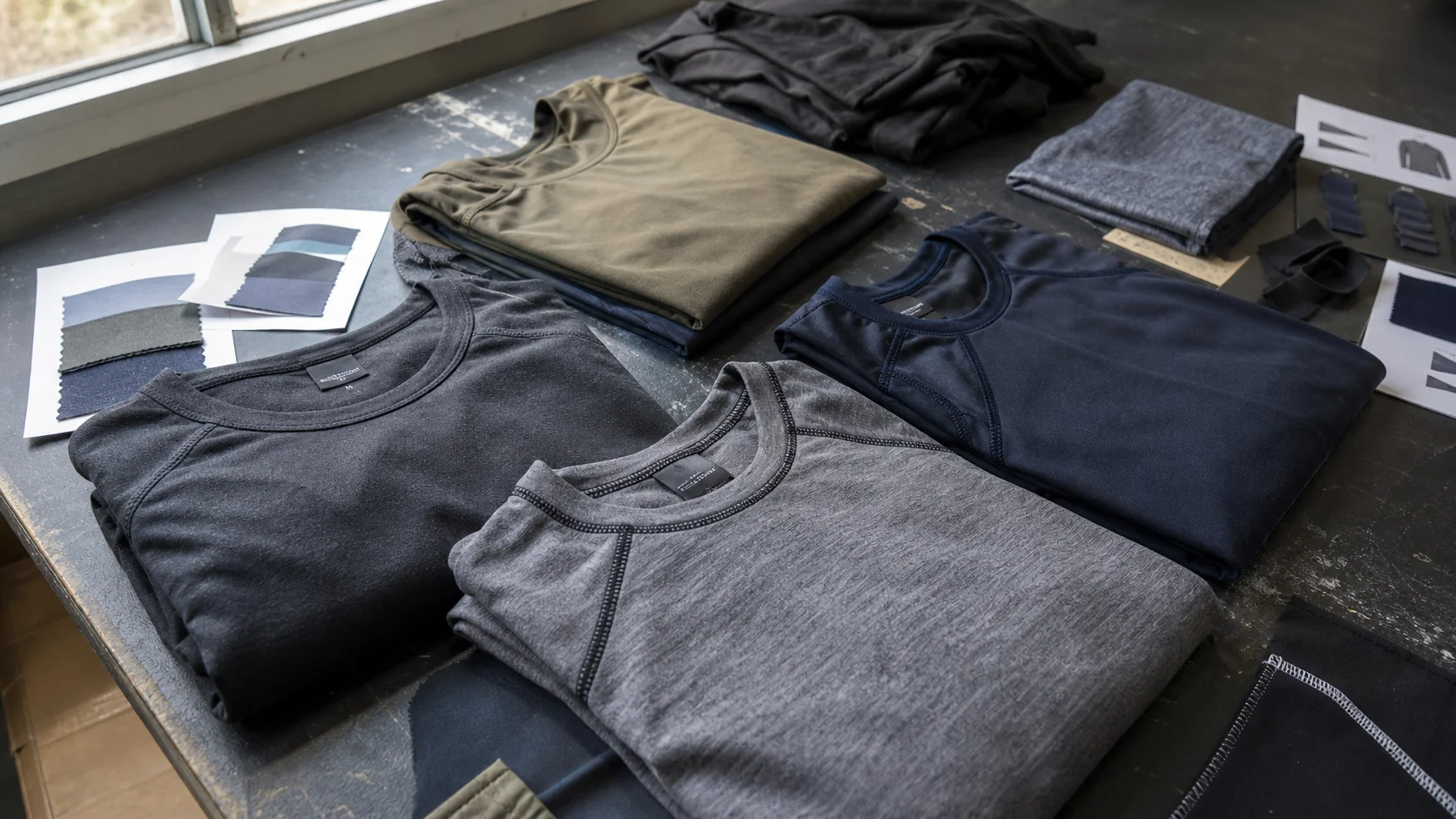
A practical compliance checklist for sourcing base layer sets for cleaning crews, covering fabric safety, labeling, hygiene, durability, and production...
Cleaning crews work in demanding conditions, so base layer sets need to do more than look uniform. They should support movement, manage moisture, hold up to repeated laundering, and meet the practical requirements of a commercial uniform program. For buyers sourcing these garments, compliance is not just about paperwork. It is about making sure the supplier can deliver consistent quality, correct sizing, safe materials, stable color, and repeatable production at the volume you need.
This checklist is written for procurement teams, uniform managers, and distributors evaluating a base layer set supplier compliance checklist for cleaning crews. The focus is on what matters in activewear and teamwear production: fabric performance, trim quality, sample approval, production controls, inspection standards, labeling, packaging, and delivery risk. If you are reviewing a vendor for a private-label or contract uniform order, use this as a practical sourcing guide rather than a marketing brochure.
Base Layer Set Compliance Checklist for Cleaning Crews - Fabrikn production reference
Base layers for cleaning crews are usually worn under outer uniform pieces, but they still affect comfort, hygiene, and professional appearance. Crews may work early shifts, move between indoor and outdoor tasks, and face frequent washing cycles. A weak base layer program can lead to complaints about itchiness, overheating, loose seams, shrinkage, or inconsistent sizing across reorders.
Compliance should cover both product and process. The product side includes fabric composition, color fastness, seam strength, and dimensional stability. The process side covers how the supplier quotes, samples, labels, tests, packs, and ships. A supplier that cannot show clear control in those areas creates avoidable risk for a uniform program.
For cleaning crews, the cheapest base layer is rarely the lowest-cost option. Replacements, returns, and employee complaints can erase any short-term savings.
Many sourcing problems begin with vague product briefs. A “base layer set” can mean different things depending on climate and work pattern. Before compliance review starts, define the garment set in practical terms.
A proper product definition helps the supplier quote the right fabric weight, construction method, and test standard. It also reduces sampling rounds. For sourcing support and product development discussions, you can review Fabrikn’s services or reach out through the contact page.
Before discussing the garment spec in detail, verify that the supplier is set up to handle activewear or teamwear rather than only basic casual apparel. A cleaning crew base layer has different performance requirements than a simple t-shirt.
Do not overrate glossy catalogues. The better indicator is whether the supplier can give consistent answers about fabric content, shrinkage tolerance, stitching method, and reorder stability. If these basics are unclear, the order is at risk.
Fabric is the foundation of the garment. For cleaning crew use, the material should be comfortable against skin, tolerate repeated washing, and dry quickly enough to support shift rotation. A good base layer may still fail if the fiber blend, knitting structure, or finishing is wrong.
For cleaning crews, fabric comfort and wash durability usually matter more than premium fashion details. A fabric that feels soft in a sample but breaks down after several wash cycles is a poor buy. When asking for compliance, request test values for shrinkage, color fastness to washing, and pilling resistance if the order size justifies it.
Base layers for active work should allow movement without exposing the wearer to bunching, seam irritation, or binding at the joints. Construction decisions matter as much as the fabric selection.
A base layer for cleaning crews should not be too loose, or it may bunch under outer layers. It should not be overly tight unless compression is specifically requested. The right balance depends on the work environment, the climate, and how the garment will be layered with polos, jackets, or work pants.
Labeling can be overlooked, yet it is one of the fastest ways to create compliance issues. Incorrect fiber content, missing care instructions, or poor size labeling leads to returns and complaints. For teamwear programs, packaging also affects distribution efficiency.
Packaging should match the distribution model. A direct-to-site delivery program may need simple size-sorted packs. A distributor program may need retail-style labeling and better carton identification. This should be fixed before bulk production begins, not after goods are packed.
Sampling is where most sourcing risk can be reduced. A supplier that rushes the sample stage often creates more expensive problems later. For base layers, the approval sequence should be disciplined and documented.
A sealed sample is only useful if it reflects what will actually go into production. If the supplier substitutes fabric or trims after approval, the risk shifts back to the buyer. Put material substitution rules in writing.
Any supplier compliance checklist should include a clear rule on substitutions: no change to fabric, trim, color, or construction without written approval.
Even a good sample can fail in bulk if production controls are weak. Compliance for cleaning crew uniforms should include line-side quality checks and final inspection criteria. The buyer does not need an elaborate system, but the system must be consistent.
For larger orders, third-party inspection may be worthwhile before shipment. A standard final inspection can catch common defects, but it does not replace disciplined in-process control. For low- to medium-volume orders, the supplier’s own QC process must carry more weight.
MOQ and lead time are not just commercial terms. They shape the quality and flexibility of the whole program. Cleaning crews often need staggered replenishment because uniforms are worn hard and replaced periodically. A supplier with a rigid MOQ may not suit the program unless the buyer has predictable demand.
Lead time depends on fabric availability, trim sourcing, sample approval speed, and production load. A common range for made-to-order activewear is 30 to 75 days after sample approval, but that number can move quickly if custom dyeing or special testing is involved. Freight method also matters.
Buyers should avoid treating lead time as fixed. Ask suppliers what part of the timeline is under their control and what part depends on outside vendors. That distinction is useful when planning reorder dates and seasonal demand.
Some cleaning crew programs now request recycled fibers, lower-impact dyeing, or responsible sourcing documentation. These requirements are reasonable, but they need verification. A supplier should be able to explain what is actually certified and what is only a general claim.
Do not accept broad claims without proof. If the order requires specific environmental language, the supplier should show the supporting certification or testing record. Unsupported claims can create compliance and reputational risk for the buyer.
For a broader view of supplier capability and company background, see Fabrikn’s about page.
A simple scorecard helps compare vendors objectively. It also prevents price from dominating the decision when product quality is not yet proven.
Category What to check Pass/Fail Notes Company legitimacy Registration, product scope, communication response Fabric control Composition, GSM, test data, color consistency Construction quality Seams, stitch density, reinforcement, finish Fit and sizing Measurement accuracy, grading, wear test Labeling and packaging Accuracy, traceability, carton control Sampling discipline Development, fit, pre-production, sealed sample Production reliability QC plan, inspection process, substitution control Commercial fit MOQ, lead time, reorder support, pricing clarityA supplier does not need perfect scores in every area, but weak control in fabric, sizing, or sample approval should be treated as a serious risk. Those are the areas most likely to cause returns and repeat complaints.
Not every line in a compliance checklist deserves the same weight. For cleaning crews, the highest-value checks are usually fabric durability, fit stability, seam quality, and wash performance. After that comes labeling accuracy and packing control. Fancy presentation matters less than a garment that keeps its shape after repeated laundering.
When comparing suppliers, ask a direct question: can they reliably deliver the same approved garment again six months later? If the answer is uncertain, the program may be fine for a one-off order but risky for a standing uniform contract. That is the difference between a garment supplier and a dependable program supplier.
If you are building a new uniform line or trying to clean up an underperforming one, it is worth discussing technical support early. You can start that process through the contact page or review available production support on the services page.
A base layer set compliance checklist for cleaning crews should be practical, specific, and grounded in how the garments will actually be used. The supplier must show control over fabric, construction, fit, sampling, labeling, inspection, and delivery timing. A polished quote is not enough. Buyers need evidence that the supplier can repeat quality across production runs and stand behind the product after shipment.
For cleaning crew uniforms, the best supplier is not always the one with the lowest price or the widest catalogue. It is the one that can deliver consistent base layers that work under real conditions, survive repeated washing, and support a stable replenishment program.
Get a free quote from Fabrikn — your trusted B2B clothing manufacturer with 10+ years of experience. MOQ as low as 200 pieces.
Get a Free Quote →It should cover supplier legitimacy, fabric composition, GSM, stretch recovery, color fastness, seam construction, fit approval, labeling, packaging, production QC, and lead time. For cleaning crews, wash durability and comfort should carry more weight than fashion details.
Typical MOQ ranges often start around 300 to 500 sets per color/style for simpler private-label programs. Custom fabrics, special colors, or more complex branding can push MOQs higher, often to 500 to 1,000 sets or more.
A good process usually includes a development sample, a fit sample, a pre-production sample, and a sealed sample. Not every project needs all four stages, but skipping fit and pre-production approval increases risk.
There is no single best option. Polyester/spandex is common for moisture control and stretch, while nylon/spandex can offer a smoother feel and good durability. For colder conditions, brushed thermal knits may be better. The right choice depends on climate, wear schedule, and laundering frequency.
The most common risks are measurement drift, seam failure, shade variation, wrong labels, mixed sizes, and fabric inconsistency across rolls or lots. These issues are easiest to catch with incoming fabric checks, in-line control, and final inspection.
Lead time often falls in the 30 to 75 day range after sample approval for made-to-order activewear, but it depends on fabric availability, trims, production capacity, and shipping method. Custom dyeing or special testing can extend the schedule.
You can review Fabrikn’s about page, check the available services, or send an inquiry through contact us.