
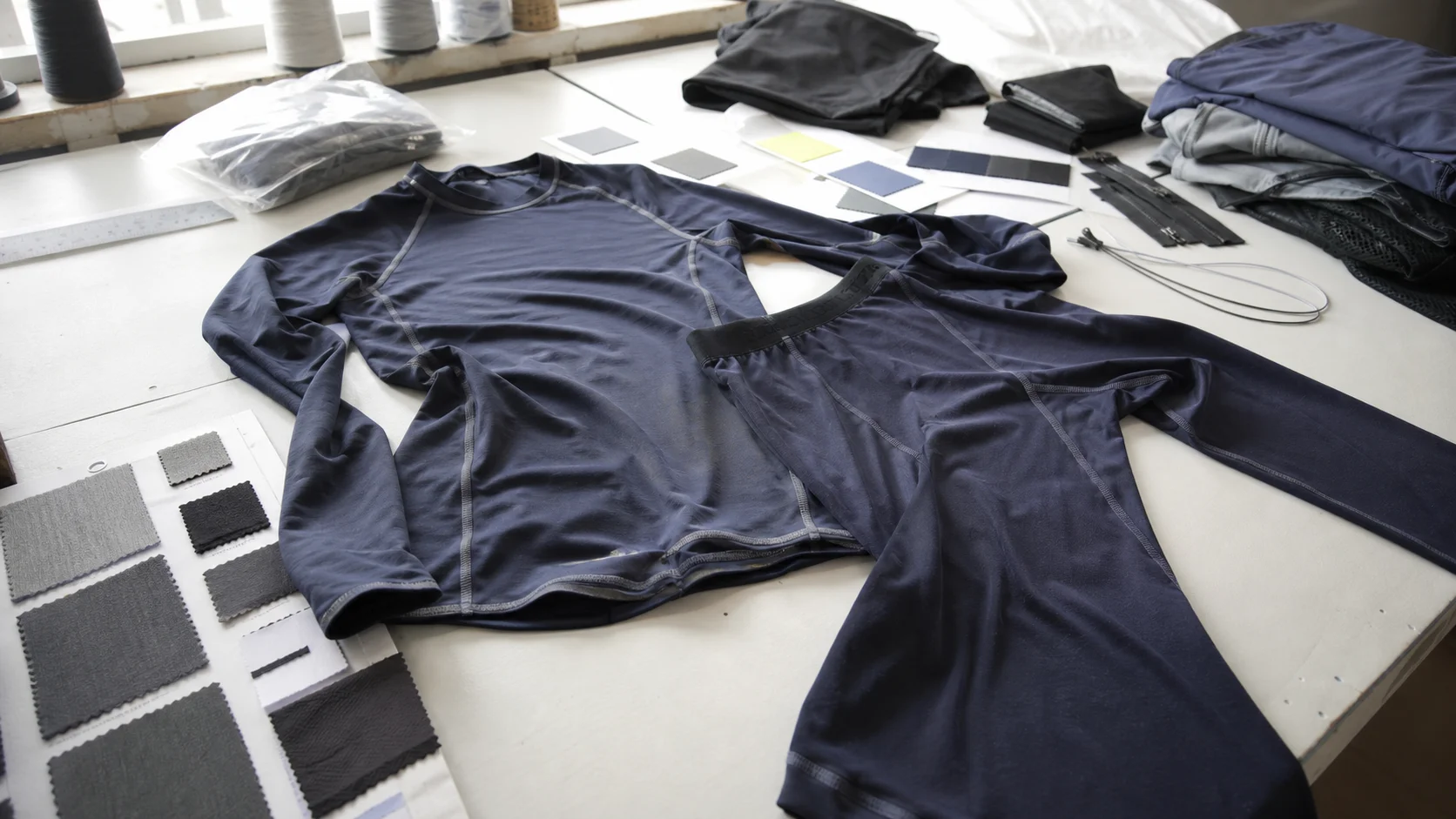
A practical SEO outline for buyers sourcing base layer sets for cleaning crews, focused on fabric testing, wear performance, hygiene, laundering, comfort,...
Base Layer Set Fabric Tests for Cleaning Crew Buyers - Activewear & Teamwear manufacturing guide
Buying base layer sets for cleaning crews is not the same as buying gym thermals or promotional activewear. Cleaning staff move constantly, work across temperature zones, kneel, stretch, carry equipment, and come into contact with detergents, disinfectants, perspiration, dust, and repeated commercial laundering. A base layer set manufacturer fabric testing guide for cleaning crews should therefore focus on durability, comfort, wash performance, and wearer safety before price negotiation gets serious.
The right base layer set can reduce discomfort under uniforms, help crews stay warm in cold facilities, and improve moisture management during physically demanding shifts. The wrong fabric can pill after a few washes, trap odor, shrink out of size spec, bleed dye into outer uniforms, or irritate skin during long shifts. For buyers sourcing activewear and teamwear, fabric testing is not a paperwork exercise. It is a practical risk-control tool.
This guide explains the key fabric tests cleaning crew buyers should request from a base layer set manufacturer, how to read the results, what tradeoffs matter, and where inspection problems usually appear. It is written for procurement teams, uniform distributors, facility service companies, and private-label buyers who need base layer sets that survive real cleaning work rather than just looking good in a showroom sample.
Cleaning crews put base layer sets through a rougher cycle than casual consumers. A worker may wear the same top and bottom under a uniform for a full shift, then the garment may go into frequent washing with strong detergents. In colder regions, crews may move from outdoor service areas into heated buildings. In hospitals, schools, kitchens, offices, warehouses, and transit facilities, base layers may be exposed to sweat, surface chemicals, lint, cleaning residue, and abrasion from outer garments.
That combination creates several sourcing risks. The fabric may lose stretch recovery, the waistband may twist, the leg opening may grow, or the top may become too short after washing. Brushed thermal fabrics may feel warm in a sample but pill quickly under coveralls. Lightweight polyester-spandex may dry fast but hold odor if the finishing and yarn selection are poor. Cotton-rich blends may feel familiar but shrink and dry slowly unless tightly controlled.
Testing gives buyers a way to separate a promising swatch from a reliable uniform program. It also creates a common language with the manufacturer. Instead of asking for “good quality,” the buyer can specify fabric weight, fiber content, stretch direction, shrinkage tolerance, colorfastness grade, pilling requirement, and seam performance. That reduces arguments after bulk production and makes supplier comparison more objective.
Purchasing judgment: for cleaning crew base layers, do not approve fabric based only on handfeel. Handfeel sells samples, but wash stability, pilling resistance, and stretch recovery determine whether crews will keep wearing the set after month one.
Buyers planning a custom program can review manufacturing capabilities and product development support through Fabrikn services. A supplier discussion should start with use conditions, not only price and color.
Before requesting fabric tests, the buyer should define how the base layer set will be worn. A cold-storage cleaning crew has different needs from an office janitorial crew working in climate-controlled buildings. A crew cleaning industrial kitchens may need faster drying and stronger odor control than a hotel housekeeping team. A public-sector uniform program may require strict color consistency and long reorder stability.
Useful questions include: Will the garment be worn under a polo, scrub top, coverall, or jacket? Will workers launder garments at home, or will the company use industrial laundry? Is the set intended for winter warmth, year-round sweat management, or modesty under uniforms? Will the base layer be visible at the collar or cuffs? Does the buyer need men’s, women’s, and unisex grading?
These answers affect the test plan. For example, a visible black mock-neck base layer needs stronger colorfastness to washing, rubbing, and perspiration than a hidden white thermal. A winter set may require brushed inner fleece, but brushing increases pilling risk and lint retention. A compression-style set may support movement, but too much compression can be uncomfortable during long cleaning shifts.
A clear use case also helps set acceptable quality limits. A luxury retail base layer may demand a very soft hand and premium finish. A cleaning crew base layer should prioritize repeatable performance, easy care, and comfort over decorative design. If budget is tight, spend more on stable fabric and reliable seams rather than unnecessary packaging or complex contrast panels.
Most base layer set manufacturers will present several fabric options. Buyers should evaluate each option against cleaning crew work conditions rather than general activewear trends.
Polyester-spandex jersey is widely used because it dries quickly, supports sublimation or solid dyeing, and offers good stretch at a reasonable price. Typical fabric weights range from 150 to 220 gsm for cleaning crew base layers. For winter programs, brushed polyester-spandex may range from 200 to 280 gsm.
The advantage is easy care and strong moisture movement when the yarn and finish are suitable. The risk is odor retention and pilling if low-grade polyester or poor brushing is used. Buyers should request pilling tests, wicking tests, and wash-after-wash handfeel checks before approving bulk fabric.
Nylon-spandex can feel smoother and more premium than polyester. It often provides good stretch recovery and abrasion resistance. It is useful for fitted base layers where comfort matters. The downside is higher cost, potential shade variation, and sometimes longer lead time depending on yarn availability.
For cleaning crews, nylon-spandex is best when the buyer wants a more durable, comfortable program and can accept a higher unit cost. It is not always necessary for basic uniform layering. If the garment will be washed heavily with harsh chemicals, confirm colorfastness and dimensional stability before committing.
Cotton-rich fabrics feel familiar and breathable, which can appeal to crews. Common blends include cotton-polyester-spandex or cotton-modal-spandex. The risk is slower drying, higher shrinkage, and possible loss of shape after repeated washing. Cotton can also hold moisture during long active shifts.
A cotton-rich base layer can work for mild indoor use, but buyers should be cautious for crews who sweat heavily or move between temperatures. Require shrinkage testing after multiple wash cycles, not just one. A fabric that passes after one wash may still creep smaller after five or ten washes.
Merino wool blends are warm, odor-resistant, and comfortable when sourced well. They are also expensive and require more careful washing. For most cleaning crew programs, wool is usually over-specified unless the crew works in cold environments and the buyer has a premium budget.
If wool is considered, test dimensional stability, seam strength, pilling, and care label accuracy. Wool blends can fail commercially when buyers underestimate laundry complexity. A garment that requires delicate care may not fit the operating reality of cleaning teams.
A base layer set manufacturer fabric testing guide for cleaning crews should include both lab testing and practical wear evaluation. Formal lab reports help compare fabric options, while sample washing and trial wear reveal issues that reports may not fully capture.
Fabric weight, usually measured in gsm, affects warmth, opacity, durability, and cost. A lightweight 140 gsm fabric may feel comfortable in a showroom but become too sheer when stretched. A 260 gsm brushed fabric may be warm but bulky under a uniform.
Buyers should ask the manufacturer to confirm fiber composition through supplier declarations and, for larger orders, third-party fiber content testing. Composition matters because even small differences in elastane percentage can change recovery. A claimed 88% polyester and 12% spandex fabric should not behave like a loose 95% polyester and 5% spandex jersey.
Pilling is one of the most visible failures in base layers. Cleaning crews wear base layers under outer garments, aprons, jackets, or coveralls. Friction occurs at elbows, waistbands, thighs, knees, and underarms. Brushed fabrics are especially vulnerable because loose fibers on the surface can ball up quickly.
Buyers should request pilling test results using recognized methods such as Martindale or random tumble pilling, depending on the market and lab standard. A typical target might be grade 3.5 or above after a defined number of cycles, but requirements should reflect price point and use case. Very cheap brushed fabric may not meet higher standards without upgraded yarn.
Visual review is still important. A lab grade can be acceptable while the garment looks tired after repeated laundering. Ask for tested swatches and washed samples, not only a PDF report.
Cleaning workers kneel, bend, and carry supplies. Base layer bottoms can rub against work pants, knee areas, carts, and equipment belts. Abrasion resistance testing helps predict surface wear and thinning.
High abrasion performance is especially important for leggings-style bottoms. If the buyer chooses a very soft fabric, abrasion resistance may drop. That is a normal tradeoff. The practical question is whether the fabric survives the expected service life. For many teamwear programs, a base layer should remain wearable through a season or a defined uniform replacement cycle.
Knit base layers are more likely to fail through bursting than tearing. Squatting, reaching, and stretching can stress fabric at knees, seat, elbows, and underarm panels. Bursting strength testing is useful for both tops and bottoms.
Buyers should not evaluate stretch only by pulling a sample in hand. A fabric can stretch easily but still lose strength, become sheer, or fail at seams. Bursting strength should be considered together with garment pattern, seam type, and fit allowance.
Stretch percentage tells only part of the story. Recovery is the measure of whether the fabric returns to its original shape after extension. Cleaning crews need garments that move with the body but do not bag at knees, elbows, or seat after a few hours.
For fitted base layers, buyers should request stretch and recovery data in length and width. Four-way stretch is often preferred, but it costs more and may require better sewing control. If cost pressure is high, a two-way stretch fabric may work for tops but can be less comfortable for bottoms.
Purchasing judgment: do not pay extra for maximum stretch unless the manufacturer can prove recovery. High stretch with poor recovery creates sagging garments and complaints from wearers.
Laundering is where many base layer programs fail. Cleaning crew garments are often washed frequently, sometimes with stronger detergents or higher drying temperatures than retail activewear. A sample that looks good before washing is not enough.
Dimensional stability testing measures shrinkage or growth after washing and drying. For base layer sets, both length and width must be controlled. A top that shrinks upward at the body length will expose the waist during bending. Bottoms that shrink in inseam become uncomfortable and look unprofessional.
Typical acceptable shrinkage for synthetic base layers may be within 3% to 5%, depending on buyer requirement and test method. Cotton-rich blends may need a wider tolerance unless the fabric is pre-shrunk and well controlled. For uniform programs, tighter tolerance is better because size consistency reduces returns.
Ask for shrinkage results after at least three wash cycles. For larger or long-term programs, five wash cycles are more informative. If the garments will enter industrial laundry, test under conditions that resemble that process. Home laundry testing alone may be too gentle.
Knit fabric can twist after washing if yarn tension, knitting, relaxation, or cutting is poorly controlled. Twisting is especially noticeable on side seams, leg seams, and sleeve seams. A base layer bottom with twisted legs will annoy wearers even if the fabric technically fits.
Buyers should inspect washed samples on a flat table and on a fit model. Side seams should remain reasonably straight. Slight movement may be acceptable in low-cost products, but obvious twisting suggests poor fabric preparation or cutting control.
Fast drying matters for cleaning crews because garments may be washed overnight or worn through sweaty shifts. Synthetic fabrics usually dry faster than cotton-rich fabrics. Dense brushed fabrics may hold moisture longer despite being polyester.
Drying performance does not always need formal lab testing for smaller orders, but buyers should run practical wash-and-dry checks. Wash the sample, hang it, and compare drying time with the current uniform layer. If crews receive limited garment quantities, slow drying can become a real operational problem.
A care label must match the fabric and trim. If the manufacturer recommends low-temperature drying but the buyer’s laundry process uses medium or high heat, the program is misaligned from the start. Heat can damage elastane, cause shrinkage, weaken waistbands, and affect reflective or printed elements.
Before approving the purchase order, buyers should confirm the care instructions with the manufacturer and testing lab. If the garment cannot tolerate normal cleaning crew laundry practices, select a different fabric.
Comfort is not soft handfeel alone. Cleaning crews wear base layers for long periods while moving. Comfort includes moisture management, breathability, fit, seam placement, waist pressure, sleeve length, and skin feel after sweating.
Moisture wicking tests measure how quickly moisture spreads across or through fabric. A wicking finish can improve comfort, but not all finishes last through repeated washing. Buyers should ask whether wicking performance is yarn-based, finish-based, or both.
Finish-based wicking can be acceptable, especially for cost-sensitive programs, but it should be tested after washing. If wicking performance drops sharply after five washes, the product may not perform well through its service life. For crews working in warm environments, poor moisture management leads to damp, clingy garments.
Breathability helps prevent overheating. A dense thermal fabric may be warm but uncomfortable during active cleaning. A very open fabric may breathe well but become too sheer or less durable.
The best choice depends on climate and layering. For indoor active cleaning, a medium-weight breathable jersey often beats a heavy brushed thermal. For cold loading docks or refrigerated spaces, warmth may justify reduced breathability. Buyers should avoid one-fabric-fits-all decisions if crews work in very different environments.
Base layers sit directly against skin. Scratchy seams, rough care labels, poor elastic, or chemical residues can cause complaints. Buyers should request soft thread, smooth seam construction, and heat-transfer labels or soft woven labels where appropriate.
Fabric should be checked after washing, not only before. Some finishes make new samples feel smooth but wash out quickly. Brushed inner surfaces may become rougher if the yarn pills or mats. If the program is large, a limited wearer trial is worth the time before bulk approval.
Odor is a common issue in synthetic base layers. Anti-odor finishes may help, but buyers should treat claims cautiously. Ask what technology is used, whether it is durable to laundering, and whether it complies with the target market’s chemical regulations.
For many cleaning crew programs, fabric construction, drying speed, and laundry discipline are more reliable than paying for a vague odor-control claim. If odor-control treatment is included, request wash durability data and regulatory documentation.
Cleaning crew base layers are often black, navy, charcoal, white, or safety-program colors. Dark shades need strong colorfastness because they may rub onto skin, inner waistbands, or outer uniforms. White or light shades need resistance to yellowing and staining.
Colorfastness to washing shows whether dye bleeds or fades during laundering. For black and navy base layers, poor wash fastness can create dull garments and staining. For multi-color designs, contrast panels may bleed into lighter areas.
Buyers should request test grades for shade change and staining. A practical target is often grade 4 or above for many uniform applications, though requirements vary by market and price. If the manufacturer cannot meet this in dark colors, reconsider the dye process or fabric source.
Dry and wet rubbing tests matter because base layers rub against uniforms and skin. Wet rubbing is especially important because crews sweat. Poor wet crocking on dark garments can cause visible transfer.
Black base layers should be tested carefully. Deep black shades can be harder to stabilize, and low-cost dyeing may not perform well. Buyers should not approve a darker lab dip without checking rubbing performance.
Perspiration can affect dye stability, especially under tight-fitting garments. Cleaning work generates sweat even in cool buildings. Perspiration fastness testing helps reduce risk of dye transfer and shade change.
This test is especially relevant for garments worn directly against skin. If the base layer is part of a corporate uniform program, staining or skin transfer can damage wearer trust quickly.
Cleaning crews may encounter diluted bleach, disinfectants, degreasers, and other chemicals. Standard activewear fabrics are not chemical-protective garments unless specifically designed and certified for that purpose. A base layer should not be sold as chemical PPE unless it has the appropriate testing and compliance.
That said, buyers can still ask for practical chemical exposure checks. Small swatches can be exposed to diluted cleaning agents used by the crew to observe discoloration, fiber damage, or odor retention. These checks do not replace certified PPE testing, but they help identify obvious failures before bulk purchase.
Purchasing judgment: never position ordinary base layer sets as chemical protection. Use them for warmth, comfort, and layering. Keep PPE claims separate unless certified evidence supports them.
Fabric testing is only part of the program. Base layer sets fail when fabric, pattern, seams, and trims do not work together. A strong fabric sewn with poor thread or restrictive seams will still create returns.
Base layers need seams that stretch with the fabric. Common options include flatlock seams, coverstitch, overlock with coverstitch, and bonded seams for higher-end products. Flatlock seams can reduce bulk and improve comfort, but quality depends on machine setup and operator control.
Seam strength testing should focus on underarm, crotch, inseam, waistband, and armhole areas. The crotch seam in base layer bottoms is a high-risk point. If the fabric has strong stretch but the seam thread does not, the seam may pop during squatting.
Waistbands should hold comfortably without rolling, twisting, or digging into the skin. Cleaning crews bend frequently, so waistband stability matters. Elastic should be tested for recovery after stretching and after washing.
Buyers should specify waistband width, elastic type, attachment method, and whether branding is required. Exposed branded elastic may look good but can feel rough or lose appearance after heavy washing. Encased elastic is often more practical for workwear base layers.
Neck labels, size labels, care labels, and heat transfers must survive washing. A scratchy label can make a base layer unpopular. A peeling size transfer creates a quality complaint even if the garment is still functional.
For cleaning crews, simple and durable is usually better. If branding is needed, keep it small and positioned away from high-friction zones. Reflective elements should be tested for wash durability if used, especially when garments are visible during early morning or night shifts.
Fine stretch knits can be damaged by wrong needle selection. Needle cuts may appear as small holes near seams after washing or stretching. This is a common inspection risk in activewear manufacturing.
Buyers should ask the manufacturer about needle type, thread type, and sewing tension during pre-production. During inspection, stretch seam areas gently and check for popped stitches, skipped stitches, holes, and waviness.
A disciplined sample process prevents expensive mistakes. Base layer sets look simple, but small fit or fabric errors become obvious after workers wear them for long shifts.
Start with swatches showing fiber content, weight, color, handfeel, stretch, and finish. Ask for the manufacturer’s available test data and confirm whether the fabric is stock, custom dyed, or made to order. Stock fabric can reduce lead time and MOQ, but color consistency may be harder over repeat orders.
For custom colors, approve lab dips under standard lighting. Compare shades against outer uniforms if the base layer will be visible. Dark navy and black shades should be checked for rubbing performance before final approval.
The fit sample checks pattern, sizing, length, sleeve shape, crotch comfort, waistband height, and movement. Do not judge fit only on a mannequin. Base layers should be tested through squatting, reaching, bending, and twisting.
Wash the fit sample according to intended care instructions. Measure before and after. Check twisting, pilling, seam puckering, waistband behavior, print durability, and handfeel. For cleaning crew programs, multiple wash cycles are strongly recommended.
The pre-production sample should use bulk fabric, bulk trims, final labels, final stitching, and approved packaging. This is the sample that should represent the production standard. If the manufacturer changes fabric lot, elastic, thread, or finishing after approval, the buyer should be notified.
For teamwear programs, review a size set across the full range. Base layers can grade poorly if the manufacturer simply scales measurements without considering body movement. Larger sizes need enough length and recovery; smaller sizes should not become too tight at neck, wrist, or ankle openings.
Buyers can discuss development timelines and project details through Fabrikn contact options when planning a custom or private-label program.
MOQ and lead time depend on fabric availability, dyeing, size range, trims, packaging, printing, and testing requirements. Buyers should be realistic. A low MOQ with custom fabric, multiple colors, wide sizing, and full lab testing may not be commercially practical.
These ranges are only general buying references. Actual MOQ depends on yarn, knitting, dyeing, factory capacity, and trim sourcing. A manufacturer may accept a lower garment MOQ if fabric is already in stock. Custom dyed fabric usually requires higher minimums because dye houses work by batch quantity.
Simple stock-fabric base layer sets may take around 3 to 6 weeks after sample approval, depending on factory capacity and order size. Custom dyed or custom developed fabrics may require 6 to 12 weeks or longer. Testing, lab dips, sample revisions, and shipping can extend the calendar.
Buyers should build the schedule backward from the required delivery date. Fabric testing should happen before bulk cutting, not after production is finished. If a buyer waits until final inspection to discover shrinkage or pilling problems, the commercial options are limited.
The largest cost drivers are fabric type, fabric weight, elastane percentage, brushing, finishing, seam construction, size range, packaging, and order quantity. Nylon-spandex generally costs more than polyester-spandex. Flatlock construction may cost more than basic overlock. Anti-odor or wicking finishes add cost and may require testing.
Price negotiation should not remove the features that make the garment usable. If the buyer must reduce cost, consider simplifying packaging, reducing color count, or using stock fabric. Cutting fabric quality, elastic quality, or seam performance usually creates higher long-term replacement cost.
Final inspection for base layer sets should combine measurement checks, visual inspection, workmanship review, and packaging verification. Cleaning crew buyers should also inspect washed samples from bulk production when possible.
Important measurement points include chest, body length, sleeve length, shoulder or raglan length, waist relaxed, waist stretched, hip, thigh, inseam, front rise, back rise, leg opening, and cuff opening. Tolerances should be agreed before production. Stretch garments need sensible tolerances because measuring tension can change results.
Inspectors should measure garments flat without overstretching. For waistbands, both relaxed and extended measurements are useful. If the garment is too tight at the waist or cuff, workers may reject it even if the main body fits.
Base layer sets create a matching risk. Tops and bottoms must be paired correctly by size and color. If a medium top is packed with a large bottom, the buyer may not discover the issue until distribution. Carton marks, polybag labels, barcodes, and size stickers should be checked carefully.
Bulk packaging should also match the buyer’s distribution method. Individual polybags may be useful for employee issue programs. Bulk packs may reduce cost and waste but require better warehouse handling. If sustainability is a priority, packaging decisions should be made early because alternative materials can affect MOQ and cost.
A good manufacturer conversation is specific. Buyers should bring a target use case, expected service life, laundry method, size range, color needs, and budget direction. The supplier should respond with fabric options, test capability, sample steps, MOQ, lead time, and risk notes.
Topic Question to Ask Why It Matters Fabric What is the fiber content, gsm, stretch direction, and finish? Confirms whether the fabric suits cleaning crew movement and laundering. Testing Can you provide shrinkage, pilling, colorfastness, and stretch recovery data? Reduces risk before bulk cutting. Laundry Has the fabric been tested after multiple washes? Base layers fail most often after repeated care cycles. Fit Can you make a size set and adjust grading? Cleaning crews need movement comfort across body types. Trims What elastic, thread, label, and print materials will be used? Trims can fail even when the fabric passes. MOQ What MOQ applies for stock fabric versus custom dyed fabric? Helps balance budget, color control, and delivery speed. Inspection Can production include washed sample checks before shipment? Finds shrinkage, twisting, and pilling problems earlier.Buyers evaluating manufacturing partners should also look at company background, category focus, communication process, and ability to manage development details. General company information can be reviewed through Fabrikn about us.
For most cleaning crew programs, the following package is a practical starting point. It is not the most expensive possible test plan, but it covers the risks most likely to create complaints.
If the program includes anti-odor, antimicrobial, water-repellent, flame-resistant, reflective, or chemical-related claims, add the appropriate compliance and durability testing. Claims increase responsibility. Buyers should keep marketing language aligned with evidence.
The best base layer set for cleaning crews is usually not the cheapest thermal and not the most technical athletic garment. It is a balanced product: stable fabric, controlled stretch, reliable seams, washable trims, accurate sizing, and realistic care instructions. Buyers should focus on how the garment behaves after repeated washing and active movement.
For budget programs, a well-tested polyester-spandex jersey may be the most practical choice. For higher-comfort programs, nylon-spandex or upgraded polyester blends can justify the cost if recovery and abrasion performance are strong. For cold work, brushed thermal fabric can be useful, but pilling and drying time must be controlled. Cotton-rich blends should be tested carefully for shrinkage and moisture retention.
The strongest buying approach is to approve the fabric, fit, washing result, trims, and pre-production sample before bulk production. It may add time at the front of the project, but it prevents larger losses later. Cleaning crew base layers are work garments. They should be sourced with the same discipline as other uniform components, not treated as simple underwear.
Get a free quote from Fabrikn — your trusted B2B clothing manufacturer with 10+ years of experience. MOQ as low as 200 pieces.
Get a Free Quote →Polyester-spandex jersey is often the most practical choice because it dries quickly, supports stretch, and is usually cost-effective. Nylon-spandex can offer a smoother hand and stronger recovery at a higher price. Cotton-rich blends may feel comfortable but need stricter shrinkage and drying tests.
For indoor year-round use, 150-220 gsm is a common working range. For cold conditions, brushed thermal fabrics may range from 200-280 gsm. The best weight depends on climate, layering, opacity, and movement needs.
The most important tests are shrinkage after washing, pilling resistance, colorfastness to washing and rubbing, stretch recovery, bursting strength, and seam strength. Buyers should also wash and measure actual samples before approving production.
Three wash cycles are a reasonable minimum for initial evaluation. Five cycles give a better view of shrinkage, pilling, twisting, and trim durability. Industrial laundry programs should be tested under conditions close to the actual laundry process.
Standard base layer sets should not be treated as chemical protection. They are mainly for warmth, comfort, moisture management, and layering. Chemical PPE claims require appropriate certified testing and documentation.
Typical MOQs may range from 100-300 sets per color for stock fabrics, 300-800 sets for custom colors, and 800-2,000 or more for custom fabric development. Actual MOQ depends on fabric availability, dyeing requirements, trims, and manufacturer capacity.
Stock-fabric programs may take around 3-6 weeks after sample approval. Custom dyed or custom developed fabrics may require 6-12 weeks or longer. Sampling, lab dips, testing, and revisions can extend the schedule.
Common issues include shade mismatch between top and bottom, twisted seams, skipped stitches, needle holes, waistband rolling, pilling, shrinkage, poor elastic recovery, and incorrect size pairing. Washed sample checks help catch many of these problems before shipment.