
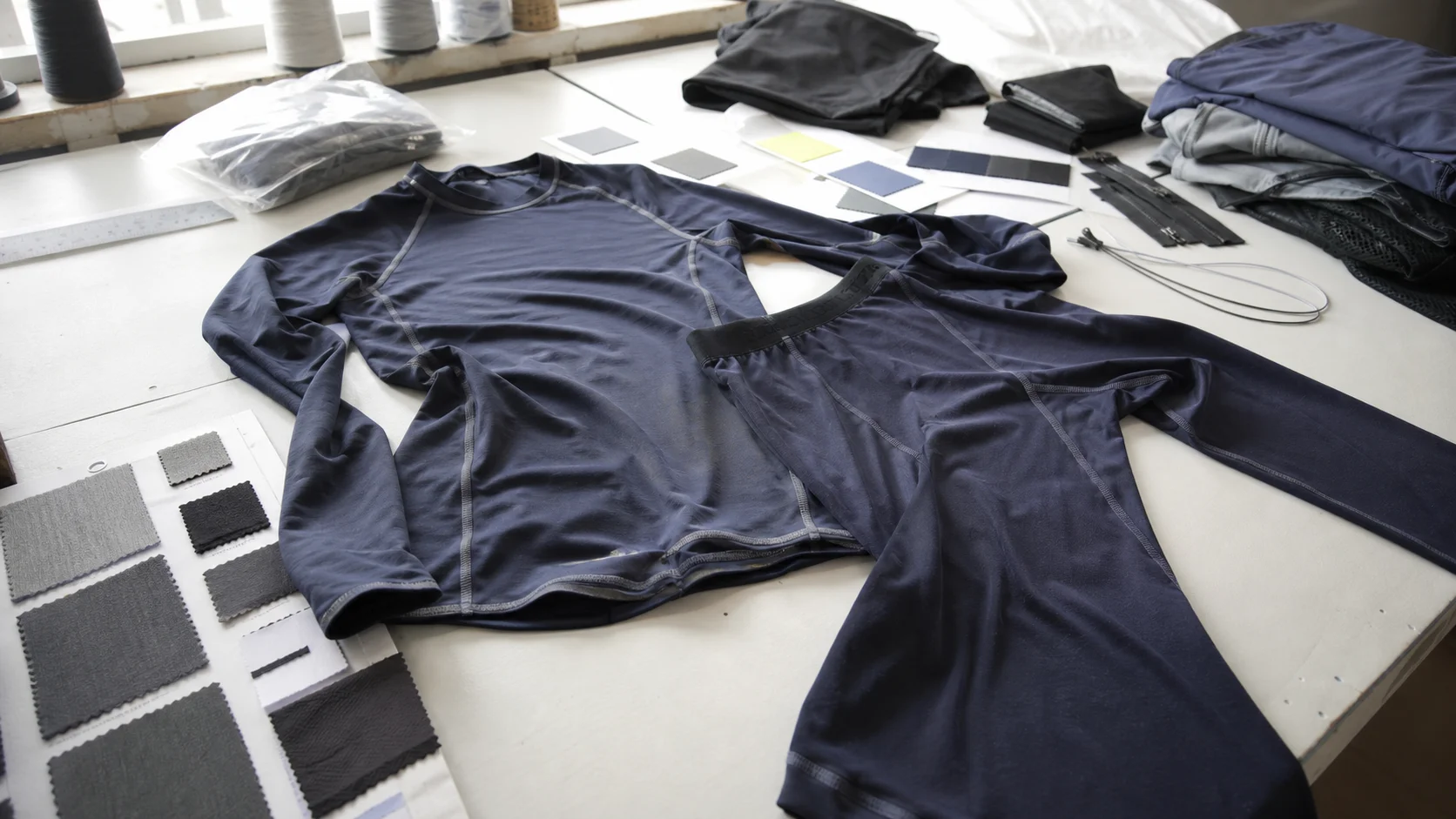
A practical guide to testing base layer set fabrics for cleaning crews, covering moisture management, stretch recovery, abrasion resistance, wash...
Cleaning crews need base layer sets that can handle long shifts, repeated washing, temperature swings, and constant movement. The fabric choice matters, but fabric testing matters more. A set that looks fine on a spec sheet can still fail in daily use if it pills, shrinks, traps odor, loses stretch, or becomes uncomfortable after a few wash cycles. For sourcing teams, the right approach is to test performance before bulk order approval, then verify consistency through pre-production and production checks.
This guide focuses on practical fabric testing for cleaning crews base layer sets. It covers material selection, lab and in-line tests, sample approval steps, trim considerations, wash performance, and the inspection risks that tend to cause returns or complaints later. If you are building a private-label program or a uniform program, the testing process should be treated as part of product development, not a last-step quality check.
Base Layer Set Fabric Testing Guide for Cleaning Crews - Fabrikn production reference
Cleaning crews work in conditions that are different from general sportswear or casual thermal wear. Base layers may be worn under uniforms during early morning shifts, in cold storage zones, in winter outdoor work, or in damp environments. The garment has to manage sweat, maintain warmth, avoid abrasion against outer layers, and survive frequent laundering.
That creates a specific risk profile. A fabric that feels soft in hand may become heavy after repeated washing. A stretch knit that looks efficient on paper may grow baggy at elbows and knees. A brushed interior can feel comfortable at first, then trap lint or pill quickly. For this category, testing should verify both comfort and durability under repeated wash-and-wear cycles.
Sourcing teams also need to remember that cleaning crews often buy in uniform programs. That raises consistency expectations. Color tolerance, size consistency, shrinkage, and trim stability matter as much as the original performance. Small variations across lots can create mixed uniforms, and mixed uniforms become a service issue fast.
A workable base layer set for cleaning crews usually needs a balanced, not extreme, spec. The fabric should be warm enough for layering, breathable enough for active movement, and stable enough to hold shape after repeated washing.
Common fabric directions include polyester-spandex blends, polyester-rayon-spandex blends, merino blends for premium programs, and brushed thermal knits. Cotton-rich fabrics can feel comfortable, but they often retain moisture longer and may not be the best fit where drying time and shape retention are priorities. The right choice depends on climate, wash program, and the employer’s expectations for appearance.
Typical fabric weights for base layer sets often fall in the 180-260 gsm range for lightweight to midweight programs. Heavier fabrics can improve warmth, but they also increase drying time and can reduce comfort for crews that move constantly. Weight alone is not enough. Construction, yarn quality, and finish determine how the fabric behaves after use.
Testing should be built around the way the garment will be used. A good test package includes both physical and performance checks. Some buyers rely only on a hand feel or a wash test. That is not enough for a workwear program.
Test What It Shows Practical Target Why It Matters Fabric weight (gsm) Actual material density Within spec tolerance agreed with supplier Affects warmth, drape, and hand feel Dimensional stability / shrinkage How much the fabric changes after wash Commonly kept within 3% or tighter depending on program Controls fit drift and size complaints Colorfastness to washing Whether color bleeds or fades Pass to agreed standard for repeat laundering Important for dark uniform sets Pilling resistance Surface wear from friction Better scores for outerwear contact and machine washing Directly affects appearance and perceived quality Stretch and recovery How well the fabric returns after extension Stable recovery after repeated cycles Prevents bagging at high-stress areas Seam slippage / seam strength Whether seams fail under stress Should exceed expected wear load Critical at crotch, underarm, and side seams Air permeability / breathability How well the fabric lets air move through Enough for active wear without overheating Matters during continuous movement Moisture management Wicking and dry time behavior Consistent with end use and climate Improves comfort in long shifts Color rub / crocking Transfer onto other surfaces Low dry and wet crocking, especially on dark shades Protects outer garments and user perceptionNot every program needs every test, but the minimum package should cover shrinkage, colorfastness, pilling, stretch recovery, and seam strength. If the supplier cannot provide recent third-party lab reports, request fresh testing on the exact fabric lot being used.
Fabric testing should be done on the same fiber blend, knit structure, dye method, and finish that will be used in production. Swapping any of these elements can change performance. A 95/5 poly-spandex knit does not behave the same as a 90/10 blend. A brushed finish does not behave the same as an unbrushed one. Even a small change in dyeing process can affect hand feel and shrinkage.
Fabric quality is only part of the equation. Construction can make or break the garment. Cleaning crews base layers are usually worn under other layers, so bulk, seam placement, and stretch behavior matter as much as warmth.
Look closely at stitching density, seam type, and reinforcement. Flatlock seams are often preferred for comfort because they reduce chafing. Coverstitch can work well for hems and cuffs. Overlock seams are common, but they need proper tension control to avoid seam rupture or tunneling. High-stress areas such as the crotch, side seams, and underarm panels may need reinforcement or pattern shaping to reduce strain.
Trims matter too. Elastic at the waist or cuffs should be tested for recovery and shrinkage. Zippers, if included, should be low-profile and corrosion-resistant. Labels need to be soft enough not to irritate the skin. Heat-transfer labels are often a better choice than woven neck labels for close-to-skin wear, provided the adhesive holds through repeated laundering.
Thread selection should not be an afterthought. A strong fabric paired with weak thread creates early seam failure. For workwear, polyester thread is a common choice because it handles repeated washing and moisture better than weaker alternatives. Thread count, stitch density, and tension settings should be confirmed in the development sample.
Placement and pattern also influence comfort. A base layer set should move with the body, not fight it. Poor pattern grading can lead to tight shoulders, short sleeves, or waistbands that roll. Those issues are not cosmetic. They drive returns, reorders, and complaints from supervisors who need uniforms to fit across a broad workforce.
A structured sample approval process saves money. It reduces the risk of approving a nice-looking sample that fails in bulk. For cleaning crews programs, the approval sequence should normally include at least a proto sample, a size-set or fit sample, a lab-dip or color sample if color accuracy matters, and a pre-production sample.
A practical process looks like this:
Samples should be judged after laundering, not only when fresh out of the box. Some fabrics look fine before washing and then twist, shrink, or pill after the first two cycles. That is the point where weak programs usually get exposed.
Keep approval notes precise. If the cuff is too loose, say so. If the fabric feels too warm for indoor crews, say so. Vague comments create ambiguity, and ambiguity becomes bulk variation. Good suppliers can work with clear comments. Poorly written approvals only hide the real problem until delivery.
The best time to reject a weak fabric is at sample stage. Once bulk cutting starts, the cost of a bad call rises quickly.
For development support or production coordination, use the supplier contact page early in the process: fabrikn.com/contact-us/. If you need broader capability context or service scope, review fabrikn.com/services/ and fabrikn.com/about-us/.
Minimum order quantity depends on fabric availability, color count, print or embroidery requirements, and whether the program uses custom trims. For a base layer set, typical MOQ ranges often start around 100-300 sets per color/style for more flexible suppliers, while larger factories may prefer 500-1000 sets or more per color. Private-label programs with custom fabric development can require higher volumes to justify dyeing and knitting runs.
Lead time also varies. Simple stock-fabric programs can sometimes move in 30-45 days after sample approval, while custom fabric development, lab testing, and bulk dyeing can extend timelines to 60-90 days or longer. Seasonal demand, raw material shortages, and wash-test retesting can push timing further.
The main dependencies are easy to underestimate:
A disciplined buyer should build margin into the timeline. Uniform programs for cleaning crews often cannot tolerate late deliveries. A product that arrives after the seasonal handover or staffing cycle has limited value, even if it is technically compliant.
Most field failures in base layer sets are predictable. They usually come from weak control on fabric consistency, size grading, or wash performance. Inspection should be set up to catch these issues before shipment.
Frequent risk points include:
Inspection should include both visual review and functional testing. A visual check alone will not catch poor recovery or hidden shrinkage. A wash test alone will not catch seam tension issues. The strongest approach is to combine in-line measurement checks, final AQL inspection, and controlled wash testing on random cartons.
For dark colors, color transfer is a real issue. If the base layer is worn under a light-colored outer garment, dry and wet crocking must be acceptable. For lighter colors, transparency and staining resistance deserve attention. Workwear uniforms are often judged by appearance first, even though the real concern should be performance.
Not every spec line deserves the same budget. A sourcing editor should separate performance-critical items from cosmetic preferences. Spend more on fabric stability, seam quality, and wash testing. Save carefully on decorative details that do not affect wear performance.
In most cleaning crew programs, the best value usually comes from a midweight synthetic blend with controlled stretch and strong recovery. That gives a practical balance of warmth, drying time, and durability. Pure performance fabrics can be expensive and may not be necessary if the work environment is mixed indoor and outdoor. On the other hand, cheap cotton-heavy blends often create more problems than they solve, especially when crews need fast turnaround after laundering.
There is also a tradeoff between softness and durability. A very soft brushed surface can feel better at first, but it may degrade faster. A tighter knit with moderate softness may feel slightly less plush while lasting longer. For a uniform program, the longer-life option is often the better purchase, provided comfort remains acceptable.
Packaging and trim upgrades should be judged the same way. A premium hangtag does not improve performance. A stable label, clean stitching, and reliable size ratio do. The spec should favor what the wearer actually notices during a shift.
Before approving a supplier for cleaning crews base layer sets, ask for the following:
Ask the supplier to explain how they handle shade continuity, reorders, and lot traceability. Good suppliers can explain what happens when the same style is reordered three months later. Weak suppliers only talk about initial production. Reorder consistency matters in uniform supply because crews expect the same fit and appearance across seasons.
If the program will expand later, check whether the factory can scale without changing fabric mills or construction methods. A small first order is useful, but it should not lock the buyer into a dead-end setup. A reliable manufacturing partner should be able to discuss both trial orders and repeat production with the same control points.
This sequence is practical because it catches the most expensive mistakes early. It also gives the buyer defensible evidence when a supplier needs to correct a problem. Clear checkpoints reduce arguments and keep the program moving.
Base layer sets for cleaning crews need to do more than feel comfortable at first wear. They must stay stable through washing, preserve fit, and perform under repeated movement and friction. That makes fabric testing a sourcing requirement, not a technical extra. A careful buyer will verify shrinkage, pilling, colorfastness, seam strength, and recovery before approving bulk. The right fabric can still fail if construction, trims, or wash performance are not checked with the same discipline.
For procurement teams, the best result usually comes from a midweight fabric with controlled stretch, strong recovery, and reliable wash behavior. Approval should be based on tested samples and clear spec control, not on appearance alone. That approach lowers return risk, improves uniform consistency, and gives cleaning crews a product that can survive the conditions it is actually used in.
Get a free quote from Fabrikn — your trusted B2B clothing manufacturer with 10+ years of experience. MOQ as low as 200 pieces.
Get a Free Quote →Polyester-spandex blends are often the most practical choice because they balance stretch, drying time, and durability. A brushed thermal knit can work well in colder conditions, while merino blends suit premium programs if the budget allows. Cotton-heavy fabrics are usually less efficient for crews that need faster drying and shape retention.
Many suppliers start around 100-300 sets per color/style for flexible programs, while others prefer 500-1000 sets or more. MOQ changes with fabric development, custom trims, and color count. Asking for a clear MOQ by size ratio and by color is the safer approach.
Simple stock-fabric orders may take 30-45 days after approval. Custom fabric development, lab testing, and bulk dyeing can extend production to 60-90 days or more. Seasonal demand, material availability, and sample revisions can add time.
At minimum, require shrinkage, colorfastness, pilling resistance, stretch recovery, and seam strength testing. Those five checks usually reveal the most common failure modes in uniform base layers.
Approving a sample without wash testing is a common mistake. A base layer can look acceptable before laundering and still fail after a few cycles through shrinkage, distortion, or surface wear. Bulk should not be approved until washed samples confirm the spec.
No. Indoor crews, cold-weather outdoor crews, and mixed-environment teams often need different weights or fabric constructions. A one-fabric-fits-all approach usually creates either overheating or insufficient warmth for part of the workforce.