
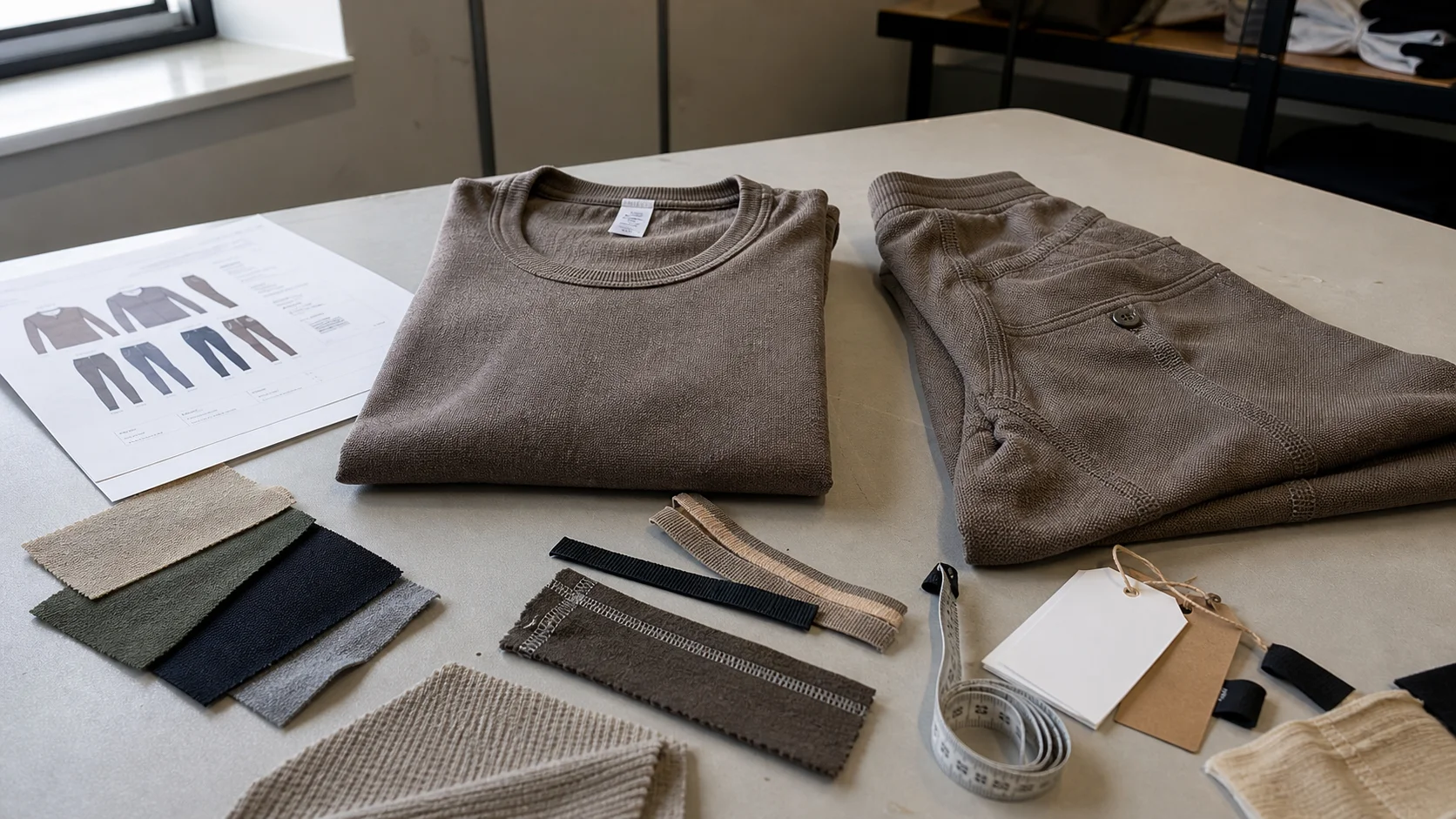
A 2500-word SEO outline for resort uniform buyers reviewing MOQ pricing, fabric specs, decoration risks, and inspection checkpoints for base layer sets.
Base Layer Set MOQ Pricing Review for Resorts - Fabrikn production reference
For resort uniform buyers, base layer sets sit in a practical but often underestimated category. They are not as visible as outer jackets, polo shirts, chef coats, or front desk tailoring, yet they directly affect staff comfort, warmth, hygiene, and shift performance. In colder destinations, ski resorts, mountain lodges, wellness retreats, golf resorts, and coastal properties with early-morning operations, base layers can become a core uniform item rather than an optional accessory.
A base layer set usually includes a long-sleeve top and matching bottom worn under workwear. The buyer’s challenge is not simply finding a low unit price. The real task is matching fabric performance, durability, size coverage, staff comfort, production minimums, and replenishment needs. MOQ pricing can look attractive at first glance, but it can also hide risk when the order includes too many sizes, multiple colorways, private labeling, or fabric that has not been properly tested.
This review is written for resort uniform buyers comparing base layer set MOQ pricing across suppliers. It focuses on sourcing logic, quality checkpoints, and inspection concerns rather than marketing claims. For broader production support, buyers can review apparel manufacturing and sourcing options through Fabrikn services. Early supplier alignment is especially useful when a resort needs base layers that coordinate with outer uniforms, staff departments, and seasonal rollout dates.
Purchasing judgment: the cheapest MOQ offer is rarely the best value if the fabric pills quickly, loses stretch recovery, shrinks after laundering, or arrives with inconsistent sizing across top and bottom pieces.
MOQ, or minimum order quantity, matters because base layer sets are usually produced from knit performance fabrics that require planned fabric purchasing, dyeing, cutting, and sewing. A supplier may offer a set price, but the economics depend on fabric availability, size distribution, color, labeling, and whether the order uses stock material or custom-developed fabric.
Resort buyers often need a wider size range than retail brands expect. Staff uniforms may need XS through 4XL or 5XL, sometimes with short and tall fit considerations. When a buyer asks for a low MOQ but also requires broad size coverage, the supplier must divide the order into many small cutting quantities. That can raise cutting waste, sewing inefficiency, inspection complexity, and packing errors.
MOQ also affects replenishment. A resort may need 600 sets before winter opening and another 100 sets mid-season due to new hires, damaged garments, or size exchanges. If the supplier’s reorder MOQ is too high, the property may overbuy. If the reorder MOQ is too low but priced aggressively, fabric shade or handfeel may differ from the first delivery.
The best MOQ structure is usually not the lowest possible number. It is the order size that supports stable fabric sourcing, acceptable cost, accurate size grading, and manageable inventory risk. Buyers should compare the first-order MOQ, reorder MOQ, per-size minimums, and per-color minimums before approving a program.
MOQ ranges vary by supplier model, fabric type, and customization level. Resort buyers should treat any quoted MOQ as conditional until the supplier confirms fabric availability, color requirements, label method, size range, and packaging instructions.
For base layer sets made from available fabric in standard colors such as black, charcoal, navy, or white, typical MOQ may range from 100 to 300 sets per style. Some suppliers may accept 50 to 100 sets for a trial order, but the unit price is usually higher and size distribution may be restricted.
This option works well for smaller boutique resorts, staff trial programs, or emergency replenishment. The tradeoff is limited control over exact fabric composition, shade consistency, and long-term availability. If the supplier is using leftover or market fabric, the same material may not be available for future reorders.
For custom-dyed fabric, MOQ often starts around 300 to 800 sets per color, depending on fabric weight and mill requirements. If the material must be knitted or dyed specifically for the order, the supplier may quote based on fabric weight rather than garment count. That can push practical MOQ higher, especially for heavier thermal fabrics.
Custom color is useful when uniforms must match resort brand standards. It also adds lab dip approval steps and shade risk. Buyers should request a clear tolerance standard under common light sources, especially for navy, burgundy, forest green, sand, and other hospitality colors that shift noticeably under indoor and outdoor lighting.
For private label base layer sets with custom fabric, branded heat transfers, woven labels, hangtags, printed care labels, and custom packaging, MOQ can range from 500 to 1,500 sets per style or color. Lower quantities may be possible, but suppliers often amortize setup costs into the unit price.
This route makes sense for resort groups, ski schools, premium properties, or retail-resort hybrid programs where base layers may be staff-issued and also sold in a pro shop. It is less attractive for a one-season staff uniform order unless the property has predictable annual replenishment.
Base layer set pricing is shaped by more than fabric cost. A low FOB quote may exclude important details such as testing, branded trims, individual polybags, carton labeling, freight, duty, or inspection. Buyers should request a costed specification sheet or at least a quote that clearly lists what is included.
Common base layer fabrics include polyester-spandex, nylon-spandex, polyester-viscose-spandex, merino wool blends, bamboo-viscose blends, and brushed thermal knits. Polyester-spandex is usually cost-effective, quick-drying, and easier to source. Nylon-spandex often feels smoother and can offer stronger recovery, but it may cost more. Merino wool blends provide warmth and odor control, yet MOQ, price, and care requirements are higher.
For resort uniform use, pure fashion fabric is usually a poor choice. Staff garments face repeated laundering, long shifts, perspiration, friction under outerwear, and frequent dressing-room handling. A buyer should review weight, stretch recovery, pilling resistance, colorfastness, shrinkage, and seam durability before accepting a low price.
Fabric weight commonly falls between 160 gsm and 260 gsm for base layers. Lightweight sets around 160 to 180 gsm suit indoor staff, spa teams, housekeeping in moderate climates, and layering under slim uniforms. Midweight options around 190 to 220 gsm work for general cold-weather resort use. Heavier brushed or thermal options around 230 to 260 gsm may be appropriate for outdoor operations, lift teams, parking staff, maintenance, and snow activity departments.
Brushing, peaching, antimicrobial finishing, moisture-wicking treatment, and anti-odor claims can add cost. These treatments should not be accepted on supplier language alone. Buyers should ask whether the performance is inherent to fiber choice or applied as a finish, then confirm durability after washing.
Flatlock seams often cost more than basic overlock seams but can improve comfort under uniforms. Gussets, ergonomic panels, raglan sleeves, thumbholes, elastic waistbands, and contoured hems all add labor. A basic two-piece set may be priced attractively, but a resort using base layers for active outdoor teams may need better mobility and seam placement.
There is a tradeoff here. More panels and ergonomic sewing can improve wear comfort, yet every additional seam is also a potential inspection point. For large uniform programs, keep the design functional and repeatable rather than over-engineered.
MOQ pricing improves as quantities rise because fabric procurement, cutting markers, sewing line setup, and quality control can be spread across more units. The size mix still matters. An order of 500 sets across five sizes is more efficient than 500 sets across twelve size combinations.
For resort programs, a realistic size curve should be based on staff data, not retail assumptions. If no data exists, start with a balanced curve and hold buffer stock in common sizes. Extreme sizes should be included, but very small quantities in fringe sizes may carry a surcharge or longer lead time.
A reliable base layer set specification should define the fabric, not merely describe it. “Moisture-wicking stretch fabric” is not enough for procurement, inspection, or future reorders. Clear specs reduce disputes and make pricing comparisons fairer.
For uniform use, buyers should consider testing for dimensional stability, pilling, colorfastness to washing, colorfastness to perspiration, colorfastness to rubbing, seam strength, and appearance after laundering. If the set is marketed as antimicrobial, odor-resistant, or UV-protective, the claim should be supported by relevant testing and legal review for the target market.
Resort laundry conditions can be harsher than home laundry. Staff may use commercial laundry, shared housing machines, hot wash settings, strong detergents, or high-heat drying. A fabric that looks good after one sample wash may not hold up after twenty wash cycles. Buyers should request wash testing before bulk approval when the order is large enough to justify the time.
Base layer sets appear simple, but trims can affect price and quality. A top and bottom usually require size labels, care labels, brand labels, waistband elastic, optional heat transfers, and packaging. If the set is issued by department, packaging may also need size stickers, barcode labels, employee kit labels, or carton sorting by property.
Heat-transfer labels are common because they reduce irritation against the skin. They must be tested for wash durability and cracking. Woven labels can feel more premium but may scratch if placed at the back neck or waistband. Printed care information must stay legible after repeated laundering.
Private branding adds setup charges. Small quantities may be charged at a higher unit cost because label MOQs are separate from garment MOQs. Buyers should confirm whether unused labels are stored for reorders, charged separately, or discarded after production.
Bottoms often fail at the waistband before the fabric fails. Elastic quality, width, recovery, and stitching method should be reviewed. A low-cost elastic may twist, roll, shrink, or lose recovery after washing. For active resort staff, waistband comfort is not a minor detail.
Individual polybags are common, but they add cost and waste. Resort buyers may request one set per bag, top and bottom folded together, with external size stickers. For sustainability goals, recycled polybags, paper bands, or bulk department packing may be considered. Bulk packing reduces packaging cost but increases sorting pressure at receiving.
When issuing uniforms to hundreds of staff, packaging errors create operational problems. A mislabeled set wastes time during onboarding and can lead to unnecessary reorders. Packaging instructions should be part of the purchase order, not an informal email note.
Sample approval is where many base layer problems can be prevented. Buyers should avoid approving bulk production from a photo or a generic sample that does not use the confirmed fabric. A practical sample process includes several stages.
The first sample confirms silhouette, basic measurements, seam type, rise, sleeve length, body length, and comfort. It may not be in final fabric. This sample is useful for design direction, but it should not be treated as final production approval.
The buyer should approve fabric handfeel, weight, color, and stretch before the supplier cuts pre-production samples. For custom color, lab dips should be reviewed under consistent lighting. If the base layer is worn under light-colored outer garments, color migration risk should be considered.
The pre-production sample should use actual bulk fabric or confirmed equivalent fabric, actual trims, actual labels, and correct sewing construction. Measurements should be checked against the size chart after relaxation. Knit garments can distort if measured immediately after unpacking or steaming.
For larger resort orders, a limited wear trial is valuable. Staff feedback can identify scratchy labels, tight cuffs, waistband rolling, overheating, insufficient coverage, or uncomfortable seams. Wash testing should check shrinkage, twisting, pilling, shade change, and label durability.
A size set helps confirm grading across the full size range. This is important for resort uniform buyers because fit must work across different body types. The top and bottom should be checked together. A common sourcing error is approving the top fit while neglecting bottom rise, waistband stretch, inseam, or calf width.
Do not release bulk production until the supplier confirms the approved sample, fabric standard, trim standard, measurement chart, packing method, and inspection criteria in writing.
Lead time for base layer sets depends on whether the fabric is in stock, whether color is custom, how complex the trims are, and whether testing is required. Resort buyers should plan backwards from staff onboarding dates, not from guest season opening dates. Uniform distribution often happens weeks before peak operations begin.
These ranges are not guarantees. Public holidays, mill capacity, dyeing delays, trim shortages, freight congestion, sample revisions, testing failures, and payment timing can all affect delivery. Buyers should ask for a production calendar with milestone dates: fabric booking, lab dip approval, trim approval, cutting, sewing, inline inspection, final inspection, packing, and shipment.
Cold-weather resorts should avoid placing base layer orders too close to winter opening. Many buyers are sourcing similar items at the same time, which can tighten fabric supply and sewing capacity. Summer resorts with early-morning marine, golf, or outdoor wellness teams may also need base layers for shoulder seasons. Demand may be smaller, but late planning still reduces supplier choice.
For multi-property resort groups, phased ordering may be better than one rushed consolidated order. A first delivery can cover high-priority departments, while a second delivery covers late hires or less exposed roles. The tradeoff is that split deliveries may increase freight and administration costs.
Base layer sets require careful inspection because many defects are not obvious on a hanger. Stretch garments can pass a quick visual check but fail during wear or after laundering. Quality control should focus on fabric, fit, sewing, measurement, and packing accuracy.
Common sewing risks include skipped stitches, broken stitches, seam grin, uneven hems, puckering, mismatched panels, waistband twisting, weak crotch seams, and rough seam ends. Flatlock stitching should be checked for consistency and comfort. If the garment uses thumbholes, the opening should be reinforced and positioned correctly.
Base layer bottoms deserve extra inspection. The crotch seam, rise, waistband, and inseam must withstand movement. A low defect rate in tops does not guarantee acceptable bottoms. Buyers should ask inspectors to review tops and bottoms as separate garment types as well as matched sets.
Knit garments need careful measurement handling. They should be laid flat without stretching, relaxed before measuring, and checked according to the agreed method. Buyers should define measurement points for chest, waist, hip, body length, sleeve length, shoulder, inseam, rise, thigh, cuff opening, and waistband relaxed and extended.
Measurement tolerance must be realistic. Very tight tolerances on stretchy knitwear can create unnecessary inspection failures, while loose tolerances can create fit complaints. A practical range may be plus or minus 1 cm for smaller points and plus or minus 1.5 to 2 cm for larger body measurements, depending on the garment and fabric.
Set garments create an extra risk: wrong top and bottom size pairing. A size M top packed with a size L bottom may not be noticed until staff issue day. Carton assortments should be checked against the purchase order and packing list. Size stickers must match actual sewn labels.
If a resort is issuing uniforms by department, cartons should be marked clearly. Receiving teams should not have to open every carton to determine whether the contents are for housekeeping, ski school, spa, maintenance, or front-of-house teams.
Quality planning can be supported through structured sourcing and inspection preparation. Buyers who need help defining specs, supplier expectations, or production checkpoints can contact Fabrikn through the contact page.
A good base layer set purchase balances comfort, durability, and reorder control. Resort uniform buyers should not chase the lowest MOQ if it forces compromises in fabric consistency, testing, or size availability. A slightly higher MOQ can be sensible when it locks in fabric, reduces unit cost, and supports a stable reorder plan.
For a small property, stock fabric with limited branding is usually the practical choice. The buyer should focus on fit, wash durability, and fast delivery. Custom fabric may not be worth the added complexity unless the base layer is visible, retail-facing, or part of a premium staff kit.
For a large seasonal resort, custom color or private label may be justified. The order size can support better pricing, consistent presentation, and more control over packaging. The buyer should negotiate reorder terms before the first purchase order, especially if staff turnover is high.
For luxury resorts, wellness properties, or premium winter destinations, comfort and fabric handfeel carry more weight. Staff wearing base layers for long shifts will notice scratchy seams, poor breathability, and overheating. Higher-quality fabric can reduce complaints, but it must still pass wash and pilling requirements.
For procurement teams under budget pressure, the best savings often come from simplifying the style rather than lowering fabric quality. Keep color count narrow. Use one approved base layer across multiple departments. Avoid unnecessary trims. Build a realistic size curve. Confirm inspection standards before production. These steps protect cost without undermining wear performance.
Before approving a base layer set MOQ quote, resort buyers should ask direct questions. Vague answers usually indicate future problems.
Buyers should document the answers in the purchase order or tech pack. Verbal agreements are weak protection when delivery dates are tight. A complete tech pack should include bill of materials, size chart, graded measurements, construction details, label artwork, packing instructions, approved sample reference, testing requirements, and inspection criteria.
If a buyer is evaluating a new supplier, a smaller pilot order can be sensible. The unit price will be higher, but the risk is controlled. After the pilot is worn and washed in real resort conditions, the buyer can decide whether to scale the program. This is better than committing to a large MOQ based only on a sample-room garment.
A base layer program should include inspection planning from the start. Inspection is not a final obstacle at the end of production; it is a risk-control process. The clearest framework includes pre-production review, inline inspection, final random inspection, and receiving checks.
At this stage, the buyer or sourcing partner confirms that the factory has the correct fabric, trims, labels, pattern, size chart, and packing requirements. Any changes to fabric composition, weight, color, or construction should be approved before cutting. Once fabric is cut, corrections become expensive.
Inline inspection is useful when the order is large or the supplier is new. It can catch sewing problems, measurement drift, shade issues, and packing misunderstandings before the full order is completed. For base layers, inline checks should include stretch seam performance, waistband attachment, and top-bottom pairing.
Final inspection should be performed when production is complete and most goods are packed. Inspectors should check appearance, workmanship, measurements, labeling, assortment, carton marks, and packaging. AQL standards may be used, but buyers should define critical defects clearly. For example, wrong fiber content, severe shade mismatch, open seams, missing labels, and wrong size pairings should be treated seriously.
Even after final inspection, the resort receiving team should check carton counts, size breakdown, labels, and visible defects. This does not need to duplicate factory inspection, but it should catch shipment or packing errors quickly. Claims are easier to manage when reported immediately after delivery.
Buyers can learn more about sourcing approach and supplier coordination through Fabrikn’s company information. For resort uniform programs, the value is not only in making garments; it is in reducing preventable problems before staff issue day.
Negotiating base layer set pricing should be structured. Asking for a lower price without adjusting any variable usually pushes risk into fabric quality, sewing time, or inspection effort. Better negotiation starts by identifying what the resort truly needs and what can be simplified.
Ask for pricing at several quantity levels, such as 300, 500, 800, and 1,200 sets. Quantity bands show where meaningful price breaks occur. Sometimes increasing from 300 to 500 sets makes a major difference because it meets fabric or dyeing efficiency. In other cases, the price barely changes, and the buyer should avoid overstocking.
Reorder pricing should be discussed before the first order. If the resort expects staff turnover, seasonal hiring, or multi-year use, reorder terms are essential. Buyers should ask whether fabric will be reserved, whether labels will be held, and whether small replenishment orders carry surcharges.
Some suppliers include sample, pattern, and label setup costs in the unit price. Others charge separately. Neither structure is automatically better. A separate development charge can make the unit price clearer, especially for repeat orders. An all-in unit price is simpler for procurement approval. The buyer should compare total landed cost, not just garment FOB.
Base layers are compact compared with bulky outerwear, but freight still matters. Air shipment may be reasonable for urgent replenishment but expensive for full programs. Sea freight saves cost but requires planning. Buyers should confirm Incoterms, carton dimensions, gross weight, and harmonized code assumptions with their logistics team.
A proper MOQ pricing review should include landed cost. FOB price is only one part of the purchase. Landed cost may include sample charges, testing, inspection, freight, duty, customs brokerage, warehousing, domestic delivery, and internal handling.
For example, a supplier may quote a low FOB price for 300 sets but require air freight due to late production. Another supplier may quote a higher FOB price but deliver earlier by sea. The second option can be cheaper overall. A sourcing decision based only on unit price can create hidden cost at the logistics stage.
Resort buyers should also account for overbuy and underbuy risk. Overbuy ties up budget and storage space. Underbuy creates emergency replenishment, inconsistent substitutes, and staff dissatisfaction. A practical order plan includes forecasted staff count, spare ratio, size buffer, and reorder schedule.
For most resort uniform buyers, the best base layer set MOQ pricing strategy is a controlled standardization approach. Choose one or two core colors, confirm a durable midweight fabric, keep construction comfortable but not overly complex, approve a full size set, and negotiate clear reorder terms. This usually delivers better value than chasing multiple custom options at low quantities.
Small resorts should prioritize stock fabric, reliable fit, and quick replenishment. Large resorts should use their volume to secure fabric continuity, private labeling, and stronger inspection controls. Premium resorts should invest in comfort and wash durability, but still require measurable performance standards.
The practical test is simple: can the supplier deliver the correct sizes, in the correct fabric, with consistent top-bottom pairing, before staff onboarding, at a landed cost the resort can defend? If the answer is uncertain, the MOQ price is not ready for approval.
Get a free quote from Fabrikn — your trusted B2B clothing manufacturer with 10+ years of experience. MOQ as low as 200 pieces.
Get a Free Quote →A typical MOQ ranges from 100 to 300 sets for stock fabric and standard colors. Custom colors or private label programs often start around 300 to 800 sets. Fully customized fabric or merino blend programs may require 500 to 1,500 sets or more.
Not always. A very low MOQ can be useful for trials or urgent needs, but it may come with higher unit costs, limited size options, stock fabric uncertainty, or weak reorder continuity. The better choice is the MOQ that supports stable quality and realistic replenishment.
Polyester-spandex is practical for many resort uniforms because it is durable, quick-drying, and cost-effective. Nylon-spandex can offer a smoother handfeel and strong recovery. Merino blends provide warmth and odor control but cost more and require closer care review.
Inspection should check fabric defects, shade matching between top and bottom, measurements, stretch recovery, seam strength, waistband quality, labels, packing accuracy, and size pairing. Wash testing is strongly recommended for larger programs.
Stock fabric programs may take about 3 to 6 weeks after sample approval. Custom color programs may take 6 to 9 weeks after lab dip approval. Custom fabric or specialty performance programs may take 8 to 14 weeks or longer depending on materials and testing.
Suppliers may quote MOQ by set, by garment piece, by color, or by fabric. Buyers should clarify this before comparing prices. A quote for 500 pieces may mean only 250 complete sets if tops and bottoms are counted separately.
Prices rise with custom fabric, custom color, premium fibers, flatlock seams, ergonomic panels, branded trims, heat-transfer labels, special packaging, broad size ranges, testing, inspections, and small production quantities.
Cost can be controlled by limiting colorways, using one approved style across departments, choosing proven stock fabric, simplifying trims, ordering realistic quantity bands, and confirming reorder terms. Reducing fabric quality is usually a poor saving because it increases wear complaints and replacement risk.
The biggest risks are shrinkage, pilling, poor stretch recovery, seam failure, waistband problems, and incorrect top-bottom size pairing. These issues may not be visible in photos, which is why sample testing and final inspection matter.
Buyers should start several months before staff onboarding. For winter resorts, planning should begin well before peak seasonal demand for thermal garments. Early sourcing allows time for fabric approval, sampling, wash testing, production, inspection, shipping, and uniform distribution.