
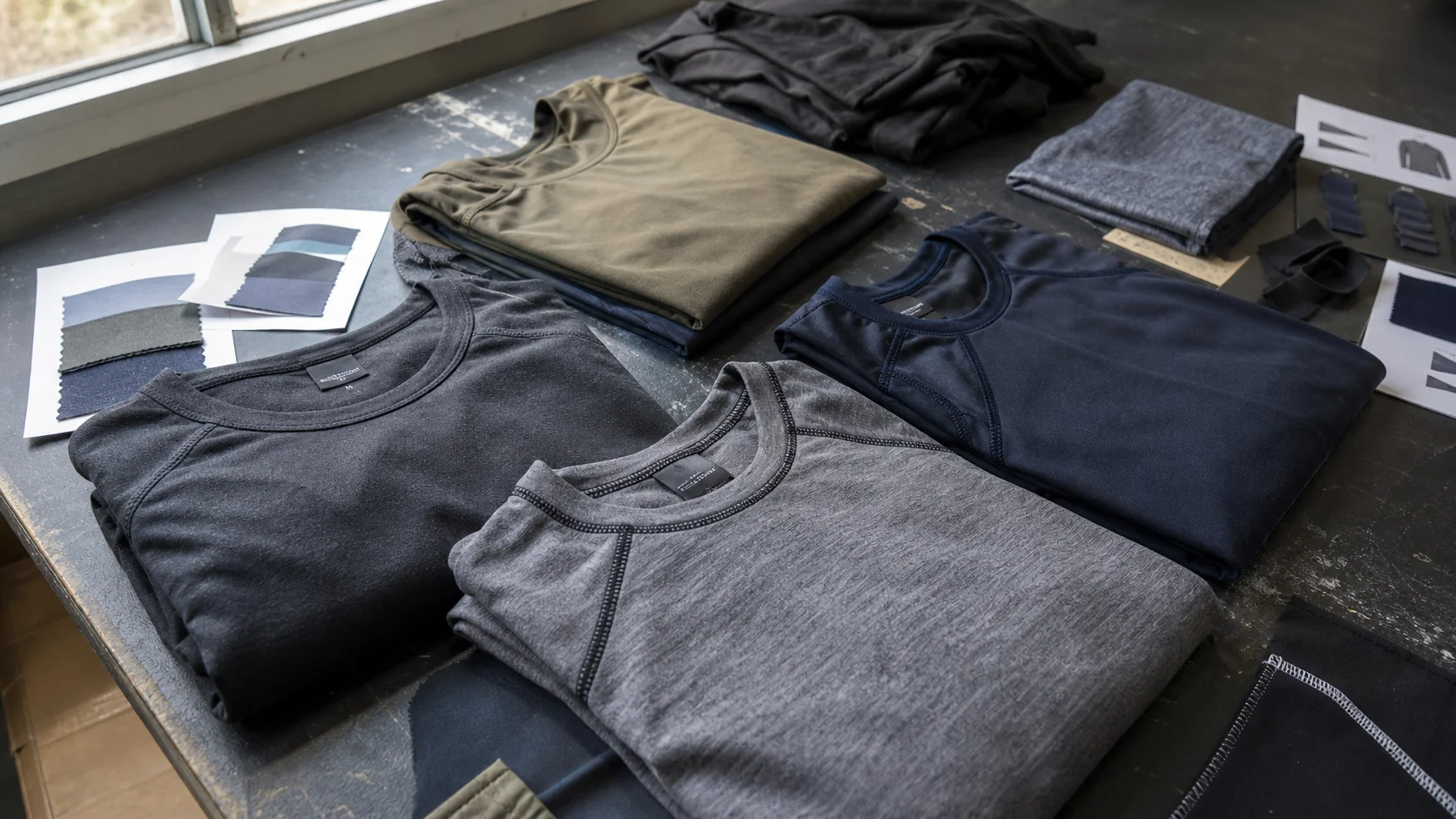
A product-specific outline for reviewing trims, fit, materials, labeling, and order details when sourcing base layer sets for cleaning crews working in...
Base Layer Set Trim Review for Cleaning Crew Orders - Fabrikn production reference
Base layer sets are not only for outdoor sports teams or winter construction crews. For cleaning crews, a well-specified base layer top and bottom can improve comfort, uniform consistency, and mobility during long shifts in cool buildings, refrigerated areas, early morning routes, or wet-weather service calls. The trim package is where many bulk orders either become practical workwear or turn into a source of complaints.
This review focuses on base layer set order trim sourcing for cleaning crews: what to specify, what to avoid, how to evaluate samples, and where purchasing teams should apply pressure before production. The category sits between Activewear and Teamwear, so decisions must balance stretch performance, wash durability, cost, branding, and daily uniform compliance.
Cleaning work is repetitive, physical, and often performed under variable indoor conditions. Staff bend, reach, kneel, carry supplies, move through temperature zones, and work around water, chemicals, dust, and friction points. A base layer set worn under a polo, softshell, coverall, or branded uniform must support movement without adding irritation.
Trim choices affect that outcome. A scratchy neck label, bulky waistband seam, unstable heat transfer, weak drawcord, or poorly matched thread can undermine the entire order. In smaller consumer orders, these issues become reviews. In cleaning crew orders, they become returns, non-compliance, or staff refusing to wear the garment.
For B2B uniform sourcing, trim should be reviewed as a performance component, not a decorative afterthought. The right trim package reduces complaints and protects the buyer from avoidable rework.
The main challenge is that cleaning crew base layers must look consistent but perform like light activewear. They need enough stretch for movement, enough warmth for comfort, enough breathability for indoor labor, and enough wash resistance for frequent laundering. Trim sourcing should be aligned with that use case from the first specification sheet.
A clear sourcing brief prevents suppliers from filling gaps with their default trims. Default trims may be acceptable for retail thermal underwear, but cleaning crew orders often need a more controlled specification. The buyer should define the set structure, fabric direction, trim package, branding method, packaging, and intended wash cycle.
For cleaning crews, avoid designing the base layer as a fashion-first garment. A sleek retail look may not survive daily laundering, chemical exposure, and size variation across a team. The safest direction is a uniform-compatible base layer with practical trims, moderate stretch, and reliable care labeling.
Most bulk orders use polyester-spandex, nylon-spandex, polyester-viscose-spandex, or polyester-cotton-spandex blends. For cleaning work, a synthetic-rich blend is often easier to dry and more stable after repeated washing. Cotton-rich blends can feel comfortable but may hold moisture longer and lose shape faster if the elastane content and finishing are not controlled.
Fabric Type Typical Use Buying Notes Polyester-spandex jersey General active base layer sets Good stretch and quick drying; check pilling and odor retention performance. Nylon-spandex jersey Softer premium base layers Comfortable hand feel; usually higher cost and may need careful color approval. Polyester-cotton-spandex Comfort-driven indoor uniforms Soft but slower drying; check shrinkage and shape retention. Brushed thermal knit Cooler working environments Warmer but bulkier; inspect brushing consistency and linting.Fabric and trim should be sourced together. A trim that performs on a stable woven uniform shirt may not suit a stretch knit base layer. Labels, heat transfers, waist elastic, thread, and zippers all need compatibility with stretch, recovery, laundering, and wearer movement.
A base layer set has fewer visible trims than a jacket or cargo pant, but the trims it does have are close to the body. That makes quality and comfort more important. The main trim components include labels, elastic, thread, zippers if used, drawcords if used, heat transfers, hangtags, polybags, stickers, and carton markings.
Cleaning crew base layers should use soft labels or tagless heat transfer prints. Woven neck labels can work if they are soft-edged and positioned carefully, but many buyers prefer printed main labels for base layers because they reduce rubbing under a uniform top.
One common mistake is approving a label that looks clean on a sample but fails during wash testing. Heat transfer labels need the right adhesive, temperature, pressure, and dwell time. If the base fabric has a brushed surface or high elastane content, the supplier should test adhesion before bulk production.
The waistband is one of the highest-risk trim areas in base layer bottoms. For cleaning staff, the waistband must hold securely without rolling, biting, or losing recovery. A weak waistband leads to fit complaints quickly, especially when workers bend or kneel throughout the day.
Exposed branded elastic can look retail-ready, but it may raise costs and introduce colorfastness or skin irritation risks. For cleaning crew orders, covered elastic is often the more conservative choice unless the base layer is also intended as a visible branded piece.
Thread is easy to overlook, yet it has a direct impact on seam strength, stretch, and appearance. Polyester thread is widely used for activewear and uniform base layers. The main concern is matching thread quality and stitch type to the stretch fabric.
Flatlock stitching improves comfort but can increase cost and requires skilled sewing control. Overlock seams are common and cost-effective, but bulky seam placement can bother wearers. The best choice depends on price target, fabric thickness, and how close-fitting the garment is meant to be.
Base layer cuffs need enough recovery to stay in place without restricting movement. Sleeve and ankle openings are especially important if the garment is worn under uniform pants, waterproof trousers, or gloves.
For cleaning crews, avoid overly tight cuffs. Staff may wear gloves, use wet tools, or move between tasks quickly. Any cuff that traps heat or restricts circulation can become a complaint during long shifts.
If the base layer top includes a quarter zip, zipper quality becomes a critical trim item. A zipper adds ventilation and a more technical look, but it also increases cost, inspection points, and production risk.
A crew neck top is simpler and usually better for budget uniform programs. A quarter zip may be worth the extra cost for supervisors, cold-area crews, or premium service teams where appearance and temperature control matter more.
Drawcords are uncommon in true base layer bottoms and are not always recommended for cleaning crews. They can interfere with layering, create laundering tangles, and add a safety snag risk. If a drawcord is requested, it should be internal and secured.
Most crew orders are better served by a reliable elastic waistband without a drawcord. This simplifies sizing, reduces trim cost, and lowers the chance of defects.
Base layer trim sourcing should not be handled separately from fabric sourcing. Stretch fabric changes how trims behave. Heat transfer labels need adhesion. Elastic needs recovery. Thread needs seam stretch. Zippers need stable application. Even packaging stickers can transfer adhesive if garments are packed warm or damp after finishing.
Cleaning crews move constantly, so the base layer should recover after bending, reaching, and kneeling. Trim must not restrict that movement. A non-stretch label sewn into a side seam can pull. A stiff zipper tape can distort the front panel. A waistband with poor recovery can loosen after a few shifts.
Buyers should request stretch and recovery checks on the garment, not only on the fabric. Testing fabric yardage is useful, but it does not reveal how the completed waistband, seams, cuffs, and labels perform together.
Cleaning crew garments may be washed more often than typical casual base layers. Some employers manage central laundering, while others ask staff to wash uniforms at home. Both systems create risk. Central laundering may use harsher conditions; home laundering is inconsistent.
Care instructions should be realistic. A delicate cold wash instruction may protect the garment in theory, but it may not match cleaning crew laundry habits. If the buyer expects frequent washing, the supplier should know that before fabric and trim approval.
Base layers are usually worn under outer uniforms, but cleaning staff may still encounter chemical splashes, residues, disinfectants, and detergents. The base layer is not a protective chemical garment unless certified for that use. Still, trim choices should avoid obvious weaknesses.
Light-colored heat transfers, poor-quality elastic, and unstable dyed trims can be affected by repeated exposure to cleaning agents. Buyers should be careful with bright contrast trims or decorative branding if the crew works with bleach-based products. A dark, simple trim package often performs better in real service.
Branding on base layer sets should be controlled. The garment is usually worn underneath a uniform shirt or jacket, so large external branding may not add much value. Smaller identification branding is often enough.
For cleaning crew base layer sets, small heat transfer branding is usually the most practical option. It keeps the garment lightweight and avoids the discomfort of embroidery. The transfer must be tested on the final fabric, especially if the material has high stretch or a brushed face.
Some buyers need internal coding for departments, locations, or issue batches. This can be handled with a printed internal label, carton sticker, polybag sticker, or barcode. Avoid large visible markings unless required by the uniform program.
Bulk cleaning crew orders often include mixed sizes and multiple delivery locations. Good packaging trim matters here. Size stickers, carton labels, and packing lists reduce distribution errors. A garment that is well made but poorly labeled at carton level can still create operational headaches.
MOQ depends on fabric availability, trim customization, color, size range, and branding. Base layer sets can sometimes be produced at lower quantities if stock fabric and standard trims are used. Custom fabric, custom-dyed elastic, branded heat transfers, and special packaging usually raise minimums.
These ranges are general. Supplier capability, fabric mill minimums, trim supplier minimums, and production season can move the numbers. Buyers should ask whether the MOQ is driven by garment production, fabric dyeing, elastic sourcing, heat transfer sheets, or packaging. That answer helps identify where cost and flexibility can be negotiated.
For buyers building an activewear or teamwear program, it can help to review production service options before finalizing the trim plan. Fabrikn outlines apparel development and manufacturing support on its services page, which can be useful when comparing how much customization is practical for a uniform order.
Stock trims reduce risk and shorten lead time. Custom trims improve brand control but add approvals and minimums. For cleaning crew base layers, custom trims should be used only where they add operational value.
Direct purchasing judgment: spend money on fabric performance, waistband recovery, seam comfort, and wash-stable labeling before spending it on decorative trim. Cleaning staff will notice comfort and durability long before they notice a custom hangtag.
A disciplined sample process is essential for base layer set orders. The buyer should not approve bulk production from a photo or a single unwashed sample. Trim performance must be checked on the body, after washing, and against the final packaging and labeling plan.
In lower-MOQ orders, suppliers may combine some stages to save time. That can work if the buyer accepts the risk. For larger cleaning crew rollouts, skipping the pre-production sample is rarely worth the speed gain.
Fit should be tested through work-like movement, not only standing measurements. Review the top and bottom together. The top should not ride up excessively when reaching overhead. The bottom should not pull at the seat or knees when kneeling. The waistband should stay stable without pressure marks.
Extended sizes deserve attention. A size range built only from a medium sample can fail at the edges. If the cleaning crew includes a broad mix of body types, the buyer should request a size set before approving production.
A simple wash test can catch many trim issues. The buyer can request supplier testing and also wash the approval sample internally if time allows. The goal is not laboratory certification unless required; it is to identify obvious failures before bulk cutting.
Use the intended care method where possible. If cleaning staff will tumble dry garments, a line-dry-only approval test gives false comfort.
Lead time for base layer set orders depends on fabric, trims, branding, approvals, and production capacity. A simple order using stock fabric and standard trims can move faster. A custom-dyed, branded, multi-size order with special packaging takes longer.
For standard B2B orders, buyers should plan roughly 45 to 90 days after approvals, depending on complexity. Smaller orders with stock materials may be faster. Custom programs can run longer, especially during peak production periods or when approval rounds are slow.
Buyers often focus on garment sewing time, but trim approval can be the real bottleneck. The best way to protect the timeline is to approve trims, artwork, color standards, and packaging labels before bulk materials are ordered.
Inspection for base layer sets should cover both garment quality and trim compliance. Since the garments are close-fitting, small defects can become noticeable during wear. Inspection plans should include measurements, workmanship, trim placement, branding durability, and packaging accuracy.
Matching tops and bottoms is a specific risk in set orders. The top and bottom may be sewn in separate lines or packed from different bundles. Inspection should verify that each set has the correct size pairing, color match, and label match. A medium top packed with a large bottom creates avoidable distribution problems.
Measurement specs should include more than chest and waist. Base layers depend on proportion and stretch. The technical pack should define tolerance levels for key points and clarify whether measurements are taken relaxed or stretched.
Garment Area Measurement Point Why It Matters Top Chest width Controls fit under uniforms and across body types. Top Body length Prevents riding up during reaching or bending. Top Sleeve length Affects layering comfort and glove compatibility. Bottom Waist relaxed and stretched Controls comfort and retention. Bottom Rise Affects kneeling and bending comfort. Bottom Inseam Prevents bunching under work pants. Both Cuff opening Controls tightness and recovery.Packaging is a trim area with real operational impact. Cleaning crew orders may be distributed by site, department, or employee size. Incorrect labels slow deployment and can cause unnecessary reorders.
Individual polybags are common for uniform distribution, but they add plastic use and cost. Bulk packing reduces packaging cost and waste, but it increases sorting labor. The right choice depends on how the buyer issues garments to staff.
Not every trim upgrade is worth paying for. Cleaning crew base layer sets need reliability more than retail decoration. The strongest purchasing strategy is to protect the wearer-facing trims and simplify the rest.
A low unit price can become expensive if trims fail after a few wash cycles. The more practical target is a controlled trim package at a repeatable cost. For a cleaning contractor or facilities team, reorder consistency matters. If a supplier changes elastic, labels, or fabric without notice, the next order may fit and feel different.
Buyers comparing options should ask suppliers to separate garment cost, custom trim cost, branding cost, and packaging cost. This makes tradeoffs visible. If the total price is too high, reduce decorative customization before reducing waistband quality or seam standards.
The following checklist can be used before placing a cleaning crew base layer set order. It is designed for sourcing teams, uniform buyers, and operations managers who need a practical approval route.
For buyers who need help turning a uniform concept into a production-ready specification, Fabrikn provides background on its company approach on the about us page. Teams with a live order, quotation request, or trim review can also use the contact page to start a more specific sourcing discussion.
A practical base layer set trim specification for cleaning crews might look like this. The exact details should be adjusted to the buyer’s climate, budget, and uniform system, but the structure gives suppliers less room to guess.
Component Recommended Specification Review Point Main fabric Polyester-spandex jersey, midweight, moisture-wicking finish if required Check stretch, recovery, pilling, and shrinkage. Top neckline Crew neck with self-fabric binding or clean coverstitch Check neck stretch and comfort. Internal label Tagless heat transfer main label and care information Check adhesion after wash. Waistband 30 mm to 35 mm covered elastic Check rolling, tension, and recovery. Seams Flatlock or low-profile overlock depending on budget Check seam stretch and bulk. Branding Small heat transfer logo on chest or sleeve Check cracking and placement consistency. Packaging One top and one bottom per polybag with size sticker Check set matching and carton labels.This kind of specification is not excessive. It is the minimum structure needed for a repeatable crew order. If the supplier cannot confirm these points before production, the buyer is carrying more risk than necessary.
For cleaning crew orders, base layer set trim sourcing should be practical, documented, and tested. The best orders do not rely on complex trims. They rely on compatible trims: soft labels that stay readable, elastic that holds shape, seams that stretch, branding that survives washing, and packaging that supports distribution.
The main tradeoff is customization versus reliability. Custom branding and premium trim can make sense for larger teamwear programs, but only after the base garment is proven. For first orders, a stock fabric, standard covered elastic, tagless label, small logo transfer, and clear size packaging often deliver the best balance.
Buyers should treat sample approval as a risk filter. Wash the sample. Stretch the waistband. Check the label. Move in the set. Inspect the top and bottom together. A few extra checks before production are cheaper than replacing garments across a working crew.
Get a free quote from Fabrikn — your trusted B2B clothing manufacturer with 10+ years of experience. MOQ as low as 200 pieces.
Get a Free Quote →The most important trims are waistband elastic, internal labels, sewing thread, seam construction, cuffs, and any heat transfer branding. These trims sit close to the body and affect comfort, movement, and wash durability.
Typical MOQs range from about 100 to 300 sets per color for stock fabric and standard trims. Orders with custom branding often start around 300 to 600 sets. Custom colors, custom elastic, or special packaging can push MOQs to 600, 1,200, or more sets per color.
For close-to-skin base layers, tagless heat transfer labels are usually more comfortable. The buyer should still test adhesion, cracking, and legibility after washing. A soft woven label can work, but it must not irritate the neck or side seam area.
Most cleaning crew base layer bottoms do not need a drawcord. A good covered elastic waistband is simpler, more comfortable, and easier to launder. If a drawcord is required, it should be internal, low-profile, and secured to prevent pull-out.
A quarter zip can help with ventilation and give a more technical appearance, but it adds cost and inspection risk. For large budget-driven cleaning crew orders, a crew neck is often the better choice. Quarter zips are more suitable for supervisors, outdoor routes, or colder work environments.
Buyers should review fit, trims, wash performance, branding, and packaging. A pre-production sample made with bulk fabric and bulk trims is strongly recommended before cutting bulk fabric, especially for larger uniform rollouts.
Common risks include waistband rolling, skipped stitches, heat transfer peeling, incorrect size labels, mismatched tops and bottoms, color shade variation, tight cuffs, and poor carton marking. Set matching should be checked carefully during final inspection.
Polyester-spandex jersey is a common practical choice because it offers stretch, quick drying, and reasonable durability. Nylon-spandex can feel softer but often costs more. Cotton-rich blends feel familiar but may dry slower and need careful shrinkage control.
After approvals, many orders take about 45 to 90 days, depending on fabric availability, trim sourcing, branding, production capacity, and inspection requirements. Custom colors and multiple approval rounds can extend the timeline.
Do not cut cost on waistband elastic, seam quality, label durability, or fabric recovery. Savings are safer on decorative trims, premium hangtags, excessive branding, or custom colors that are not essential to the uniform program.