
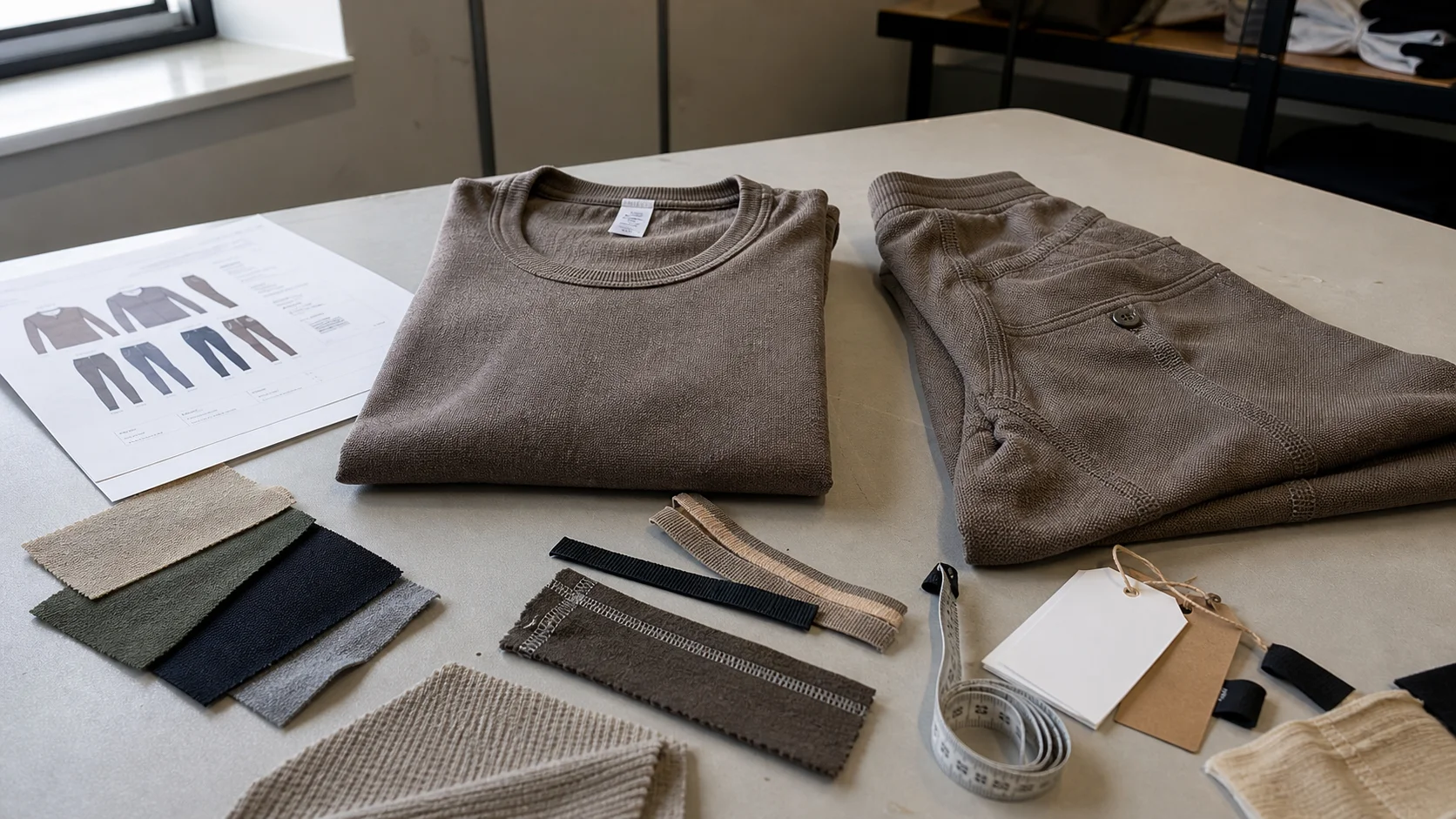
A quality-focused outline for resort uniform buyers reviewing trims on base layer sets, including labels, elastic, zipper guards, drawcords, heat...
Base Layer Set Trim Review for Resort Buyers - Fabrikn production reference
Resort uniform buyers source base layer sets for a very specific job: keeping staff warm, mobile, neat-looking, and brand-consistent across long shifts in cold, wet, or high-altitude environments. The fabric gets most of the attention, but trim decisions often determine whether the garment survives real operational use. Zippers, elastic, drawcords, labels, heat transfers, thread, grippers, seam tapes, and packaging all affect comfort, compliance, laundering, and replacement cost.
This base layer set trim sourcing review is written for resort uniform buyers, purchasing managers, apparel developers, and quality teams who need practical checkpoints before placing bulk orders. It focuses on what to review, what to specify, and what to inspect before base layer tops and bottoms go into staff issue, rental uniform programs, ski school operations, spa teams, lift operations, snowmaking crews, housekeeping, maintenance, and outdoor guest-service roles.
Base layers are close-to-skin garments. That makes trim quality more sensitive than it would be on outerwear or standard staff polos. A rough label, bulky seam tape, sharp zipper edge, weak waistband, or unstable heat transfer can create daily discomfort. Resort employees may wear these sets for eight to twelve hours, often under insulated jackets, bibs, uniforms, or protective equipment. Small trim mistakes become complaints quickly.
Trim also affects the resort’s uniform budget. A set that looks acceptable at delivery can fail after repeated industrial laundering, guest-facing wear, or locker-room handling. Waist elastic may roll, drawcords may slip inside channels, zipper pullers may break, and printed size labels may crack. These are not rare issues in base layer programs, especially when orders are pushed through without trim testing.
For sourcing teams, trim review is a way to control risk before the purchase order becomes expensive. Resort uniform buyers should treat trim as part of the performance specification, not as decoration. It needs to match fabric stretch, laundering method, wearer role, safety requirements, and brand presentation.
Not all resort staff need the same base layer set. A lift operator standing in wind and snow has different needs from a spa attendant moving between indoor and outdoor zones. Ski instructors need high mobility and moisture management. Maintenance staff may prioritize durability under abrasion. Housekeeping teams may need warmth without bulk under standard uniforms.
Trim decisions should follow the staff role. A quarter-zip top may be useful for temperature control but can interfere with neck gaiters or uniform collars if the zipper head is bulky. A brushed elastic waistband may improve comfort for long shifts, but poor recovery can create fit complaints. Heat-transfer labels reduce irritation, but they must survive laundering and stretch.
Before trim sourcing begins, buyers should define the intended environment:
These answers guide trim selection. A base layer set used by snowmaking or lift operations should be reviewed more aggressively for seam strength, zipper reliability, and elastic recovery than a lightweight indoor hospitality layer.
A complete base layer set trim review should cover every non-shell-fabric component. Buyers often ask for “standard trim,” but standard can mean different things across factories, mills, and trim suppliers. Written specifications reduce misunderstanding and make inspection more objective.
The main trim categories usually include:
For uniform buyers, packaging trim also matters. Staff issue programs need clear size identification, set pairing, and easy distribution. A top and bottom packed separately may help replacement control, while a paired set in one polybag may reduce distribution errors. The right choice depends on resort operations.
Quarter-zip and half-zip base layer tops are popular in resort uniforms because they allow ventilation and look more structured than crew necks. The risk is comfort. Any hard component near the neck can irritate skin or press against a jacket collar.
Buyers should specify zipper type clearly. Coil zippers are common for base layers because they are flexible and lighter than molded plastic zippers. Reverse coil zippers can create a cleaner appearance. The zipper gauge should suit the garment weight. A heavy zipper on lightweight stretch knit can distort the placket, while a very light zipper may fail under repeated pulling.
Practical zipper review points include:
A zipper garage is a small detail that deserves attention. Poorly shaped garages can become bulky at the throat. Clean self-fabric garages or soft binding usually work better than stiff, overbuilt pieces. If the garment will be worn under a uniform shell, low-profile construction is worth paying for.
Waist elastic is one of the most common failure points in base layer bottoms. Resort staff bend, climb stairs, load equipment, shovel snow, kneel, and sit for long periods. If the waistband rolls or loses recovery, the garment feels cheap even when the fabric is good.
Typical waistband elastic widths range from 25 mm to 40 mm for adult base layer bottoms. Wider elastic can feel more stable, but it may also feel bulky under ski pants or uniform trousers. A 30 mm to 35 mm elastic often works for many staff uniform programs, though final choice should be based on size range, body type, and intended layering.
Important elastic specifications include:
Encased elastic is softer against skin and protects branding if the waistband is plain. Exposed jacquard elastic can carry a logo, but it increases cost and may require higher minimums. It can also feel less comfortable if the back side is rough. For resort uniforms, comfort and recovery usually matter more than visible waistband branding unless the garment is part of retail or premium staff kit.
Cuffs can be self-fabric, elasticated, bound, or left as coverstitched hems. Self-fabric cuffs offer comfort and stretch compatibility, while elasticated cuffs help prevent riding up. In base layer bottoms, ankle cuff bulk should be controlled because staff may wear ski socks, boots, or insulated footwear.
Labels are small, but they cause disproportionate complaints in base layer programs. Close-to-skin garments should avoid scratchy woven labels at the back neck and waistband whenever possible. Heat-transfer labels are common because they reduce irritation and create a clean appearance.
Heat transfers must be tested. A label that looks crisp on a salesman sample can crack, peel, or become tacky after industrial wash, tumble drying, or repeated stretch. Buyers should request wash test results or conduct internal wash trials before approving bulk.
Labeling requirements usually include:
Woven labels may still be appropriate for side seams or low-contact areas. The edge finish should be soft, and the placement should avoid pressure points. For staff issue programs, printed internal name fields or barcode labels may help asset tracking, but they introduce extra trim and process steps. Barcode labels need durability testing if garments will be laundered often.
Branding should be restrained for base layers unless visible use is expected. A small heat-transfer logo at the chest or hip can support staff identity, but large prints may reduce stretch and comfort. Reflective trims can be useful for some outdoor roles, yet they should be reviewed for laundering durability and placement under outer layers.
Thread is trim, and it is central to base layer quality. Stretch knit garments require seams that move with the body. If thread selection or stitch type is wrong, seams pop during wear or become wavy after washing.
Common constructions include flatlock, overlock, coverstitch, and chainstitch. Flatlock seams are often preferred for close-to-skin comfort because they reduce bulk. They can cost more and require better machine control. Overlock seams are efficient, but seam allowance and thread softness must be checked to prevent irritation.
Thread specifications should cover:
For cold-weather resort uniforms, seam reinforcement may be needed at crotch, gusset, waistband join, zipper placket base, thumbhole openings, and cuff seams. Reinforcement should not create hard spots. Buyers should review inside construction as carefully as outside appearance.
Purchasing judgment: if the base fabric has high stretch, do not approve a seam construction based only on appearance. Stretch the sample across major seams and check whether the thread recovers without popping, grin-through, or distortion.
Trim cannot be approved separately from fabric. A base layer set made from polyester/spandex jersey, merino blend, nylon/spandex, or brushed thermal knit will react differently to the same trim package. Fabric weight, stretch direction, recovery, shrinkage, and surface texture all affect trim performance.
Typical resort base layer fabrics may include:
Trim must match fabric behavior. A rigid zipper tape can ripple on a stretchy chest panel. A heat transfer may not bond properly to a brushed or textured surface. Elastic that shrinks more than the fabric can distort the waistband. Thread that is too heavy can create puckering on lightweight knits.
Colorfastness is another concern. Dark resort colors such as black, navy, charcoal, forest green, and burgundy are common. Labels, zipper tape, thread, and elastic should be checked for shade matching and bleeding. A black elastic waistband that stains a light heather body after washing is a preventable defect.
MOQ depends on fabric, trim customization, size range, color count, and factory setup. For resort uniform buyers, base layer set MOQ often falls into several practical ranges. These are typical commercial ranges, not fixed guarantees.
The best tradeoff for many resort uniform programs is to customize visible or operationally important elements while keeping low-impact trims standard. For example, a resort may choose custom heat-transfer branding and standard color-matched zippers rather than branded zipper pullers and custom waistband elastic. This protects budget and reduces lead-time risk.
Small resorts or pilot programs should ask about stock fabric, shared trim options, and consolidated colorways. Buying black, charcoal, or navy often reduces sourcing complexity. Specialty colors may support brand identity but can create replenishment problems if quantities are low.
For help structuring uniform sourcing requirements, buyers can review apparel manufacturing support options at fabrikn.com/services/.
Trim approval should be staged. Approving a full garment sample without separate trim confirmation can hide problems until production. A clear approval flow helps prevent last-minute substitutions.
The supplier should submit a trim card showing actual zippers, elastic, labels, thread, heat transfers, drawcords, and packaging components. Buyers should check color, handfeel, size, finish, and branding accuracy. Digital photos are useful for speed, but physical trim cards are safer for final approval.
The first fit sample confirms garment shape and trim placement. At this stage, trims may be approximate, but critical comfort points should already be reviewed. Neck zipper length, waistband width, cuff finish, label placement, and seam construction should not be left vague.
This sample should move closer to final fabric and final trims. Buyers should wear-test or at least conduct stretch, recovery, and wash checks. Any trim that touches skin deserves extra attention.
The pre-production sample should use bulk fabric, bulk trims, correct colors, correct labels, and correct packaging. This is the standard that production should follow. Approval comments should be written, dated, and linked to a physical sealed sample where possible.
Size sets are important for resort buyers because staff populations often include wide size variation. Waist elastic tension, inseam proportion, sleeve length, neck opening, and cuff pressure should be checked across sizes. A waistband that feels fine in medium may be too tight in extended sizes if grading is not handled properly.
Base layer set lead times are shaped by fabric availability and trim complexity. Standard trims can move quickly, while custom trim can add weeks. Buyers should build the calendar around approval gates, not just the promised ship date.
Typical timing considerations include:
A realistic resort uniform calendar should allow time for staff size forecasting, sample comments, wear testing, wash testing, and inspection. Buying too late often forces concessions: stock colors instead of brand colors, standard elastic instead of branded elastic, or air freight instead of sea freight. Those tradeoffs can be reasonable, but they should be deliberate.
Resorts planning seasonal uniform rollouts should contact suppliers early, especially when delivery must land before winter onboarding or holiday occupancy peaks. Sourcing support inquiries can be directed through fabrikn.com/contact-us/.
Inspection should include both appearance and function. Base layer sets can pass a basic visual check and still fail in use. The most important inspection risks are usually linked to stretch, laundering, and close-to-skin comfort.
Inspection does not need to be complicated, but it should be specific. For base layer trim review, practical checks may include:
AQL inspection can catch many shipment-level defects, but it should be paired with pre-production controls. If the wrong elastic or heat transfer enters production, final inspection may only quantify the damage. It may not offer an easy fix without rework or replacement.
Purchasing judgment: final inspection is not a substitute for trim approval. The most expensive trim defects are usually approved into the garment before bulk sewing starts.
Trim cost is often reviewed line by line, but buyers should judge it by replacement risk and staff satisfaction. Saving a small amount on elastic or zippers can create a higher total cost if garments fail mid-season. At the same time, not every custom trim is worth the premium.
High-value trim upgrades usually include:
Lower-priority upgrades may include custom zipper pullers, decorative waistband branding, complex hangtags, or multiple logo placements. These can be useful for premium programs or retail crossover products, but they are not always necessary for operational uniforms.
Uniform buyers should also consider replenishment. If a custom trim has a high MOQ and long lead time, replacement orders may become difficult. For resorts with seasonal turnover, standard trims in stable colors may be more practical than highly customized details.
Before issuing bulk approval, resort uniform buyers should confirm that trim decisions are locked and documented. Verbal approval is risky. A written trim sheet and approved sample reduce disputes if production changes occur.
Supplier capability also matters. Base layer sets require experience with stretch knits, not only general uniform sewing. Buyers should review whether the manufacturer can manage flatlock or stretch seam construction, heat-transfer application, elastic control, and consistent size grading. Company background and sourcing approach can be reviewed at fabrikn.com/about-us/.
For resort uniform buyers, the best base layer set is not the one with the most trim features. It is the one that stays comfortable, fits consistently, survives laundering, and can be replenished without disrupting operations. Trim review should be practical and firm: approve what improves performance, question what adds complexity, and reject anything that creates skin irritation or inspection risk.
Standard trims are often the right choice when budgets are tight or timelines are short. Custom trims can support brand identity, but they need enough order volume and lead time to make sense. The safest sourcing approach is to specify critical comfort and durability trims in detail while keeping decorative customization under control.
A resort base layer program may look simple on a purchase order: top, bottom, color, size range, quantity. In production, the outcome depends on dozens of small trim decisions. Buyers who review those details early are more likely to receive garments that staff will actually wear through the season.
Get a free quote from Fabrikn — your trusted B2B clothing manufacturer with 10+ years of experience. MOQ as low as 200 pieces.
Get a Free Quote →The most important trims are waist elastic, neck zipper components, heat-transfer or care labels, thread, seam construction, cuffs, and packaging labels. These affect comfort, durability, laundering performance, and staff distribution.
Typical MOQ may range from about 300 to 800 sets per color for stock fabric and standard trims. Custom fabric colors, branded elastic, custom zipper pullers, or specialty performance materials may push MOQ closer to 1,000 to 3,000 pieces or more, depending on supplier and material requirements.
Heat-transfer labels are usually better for close-to-skin base layers because they reduce irritation. They must be tested for stretch and wash durability. Woven labels can be used in lower-contact areas, but the edges and placement should be reviewed carefully.
Quarter-zip tops can work well because they allow ventilation and create a professional look. Buyers should inspect zipper smoothness, puller size, zipper garage comfort, and placket stability. A bulky or rough zipper can become uncomfortable under jackets or bibs.
Specify width, thickness, stretch percentage, recovery, finish, construction, and wash resistance. Many adult base layer bottoms use elastic in the 25 mm to 40 mm range. The best width depends on comfort, size range, and layering needs.
Common risks include zipper catching, sharp zipper stops, peeling heat transfers, waistband rolling, poor elastic recovery, skipped stitches, seam popping, scratchy labels, shade mismatch, and packaging errors where tops and bottoms are paired incorrectly.
Standard trim sourcing may take 1 to 3 weeks. Custom heat transfers can take 1 to 3 weeks for development and testing. Custom elastic or branded hardware may take 4 to 8 weeks, especially if yarn dyeing, tooling, or artwork approvals are involved.
A pre-production sample should include bulk fabric, approved trims, final labels, correct logo placement, final colors, accurate stitching, and intended packaging. It should represent the production standard and be kept as a reference for inspection.
Custom branded trim is worth considering for premium staff kits, retail crossover products, or highly visible garments. For standard operational base layers, comfort, durability, and replenishment reliability usually deliver better value than decorative customization.
Buyers can reduce problems by approving physical trim cards, testing samples after washing, reviewing size sets, specifying inspection criteria, checking seam stretch, and avoiding late trim substitutions. Clear documentation before bulk production is the strongest control.