
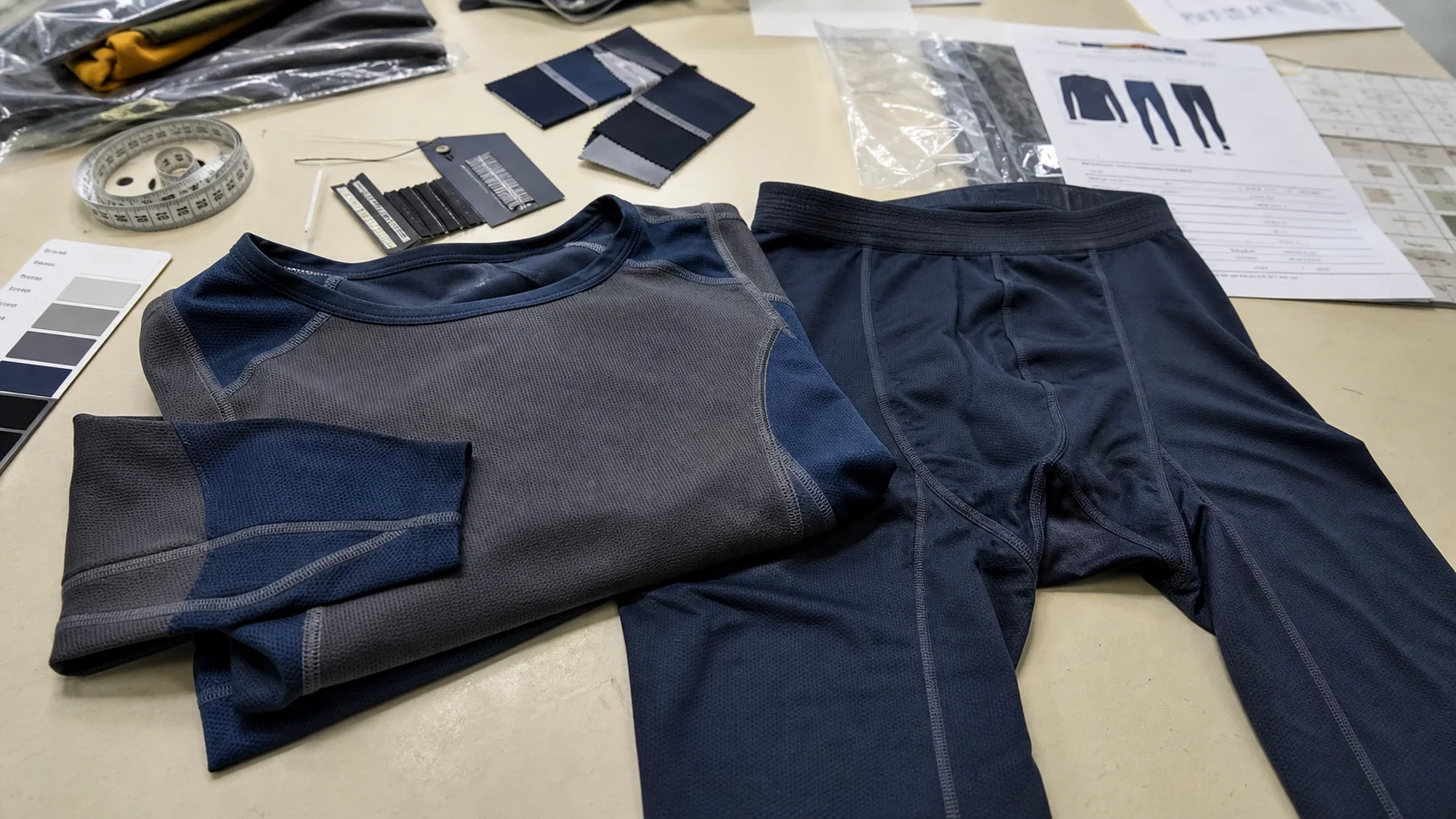
A product-specific audit outline for airport uniform teams evaluating base layer set vendors, covering fabric performance, sizing, decoration readiness,...
Base Layer Set Audit Brief for Airport Uniform Buyers - Fabrikn production reference
Airport uniform teams buy base layer sets for a very specific use case: long shifts, changing temperatures, high visibility outerwear, baggage handling, ramp exposure, security screening environments, cabin service support, cleaning crews, and indoor customer-facing roles. A base layer set that works for a gym capsule may fail quickly in an airport uniform program if the fabric pills under hi-vis vests, the waistband rolls during lifting, or the thermal rating is wrong for apron staff working near open aircraft doors.
This audit brief is written for procurement managers, uniform coordinators, sourcing teams, and operations stakeholders evaluating base layer set vendors for airport staff. It focuses on practical vendor review points: fabric performance, construction, fit grading, testing, MOQ, sampling, production controls, packaging, compliance, and inspection risks.
For broader activewear and teamwear sourcing support, buyers can review manufacturing service options at Fabrikn services, learn more about the company background at Fabrikn about us, or discuss a specific airport uniform project through the contact page.
Base layer sets are often treated as simple commodity garments: a long-sleeve top and a legging or thermal bottom. In airport uniform procurement, that is a risky assumption. These products sit directly against the skin and influence comfort, odor control, mobility, warmth, and staff acceptance of the wider uniform package.
The wrong vendor can create problems that are expensive to correct after rollout. Common failures include shrinkage after industrial laundering, shade mismatch between tops and bottoms, seam abrasion at the underarm or inner thigh, poor recovery at cuffs, inconsistent sizing, or heat retention that does not match working conditions.
A supplier audit does not need to be overcomplicated, but it should be structured. The buyer should confirm that the vendor understands base layer performance, can control repeat orders, and has a system for testing, measurement, packing, and defect prevention. For airport teams, consistency matters as much as the first sample.
Purchasing judgment: do not approve a base layer vendor based only on hand feel and price. Ask how the fabric performs after repeated washing, how the size set fits real job roles, and how the supplier will keep shade, stretch, and shrinkage stable across replenishment orders.
Airport uniform buyers should begin the audit by mapping the garment to job functions. A base layer for a ramp agent working in cold rain needs a different balance of thermal insulation, moisture management, and durability than a base layer for security staff working indoors.
The audit should check whether the vendor asks these questions before recommending fabric. If a supplier proposes one generic fabric for every role, the buyer should be cautious. A single specification can work for smaller programs, but larger airport uniform teams often need at least two fabric weights: a lightweight moisture-wicking option and a heavier thermal option.
The main tradeoff is warmth versus mobility. Heavier fabric may be welcomed during winter operations but rejected when staff move indoors or perform physical tasks. A midweight option often delivers the best balance for year-round ordering, while cold-weather airports may require seasonal issue planning.
Before approving development samples, airport uniform buyers should review the vendor’s business profile and production capability. This is not only a compliance exercise. It determines whether the supplier can handle size complexity, repeat orders, packing by department, and uniform program deadlines.
A base layer vendor does not need to be the largest factory in the market. In many cases, a focused activewear or thermal knit supplier is more suitable than a general cut-and-sew factory. The buyer should look for evidence of repeatable process control rather than a polished presentation alone.
Certificates should be verified for scope and validity. A certificate for one site, one process, or one product category does not automatically cover the proposed base layer set. If the airport buyer has a strict responsible sourcing policy, this check should happen before sample approval, not after the purchase order is ready.
Fabric is the central risk area in a base layer audit. The specification should be detailed enough for consistent production but not so narrow that it blocks practical sourcing. Airport buyers should define the performance target first, then confirm the blend, weight, knitting structure, finish, and testing method.
For many airport uniform programs, polyester elastane or polyester-rich brushed thermal knit is the practical starting point. It balances price, availability, washing performance, and lead time. Nylon blends feel better but may raise cost. Merino blends can perform well in cold climates, but they require tighter care management and clearer staff instructions.
Airport buyers should be cautious with “antibacterial” or “odor-free” claims. These claims need chemical disclosure and valid test support. Some finishes wash out quickly. Others may trigger restricted substance concerns depending on the market. A simple moisture-wicking base fabric with good laundering performance may be a better choice than an unverified treatment.
The most common trim failure is waistband quality. A low-cost waistband may pass a first fitting but roll, twist, or lose recovery after laundering. The buyer should request a waistband sample washed multiple times before approving bulk production.
Fit is one of the biggest reasons base layer programs receive complaints. Airport teams include different body types, shift roles, and layering habits. A base layer set that is too tight may feel restrictive under uniform trousers. A set that is too loose may bunch under shirts or jackets.
The audit should confirm whether the vendor can develop a size range that reflects the workforce, not only a standard retail grading chart. Airport programs may require men’s, women’s, and unisex sizing. Unisex sizing can simplify inventory, but it often compromises fit at the hip, waist, rise, and chest. For large teams, separate fits may be worth the additional SKU complexity.
Size set approval should include physical movement checks. Staff should simulate common airport tasks: bending to lift bags, walking stairs, reaching overhead bins or storage shelves, kneeling, sitting, driving service vehicles, and moving between heated and cold areas. A conference room fitting is useful, but it does not replace movement-based review.
Base layer construction needs to protect comfort and durability. Since the garment sits close to the skin, bulky seams and scratchy labels are not small issues. They become daily complaints.
The buyer should inspect both the outside and inside of the sample. Some factories make the exterior look clean but leave rough thread ends, uneven seam allowances, or bulky intersections inside. These issues may not be obvious in product photos.
Sets introduce another quality risk: the top and bottom need to look and perform as a coordinated pair. Shade variation between pieces can happen when fabric rolls come from different dye lots. Hand feel differences may also occur when cutting is split across fabric batches.
The audit should ask how the vendor allocates fabric rolls for set production. For solid black, navy, charcoal, or thermal grey base layers, small shade differences may still be visible under terminal lighting. If sets are packed together, the top and bottom should be cut from the same approved fabric lot whenever possible.
Testing requirements depend on the destination market, airport authority standards, corporate policy, and product claims. For a base layer set vendor audit, buyers should separate essential testing from optional marketing tests.
For airport uniform programs, laundering is a critical question. Some staff will wash garments at home, while other programs may use commercial or industrial laundry services. The care label must match the real washing method. If garments are expected to tolerate tumble drying, that should be tested before rollout.
Base layers are not automatically protective workwear. Buyers should avoid language that implies flame resistance, arc protection, or certified PPE performance unless the garment is designed, tested, and certified for that purpose. Ramp environments may involve fuel, equipment, and operational hazards, so misleading claims can create liability.
If the airport requires flame-resistant base layers for specific teams, the vendor audit changes significantly. The buyer must request certified FR fabrics, relevant test reports, controlled trims, traceability, and production controls aligned with the applicable standard. A standard polyester elastane thermal set should not be substituted for FR basewear.
A disciplined sample process prevents many production disputes. The buyer should define each stage and make approvals in writing. Verbal approvals create risk, especially when multiple stakeholders review fit, color, and performance.
For custom airport uniform base layer sets, the pre-production sample is the key control sample. It should use bulk fabric, bulk trims, approved labels, approved packaging, and final measurements. If the supplier submits a pre-production sample in substitute fabric “for reference,” the buyer should not treat it as full approval.
A limited wear trial is worth considering for airport teams, especially for large programs or harsh climates. The trial does not need to involve hundreds of staff. A small group across job roles can reveal practical problems: overheating, waistband rolling, sleeve riding, odor retention, pilling under outerwear, and discomfort during long shifts.
Wear trial feedback should be structured. Ask staff to rate warmth, mobility, comfort, fit, laundering result, and layering compatibility. Open comments are useful, but a simple scoring sheet makes decisions easier.
MOQ varies by fabric availability, dyeing requirements, size range, trim customization, and factory capacity. Airport buyers should ask for MOQ by style, color, and fabric lot rather than accepting a vague total quantity.
Lower MOQ usually means less customization, more reliance on stock fabric, and potentially less control over shade continuity. Higher MOQ can reduce unit price and improve fabric control, but it increases inventory risk if sizing demand is uncertain.
Lead time becomes longer when the buyer changes fabric weight, adds new sizes, rejects lab dips, requires special testing, or delays pre-production approval. Airport uniform schedules are often tied to seasonal issue dates, contract launches, or brand refreshes. Build a buffer. A tight delivery promise with no testing window is not a strong offer.
Purchasing judgment: if the program is new and size demand is uncertain, avoid over-customizing the first order. A reliable stock or semi-custom fabric may be safer than a highly customized fabric that locks the buyer into high MOQ and slow replenishment.
Base layer sets have specific inspection risks because stretch fabric can hide or create problems during measurement and sewing. A final inspection should include workmanship, measurements, shade, packing, labeling, and function checks.
Measurement inspection on stretch garments needs a consistent method. Garments should be laid flat without pulling. The inspector should allow fabric to relax before measuring. If the supplier and buyer use different measuring tension, disputes are likely. Measurement points should be illustrated in the tech pack.
Many apparel buyers use AQL 2.5 for major defects and AQL 4.0 for minor defects, though the final level depends on the buyer’s policy and risk tolerance. For airport uniform programs, certain defects should be treated seriously even if they look minor. An incorrect size label, rough seam, or waistband failure can make the garment unusable for staff.
Critical issues include wrong fiber composition, unsafe trims, incorrect labeling required by law, severe shade mismatch, mold, contamination, and any unapproved substitution of fabric. These should trigger rejection or immediate corrective action.
Packing is not an afterthought for airport uniform teams. Uniform programs often need distribution by department, employee size, location, or onboarding schedule. Poor packing creates administrative work and delays issue.
Set packing looks neat, but it can be inconvenient if employees need different top and bottom sizes. Separate packing improves flexibility but adds handling. The buyer should choose based on real distribution practice, not catalogue appearance.
For next-to-skin garments, printed labels can improve comfort, but they must survive washing. If printed neck labels crack, peel, or fade quickly, staff lose size and care information. Heat transfer labels should be tested for adhesion and irritation.
Price matters, but base layer procurement should not be awarded on unit cost alone. A slightly cheaper set can become expensive if the supplier cannot control shrinkage, pack correctly, or replenish sizes mid-season.
Large size ranges may affect costing. Some vendors charge extra for extended sizes due to fabric consumption. That may be commercially reasonable, but it should be transparent before the order is approved. Airport uniform programs should avoid hidden size surcharges that appear after size breakdown submission.
A practical scorecard helps balance decisions. The lowest-cost supplier may score well on price but poorly on repeatability. The highest-cost supplier may offer excellent performance but exceed the program’s budget. The best choice is usually the vendor that meets the required performance level with manageable risk.
The following checklist can be used before placing a purchase order for airport uniform base layer sets. It is designed for sourcing conversations, sample reviews, and factory capability checks.
Airport uniform buyers should treat this audit as a risk filter. A vendor that answers clearly, provides realistic timelines, and accepts measurable quality standards is usually easier to manage than a vendor that promises fast delivery without explaining fabric sourcing, testing, or production controls.
A base layer set for airport teams is not just an undergarment. It is part of the working uniform system. The right specification improves comfort and reduces complaints. The wrong one creates avoidable issues across operations, HR, procurement, and staff distribution.
For most airport uniform buyers, the safest route is a controlled midweight performance fabric, tested shrinkage, stable waistband, comfortable seams, realistic MOQ, and a clear replenishment plan. Cold-weather operations may need a heavier thermal option, while indoor teams may prefer lighter moisture-wicking fabric. One product rarely satisfies every airport role perfectly.
The vendor audit should focus on proof: test data, sample quality, fit logic, production control, inspection discipline, and commercial clarity. Good suppliers will be able to discuss tradeoffs. Weak suppliers tend to rely on broad claims such as “premium quality,” “quick dry,” or “thermal” without measurable standards.
Buyers preparing a base layer set sourcing brief can use this audit structure to compare vendors more consistently. For support with activewear and teamwear manufacturing, review Fabrikn’s services or start a sourcing discussion through Fabrikn contact.
Get a free quote from Fabrikn — your trusted B2B clothing manufacturer with 10+ years of experience. MOQ as low as 200 pieces.
Get a Free Quote →A base layer set usually includes a long-sleeve or short-sleeve top and a matching bottom worn under the main uniform. In airport teams, it is used for warmth, moisture management, comfort, and layering during long shifts.
Polyester elastane is a practical choice for many programs because it balances cost, stretch, durability, and moisture management. Brushed polyester blends work for colder roles. Merino blends can offer odor and temperature benefits, but they cost more and need tighter care control.
Typical MOQ can range from 300-800 sets for stock fabric and simple private labeling. Custom dyed fabric often starts around 800-1,500 sets per color. Specialty fabric development may require 1,500-3,000 sets or more, depending on the mill and material.
A practical timeline can range from 8-16 weeks after the specification is stable, depending on sampling rounds, fabric sourcing, lab dips, testing, production capacity, inspection, and shipping. Custom fabric or delayed approvals can extend the schedule.
Unisex sizing reduces SKU complexity and inventory handling, but it often compromises fit. Gender-specific sizing can improve comfort and adoption, especially across larger teams, but it requires better size data and more inventory planning.
Key risks include shade mismatch between top and bottom, twisted seams, skipped stitches, waistband rolling, incorrect size labels, shrinkage, pilling, and measurement failures. Stretch garments require careful measurement methods during inspection.
Only if the role or airport safety policy requires it. Standard polyester elastane base layers are not flame-resistant PPE. If flame resistance is required, the buyer must specify certified FR fabrics and request relevant test reports and compliance controls.
A wear trial is strongly recommended for large programs, cold-weather airport operations, or new vendors. Even a small trial across job roles can reveal comfort, fit, laundering, pilling, and layering issues before full rollout.
A strong tech pack should include fabric composition, gsm, color standards, measurements, grading, seam construction, trims, labels, care instructions, packing method, test requirements, and inspection tolerances. For stretch garments, clear measurement diagrams are especially important.
They can be packed as matched sets or as separate tops and bottoms. Set packing is simple, but separate packing supports mixed top and bottom sizes. Department-level or employee kit packing may be useful when the airport has accurate staff size data.