
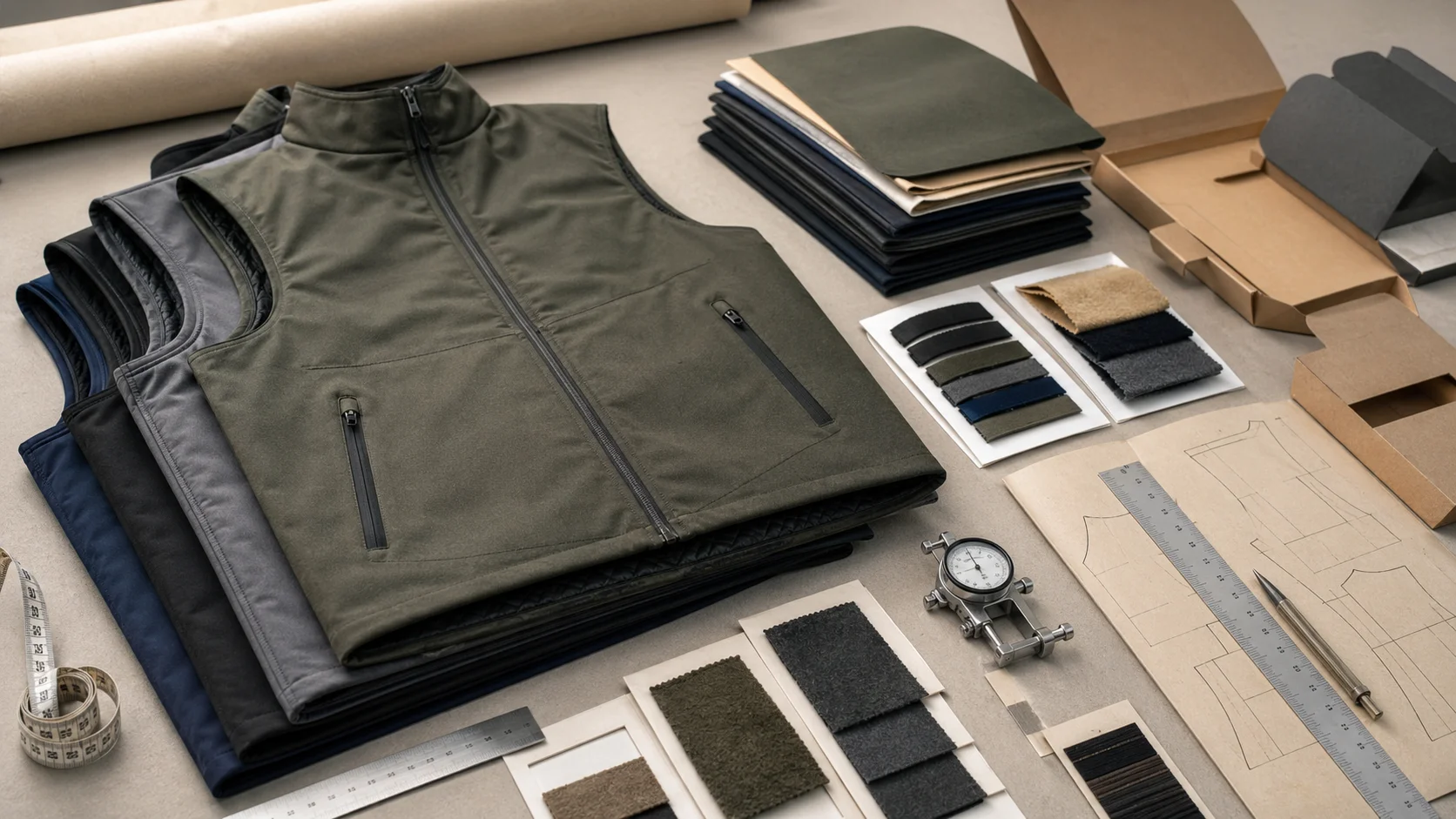
Certifications for Sustainable Clothing Brands with checks for samples, fit, MOQ, QC evidence, pricing terms, and delivery risk.
Fast answer: Certifications for Sustainable Clothing Brands: Samples, Cost Lines, QC, and Delivery Risk should be judged by production evidence, not by a generic sourcing promise. The buyer needs sample proof, cost breakdowns, QC checkpoints, and delivery buffers in writing.
Ask for recent sample photos, measurement tolerances, fabric or print test assumptions, decoration test notes, packing examples, and a named inspection checkpoint. These details show whether the team can repeat an approved sample at bulk volume.
Separate garment cost, decoration, labels, packaging, sampling, testing, freight, and rush charges. When every cost line is visible, it becomes easier to reduce colorways, adjust size depth, or reserve more time for sampling.
As demand for ethical and eco-conscious apparel continues to rise, certifications have become one of the most important ways for sustainable clothing brands to prove their commitment to responsible production. For today’s shoppers, B2B buyers, and retail partners, sustainability claims are no longer enough on their own. Brands need credible third-party validation to back up their promises around organic materials, safe chemicals, fair labor, traceability, and low-impact manufacturing.
If you are building or scaling a sustainable fashion label, choosing the right certifications can strengthen your reputation, open doors to new markets, and help you stand out in a crowded industry. But with so many standards available, it can be difficult to know which ones matter most, what they cover, and which are worth the investment.
This complete guide explains the best certifications for sustainable clothing brands, how they work, why they matter, and how to decide which ones align with your business goals. Whether you are a startup creating your first eco-friendly collection or an established label looking to improve your supply chain, this article will help you make informed decisions.
Sustainability in fashion is complex. It can involve organic farming, recycled fibers, safer dyes, lower water use, ethical labor practices, and responsible supply chain management. Because these claims are difficult for consumers and buyers to verify, certifications help bridge the trust gap.
Here are the main reasons certifications are valuable for sustainable clothing brands:
For brands looking to grow in the sustainable fashion category, certifications are not just badges. They are strategic business assets.
Below are some of the best certifications for sustainable clothing brands, grouped by what they cover. Not every brand needs every certification. The right mix depends on your materials, manufacturing model, and target market.
GOTS is one of the most recognized certifications for organic textiles. It covers the full processing chain of textiles made from organic fibers, including harvesting, manufacturing, packaging, labeling, trading, and distribution.
Best for: Brands using organic cotton, organic wool, organic hemp, or other certified organic fibers.
What it covers:
Why it matters: GOTS is widely trusted by consumers and retailers and is considered one of the strongest certifications in sustainable apparel.
OEKO-TEX Standard 100 certifies that textile products have been tested for harmful substances. It focuses on product safety rather than organic content or labor practices.
Best for: Brands that want to demonstrate product safety and chemical transparency.
What it covers:
Why it matters: It is especially useful for babywear, activewear, intimates, and products worn close to the skin.
OEKO-TEX Made in Green expands beyond product testing by adding traceability and verified production facilities. It indicates that a textile product is made from materials tested for harmful substances and produced in environmentally friendly, socially responsible facilities.
Best for: Brands wanting both safety and supply chain transparency.
What it covers:
Why it matters: It is a stronger claim than Standard 100 because it also supports traceability and responsible manufacturing.
The Global Recycled Standard verifies recycled material content and tracks it through the supply chain. It also includes environmental processing requirements and social criteria.
Best for: Brands using recycled polyester, recycled cotton, or other recycled fibers.
What it covers:
Why it matters: Recycled materials are increasingly popular, but buyers want proof. GRS helps validate recycled claims and strengthens sustainability messaging.
RCS is similar to GRS but focuses specifically on verifying recycled input content and chain of custody. It does not include as many environmental or social criteria as GRS.
Best for: Brands that want a simpler certification for recycled content claims.
What it covers:
Why it matters: RCS is often a more accessible option for brands new to recycled material sourcing.
Fair Trade Certified apparel products are made under standards that promote safe working conditions, fair wages, and community investment. It is especially valued by consumers who care deeply about labor ethics.
Best for: Brands focused on social impact and ethical labor.
What it covers:
Why it matters: It sends a strong message that your brand cares not only about the planet but also about the people behind the products.
B Corp Certification is a company-level certification, not a product-level one. It evaluates the overall social and environmental performance of a business, including governance, worker treatment, community impact, and environmental practices.
Best for: Brands wanting to show holistic commitment to responsible business.
What it covers:
Why it matters: B Corp is highly respected, but it requires a broad commitment across the entire organization, not just product sourcing.
Cradle to Cradle Certified evaluates products based on material health, material reuse, renewable energy, water stewardship, and social fairness. It is designed to encourage circular product design.
Best for: Brands building circular or future-focused apparel lines.
What it covers:
Why it matters: It is ideal for brands moving toward circular fashion models and lower-impact product design.
If your brand uses leather, the Leather Working Group certification helps verify responsible leather sourcing and tanning practices.
Best for: Footwear, accessories, outerwear, and premium apparel brands using leather.
What it covers:
Why it matters: Leather is often under scrutiny in sustainable fashion, so LWG helps brands demonstrate more responsible sourcing.
FSC certification is not a clothing certification in the strictest sense, but it is important for brands using viscose, lyocell, modal, paper packaging, or hangtags made from forest-based materials.
Best for: Brands using cellulosic fibers or sustainable packaging.
What it covers:
Why it matters: FSC can support claims around responsible sourcing for packaging and certain regenerated fibers.
bluesign focuses on sustainable textile production by reducing harmful chemicals and improving resource efficiency. It is widely respected in performance apparel and technical textiles.
Best for: Activewear, outdoor brands, and technical apparel companies.
What it covers:
Why it matters: It is a strong choice for brands needing a science-based approach to cleaner production.
ISO 14001 is an environmental management system standard that helps businesses build structured processes for reducing environmental impact.
Best for: Manufacturers and brands with their own operations or supply-chain oversight.
What it covers:
Why it matters: It is not apparel-specific, but it can strengthen a brand’s sustainability infrastructure and operations.
Not every sustainable clothing brand needs the same certifications. The best approach is to align certifications with your products, supply chain, and business goals.
Ask yourself these questions:
A few helpful scenarios:
In many cases, a combination of certifications creates the strongest proof of sustainability. For example, one certification may validate materials while another supports labor or chemical safety claims.
Certification is an investment, and the total cost can vary significantly depending on the standard, the number of facilities involved, the complexity of your supply chain, and whether you need audits or testing.
Common cost components include:
Requirements may include:
Smaller brands sometimes hesitate because of the perceived complexity, but certifications can be phased in over time. Many brands start with one high-value certification and expand as they grow.
Choosing certifications without a strategy can lead to wasted time and money. Avoid these common mistakes:
The most successful sustainable fashion brands treat certifications as part of a long-term systems approach, not just a label on a hangtag.
At Fabrikn, we understand that sustainable clothing brands need more than stylish garments. They need reliable manufacturing partners who can support quality, consistency, and responsible production practices.
If you are planning a sustainable apparel line, our team can help you explore the right production approach for your brand. Learn more about our manufacturing capabilities on our services page, or connect with us directly through our contact page.
We also believe transparency matters. To understand more about our company values and approach, visit our about us page.
Whether you need help producing organic basics, recycled collections, or ethically made fashion items, working with the right manufacturer can make the certification process easier and more effective.
The best certifications for sustainable clothing brands depend on what you make, how you make it, and what your customers expect. GOTS, OEKO-TEX, GRS, Fair Trade Certified, B Corp, Cradle to Cradle, bluesign, FSC, and other standards each serve different purposes. Together, they provide the proof, transparency, and credibility that modern sustainable fashion demands.
Instead of thinking about certifications as a checklist, think of them as a strategic framework for building trust, improving operations, and communicating your values clearly. Start with the standards that align most closely with your materials and mission, then grow from there.
If your brand is ready to take the next step in sustainable apparel production, partnering with a manufacturer that understands quality, compliance, and responsible sourcing can make all the difference.
Get a free quote from Fabrikn — your trusted B2B clothing manufacturer with 10+ years of experience. MOQ as low as 200 pieces.
Get a Free Quote →It depends on your products and claims. GOTS is one of the strongest certifications for organic textiles, while OEKO-TEX is excellent for chemical safety and GRS is ideal for recycled materials.
Yes, but certification adds credibility. Without third-party verification, sustainability claims are harder to prove and may be viewed as greenwashing by consumers or buyers.
The Global Recycled Standard (GRS) is often the best choice because it verifies recycled content and includes social and environmental criteria. RCS is a simpler alternative focused on recycled content traceability.
B Corp is a company-level certification, not a product-level certification. It evaluates the overall business, including governance, workers, community impact, and environmental performance.
Timelines vary by certification and readiness. Some can take a few months, while others may take longer depending on audits, documentation, supplier alignment, and product testing.
Not always, but multiple certifications can strengthen your brand. For example, one certification may validate materials while another covers labor or chemical safety.
Start by identifying your core product claims, reviewing your supply chain, and selecting the certification that best matches your materials and business goals. Then work with suppliers and a certification body to prepare the necessary documentation.