
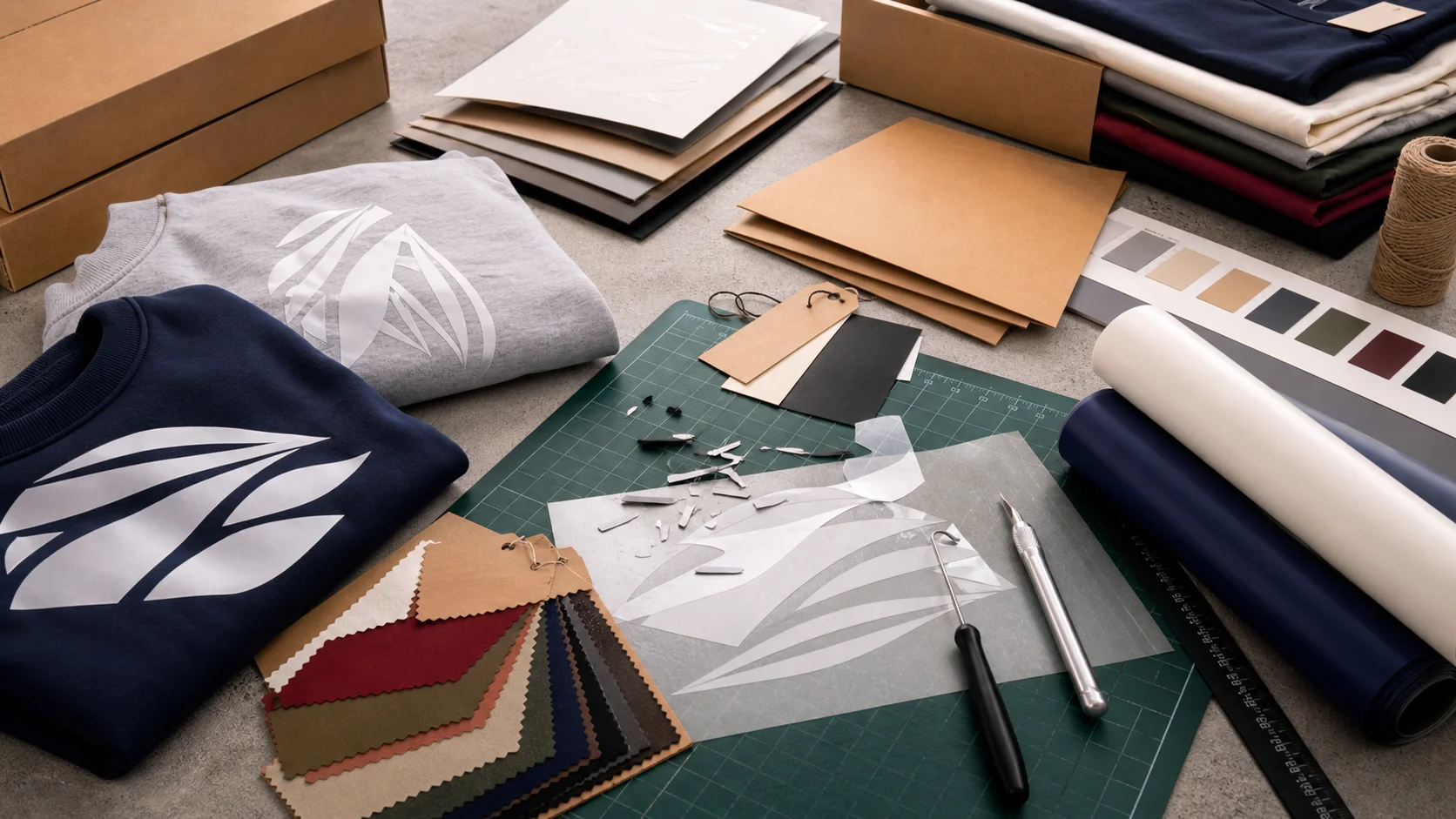
Fashion Hang Tag Materials with checks for samples, fit, MOQ, QC evidence, pricing terms, and delivery risk.
Fast answer: Fashion Hang Tag Materials: Kraft, FSC, Coated Stock, and Cost should be judged by production evidence, not by a generic sourcing promise. The buyer needs sample proof, cost breakdowns, QC checkpoints, and delivery buffers in writing.
Ask for recent sample photos, measurement tolerances, fabric or print test assumptions, decoration test notes, packing examples, and a named inspection checkpoint. These details show whether the team can repeat an approved sample at bulk volume.
Separate garment cost, decoration, labels, packaging, sampling, testing, freight, and rush charges. When every cost line is visible, it becomes easier to reduce colorways, adjust size depth, or reserve more time for sampling.
A tag can make a cheap garment look expensive, or a premium one look oddly underdressed. I’ve watched that judgment happen in three seconds flat, usually before anyone touches the fabric. That is why the best hang tag materials for fashion packaging matter more than many buyers like to admit: they carry the brand story from factory to sales floor.
Stiffness, texture, edge quality, and even how a tag resists fraying around the hole all register instantly. A 350 gsm card with a clean matte finish signals discipline. A 200 gsm sheet that curls after one rack move signals haste. One looks intentional. The other looks like somebody cut corners and hoped nobody would notice.
On factory visits in Vietnam and Portugal, I saw the savings calculation play out in a way that was almost comic, if it weren’t so expensive. A supplier might shave $0.015 per unit by dropping from 400 gsm to 300 gsm on a 20,000-piece order, yet the brand can lose far more in perceived value if the tag bends during packing. That gap is where margin leaks.
Print quality changes the story too. Offset on coated board gives sharper type, especially at 6 pt and 8 pt sizes. Digital can work for runs of 500 to 2,000 units, but ink density often shifts across replenishment orders. Foil stamping adds authority, though it flattens if the board is too soft or too glossy. When the surface fails, the price point feels unsupported.
The best hang tag materials for fashion packaging depend on product price point, print method, and the claim the tag is meant to support. A recycled board can be perfect for a $28 hoodie. A cotton-fiber paper may be justified for a $180 knit. A low-profile paper tag may be all a fast-fashion tee needs, provided it stays flat through 7 to 14 days of production and shipping.
Paper-based tags still dominate because they balance cost, print quality, and speed better than almost anything else. In mass-market runs, I’ve seen 300 gsm to 350 gsm art card deliver a clean hand feel at $0.03 to $0.08 per piece, depending on quantity and finish. Move up to 400 gsm or 450 gsm, and the tag starts feeling more architectural. That extra stiffness matters on premium basics.
Virgin paper gives the sharpest print and the most predictable fold resistance, but recycled content now does most of the work in sustainable fashion claims. A board with 30% to 100% recycled fiber can still perform well if the pulp is sorted properly and the caliper stays even. FSC and PEFC sourcing help the story, but certification alone does not guarantee a good tactile result. Cheap recycled board can feel dusty, uneven, or soft at the edges.
Coated art paper suits photographic branding, fine typography, and foil stamping. Uncoated stocks are better for matte, natural aesthetics and for brands that want the tag to feel closer to a garment label than an ad card. Textured papers, including cotton-fiber paper, work especially well on luxury knitwear and small-batch accessories because the surface makes minimal branding feel considered rather than sparse. I’ve seen cotton-fiber sheets raise the perceived value of a $90 shirt more effectively than a louder graphic ever could.
Recycled kraft is a different animal. It looks honest. It also prints darker, so brands need to adjust ink density and accept a less clinical white. Bleach-heavy white boards can undermine eco claims fast, especially when the tag is meant to support a recycling message. For offset, coated stocks win. For digital, smoother uncoated boards are usually safer. For foil stamping, a firm 350 gsm to 450 gsm base keeps the imprint crisp.
Regional sourcing changes this category more than many teams expect. Asia often offers lower unit costs on high-volume board, especially at MOQs of 5,000 to 20,000 pieces from a Guangzhou manufacturer running Heidelberg Speedmaster 102 presses with inline UV curing. Smaller European mills, though pricier, often deliver tighter color control and more consistent texture from batch to batch. I’ve seen a €0.02 difference per tag disappear once the European supplier reduced spoilage and reprints. The cheaper quote was not actually cheaper.
When soft goods need a softer tag, fabric makes sense. Cotton, linen, and satin tags work well for denim capsules, resortwear, and certain luxury accessories where the brand wants the tag to feel like part of the garment system rather than a disposable insert. I’ve seen woven cotton tags at $0.12 to $0.30 per piece, depending on size and stitch count, and they can be especially effective on outerwear and limited editions.
PU leather-like tags are popular because they photograph well and carry a premium cue at a relatively modest cost. They suit jackets, bags, and heavier knitwear, but they can also date quickly if the embossing is sloppy or the material feels plasticky. For activewear, recycled PET accents or labels can be useful because they match the technical language of the product. They do not need to look precious. They need to look deliberate.
Wood, bamboo veneer, birch, and aluminum all send a stronger signal. They also demand more discipline from the factory. A birch tag may look beautiful in a campaign shoot, yet on the line it can slow packing by 8% to 15% if edges chip or drilling is inconsistent. I’ve watched rejection rates rise when a supplier moved from paper to wood without adjusting handling trays. That is expensive theater.
Here’s what most people miss: mixed-material tags often look premium but are harder to process at end of life. A paper tag with a metal grommet, foil, and a plastic string may impress a buyer once and frustrate a recycler forever. For outerwear and luxury goods, that may still be acceptable. For sustainability-led brands, it usually is not.
Metal and recycled PET have a place, but only in the right category. Limited-edition sneakers, technical outerwear, and premium bags can absorb the cost and visual weight. A $22 tee cannot. The same object can read as luxury or excess depending on the garment. That judgment is commercial, not emotional.
Unit cost tells only half the story. Total landed cost includes print method, freight weight, tooling, packing labor, spoilage, and the number of approvals before production starts. On a 10,000-piece order, paper tags can land at $0.03 to $0.09 each, recycled board at $0.04 to $0.11, fabric tags at $0.10 to $0.35, wood at $0.18 to $0.60, and metal at $0.25 to $0.90 depending on thickness and finish.
The MOQ pressure changes quickly as the material gets more unusual. Paper may start at 500 to 1,000 pieces from a supplier or wholesale factory, while specialty substrates often require 2,000 to 5,000 pieces because tooling and setup are not trivial. A die-cut paper tag needs a clean cut and maybe one hole punch. A wooden tag may need laser cutting, sanding, edge sealing, and packing that protects corners. That adds labor. Labor is not invisible.
Shipping weight matters too. A carton of 20,000 paper tags might weigh 18 to 25 kg. The same quantity in wood or metal can multiply freight cost enough to erase the unit savings of a cheaper factory quote. I’ve seen brands approve a $0.22 wooden tag, then pay another 12% to 18% in packing and freight because the finished cartons were too heavy for the original plan.
Lead time is the clean divider. Simple paper tags can turn in 7 to 14 days if artwork is final and the printer is local. Specialty materials usually stretch to 21 to 45 days because tooling, sample approval, and finishing are more involved. Foil, embossing, drilled holes, and laser engraving all add 18 to 22 business days when you factor in die manufacturing on the Komori GL540, sanding, and dry-point quality checks at the Ho Chi Minh City finishing hub. Most of these materials also require an extra 2-3 days for handling at the Guangzhou logistics center before they even leave China.
For brands sourcing from Istanbul, expect a $2.50-4.00 per unit price range at 500 MOQ for anodized aluminum tags with custom color fills, because the CNC routing, bead blasting, and hand-polished edges are labor-intensive. Even with the higher cost, the weight makes them feel more substantial than a textile tag, which is why the tactical feel keeps them in the mix for limited-edition collections.
Claims without proof are a liability. On a trip to Dhaka, I audited a supplier that only took sustainability seriously after a GOTS audit forced them to install a closed-loop dyeing pump for their organic cotton hang tags. The difference was stark: the tags were now softer, the edges cleaner, and the certificates (GOTS plus OEKO-TEX Standard 100 for the finished strip, and WRAP for the facility) were visible on invoices. They also kept a GRS-certified recycled polyester blend for their woven emblems, which meant the brand could call out the exact percentage of recycled material per tag.
It is not enough to print a recycling symbol. Real factories document tensile strength, dye lot numbers, and chemical content on a 2.5" x 3" spec card that travels with every shipment. They run tear testing on the Atlas AutoProbe 5 and shrinkage tests in a Roper laboratory oven. That data confirms whether the tag will survive a tour through the pressing trolley and the sample room without deforming.
Buyers should ask for sample test reports that include BSCI compliance for worker safety, because the factory’s code of conduct affects turnover, and turnover affects consistency on every print run. Brands that push for WRAP, BSCI, and OEKO-TEX Standard 100 at the same time tend to get the most consistent outcome, since the auditors check everything from waste handling to employee health.
Brands with heavy sustainability claims sometimes overlook the finishing. A laminated hang tag without proper solvent control will delaminate in humid warehouses, undermining even GOTS or GRS material claims. Reputable vendors use laminators like the Bobst SP 104E with chilled rollers to keep adhesives from yellowing, and they micro-vent the stacks with a Profile Balancer to keep moisture from building up in transit.
High-volume tees priced under $30 fare fine with a 250 gsm text-weight tag that ships from a Dhaka binder running Heidelberg Linoprints; the finishing tolerance is plus or minus 0.3 mm and the hole punch is diamond-shaped to keep the yarn from ripping. For elevated essentials between $70 and $150, 350 gsm board with a soft-touch aqueous coating or tactile embossing makes sense, especially when the tag carries a GOTS certificate and highlights OEKO-TEX Standard 100 compliance.
In the $180 to $350 range, cotton-fiber paper or double-thick card with polypropylene lamination lets the brand talk about tactile luxury and durability. These tags benefit from being produced on presses tied to a color management workflow (Pantone 289 C for navy, for example) and cut on a Heidelberg die board to keep the edges crisp. The machines matter because even half a millimeter of misregistration shows as a crooked line on a premium item.
Technical outerwear or premium bags might warrant metal or wood tags because the price point absorbs both the $0.18-0.60 wood cost and the extra logistics weight. These goods typically pair a CNC router for wood and a fiber laser for metal, which gives detail down to 0.1 mm. They also allow brands to leverage statements about recycled aluminum and the GRS-certified recycled PET strings—they read better when they are verifiable.
Fast-fashion or discount segments should shop by materials that survive rough handling and share the supply chain with general accessories. A $0.06 gloss-laminated board tag on 350 gsm card is sufficient when it is processed through a high-speed folder gluer with consistent pressure. Keep in mind that anything heavier must come with extra margin or a unique selling point.
1. Define what the tag needs to say: price point, sustainability claim, feel, rigidity, and whether it must resist UV moisture from garment steamers.
2. Visit at least one partner in Guangzhou for offset printing and another in Ho Chi Minh City for specialty finishing; compare sample sets and note how they handle foil blocking, spot UV, and die-cutting.
3. Require documentation for every claim—FSC, GRS, OEKO-TEX Standard 100, and GOTS—plus factory credentials such as WRAP or BSCI. Keep the certificates on file for auditors and marketing teams.
4. Run a pre-production approved sample through the same cutting board and heat setting that the full run will see to verify that adhesives, coatings, and embossing stay intact after 18-22 business days of handling.
5. Approve packaging to protect the tags: use cartons with dividers, anti-static film when needed, and humidity indicators to keep the finish perfect from Dhaka to your distribution center.
6. Schedule a quarterly review of rejected pieces, spoilage logs, and delivery performance to ensure there are no hidden costs eating into the price that seemed competitive at first glance.
Not matching the rigidity to the garment. A flimsy 220 gsm tag on a $120 field jacket sags under the stress of a packout and looks like a price tag from a warehouse store.
Hitting the tag with aggressive finishing without adjusting the base material. Foil on soft text stock or heavy UV on 100% cotton paper can crack and peel before it ships.
Ignoring certification mismatches. Claiming GOTS compliance while sourcing from a GRS-certified mill is confusing unless you mention the exact aspect of the tag that is certified. That confusion shows up on the shelf too—buyers notice when the hang tag text contradicts the garment label.
Skipping proper testing. Not running the tag through a Pantone balanced press or failing to stress-test tear, bend, and washing can mean batches arrive with warping, color shifts, or scratches.
Overcomplicating the construction. Multi-material tags with metal eyelets, plastic loops, and glued-on charms may look luxurious in the shoot, but they slow down packaging, increase rejects, and can violate recyclability claims when not properly documented.
For most standard paper or recycled board tags, 7 to 14 days is reasonable when artwork is pre-approved and the printer is in the same region—think Guangzhou or Ho Chi Minh City. Add 18-22 business days when specialty finishes like foil or embossing are required, especially if the tags leave for Istanbul or Dhaka for finishing.
Premium tags, such as laser-engraved aluminum from Istanbul, typically run $2.50-4.00 per unit at a 500 MOQ because of the time-intensive finishing. Fabric tags from Dhaka with custom weaving and OEKO-TEX Standard 100 compliance fall in the $0.30 to $0.45 range at similar volumes.
Look for GOTS for organic fibers, OEKO-TEX Standard 100 for chemical safety, WRAP and BSCI for factory compliance, and GRS for recycled content. Collect and store copies of each certificate before approving a production run to support marketing claims and compliance.
Yes. Claims like GOTS and GRS often require colored yarns to be tracked through each step, meaning cutting, printing, and finishing must happen on machines capable of zero-contact configurations, like dedicated coating stations with solvent recovery systems.
Factor in tooling, spoilage, freight, and finish quality. Compare Guangzhou’s offset houses and finishing centers to Dhaka’s embroidery and weaving hubs, Ho Chi Minh City’s specialty boards, and Istanbul’s precision metalwork. A lower per-unit price may eat up margin when rework, certifications, or shipping delays come into play.