
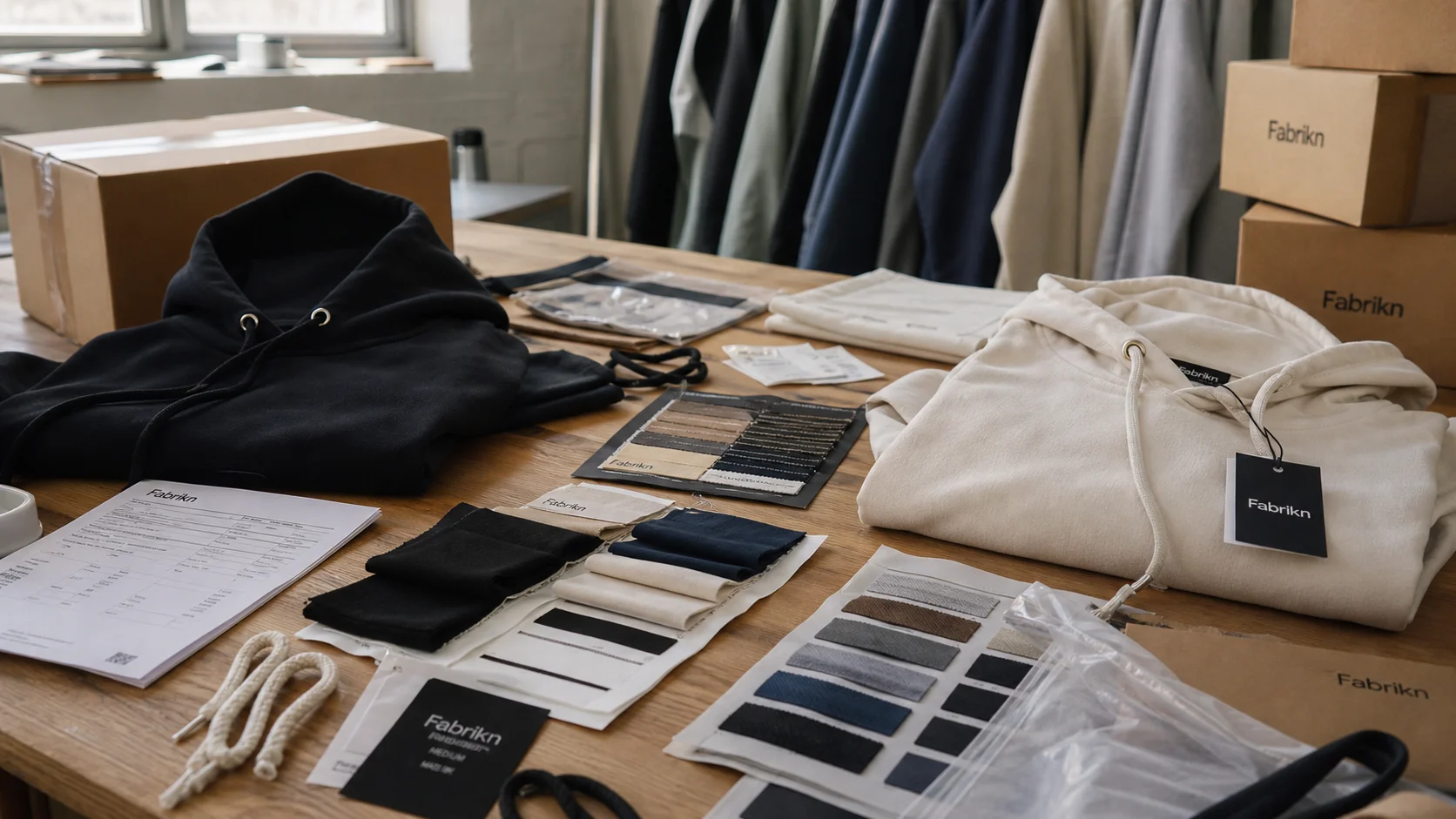
Marketplaces Fashion Startup Sales with checks for samples, fit, MOQ, QC evidence, pricing terms, and delivery risk.
Fast answer: Marketplaces Fashion Startup Sales: Samples, Cost Lines, QC, and Delivery Risk should be judged by production evidence, not by a generic sourcing promise. The buyer needs sample proof, cost breakdowns, QC checkpoints, and delivery buffers in writing.
Ask for recent sample photos, measurement tolerances, fabric or print test assumptions, decoration test notes, packing examples, and a named inspection checkpoint. These details show whether the team can repeat an approved sample at bulk volume.
Separate garment cost, decoration, labels, packaging, sampling, testing, freight, and rush charges. When every cost line is visible, it becomes easier to reduce colorways, adjust size depth, or reserve more time for sampling.
For fashion startups, reaching customers consistently and scaling sales quickly depends on visibility, trust, and operational efficiency. While building a standalone ecommerce website is essential, the initial traction often comes from tapping into established marketplaces where shoppers already shop for fashion. These platforms provide built-in traffic, marketing tools, payment infrastructure, and fulfilment support, allowing brands to focus on design, storytelling, and core operations.
This article explores the top marketplaces where fashion startups can boost sales, highlighting what makes each platform unique and how to align marketplace strategies with broader brand goals. You will gain insights into evaluating marketplace fit, leveraging data, optimizing listings, and complementing marketplace presence with manufacturing support from Fabrikn's services.
Selecting the right marketplaces requires clarity on your product, target customer, pricing strategy, and fulfillment capacity. Not every marketplace suits every fashion brand. Consider the following criteria before investing time and budget into a platform:
Establish an internal marketplace playbook that defines decision makers, onboarding steps, branding requirements, and performance metrics. This standardization ensures consistent quality across platforms and prevents operational bottlenecks as you expand.
Here are the marketplaces that have proven especially powerful for fashion-focused startups aiming to expand sales quickly:
While Shopify is renowned for powering independent ecommerce stores, their ecosystem now includes a marketplace layer through the Shop app and Exchange marketplace for acquisitions. Fashion startups already on Shopify benefit from the seamless integration of sales channels, allowing them to appear in the Shop app where millions of shoppers discover new brands. The native Shop Pay checkout, customizable storefronts, and loyalty programs help build long-term customer relationships.
Fashion founders who are experimenting with multi-channel expansion should consider linking Shopify with other marketplace integrations directly from the admin dashboard. This ensures inventory sync, unified order management, and reporting through a single system.
Amazon Fashion remains one of the world’s largest marketplaces for apparel and accessories, offering unmatched scale. Startups can tap into Amazon’s Her Platform to reach Prime members, leverage Fulfillment by Amazon (FBA) for logistics, and use targeted advertising to promote new launches.
Success on Amazon Fashion hinges on optimizing detail pages, winning the Buy Box, and delivering consistent customer service. Fashion founders should also consider Amazon Exclusives or Launchpad programs aimed at emerging brands. These programs provide marketing support, brand storytelling opportunities, and access to Amazon’s influencer network.
Zalando is the fashion marketplace of choice in Europe, with an strong reputation for quality curation and customer experience. The Zalando Partner Program allows brands to manage their own inventory (Partner Fulfillment) or rely on Zalando Fulfillment Solutions. The platform’s sleek user interface and strong data insights into shopper behavior help fashion startups align their merchandising with regional trends.
The platform prioritizes sustainability and transparency, so emerging brands with eco-friendly practices or traceable supply chains can leverage Zalando’s marketing channels effectively. The application process may be selective, but those accepted gain exposure to more than 30 million active customers.
Farfetch has positioned itself as a luxury fashion marketplace that champions independent boutiques and designers. Emerging designers can benefit from Farfetch’s global reach, white-glove logistics, and the ability to sell through a marketplace that attracts affluent shoppers seeking unique products.
Farfetch offers multiple onboarding options, including the standard marketplace model and the Farfetch Second Life platform for researched resale. Startups should highlight craftsmanship, storytelling, and limited production runs to align with Farfetch’s brand aesthetic.
For artisanal fashion brands, Etsy remains a powerhouse with a community of buyers who value handmade, customizable, and niche pieces. Although it is often associated with crafts, Etsy’s recent investments in fashion marketing, style guides, and shop personalization have made it a vibrant platform for boutique clothing lines.
Startups should optimize product photography, leverage Etsy ads, and maintain excellent reviews to stand out. Etsy’s messaging tools also allow for direct communication with customers about custom orders, creating loyalty through bespoke experiences.
Chinese cross-border ecommerce continues to grow, and Tmall Global is Alibaba’s gateway for international fashion brands seeking access to Chinese consumers without a local entity. For fashion startups ready to scale internationally, Tmall Global offers enormous potential, especially for established lines with proven product-market fit.
Brands must navigate compliance, localization, and marketing aligned with Chinese shopping festivals such as Singles Day and 618. Partnerships with agencies and trusted logistics providers ensure efficient delivery and returns management.
Pre-owned luxury fashion has a growing customer base, and The RealReal is the dominant authenticated resale marketplace. Startups exploring circular fashion or limited drops can use The RealReal to resell inventory while testing product desirability.
Focusing on high-quality design and narratives about sustainability can help fashion startups position themselves within The RealReal community. Beyond resale, the platform offers concierge services for packaging, authentication, and marketing support.
Depop is a Gen Z favorite for streetwear, vintage, and emerging designer pieces. With its social feed, influencer partnerships, and in-app messaging, Depop functions as a marketplace and community. Fashion startups targeting a younger audience should invest in vibrant visuals, quick shipping, and engaging drops to capture attention.
Consider collaborations with content creators and leveraging Depop’s editorial features to amplify brand stories. The platform rewards authenticity and limited releases.
For British startups and designers making unique, high-quality products, Notonthehighstreet specializes in curated gifts and fashion. Brands on the platform benefit from professional product marketing, gift guides, and a loyal customer base looking for thoughtful fashion with a story.
The selection process is competitive, but the marketplace provides guidance on photography, copywriting, and packaging to maintain consistent customer experiences.
These online luxury retailers highlight categories like runway-inspired fashion, limited editions, and designer collaborations. While their onboarding may be more selective, being featured can elevate brand status quickly. Fashion startups with exquisite craftsmanship and unique silhouettes that align with the luxury segment find resonance with these shoppers.
Moda Operandi’s pre-order model can help manage inventory risks, while Cettire’s aggressive international expansion offers increased brand exposure with performance marketing.
While general marketplaces provide scale, specialized platforms offer targeted reach and more intimate brand experiences. Fashion startups can use niche marketplaces to test product ideas, validate pricing, and cultivate passionate communities.
Examples include:
Niche marketplaces reward authenticity, transparency, and rapid customer feedback. Fashion startups can use them alongside larger platforms to build a layered presence, understand different customer segments, and prototype new concepts.
Merely listing products on marketplaces isn’t enough. Fashion startups must treat each marketplace as a mini business channel with tailored strategies:
To manage multiple marketplaces simultaneously, implement a multichannel management platform that centralizes listings, orders, and analytics. Standardize reporting to compare performance and pivot quickly if a marketplace underperforms.
While marketplaces drive sales, consistent product quality and reliable manufacturing keep customers coming back. Fabrikn partners with fashion startups to turn prototypes into scalable production, ensuring each marketplace listing is backed by a dependable supply chain.
Our services span pattern development, sourcing, and on-demand manufacturing. We help brands optimize cost, maintain compliance, and reduce lead times so they meet marketplace requirements effortlessly. Whether you’re launching a drop on Amazon Fashion or expanding to Zalando, Fabrikn’s team supports quality controls and transparent production timelines.
To learn more about how our manufacturing solutions can align with your marketplace strategies, visit our services page. Building a cohesive presence across marketplaces often begins with a solid foundation in production, and Fabrikn stands ready to guide your startup from sampling to fulfilment.
Ready to discuss your next collection or marketplace plan? Reach out through our contact us page.
Curious about our journey and why fashion founders trust Fabrikn? Explore our story on the about us page and learn how we help startups succeed.
Get a free quote from Fabrikn — your trusted B2B clothing manufacturer with 10+ years of experience. MOQ as low as 200 pieces.
Get a Free Quote →A strong brief makes the supplier's job narrower and the quote more reliable. For top marketplaces for fashion startups to boost sales, include the target customer, sales channel, expected order quantity, size range, decoration needs, packaging requirements, and delivery market. Then call out the details most likely to affect the result, especially fit intent, material source, and trim selection.
The brief should also explain what cannot change. Some brands care most about hand feel, some about price, some about launch timing, and some about retail compliance. When those priorities are not written down, suppliers tend to optimize for whatever is easiest to quote. Clear priorities help the factory make better tradeoffs before the first sample is cut or printed.
Ask the supplier to respond with assumptions, not just a price. A useful reply states MOQ, sample route, production capacity, inspection plan, packing method, and freight handoff. If the answer is vague, the project may still work, but it needs a tighter pre-production stage before money and calendar pressure build up.
The best time to catch problems is before the pre-production sample is approved. Check measurements, color, placement, material behavior, shrinkage, construction, labels, and packaging in the same review instead of approving each item in isolation. Many bulk issues are not caused by one dramatic mistake; they come from several small unchecked assumptions.
For top marketplaces for fashion startups to boost sales, pay special attention to sample review, bulk inspection, and shipping plan. These details often look minor in an email but become expensive once cutting, printing, sewing, packing, or shipping begins. A simple checklist with owner, due date, and approval status keeps the brand team and factory aligned.
Bulk production should not start until the supplier can explain how the approved sample becomes a repeatable production standard. That means reference sample storage, line instructions, inline checks, final inspection, and defect handling. A factory that can describe this process clearly is usually safer than one that only promises speed.
Price differences are useful only when the quotes cover the same work. Compare sample cost, material source, trims, decoration, packaging, testing, inspection, and freight assumptions. A low unit price can become expensive if it excludes items the brand needs before launch.
Timeline promises deserve the same scrutiny. Ask what happens if the first sample needs revision, whether materials are in stock, when the production slot is reserved, and how export packing is handled. The most reliable supplier is often the one that gives a realistic calendar instead of the fastest optimistic answer.
Start with one or two marketplaces that best align with your target customer and brand positioning. For mainstream reach, Amazon Fashion or Shopify-integrated platforms are strong bets. For niche or premium designs, consider Zalando or Farfetch. Focus on mastering one marketplace before expanding to others.
Use inventory management systems or marketplace integrators that sync stock across channels. This prevents overselling and ensures accurate updates. Fabrikn can also assist with production planning to match inventory levels with marketplace demand.
Many marketplaces provide international logistics services, especially if you enroll in their fulfillment programs. However, fashion startups should verify customs, duties, and return policies per region. Work with fulfillment partners or local warehouses to streamline cross-border sales.
Costs vary by platform and typically include listing fees, referral fees, and fulfillment charges. Evaluate each marketplace’s fee structure, factoring it into your pricing strategy. Remember to include marketing spend for sponsored placements and content creation.
Fabrikn ensures that every product you list on marketplaces meets quality standards and shipping deadlines. From sampling to bulk production, our manufacturing workflow adapts to your launch schedule. Connect with us via our contact page to explore how we can support your marketplace ambitions.