
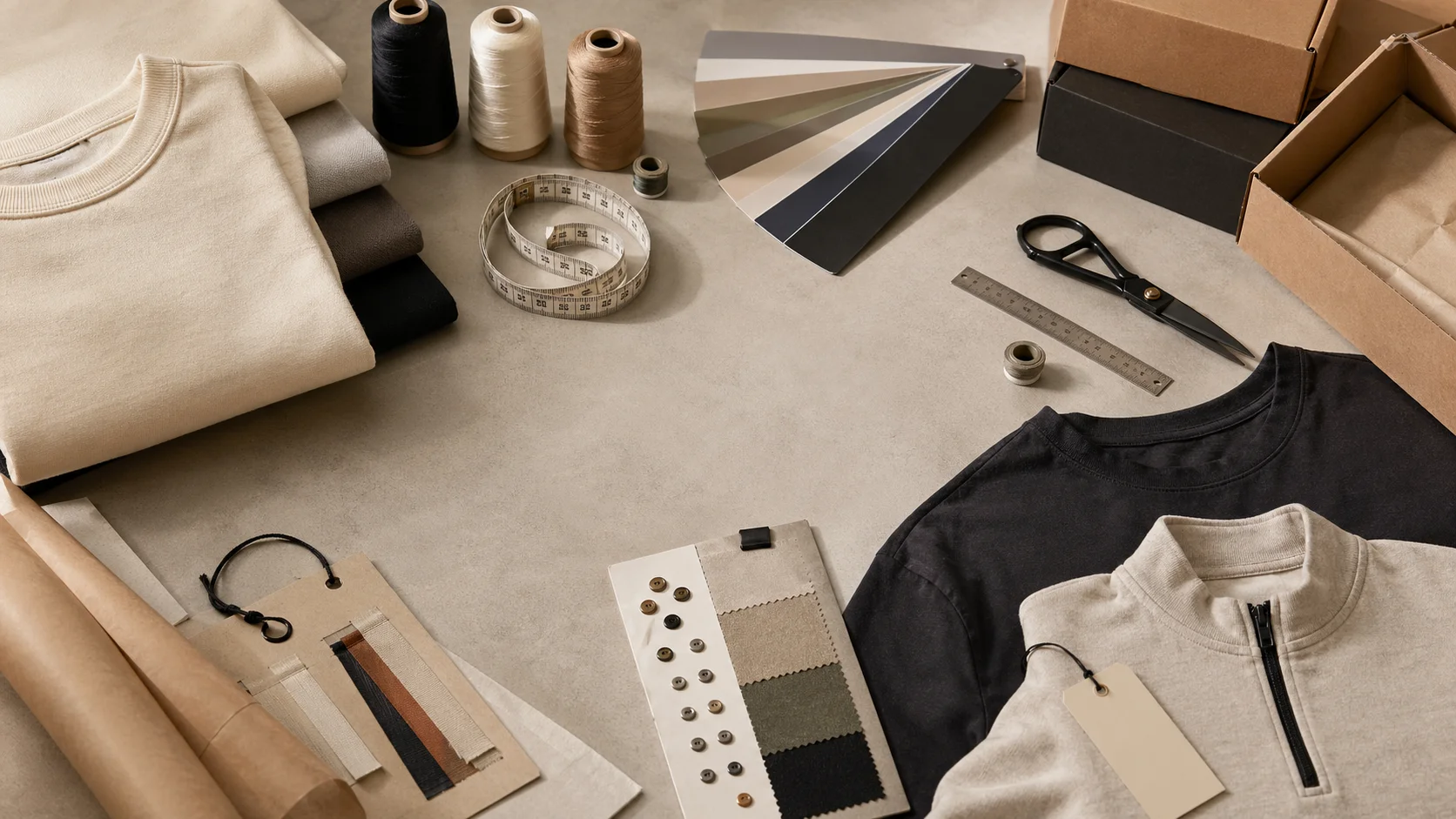
Product Photography Setup for Fashion Ecommerce with checks for samples, fit, MOQ, QC evidence, pricing terms, and delivery risk.
Fast answer: Product Photography Setup for Fashion Ecommerce: Samples, Cost Lines, QC, and Delivery Risk should be judged by production evidence, not by a generic sourcing promise. The buyer needs sample proof, cost breakdowns, QC checkpoints, and delivery buffers in writing.
Ask for recent sample photos, measurement tolerances, fabric or print test assumptions, decoration test notes, packing examples, and a named inspection checkpoint. These details show whether the team can repeat an approved sample at bulk volume.
Separate garment cost, decoration, labels, packaging, sampling, testing, freight, and rush charges. When every cost line is visible, it becomes easier to reduce colorways, adjust size depth, or reserve more time for sampling.
If you sell fashion online, your product photography is not just a visual asset. It is one of your most important sales tools, branding tools, and SEO opportunities. In a crowded ecommerce market, customers cannot touch the fabric, try on the fit, or see the true color in person. That means your photography must do the heavy lifting.
This guide explains the best product photography setup for fashion ecommerce, from lighting and equipment to styling, editing, and SEO. Whether you are launching a new apparel brand, upgrading your Shopify store, or planning a more professional content workflow, the right setup can improve conversions, reduce returns, and strengthen your search visibility.
At Fabrikn, we understand how visual presentation impacts the performance of fashion products online. If you need help with manufacturing and product development, explore our services or reach out through our contact page.
Fashion is a highly visual category. Shoppers often decide within seconds whether a product feels premium, trustworthy, and worth clicking. Strong photography helps answer the questions buyers ask before purchasing:
High-quality photos can also improve key ecommerce metrics. Better images often lead to higher click-through rates, more time on page, better conversion rates, and fewer returns. For fashion brands, this is especially important because fit, finish, and fabric quality influence customer trust.
Search engines also reward pages that satisfy users. If your images are optimized with descriptive file names, alt text, and proper page structure, they can support your SEO strategy while improving user experience.
The best product photography setup for fashion ecommerce depends on your product line, but most successful brands rely on a simple, repeatable system. The goal is consistency. Your images should look cohesive across every product, category, and campaign.
A strong setup usually includes three elements: controlled lighting, a neutral shooting environment, and a stable camera system. Once those basics are in place, you can create images that are clean, accurate, and easy to scale.
For many fashion brands, the ideal setup includes a combination of:
For ecommerce, the “best” setup is not always the most expensive one. It is the one that delivers accurate, repeatable results and supports your brand identity.
To create professional fashion product photography, you do not need a full studio right away. However, investing in the right core equipment will make a major difference in image quality and production speed.
A DSLR or mirrorless camera is ideal because it gives you full control over exposure, aperture, and white balance. Popular choices include entry-level to mid-range cameras from Canon, Nikon, Sony, and Fujifilm. If you are just starting, even a quality crop-sensor camera can produce excellent ecommerce photos.
A standard prime lens or zoom lens with sharp focus is important. For apparel and accessories, a lens in the 50mm to 100mm range is often a good option because it reduces distortion and preserves natural proportions. A macro lens may be useful for jewelry, fabric details, or close-up shots.
A tripod is essential for consistency. It keeps every product image aligned, helps with repeat shots, and minimizes blur. If you are photographing multiple SKUs, a tripod can save a significant amount of editing time later.
Softbox lights, LED panels, or continuous lighting systems are common for fashion ecommerce. Flash photography can also work well, but continuous light is often easier for teams that want to see the result in real time. The key is soft, even illumination with minimal harsh shadows.
A smooth seamless backdrop in white, gray, or off-white creates a professional look and helps keep attention on the product. For flat lays, you can use a large board or tabletop covered in a clean neutral surface.
These inexpensive tools help control light and reduce unwanted shadows. Reflectors bounce light back into darker areas, while diffusers soften direct light.
Adobe Lightroom, Photoshop, Capture One, or similar tools are useful for color correction, background cleanup, cropping, and export optimization. Editing is not about changing the product. It is about ensuring the image accurately represents it.
Lighting is one of the most important parts of the best product photography setup for fashion ecommerce. Poor lighting makes fabric look dull, hides texture, and can distort color. Good lighting makes the product appear crisp, premium, and trustworthy.
For clothing and accessories, soft light is usually best. Hard direct light creates strong shadows and can emphasize wrinkles or imperfections in a distracting way. Use a softbox, umbrella, or diffuser to spread the light evenly.
Consistency matters more than dramatic effects in ecommerce photography. Every product photo should follow the same lighting pattern so your store looks uniform. This creates a cleaner shopping experience and helps customers compare products fairly.
Fashion shoppers expect accurate colors. If white balance is off, a white shirt may appear cream or blue, and a black jacket may look washed out. Set your white balance manually or use a gray card to maintain color accuracy across your shoot.
Do not combine daylight, warm indoor bulbs, and studio lights unless you are very experienced. Mixed lighting can create color casts that are difficult to correct later. Use one controlled lighting system for the whole setup.
Natural light can work well if you have a large window and a diffusing curtain. However, it changes throughout the day, which can make consistency difficult. For brands that need high-volume photography, artificial light is usually the more reliable choice.
Backgrounds and styling choices should support the product, not distract from it. The best product photography setup for fashion ecommerce usually favors simplicity, especially for main product images.
White backgrounds are common for ecommerce because they look clean, professional, and versatile. They also work well for marketplaces and search listings. Light gray, beige, or soft neutral tones can also work if they fit your brand.
In addition to plain product images, fashion brands should often include lifestyle photos. These show the product in context and help customers imagine how it fits into their lives. For example, a jacket may be shown on a street, while activewear may be photographed in a studio or gym setting.
Props can add style, but too many can make the image feel cluttered. Use props only when they support the story of the product. For example, a handbag may be styled with a few accessories, but the bag itself must remain the focal point.
Use the same hangers, mannequins, model posing style, or flat lay approach across your catalog. Consistency improves brand perception and makes your store look more polished.
Different fashion categories require different shooting approaches. A strong ecommerce photo setup should adapt to the product type while keeping the overall presentation cohesive.
For clothing, you generally have three main options: on-model photography, ghost mannequin photography, and flat lay photography.
For apparel, capture multiple angles, including front, back, side, close-up fabric shots, and detail shots of zippers, stitching, labels, or buttons.
Accessories such as bags, belts, scarves, sunglasses, and hats should be photographed with close attention to shape and texture. Use a stable support system and focus carefully on small details. For products like bags, show both the exterior and interior if relevant.
Shoes need clean lines, even lighting, and careful attention to proportions. Photograph them from the side, front, back, and top. If possible, include a shot that shows sole details or construction quality. Footwear often benefits from both studio shots and lifestyle images.
Online shoppers cannot physically inspect the product, so your gallery should answer as many questions as possible. A strong product page usually includes at least four to six photos, and more for premium or complex items.
Editing should enhance clarity and consistency without misrepresenting the product. For fashion ecommerce, your post-production workflow is just as important as the shoot itself.
Color correction is critical in fashion. Customers expect the product they receive to match the product they saw online. Use calibrated monitors and a consistent editing process to keep colors true to life.
Remove dust, wrinkles that are not part of the product presentation, background blemishes, and minor inconsistencies. Do not over-edit the garment into looking unnatural. Authenticity matters.
All product photos on a category page should follow the same crop ratio and framing. This makes your ecommerce store feel organized and professional.
Large image files can slow down page speed, which hurts both SEO and user experience. Export images in the right dimensions and compress them without losing visible quality. Fast-loading images help improve engagement and search performance.
A consistent editing style creates a stronger visual identity. If your photography is clean and minimal, your editing should reflect that same tone across every image.
Photography is visual, but it also has a direct relationship with SEO. Search engines depend on file names, alt text, page content, and metadata to understand your images.
Before uploading images, rename them clearly. Instead of generic names like IMG_2045.jpg, use descriptive names such as women-black-tailored-blazer-front.jpg. This helps search engines better understand the image content.
Alt text should describe the product accurately and naturally. It supports accessibility and gives search engines more context. For example: “Black tailored women’s blazer with gold buttons, front view.”
If someone searches for “best product photography setup for fashion ecommerce,” they may be looking for a setup guide, not just inspiration. For your product pages and blog content, include photos that demonstrate quality, craftsmanship, and product details.
Search engines understand content better when images are surrounded by relevant copy. On your product pages, pair each photo gallery with strong descriptions, materials, fit notes, and care information.
Image optimization is not optional. Compress files, use modern formats when possible, and make sure your ecommerce platform serves images efficiently. Faster pages help SEO and improve mobile shopping performance.
Original photos are better for branding and SEO than stock imagery. Search engines and users both value unique content. For fashion brands, original photography can differentiate your store from competitors and support better rankings over time.
If you are building a clothing brand and need support turning product concepts into production-ready garments, Fabrikn can help. Learn more about our background on the about us page.
Even a well-equipped studio can produce weak ecommerce photos if the process is inconsistent. Avoid these common mistakes when building your setup.
These issues can reduce trust, confuse shoppers, and weaken your SEO performance. The more consistent and accurate your photography is, the better your store will perform.
As your brand grows, in-house photography may become time-consuming. Outsourcing can be the right choice if you need faster turnaround, higher production quality, or a more polished brand image.
Consider outsourcing if:
Working with the right manufacturing and development partner can also improve the final result because better product construction often photographs better. Clean stitching, accurate fit, and quality materials all show up in images.
If you are planning a new fashion line, creating sample-ready products, or looking to improve how your garments are presented, get in touch with Fabrikn through our contact page.
The best product photography setup for fashion ecommerce is one that combines clean lighting, accurate color, consistent framing, and a workflow that can scale. You do not need an overly complex studio to get results. What matters most is control, repeatability, and attention to detail.
When your images clearly communicate fit, texture, quality, and style, shoppers feel more confident buying from you. That confidence can lead to more sales, stronger branding, and better SEO performance over time.
Whether you handle photography in-house or work with creative partners, the right setup can transform how your fashion products perform online. In ecommerce, visuals sell — and professional visuals build trust.
Get a free quote from Fabrikn — your trusted B2B clothing manufacturer with 10+ years of experience. MOQ as low as 200 pieces.
Get a Free Quote →The best setup usually includes a DSLR or mirrorless camera, a sharp lens, soft lighting, a neutral background, and a tripod. Consistency is more important than having expensive equipment.
Yes, white or neutral backgrounds are ideal for main ecommerce product images because they keep the focus on the garment and create a clean, professional look.
Natural light can work well for small shoots, but it is harder to control. For consistent ecommerce photography, artificial lighting is usually better.
A strong listing should include at least four to six images, showing different angles, details, and styling views. Premium products may need more.
Yes. Optimized file names, alt text, page speed, and original images can all support SEO. Good photography also improves engagement and conversion rates, which indirectly helps performance.
Yes. Fabrikn works with brands on manufacturing and product development. Learn more about our services or contact us to discuss your project.