
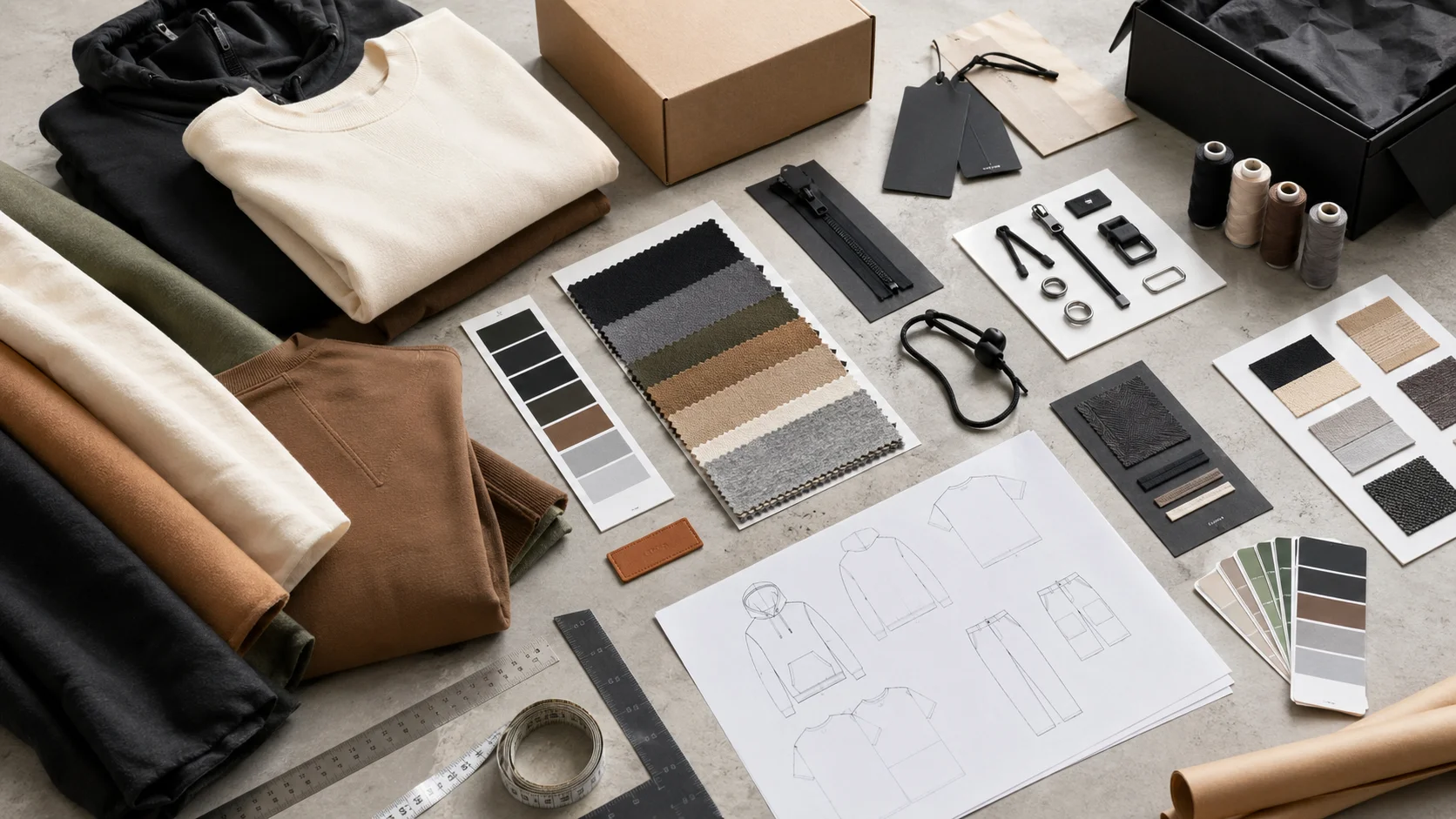
Shopify Apps for Clothing Brand Returns with checks for samples, fit, MOQ, QC evidence, pricing terms, and delivery risk.
Fast answer: Shopify Apps for Clothing Brand Returns: Samples, Cost Lines, QC, and Delivery Risk should be judged by production evidence, not by a generic sourcing promise. The buyer needs sample proof, cost breakdowns, QC checkpoints, and delivery buffers in writing.
Ask for recent sample photos, measurement tolerances, fabric or print test assumptions, decoration test notes, packing examples, and a named inspection checkpoint. These details show whether the team can repeat an approved sample at bulk volume.
Separate garment cost, decoration, labels, packaging, sampling, testing, freight, and rush charges. When every cost line is visible, it becomes easier to reduce colorways, adjust size depth, or reserve more time for sampling.
Returns are a normal part of running an apparel business, but for clothing brands on Shopify, they can quickly become a cost center if the process is slow, confusing, or manual. The best Shopify apps for clothing brand returns help streamline exchanges, automate labels, reduce customer service tickets, and protect margins while improving the post-purchase experience.
For fashion and apparel brands, returns are especially important because fit, color, fabric feel, and styling preferences often lead to higher return rates than in other categories. That means your returns workflow needs to be simple for customers and efficient for your team. In this guide, we’ll break down what to look for in a returns app, the best Shopify apps for clothing brand returns, and how to choose the right solution for your store.
Clothing returns are different from returns in most other categories. Apparel buyers often order multiple sizes, compare styles at home, and send back items that don’t fit the way they expected. Even well-performing brands can see return rates that are significantly higher than average ecommerce stores.
That creates a few business challenges:
For fashion brands, returns are not just a support issue. They are a core part of the customer journey. The right app can turn returns into a smoother experience that encourages exchanges instead of refunds and helps preserve revenue.
Not every returns app is built for apparel. Some tools are generic, while others are designed for fashion ecommerce. If you’re evaluating the best Shopify apps for clothing brand returns, focus on features that support both customer convenience and operational control.
A branded return portal lets customers start a return without emailing support. They can choose the item, select a reason, and request a refund, exchange, or store credit. This reduces ticket volume and makes the experience feel professional.
For clothing brands, exchanges are often better than refunds. A strong returns app should make it easy for customers to swap sizes, colors, or styles. Some apps also offer instant exchanges, which can protect revenue by sending the replacement before the original item arrives back.
Automating shipping labels saves time and reduces manual work. The best apps can generate prepaid labels, apply rules by region or order value, and send labels automatically after approval.
Your store may need custom rules for final sale items, promotional products, or exchange-only categories. Look for tools that let you set return windows, condition requirements, and brand-specific policies.
Offering store credit can retain more revenue than a refund. The best apps support credit-based returns and can encourage customers to buy again with incentives such as bonus credit.
Returns data can help you identify recurring fit problems, product defects, or misleading product descriptions. App analytics should show return reasons, refund rates, exchange trends, and item-level insights.
The app should integrate cleanly with Shopify and your existing tech stack. Ideally, it should sync orders, update inventory, trigger notifications, and reduce manual admin work.
Below are some of the most useful Shopify apps for clothing brand returns. The best option for your business depends on your order volume, return complexity, and whether you want to emphasize exchanges, store credit, or customer self-service.
Loop Returns is one of the most well-known returns platforms for ecommerce brands, especially in apparel. It is built to support exchanges, store credit, and a polished customer return portal. For clothing brands, Loop is popular because it makes exchanges feel seamless and helps brands keep revenue in-house.
Loop is a strong choice if you want a premium returns experience and expect returns volume to justify a more advanced platform.
ReturnGO is another strong option for clothing brands that want to automate self-service returns and exchanges. It offers flexible workflows, branded pages, and support for exchange-first return logic. Many apparel brands like ReturnGO because it can handle complex policies while keeping the customer experience simple.
If your brand sells in multiple regions or has different return rules by market, ReturnGO can be a practical fit.
AfterShip Returns is part of a broader delivery and tracking ecosystem, which makes it attractive for brands that want returns and post-purchase visibility in one place. It offers branded return pages, automated approvals, and return label management.
For brands that care about shipment tracking, delivery updates, and reverse logistics in one ecosystem, AfterShip can be a smart option.
Parcel Panel is known for order tracking, but its returns functionality also makes it useful for clothing brands that want a unified post-purchase experience. It can help reduce “Where is my order?” tickets and support return workflows in a customer-friendly way.
If customer communication is a pain point, Parcel Panel can help improve both order tracking and return visibility.
RichReturns focuses on flexible returns workflows, making it a good fit for clothing brands that want a straightforward and efficient solution. It supports return portals, exchange handling, and custom policies. For brands that want less complexity than enterprise tools, it may be a good middle ground.
RichReturns can work well if you want solid functionality without overcomplicating your operations.
Return Prime is designed to simplify returns and exchanges for Shopify merchants. It includes a customer portal, automated approvals, and custom return rules. Many merchants choose it for its straightforward setup and ability to support exchange and credit-based returns.
For newer clothing brands, this can be a good way to professionalize returns without overwhelming your team.
Narvar is an enterprise-level post-purchase platform used by major retail brands. It is well suited for larger clothing companies with high order volume and sophisticated operational needs. Narvar offers strong returns management, tracking, and customer communication tools.
If your brand is scaling quickly and needs enterprise-level infrastructure, Narvar is worth exploring.
Returnly is a well-established returns solution focused on enabling exchanges and instant credit. It has long been used by apparel brands because it helps customers get a new item quickly while keeping refund processing under control.
Returnly is particularly useful when reducing refund leakage is a major priority.
The “best” Shopify app depends on where your brand is today. Here’s a simple way to think about the options.
If your brand is small and growing, the best app is usually the one that removes the most support burden without adding too much complexity. If your brand is established and processing thousands of returns a month, you may need a more advanced platform with detailed automation and analytics.
When comparing the best Shopify apps for clothing brand returns, don’t just look at features. Think about your business model, return rate, and customer experience goals.
Look at your current return rate, top return reasons, and which products are returned most often. If sizing is the biggest issue, an exchange-focused app may be your best option. If customer service tickets are overwhelming your team, prioritize self-service and automation.
Your return policy should align with your app’s capabilities. For example, if you offer store credit incentives, choose a platform that can support them clearly. If certain items are final sale, make sure the app can enforce those rules.
Fashion shoppers expect a smooth experience. A return app should feel branded, easy to use, and mobile-friendly. If the portal is confusing, customers will email support anyway, defeating the purpose of automation.
Some apps are better at protecting revenue than others. If exchanges and credit retention matter, look for features that make the replacement path easier than the refund path.
Select a tool that fits not only your current volume but also where your brand will be in 12 to 24 months. Migrating platforms later can be disruptive, so it’s worth choosing a solution that can scale with your business.
Even the best app is only one part of the equation. Clothing brands can lower return rates and improve profitability with a few operational and merchandising best practices.
Reducing returns often starts before the sale. The better your product pages and sizing tools are, the fewer post-purchase problems you’ll face.
At Fabrikn, we work with clothing brands that need reliable production, consistent quality, and a smoother path from product development to customer experience. While returns software helps manage post-purchase operations, your returns rate also depends on product quality, fit consistency, and how well your garments are made in the first place.
If you’re building or scaling a clothing brand, it helps to have a manufacturing partner that understands the operational realities behind returns. Better pattern development, clearer sizing, and more consistent production can all reduce avoidable returns over time.
To learn more about our capabilities, visit our services page. If you’re planning a new collection or want to discuss production support, you can also reach out through our contact us page. To learn more about our team and mission, see our about us page.
The best Shopify apps for clothing brand returns do more than process refunds. They create a smoother customer journey, reduce support workload, and help apparel brands keep more revenue through exchanges and store credit. Whether you’re a growing DTC fashion brand or a larger apparel retailer, choosing the right returns app can improve both operations and customer satisfaction.
Start by identifying your biggest return challenges, then choose a platform that matches your policy, volume, and growth goals. For many clothing brands, the best solution will be the one that balances automation, branding, and exchange-first logic without making the process complicated for customers.
Get a free quote from Fabrikn — your trusted B2B clothing manufacturer with 10+ years of experience. MOQ as low as 200 pieces.
Get a Free Quote →There is no single best app for every brand, but Loop Returns, ReturnGO, and Returnly are among the strongest choices for apparel brands that want exchange support, branded portals, and automation.
Not always, but a dedicated returns app usually improves efficiency, reduces customer service tickets, and creates a better experience than handling returns manually.
Many returns apps offer exchange-first workflows, store credit incentives, and instant exchange options that make it easier for customers to choose a replacement instead of a refund.
Yes, especially if your team spends a lot of time managing return emails or if customers regularly ask for exchanges. A simple returns app can save time and make your store look more professional.
Prioritize self-service returns, exchange support, automated labels, store credit options, policy rules, and reporting. These features are especially useful for fashion and apparel businesses.
A good returns app makes the process faster, easier, and more transparent. Customers can manage returns on their own, which reduces friction and improves trust in the brand.