
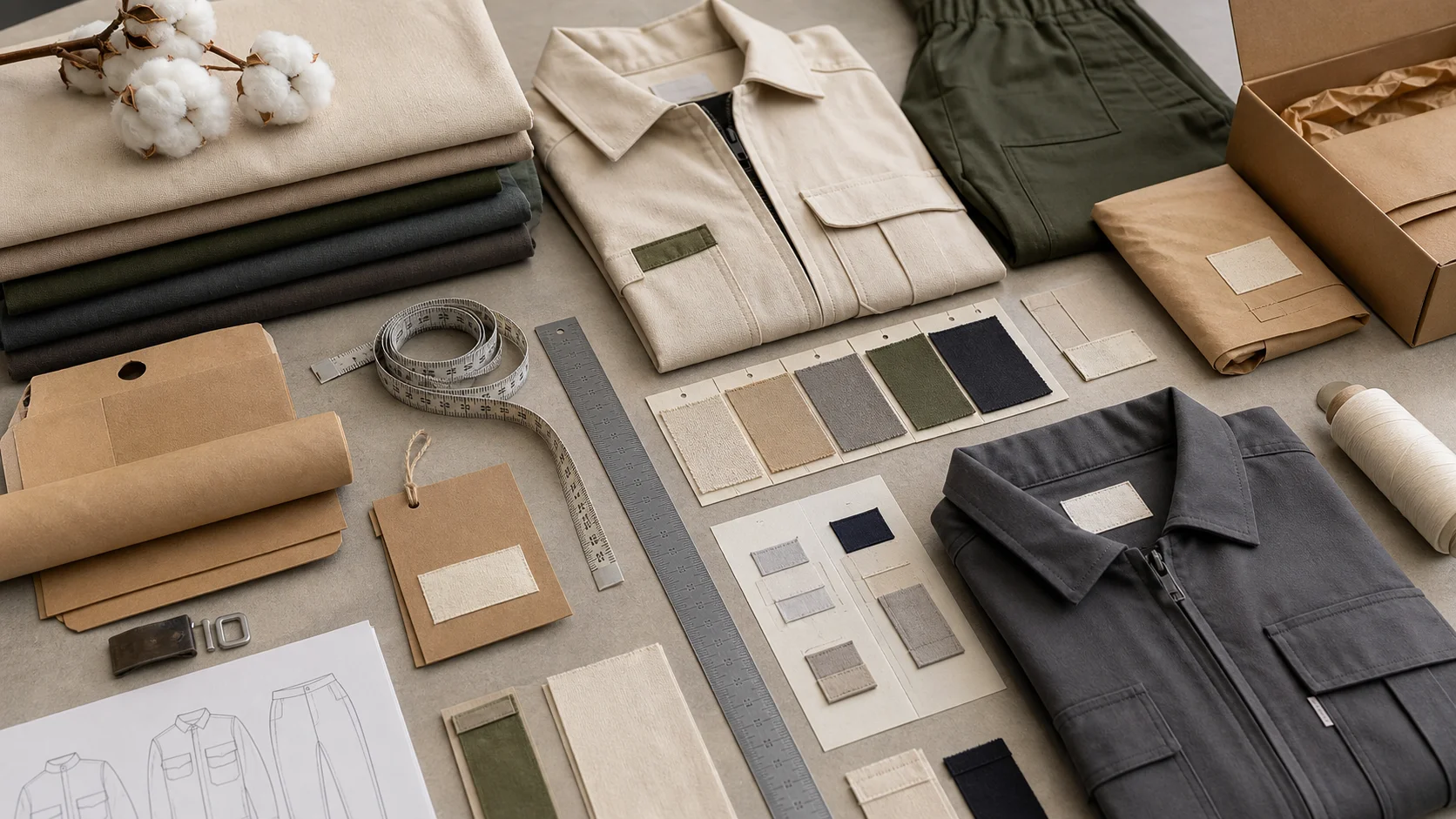
Supplier Selection Criteria for B2b Fashion Distributors with checks for samples, fit, MOQ, QC evidence, pricing terms, and delivery risk.
Fast answer: Supplier Selection Criteria for B2b Fashion Distributors: Samples, Cost Lines, QC, and Delivery Risk should be judged by production evidence, not by a generic sourcing promise. The buyer needs sample proof, cost breakdowns, QC checkpoints, and delivery buffers in writing.
Ask for recent sample photos, measurement tolerances, fabric or print test assumptions, decoration test notes, packing examples, and a named inspection checkpoint. These details show whether the team can repeat an approved sample at bulk volume.
Separate garment cost, decoration, labels, packaging, sampling, testing, freight, and rush charges. When every cost line is visible, it becomes easier to reduce colorways, adjust size depth, or reserve more time for sampling.
Category: Business Tips
For B2B fashion distributors, supplier selection is not just a procurement decision. It directly affects product quality, brand reputation, delivery performance, customer satisfaction, and profit margins. In the fashion industry, where trends move quickly and buyers expect consistency, the wrong supplier can create costly disruptions that ripple through the entire supply chain.
Choosing the best supplier means more than finding the lowest price. It means identifying a partner who can deliver the right products at the right time, maintain quality at scale, communicate clearly, and adapt to changing market demands. Whether you distribute private label clothing, wholesale apparel, or customized fashion collections, your supplier relationship can determine how competitive your business becomes.
If you are evaluating manufacturing or sourcing partners, it helps to understand the full scope of services available. You can explore more about our production capabilities on our services page, or learn more about our company on the about us page.
The first step in choosing the best supplier is knowing exactly what your business needs. Many distributors begin searching before they have clearly defined product specifications, order volumes, target margins, or delivery expectations. This often leads to mismatched supplier relationships and wasted time.
Start by outlining your requirements in detail:
When your requirements are clear, supplier comparisons become much more effective. You can quickly identify which partners match your business model and which ones are better suited to other types of buyers.
Product quality is one of the most important supplier selection criteria for B2B fashion distributors. A supplier may offer attractive pricing and fast turnaround, but if the garments do not meet quality expectations, your customers will notice immediately.
In fashion distribution, quality is not limited to fabric softness or visual appeal. It also includes stitching precision, color consistency, fit accuracy, garment finishing, sizing reliability, and durability after washing. A strong supplier should be able to maintain the same quality standards across multiple production runs.
When assessing quality, ask these questions:
Request product samples whenever possible. A sample gives you a realistic picture of what your customers will receive and helps you evaluate workmanship before making a larger commitment.
A supplier may be a great fit for small orders but struggle once your business grows. That is why production capacity is a critical factor for B2B fashion distributors. You need a supplier who can support your current demand while also scaling with your business over time.
Ask about:
Scalability matters especially in fashion, where demand can spike due to seasonal trends, promotions, or retail expansion. A supplier that cannot keep up can cause stock shortages, missed sales opportunities, and strained customer relationships.
If you are building a long-term manufacturing partnership, choose a supplier that can grow with you instead of forcing you to switch vendors later.
Strong communication is essential in any supplier relationship, but it becomes especially important in fashion distribution, where timelines are tight and product details matter. Poor communication can lead to misunderstandings, missed deadlines, and costly errors.
Look for a supplier that responds quickly, answers questions clearly, and keeps you updated throughout the production process. Good customer service is a sign of professionalism and operational maturity.
Evaluate communication by considering:
It is often easier to build a profitable long-term relationship with a responsive supplier than with one that offers a slightly lower price but poor service. If you want to begin a conversation with a manufacturing partner, you can reach out through our contact us page.
Fashion distributors must pay close attention to supplier compliance. In many markets, products must meet legal, safety, environmental, and labor standards. Working with a supplier that ignores compliance can expose your business to recalls, penalties, or reputational damage.
Depending on your market and product type, you may need to verify:
Ethical sourcing is also increasingly important to buyers. Many retailers and consumers now expect transparency regarding manufacturing conditions, sustainability, and responsible sourcing. A supplier that aligns with these values can strengthen your brand positioning and help you meet buyer expectations.
Many distributors make the mistake of judging suppliers only by unit price. While cost is important, the cheapest supplier is not always the most profitable partner. Hidden costs can quickly erase savings if quality issues, shipping delays, or communication problems arise.
When comparing pricing, consider the full landed cost and total value of the relationship. This includes:
Also evaluate whether the supplier offers price stability over time. Frequent price changes can make it difficult to plan margins and maintain competitiveness. A reliable supplier should provide clear quotations and explain any factors that may affect pricing.
In the fashion industry, timing is everything. Late deliveries can cause missed retail windows, stockouts, and disappointed buyers. That is why lead time and delivery reliability are essential supplier selection criteria for B2B fashion distributors.
Ask suppliers to clearly explain their standard production timeline, shipping process, and contingency plans for delays. It is also wise to ask how they manage urgent orders and peak seasons.
Key questions include:
A supplier with dependable delivery performance can help you maintain customer trust and improve inventory planning. A delayed supplier, even one with excellent products, can create significant operational risk.
Many B2B fashion distributors need more than standard garments. They need private label options, custom trims, unique sizing, custom packaging, or design modifications that help them stand out in the market. Supplier flexibility is therefore a major advantage.
Ask whether the supplier can support:
Strong product development support is especially useful if your business serves buyers looking for differentiated collections. A supplier that can collaborate on product development helps you move faster from concept to market-ready product.
This is one of the reasons why many distributors prefer to work with full-service manufacturing partners rather than fragmented vendors that only handle one part of the process.
Supplier selection is not only about what a partner can do today. It is also about whether they will remain reliable in the future. A financially unstable supplier may face disruptions, quality cutbacks, delayed payments to their own vendors, or even sudden shutdowns.
While you may not have access to every financial detail, you can still assess stability by looking at:
A mature supplier with strong systems is usually better positioned to support long-term distribution partnerships. This matters especially if you are developing a multi-season or multi-year supply strategy.
Before committing to a large order, always request samples or place a smaller test order. This is one of the most practical ways to verify whether a supplier can meet your expectations in real-world conditions.
Use sample testing to evaluate:
A test order can reveal issues that are not visible during initial conversations. It also gives you insight into how the supplier handles instructions, deadlines, and communication once a project is underway.
For B2B fashion distributors, this step reduces risk and creates a more objective basis for choosing a supplier.
One of the best ways to evaluate suppliers objectively is to create a scorecard. Instead of relying on instinct alone, assign ratings to each supplier across the criteria that matter most to your business.
A simple supplier scorecard may include:
You can score each category from 1 to 5 and then calculate an overall total. This makes it easier to compare suppliers side by side and reduces the chances of choosing based on one attractive feature alone.
It is also useful to weight certain criteria more heavily. For example, if your business serves retail clients with strict deadlines, delivery reliability may deserve more importance than minor price differences.
Even experienced distributors can make supplier selection mistakes. Avoiding these errors can save time, money, and frustration.
Another common mistake is treating supplier selection as a one-time event rather than an ongoing relationship. The best supplier partnerships are built through continued evaluation, regular feedback, and shared growth objectives.
The best supplier selection criteria for B2B fashion distributors go far beyond price. To build a resilient and profitable supply chain, distributors should evaluate quality, capacity, communication, compliance, pricing structure, lead times, customization support, and long-term stability.
When you choose a supplier who can deliver consistently and grow with your business, you create more than a purchasing relationship. You create a strategic partnership that supports brand reputation, customer satisfaction, and business expansion.
If you are looking for a professional manufacturing partner for your fashion distribution business, learn more about our approach on the about us page, explore our services, or connect with us directly through our contact us page.
Get a free quote from Fabrikn — your trusted B2B clothing manufacturer with 10+ years of experience. MOQ as low as 200 pieces.
Get a Free Quote →Product quality and consistency are usually the most important, followed closely by delivery reliability and communication. However, the best criterion depends on your business model and customer expectations.
No. Price matters, but the lowest-cost supplier may create higher overall costs through defects, delays, or poor service. It is better to evaluate total value and long-term reliability.
Request samples, review references, check production capacity, ask about lead times, and place a test order. These steps help confirm whether the supplier can perform consistently.
Compliance helps protect your business from legal, ethical, and reputational risks. It also ensures your products meet the standards expected by retailers and end buyers.
A supplier scorecard should include quality, price, communication, lead time, compliance, customization capability, scalability, and financial stability. You can adjust the weighting based on your priorities.
Suppliers should be reviewed regularly, especially after each production cycle or season. Ongoing review helps ensure that performance remains aligned with your business needs.