
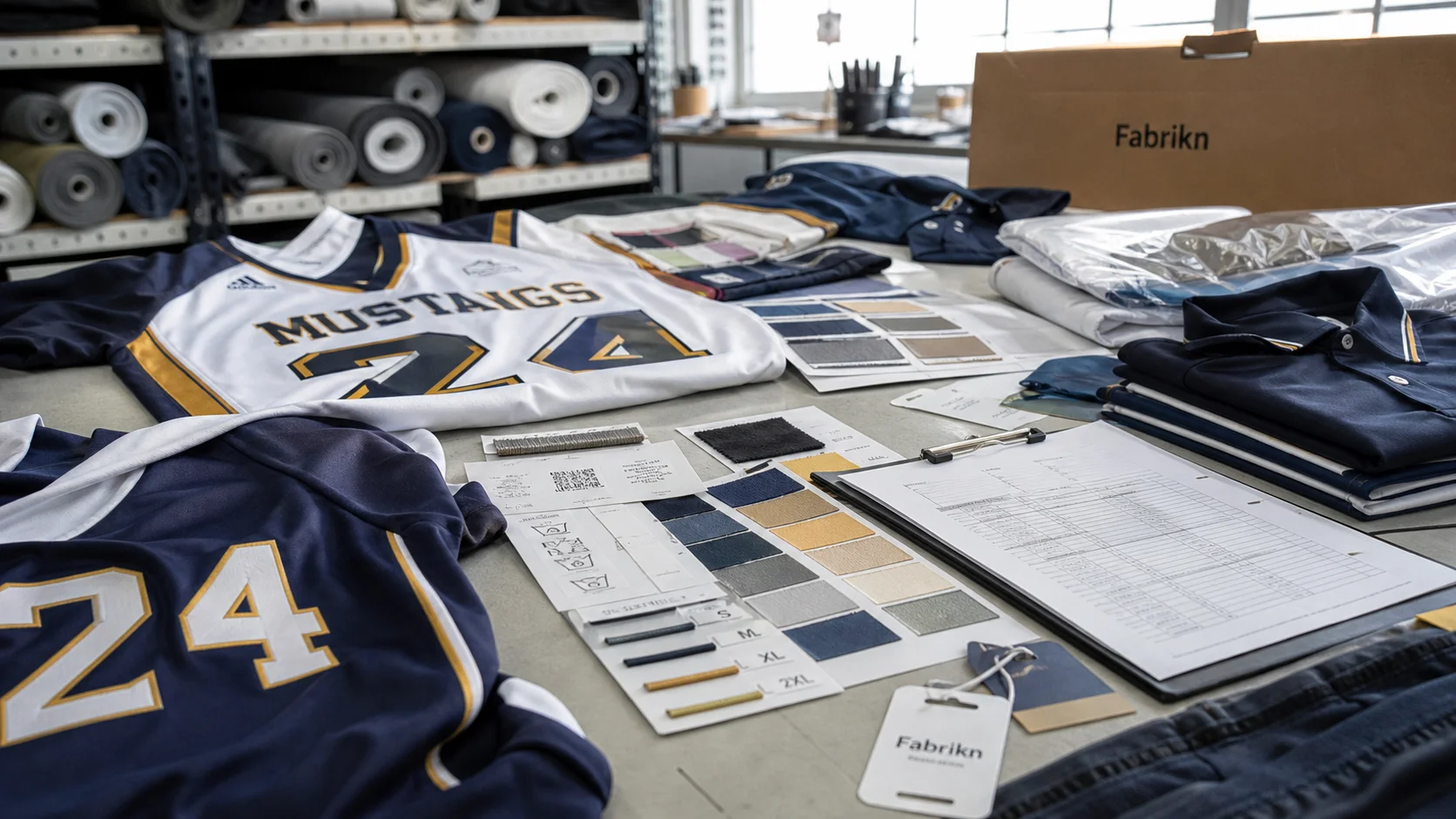
Sustainable Materials for Clothing with checks for samples, fit, MOQ, QC evidence, pricing terms, and delivery risk.
Fast answer: Sustainable Materials for Clothing: Samples, Cost Lines, QC, and Delivery Risk should be judged by production evidence, not by a generic sourcing promise. The buyer needs sample proof, cost breakdowns, QC checkpoints, and delivery buffers in writing.
Ask for recent sample photos, measurement tolerances, fabric or print test assumptions, decoration test notes, packing examples, and a named inspection checkpoint. These details show whether the team can repeat an approved sample at bulk volume.
Separate garment cost, decoration, labels, packaging, sampling, testing, freight, and rush charges. When every cost line is visible, it becomes easier to reduce colorways, adjust size depth, or reserve more time for sampling.
In today’s apparel industry, consumers and businesses alike are demanding more responsible sourcing and smarter material selections. With sustainability set to stay, clothing brands and manufacturers must adopt materials that minimize environmental impact without sacrificing design, comfort, or quality. This article takes a detailed look at the best sustainable materials for clothing, focusing on practical adoption, comparative advantages, and how these choices support broader eco-conscious fashion goals.
Material selection lies at the heart of sustainable fashion because fabric accounts for the majority of a garment’s environmental footprint. Conventional textiles often rely on intensive water use, pesticides, and fossil fuel-derived synthetics. By shifting to better materials, brands can reduce emissions, preserve biodiversity, and minimize waste. Sustainable materials also boost brand loyalty: consumers are willing to pay a premium for garments that align with their values.
Beyond reducing resource use, choosing sustainable materials often means working with transparent supply chains, fair labor practices, and regenerative agriculture. For manufacturers and brands, this shift is not only ethically imperative but also commercially advantageous. As the demand for eco-conscious fashion grows, sourcing the right materials becomes a competitive differentiator and a foundational strategy for long-term resilience.
Not all sustainable materials are created equal. Evaluating them requires considering several key factors that determine their overall impact:
In addition to these benchmarks, brands should engage with suppliers to confirm certifications and invest in technologies that monitor lifecycle emissions and waste. Multi-dimensional assessments help prevent greenwashing and ensure genuine progress toward sustainable fashion goals.
Natural fibers remain a staple of sustainable clothing due to their biodegradability and appeal. Here are the best options that combine durability, softness, and low-impact profiles:
Organic cotton eliminates synthetic pesticides and fertilizers, conserving soil and water. While conventional cotton relies heavily on chemical inputs, organic cultivation nurtures ecosystems through crop rotation and natural pest control. Brands that prioritize traceability can incorporate organic cotton into a wide range of garments, from casual tees to premium denim. Though organic cotton may cost more, its enduring popularity justifies the investment, especially when paired with eco-dyeing and water-saving finishing techniques.
Hemp stands out for its rapid growth, minimal water needs, and nitrogen-fixing properties. It can thrive without pesticides, regenerating soil health with every harvest. Hemp fibers are strong, breathable, and soft once processed, making them suitable for outerwear, denim, and travel garments. Blending hemp with other fibers—like organic cotton or recycled nylon—balances comfort with structural integrity, providing versatility for designers seeking texture and resilience.
Linen, derived from flax, offers natural moisture-wicking and cooling properties ideal for warm climates. Flax requires little irrigation and provides substantial fiber yields per acre. Linen garments often become softer over time, extending their lifespan. With low chemical requirements and easy compostability, linen remains a front-runner for sustainable apparel, especially when processed with mechanical retting and eco-friendly dyes.
Tencel™ Lyocell, produced by Lenzing, originates from sustainably managed forests, predominantly eucalyptus that grows quickly and needs little irrigation. The closed-loop production process recovers solvents and minimizes emissions, while the fabric offers exceptional drape, breathability, and tear strength. Tencel™ is especially suitable for activewear, intimate apparel, and performance-ready pieces that value softness without sacrificing eco credentials.
Modal, another Lenzing fiber, is derived from beechwood and shares the eco-friendly closed-loop process of lyocell. MicroModal enhances softness even further, making it a preferred choice for underwear and loungewear. The minimal chemical residue and high tensile strength contribute to garments that feel luxurious and stand the test of wear.
Wool, when sourced from farms with strong animal welfare standards and land regeneration practices, is a natural, renewable option. Merino wool provides temperature regulation and breathability, while recycled wool reduces resource demand by diverting textile waste. Certifications such as Responsible Wool Standard (RWS) verify ethical treatment of animals and environmental stewardship.
Beyond conventional natural fibers, regenerative textiles and cutting-edge bio-based materials are redefining sustainable fashion. These materials prioritize ecosystem restoration and circularity.
Regenerative cotton farming focuses on rebuilding soil fertility, capturing carbon, and enhancing biodiversity. Practices like cover cropping, reduced tillage, and pollinator-friendly plantings foster healthier landscapes. Brands that invest in regenerative cotton signal commitment to an industry transformation, pairing transparency with measurable improvements in soil carbon and water retention.
Bamboo itself is fast-growing and requires few pesticides, but processing methods matter. Mechanical processing (like bamboo linen) retains the plant’s sustainability features, while some chemical methods use harsh solvents. Responsible production ensures bamboo fabric shows off antimicrobial properties, high breathability, and smooth texture without environmental compromise.
Piñatex captures the essence of eco-innovation by turning pineapple leaf waste into a textile alternative to leather. With a carbon-neutral production process and no additional cultivation needed, it creates value from otherwise discarded fibers. Piñatex supports circular design, ideal for accessories and footwear that demand structure and longevity.
Mycelium, the root structure of mushrooms, transforms into low-impact “leather” through controlled growth and minimal processing. This biomaterial offers a soft, flexible surface with far lower emissions compared to animal-derived leather. Brands experimenting with mycelium showcase how regenerative design can satisfy luxury expectations.
Nettle fiber, harvested from resilient nettle plants, resembles linen but requires even fewer resources. Historically used for textiles, it is experiencing a resurgence thanks to regenerative agriculture initiatives. Nettle fabric is breathable, antimicrobial, and biodegradable, offering an authentic, rustic aesthetic that appeals to slow fashion enthusiasts.
Sustainable fashion does not reject synthetics entirely; rather, it reclaims and reimagines them. Recycled and responsibly produced synthetics extend garment life while reducing virgin petroleum use.
Recycled polyester, often made from post-consumer bottles and textile waste, provides the same durability as virgin polyester with significantly fewer emissions. It is widely used in athleisure, outerwear, and technical garments. When paired with responsible dyeing techniques and tear-resistant finishes, recycled polyester maintains performance without the fossil fuel footprint.
Recycled nylon—sourced from fishing nets and industrial scraps—delivers a premium handfeel while diverting waste from oceans and landfills. Brands integrate recycled nylon into swimwear, lingerie, and lightweight outerwear. Innovations in traceability allow brands to authenticate recycled content, often through certification programs like GRS (Global Recycle Standard).
ECONYL® recovers nylon waste and remakes it into fiber identical to virgin nylon. Its closed-loop system enables a circular lifecycle, especially valuable in swimwear and high-performance wear. Fabrics made with ECONYL® support a message of full-circle sustainability while maintaining the aesthetic quality of conventional nylon.
Recycled TPE offers flexibility for high-stretch garments and trims while aligning with circular material flows. Its adaptability makes it ideal for sportswear, footwear soles, and swimwear components, providing comfort without sacrificing planet-friendly credentials.
Certifications distinguish authentic sustainable materials from greenwashing. Brands should prioritize materials verified by recognized bodies:
Transparent reporting, labeling, and storytelling build consumer trust. Brands can showcase certifications on hangtags, websites, and marketing materials. Partnering with reputable manufacturers like Fabrikn helps align product messaging with verified sustainability outcomes. Manufacturers experienced in sustainable apparel can provide guidance on sourcing, compliance, and process optimization.
Transitioning to sustainable materials involves strategic planning. Here are actionable steps for brands and manufacturers:
Effective integration goes beyond sourcing. It includes responsible manufacturing, efficient cutting, and eco-friendly packaging. Brands should engage consumers through transparency reports, product narratives, and educational content. Collaborating with suppliers, design teams, and manufacturing partners ensures a cohesive approach from concept to consumer.
Explore Fabrikn’s full range of sustainable manufacturing and design services at https://www.fabrikn.com/services/ to discover how you can bring eco-conscious apparel visions to life.
Get a free quote from Fabrikn — your trusted B2B clothing manufacturer with 10+ years of experience. MOQ as low as 200 pieces.
Get a Free Quote →A strong brief makes the supplier's job narrower and the quote more reliable. For best sustainable materials for clothing, include the target customer, sales channel, expected order quantity, size range, decoration needs, packaging requirements, and delivery market. Then call out the details most likely to affect the result, especially fabric weight, shrinkage, and colorfastness.
The brief should also explain what cannot change. Some brands care most about hand feel, some about price, some about launch timing, and some about retail compliance. When those priorities are not written down, suppliers tend to optimize for whatever is easiest to quote. Clear priorities help the factory make better tradeoffs before the first sample is cut or printed.
Ask the supplier to respond with assumptions, not just a price. A useful reply states MOQ, sample route, production capacity, inspection plan, packing method, and freight handoff. If the answer is vague, the project may still work, but it needs a tighter pre-production stage before money and calendar pressure build up.
The best time to catch problems is before the pre-production sample is approved. Check measurements, color, placement, material behavior, shrinkage, construction, labels, and packaging in the same review instead of approving each item in isolation. Many bulk issues are not caused by one dramatic mistake; they come from several small unchecked assumptions.
For best sustainable materials for clothing, pay special attention to hand feel, lab dip approval, and care label rule. These details often look minor in an email but become expensive once cutting, printing, sewing, packing, or shipping begins. A simple checklist with owner, due date, and approval status keeps the brand team and factory aligned.
Bulk production should not start until the supplier can explain how the approved sample becomes a repeatable production standard. That means reference sample storage, line instructions, inline checks, final inspection, and defect handling. A factory that can describe this process clearly is usually safer than one that only promises speed.
Price differences are useful only when the quotes cover the same work. Compare sample cost, material source, trims, decoration, packaging, testing, inspection, and freight assumptions. A low unit price can become expensive if it excludes items the brand needs before launch.
Timeline promises deserve the same scrutiny. Ask what happens if the first sample needs revision, whether materials are in stock, when the production slot is reserved, and how export packing is handled. The most reliable supplier is often the one that gives a realistic calendar instead of the fastest optimistic answer.
What makes a material truly sustainable? A truly sustainable material minimizes environmental harm through low energy and water use, avoids harmful chemicals, supports fair labor, and ideally contributes to circularity by being recyclable or biodegradable. Certifications and transparent supply chains help validate these claims.
Are recycled materials inferior in quality? Not necessarily. Technologies like ECONYL® and recycled polyester now match the performance of virgin fibers. In some cases, recycled fibers can even offer enhanced softness or durability. The key is working with reputable suppliers and testing each fabric for its intended use.
How can smaller brands adopt these materials without inflating costs? Smaller brands can start with capsule collections, blend sustainable fibers with traditional ones, or partner with manufacturers who specialize in low minimum orders and scalable production. Investing in materials that extend garment life also improves perceived value, offsetting higher costs.
How do I verify if a material is truly sustainable? Look for certifications like GOTS, GRS, OEKO-TEX®, and FSC. Request traceability documents from suppliers and ensure transparency across the supply chain. Working with experienced manufacturers can help validate material claims and compliance.
Can Fabrikn help with sourcing sustainable materials? Yes. Fabrikn offers comprehensive guidance on sourcing, prototyping, and producing garments using sustainable materials. Whether you need help designing eco-conscious collections or navigating certifications, Fabrikn’s team can assist. Contact us to begin the conversation at https://www.fabrikn.com/contact-us/.
Learn more about Fabrikn’s mission and dedication to responsible fashion on the https://www.fabrikn.com/about-us/ page.