
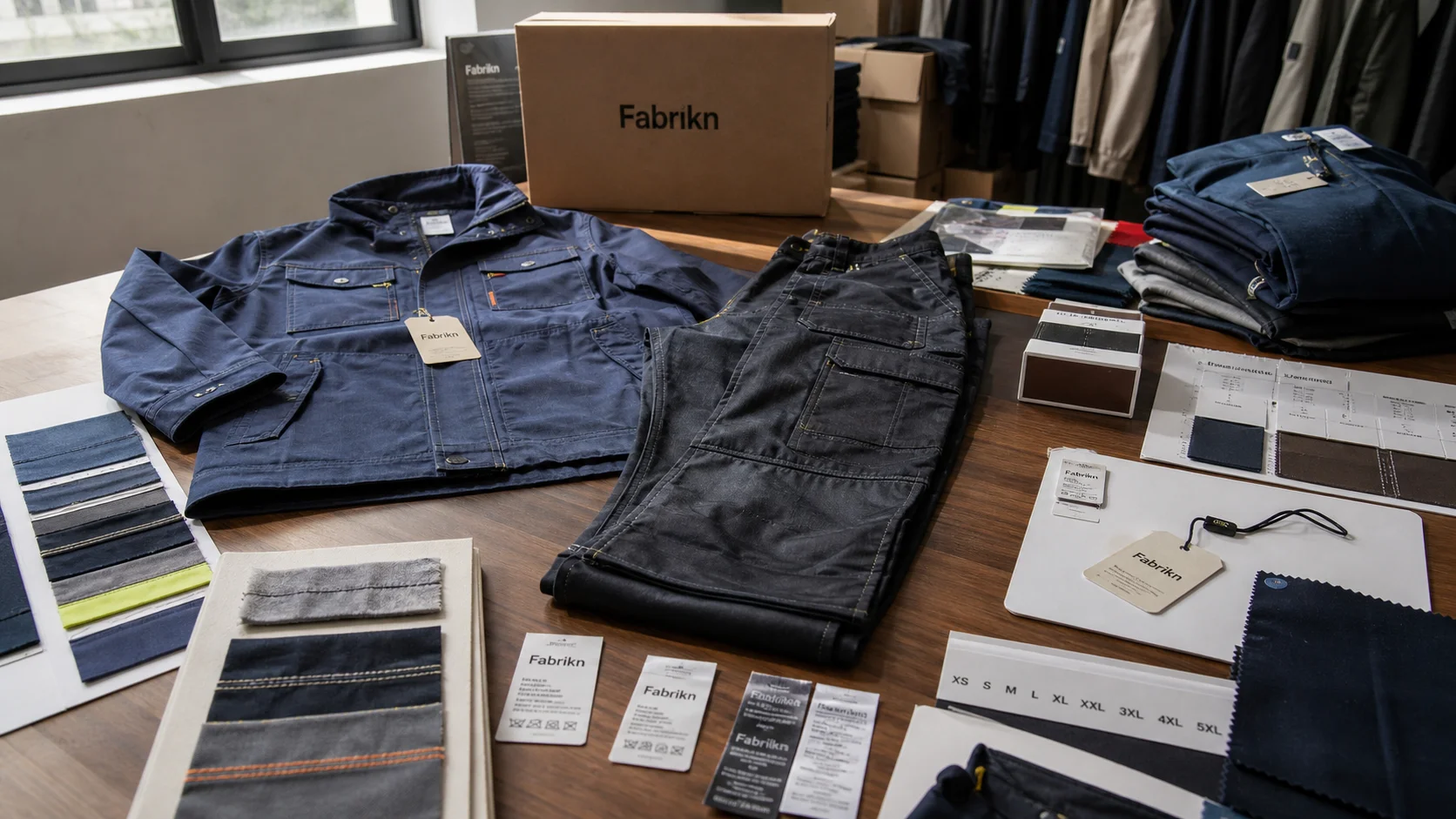
Way To Request Production Quotes From Clothing Factories with checks for samples, fit, MOQ, QC evidence, pricing terms, and delivery risk.
Fast answer: Way To Request Production Quotes From Clothing Factories: Samples, MOQ, QC, and Lead Time should be judged by production evidence, not by a generic sourcing promise. The buyer needs sample proof, cost breakdowns, QC checkpoints, and delivery buffers in writing.
Ask for recent sample photos, measurement tolerances, fabric or print test assumptions, decoration test notes, packing examples, and a named inspection checkpoint. These details show whether the team can repeat an approved sample at bulk volume.
Separate garment cost, decoration, labels, packaging, sampling, testing, freight, and rush charges. When every cost line is visible, it becomes easier to reduce colorways, adjust size depth, or reserve more time for sampling.
Requesting production quotes from clothing factories is one of the most important steps in turning a clothing idea into a profitable product line. A well-prepared request for quotation, often called an RFQ, helps you compare factories accurately, avoid delays, and understand your true manufacturing costs before placing an order. If you send vague information, you will likely receive vague pricing. If you send complete, organized details, factories can quote faster, more accurately, and with fewer follow-up questions.
For brands, startups, and retailers, the best way to request production quotes from clothing factories is to approach the process like a professional sourcing project. That means providing a clear tech pack, defining product specifications, stating quantities, identifying materials, and explaining your quality expectations and timeline. It also means knowing how to evaluate the responses you receive so you can choose the right manufacturing partner, not just the cheapest one.
In this guide, we will walk through the best practices for requesting apparel manufacturing quotes, the information factories need to give accurate pricing, common mistakes to avoid, and how to compare multiple quotes effectively. Whether you are sourcing locally or overseas, these tips will help you communicate more clearly and make smarter production decisions. If you are ready to discuss your next project, you can also explore our services or contact us page for support.
Factories base their pricing on the information they receive. If your request is incomplete, the factory may add assumptions, inflate the quote to reduce risk, or ignore your project altogether. A strong RFQ reduces uncertainty and helps the factory calculate labor, material, trimming, packaging, sampling, and shipping-related costs more precisely.
This matters for several reasons. First, you need realistic pricing to determine whether your product can be profitable. Second, a detailed quote request helps identify production risks early, such as difficult construction methods, expensive fabrics, or low order quantities. Third, it saves time for both sides by reducing back-and-forth communication.
For growing brands, RFQ quality often determines sourcing success. The brands that get the best pricing and the smoothest production experience are usually not the ones asking for the cheapest quote. They are the ones asking the clearest question.
To create an accurate production quote, clothing factories need a complete picture of the product. Think of it as giving the manufacturer a roadmap. The more detailed the roadmap, the less room there is for errors and surprises.
At a minimum, factories need to understand what the product is, how it is made, what materials are used, how many units you want, and what level of quality you expect. In many cases, a tech pack is the best way to organize this information. A tech pack typically includes design sketches, measurements, construction details, fabric references, trim specifications, colorways, and labeling requirements.
If you do not have a full tech pack yet, you can still request quotes. However, the more your request looks like a professional production brief, the better the response will be. If you need help developing a production-ready concept, learn more about Fabrikn and our approach on our about us page.
The best way to request production quotes from clothing factories is to make your email or RFQ easy to read, complete, and scannable. Factory teams often review many inquiries each day, so a clear structure helps your request stand out and get answered faster.
Begin by introducing your brand, what product you want to make, and where you are in the development process. Mention whether you are looking for sampling, bulk production, private label manufacturing, or full-package development. This gives the factory immediate context.
State exactly what you are producing. For example, do not just say “t-shirts.” Instead say “men’s oversized cotton t-shirts with dropped shoulders, screen print on front chest, woven neck label, and polybag packaging.” The more specific you are, the less likely the quote will miss key cost items.
Include tech packs, sketches, reference images, measurement specs, artwork files, or sample photos. If you do not yet have a formal tech pack, provide as much visual and written detail as possible. Factories quote faster when they can see the product.
Quantity has a major effect on price. Let the factory know your target order quantity per color, per style, and per size ratio if possible. If you are unsure, provide a range, such as 300 units, 500 units, or 1,000 units. Also mention whether you are requesting MOQ pricing or scale pricing.
Fabric choice strongly influences manufacturing cost. Include fiber content, fabric weight, weave or knit type, finish, and desired color. Do the same for trims such as zippers, buttons, elastic, labels, hangtags, embroidery, and packaging. If you want the factory to source materials for you, say so clearly.
Different factories serve different market levels. Explain whether you need budget production, mid-market retail quality, or premium luxury finishing. Mention any tolerance requirements, testing standards, or compliance requirements relevant to your market.
Factories need to know when you want samples, bulk production, and delivery. If you have a launch date, store opening, or seasonal deadline, include it. This helps the factory assess whether they can meet your schedule.
Instead of asking only for a total price, request a breakdown that includes sample cost, unit production cost, tooling or setup fees, material costs, packaging, and freight if applicable. A breakdown makes it easier to compare different factories fairly.
When requesting production quotes from clothing factories, certain details should almost always be included. These details improve quote accuracy and help avoid hidden costs later.
If you are unsure about fabric or trim specifics, say that clearly and ask the factory for options. Good manufacturers can often suggest cost-effective alternatives while keeping the product aligned with your design intent. The key is to be transparent about what you know and what you still need help with.
Many brands make avoidable mistakes when requesting quotes. These mistakes usually lead to inaccurate pricing, delays, or poor factory matches. Avoiding them can save both money and time.
One of the most common mistakes is sending a short message like “Please quote for hoodies” without any specs. Factories cannot guess fabric weight, fit, print size, order quantity, or packaging. The result is often a rough estimate instead of a usable quote.
Factories need volume to price correctly. A quote for 100 pieces is very different from a quote for 5,000 pieces. If you omit quantities, the factory may give you a placeholder price that is not useful.
If you only provide a front sketch but not the back view, measurements, or artwork placements, the factory may not understand the full product. This can cause misunderstandings during sampling and bulk production.
Many brands focus on garment construction but forget packaging, hangtags, care labels, size stickers, and carton requirements. These items affect unit cost and should be included in your RFQ.
Two quotes may look similar on the surface but be based on very different assumptions. One factory may include sourcing, sampling, and packaging. Another may quote only cut-and-sew labor. Always verify what is included before comparing prices.
The cheapest quote is not always the best choice. A low quote can signal missing costs, weak quality control, poor communication, or an inability to meet deadlines. Consider reliability, experience, and product fit along with price.
Once you start receiving responses, the next challenge is comparing them correctly. Smart comparison requires more than looking at the bottom line. You need to evaluate what each factory is actually offering.
Make sure each quote is based on the same product details, fabric quality, quantity, and packaging. If one factory quoted a 220 GSM fabric and another quoted a 180 GSM fabric, the lower price is not necessarily better.
Ask whether the quote includes sampling, fabric sourcing, garment washing, printing, embroidery, labels, packaging, cartons, inspection, and shipping. A quote that excludes several of these items may appear cheaper but cost more in the end.
Some factories offer attractive per-unit pricing but require a high MOQ. Others allow smaller production runs at a higher unit cost. Choose the option that fits your current business stage and inventory risk.
Factory communication matters. A responsive, detail-oriented factory is often easier to work with than one that gives a low price but slow or unclear answers. Good communication is especially important during sampling and production approvals.
If anything is unclear, ask for clarification. Common follow-up questions include fabric substitution options, lead time by quantity, sample turnaround time, production deposit terms, and quality inspection processes. A reputable factory should be able to answer these clearly.
Use this checklist to prepare a professional quote request for a clothing factory.
If you send this information in one organized package, factories can usually respond faster and more accurately. It also signals that you are prepared to move forward seriously, which can improve the quality of attention your project receives.
The best quote requests are not just about getting numbers. They are about starting a productive relationship with a manufacturer that understands your brand goals. A strong manufacturing partner will help you refine specifications, identify cost-saving opportunities, and guide you through sampling and production with fewer surprises.
At Fabrikn, we believe the quote request stage should create clarity, not confusion. When brands provide clear product information and realistic timelines, the entire sourcing process becomes more efficient. That is why we encourage businesses to approach manufacturing as a partnership from the very beginning. If you are exploring apparel production support, you can review our services or reach out through our contact us page to start the conversation.
It is also helpful to understand who you are working with. A factory that fits your product category, volume, and quality level will usually deliver a better outcome than one chosen only because it offered the lowest initial price. Learn more about our team and manufacturing perspective on our about us page.
If you want quicker factory replies, make your RFQ easy to process. Use a clear subject line, label your attachments, and summarize the most important details in the body of your message. Factories are more likely to prioritize requests that are organized and complete.
You should also avoid sending huge, unstructured email threads with missing files and scattered questions. Instead, prepare one concise project summary, attach the relevant documents, and indicate exactly what quote you want. If you need separate pricing for sampling and bulk production, request both in the same message.
Another useful strategy is to state your decision timeline. For example, mention whether you are collecting quotes for comparison this week or choosing a supplier this month. This helps factories understand urgency and may improve response speed.
Getting a quote is only the first step. Once you receive pricing, review it carefully and confirm assumptions before approving samples or production. Ask for written confirmation of fabric, size specs, print methods, unit cost, lead time, and payment terms. This reduces the risk of misunderstandings later.
It is also wise to start with sampling when possible. Sampling allows you to test fit, material quality, stitching, and decoration before committing to a full run. Even if sampling adds time and cost, it often prevents much larger mistakes in bulk production.
As you build sourcing experience, you will become better at reading quotes and identifying reliable partners. Over time, your RFQs will become faster to prepare, and your manufacturing conversations will become more strategic. That is one of the biggest advantages of learning the best way to request production quotes from clothing factories: it improves the entire production lifecycle.
The best way to request production quotes from clothing factories is to be clear, complete, and professional. The more detailed your RFQ, the more accurate the pricing you will receive. Include product specifications, quantities, materials, timelines, and packaging requirements, and always compare quotes based on the same assumptions. Avoid vague requests and focus on finding a factory that offers the right combination of price, quality, communication, and reliability.
For apparel brands, a strong quote request is not just an administrative task. It is a strategic sourcing tool that helps you control costs, reduce errors, and set your product up for success. If you are preparing to launch a new clothing line or improve your current manufacturing process, Fabrikn is here to help. Explore our services or send us a message through our contact us page.
Get a free quote from Fabrikn — your trusted B2B clothing manufacturer with 10+ years of experience. MOQ as low as 200 pieces.
Get a Free Quote →Include a clear product description, tech pack or visuals, quantities, fabric details, trim specifications, size range, packaging needs, timeline, and shipping destination. The more detail you provide, the more accurate the quote will be.
Yes, but your quote may be less accurate. If you do not have a tech pack, send sketches, reference images, measurements, and written notes so the factory can estimate pricing more effectively.
Quotes can differ because of fabric quality, labor costs, MOQ, included services, location, and production methods. Some factories also assume different levels of finish or packaging, so always check what is included.
Best overall value is usually the smarter choice. The lowest price may not include important services or may come with quality risks. Look for a factory that balances cost, quality, reliability, and communication.
Many brands request quotes from three to five factories to compare pricing and capabilities. This gives you enough options to evaluate without becoming overwhelmed.
Timing depends on how complete your request is and how busy the factory is. A clear RFQ may receive a response within a few days, while incomplete requests often take longer because of follow-up questions.
The biggest mistake is being too vague. If you do not specify materials, quantities, construction, and packaging, the factory cannot provide a reliable quote. Clarity is the key to better pricing and smoother production.