
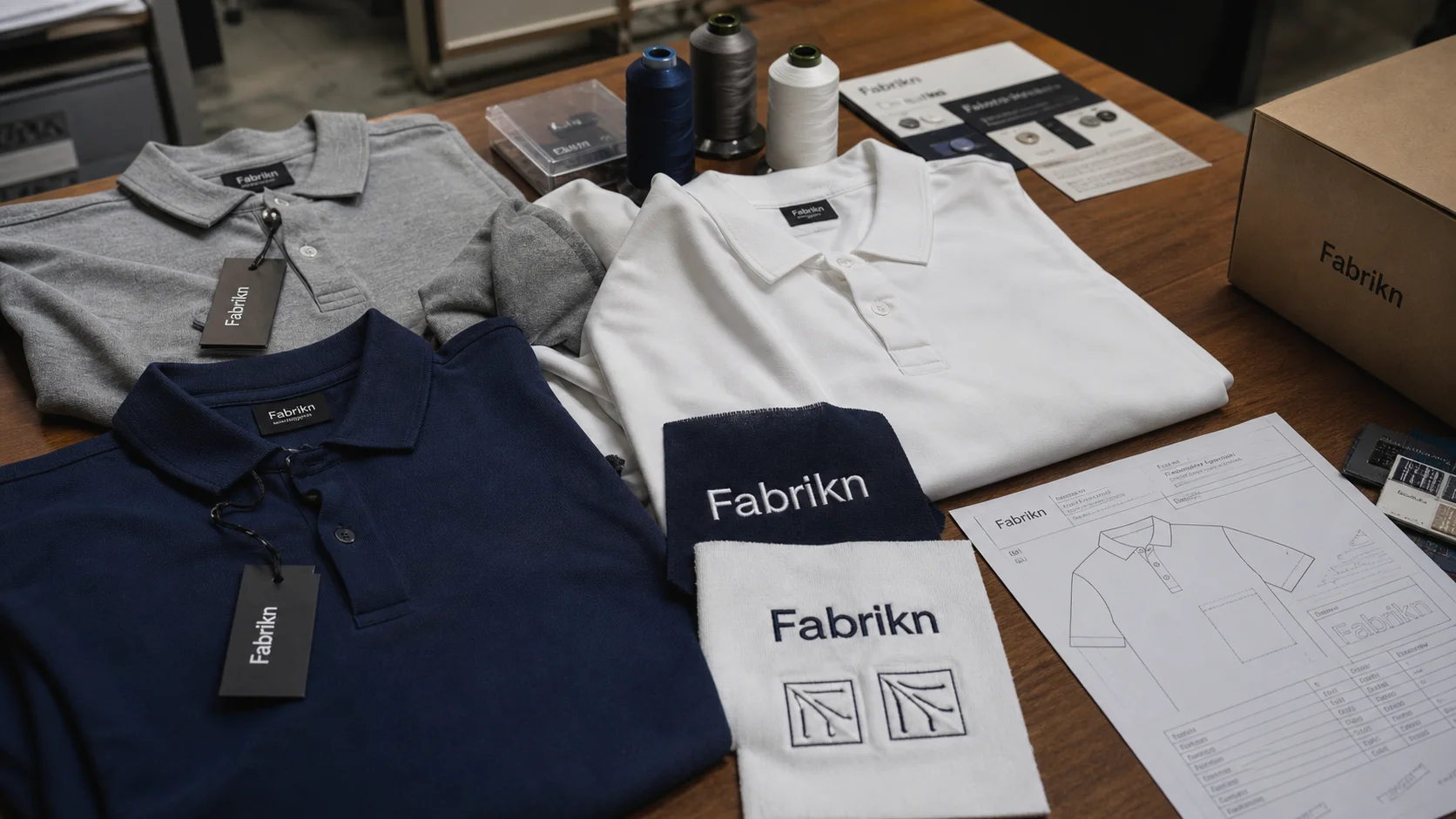
Ways To Verify A Garment Suppliers Quality Certifications with checks for samples, fit, MOQ, QC evidence, pricing terms, and delivery risk.
Fast answer: Ways To Verify A Garment Suppliers Quality Certifications: Samples, Cost Lines, QC, and Delivery Risk should be judged by production evidence, not by a generic sourcing promise. The buyer needs sample proof, cost breakdowns, QC checkpoints, and delivery buffers in writing.
Ask for recent sample photos, measurement tolerances, fabric or print test assumptions, decoration test notes, packing examples, and a named inspection checkpoint. These details show whether the team can repeat an approved sample at bulk volume.
Separate garment cost, decoration, labels, packaging, sampling, testing, freight, and rush charges. When every cost line is visible, it becomes easier to reduce colorways, adjust size depth, or reserve more time for sampling.
When sourcing apparel for a brand, retailer, or private label line, product quality is only as strong as the garment supplier behind it. One of the most effective ways to assess a supplier’s reliability is by reviewing their quality certifications. But in a global manufacturing market where documents can be outdated, incomplete, or even falsified, simply asking for a certificate is not enough.
To protect your brand, reduce production risk, and ensure consistent standards, you need a clear process for verifying a garment supplier’s quality certifications. This article explains the best ways to confirm that a supplier’s certifications are valid, current, and relevant to the products you want to produce. Whether you are sourcing for the first time or auditing an existing partner, these steps will help you make smarter, safer decisions.
Quality certifications are more than paperwork. They signal that a garment supplier follows established standards for production, quality management, workplace processes, and sometimes environmental or social responsibility. For buyers, this creates confidence that the factory can consistently deliver garments that meet specifications.
In the apparel industry, certifications can help you:
However, certifications are only useful if they are authentic and applicable. A supplier may hold one legitimate certification but still fail to meet your quality standards for garment construction, finishing, labeling, or inspection practices. That is why verification matters just as much as the certificate itself.
Before verifying certifications, it helps to know which ones are commonly relevant in garment manufacturing. Depending on your product category and market, you may see different combinations.
ISO 9001 is one of the most widely recognized quality management certifications. It does not certify a product directly, but it shows that the supplier has a structured quality management system in place. For garment buyers, this can indicate more reliable process control, traceability, and corrective action procedures.
This certification is often used for textiles and garments that need to be tested for harmful substances. It is especially important if your products are worn close to the skin or marketed as skin-safe or child-safe.
The Global Organic Textile Standard is used for organic textiles and apparel. It covers not only fiber content but also processing, chemical usage, and supply chain tracking. If you are sourcing organic garments, this certification should be verified carefully.
The Worldwide Responsible Accredited Production certification focuses on lawful, humane, and ethical manufacturing practices. While it is not a pure product quality certification, it can still be relevant when assessing a factory’s operational integrity.
Although primarily focused on social compliance, this is often included in supplier evaluation. A garment supplier that maintains strong social compliance may also have more mature internal systems overall.
Depending on your region, product type, or customer requirements, you may also encounter certifications related to fabric safety, environmental management, or specialized manufacturing processes. Always verify whether the certification is actually relevant to the specific garments you plan to produce.
The first step is to ask for a complete copy of the certificate. A supplier may display a certification logo on a website or in a sales deck, but that does not prove the certification is valid.
Review the document carefully and confirm that it includes the following:
If any of this information is missing or inconsistent, ask for clarification before moving forward.
One of the most common verification mistakes is assuming that a certificate held by one factory automatically covers another location or company name. In garment manufacturing, factories may operate under parent companies, sister companies, or trading entities. The certification must match the exact entity producing your goods.
Check the certificate name against the supplier’s official business registration documents, invoices, and contract details. If a supplier claims that the certificate belongs to a related facility, ask for evidence showing the relationship and scope of coverage.
Many reputable certification bodies offer online verification tools or public certificate databases. This is one of the most reliable ways to confirm whether the document is real and active.
Use the certificate number, company name, or QR code, if provided, to search the issuer’s official database. Compare the information you find online with the document the supplier sent you. Look for:
If the certificate cannot be found in the issuer’s database, do not assume it is legitimate. Contact the certification body directly for confirmation.
Not all certifications cover every product or process. A garment supplier may have a certificate that applies only to a specific facility, product line, or manufacturing activity. For example, a factory may be certified for fabric dyeing but not garment assembly, or for one location but not another.
Pay close attention to the scope statement on the certificate. Ask whether the certification covers:
For best results, make sure the scope matches the exact operations that will be used for your order.
Many buyers focus on whether a supplier has a certificate and forget to check whether it is still current. An expired certificate may indicate that the supplier failed an audit, did not renew on time, or no longer meets the required standard.
Always check the issue date and expiry date. If the certificate is close to expiring, ask the supplier whether renewal is in progress and whether there have been any interruptions in certification status. For high-value or long-term sourcing relationships, it is wise to request updated certificates before each production cycle.
If you have any doubt about a certificate, contact the certification body directly. Most reputable issuers will confirm whether a certificate is valid, current, and within scope.
When reaching out, provide the following details:
This direct approach is especially useful if the certificate database is unclear, if the document looks edited, or if the supplier is not responsive to basic questions.
A certification is only part of the picture. The most reliable suppliers are usually willing to share recent audit summaries, nonconformity reports, or corrective action evidence. These documents help you understand how well the factory actually performs, not just whether it passed a point-in-time assessment.
Look for signs that the supplier takes quality seriously, such as:
If a supplier resists sharing any supporting documentation, that may be a warning sign.
Third-party verification is one of the strongest ways to validate a supplier’s quality claims. A factory audit gives you an on-the-ground view of whether the company follows the practices suggested by its certifications.
During an audit or inspection, you can review:
If you do not have internal auditing resources, consider hiring a third-party inspection company with experience in apparel manufacturing. This can be especially valuable for overseas sourcing.
Certificates should align with what you see in product samples. If a supplier claims a high level of quality management but sends samples with inconsistent stitching, poor labeling, weak color control, or inaccurate sizing, the certification may not reflect real performance.
Request pre-production samples, lab dip approvals, size sets, and top-of-production samples. Compare these against your specification sheet and make sure the supplier has a documented approval process. Real product consistency is a practical test of whether the factory can meet certified standards.
Some certifications are only meaningful in certain markets or product categories. A supplier may hold a valid certificate that does not help you meet your customer’s compliance requirements.
For example, if you sell in the European market, you may need stronger testing documentation for restricted substances. If you sell children’s apparel, safety-related textile certifications may matter more. If you are building a sustainable brand, organic or chemical-management certifications may be essential.
Always verify that the certification aligns with your target market and your buyers’ expectations, not just with the supplier’s marketing materials.
Certifications are stronger when supported by a broader quality culture. Ask how the supplier handles training, corrective actions, inspection records, and customer complaints. A factory with a mature quality management system is more likely to maintain certifications accurately and consistently.
Key questions include:
If you are new to garment sourcing or buying from a region where documentation is difficult to assess, working with an experienced manufacturing partner can save time and reduce risk. A reliable partner will already understand which certifications matter, how to verify them, and how to interpret the results.
At Fabrikn, we believe transparency and process discipline are essential in apparel manufacturing. If you want to learn more about our capabilities, visit our services page or read more about our company on the about us page.
Even when a supplier appears professional, certification issues can still arise. Watch for these warning signs:
If you see one red flag, investigate further. If you see several, proceed with caution or look for another supplier.
Use this checklist as a practical guide when reviewing garment supplier certifications:
For buyers who need direct assistance with sourcing, production planning, or supplier evaluation, you can also contact our team here.
Verifying certifications is an important part of supplier due diligence, but it should not be the only factor in your sourcing decision. The best garment suppliers combine valid certifications with strong communication, dependable timelines, clear documentation, and consistent sample quality.
When you partner with a manufacturer that values transparency, it becomes easier to confirm compliance and reduce the risk of production delays, disputes, and quality failures. That is especially important in competitive apparel markets where brand reputation depends on every shipment.
If you are looking for a manufacturing partner that understands the importance of quality control and documentation, Fabrikn can help guide your sourcing process. Learn more about our approach through our services, or get in touch through the contact page to discuss your project requirements.
Get a free quote from Fabrikn — your trusted B2B clothing manufacturer with 10+ years of experience. MOQ as low as 200 pieces.
Get a Free Quote →Check the full certificate, verify the legal name and address, and confirm the certificate number on the issuer’s official website or database. If needed, contact the certification body directly.
It depends on your product and market. ISO 9001 is common for quality management, while OEKO-TEX, GOTS, and other certifications may be more important for textile safety or sustainability requirements.
Yes. Certifications show that certain systems or standards are in place, but they do not guarantee perfect product quality. You should still review samples, conduct inspections, and audit production processes.
Not by itself. A certificate posted on a website is only a starting point. Always verify it through the issuing organization or an official certificate database.
Recheck certifications before onboarding a new supplier, before major orders, and whenever a certificate is near expiration. For long-term suppliers, periodic verification is a smart practice.
Treat that as a warning sign. A trustworthy supplier should be willing to provide documents and allow verification. If they refuse, consider it a risk and evaluate alternatives.