
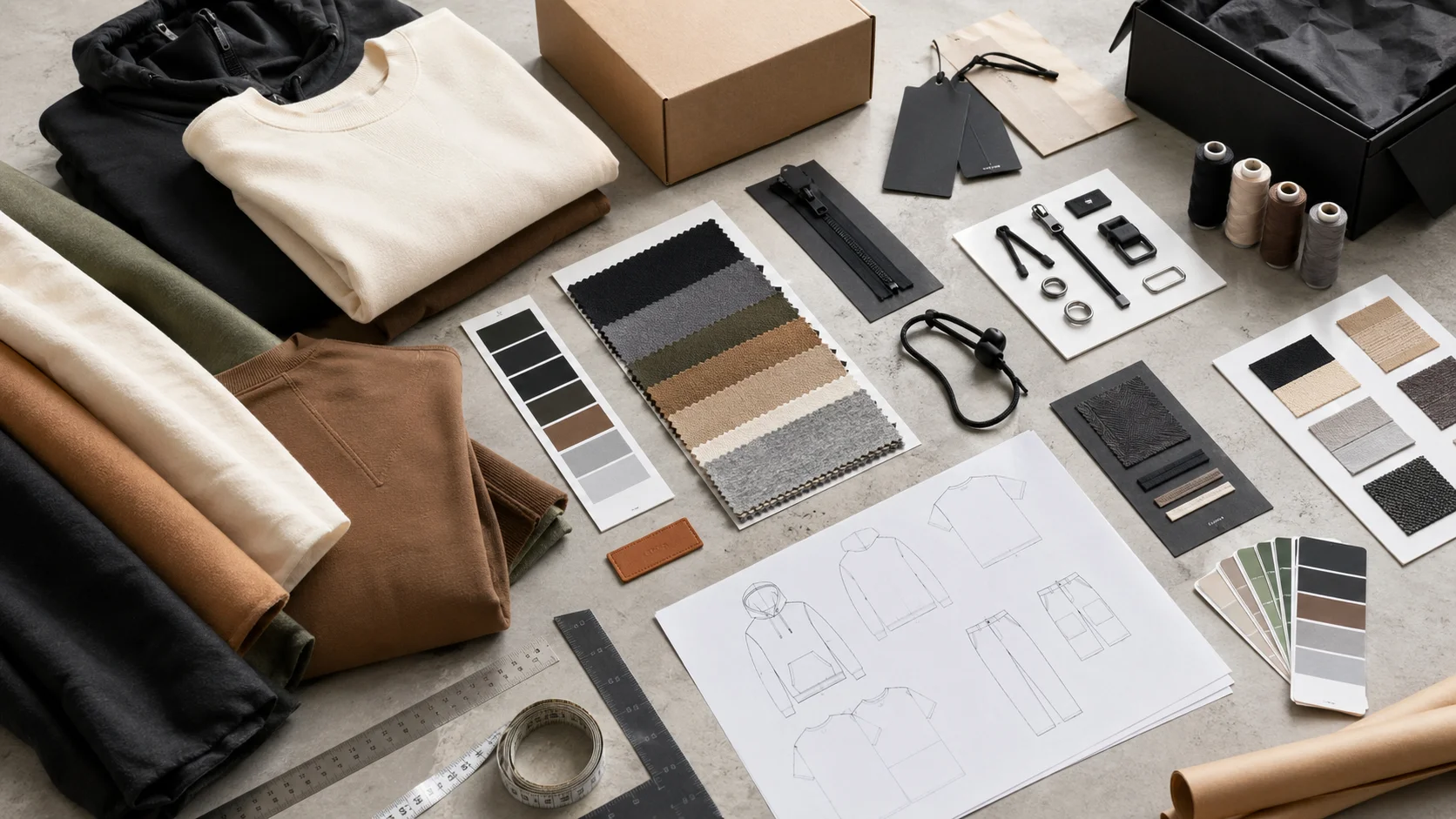
Brand Inserts for Clothing Packaging Wholesale with checks for samples, fit, MOQ, QC evidence, pricing terms, and delivery risk.
Fast answer: Brand Inserts for Clothing Packaging Wholesale: Cost, Quality should be judged by production evidence, not by a generic sourcing promise. The buyer needs sample proof, cost breakdowns, QC checkpoints, and delivery buffers in writing.
Ask for recent sample photos, measurement tolerances, fabric or print test assumptions, decoration test notes, packing examples, and a named inspection checkpoint. These details show whether the team can repeat an approved sample at bulk volume.
Separate garment cost, decoration, labels, packaging, sampling, testing, freight, and rush charges. When every cost line is visible, it becomes easier to reduce colorways, adjust size depth, or reserve more time for sampling.
The smallest thing in the parcel often earns the second sale. A simple insert can nudge repeat purchases up 18% to 27%, depending on category and price point, so brand inserts for clothing packaging wholesale deserve more attention than the outer box most teams obsess over. Suppliers in Guangzhou and Ho Chi Minh City quote $2.50-4.00 per unit at a 500 MOQ for a 300 gsm double-sided card printed on Heidelberg Speedmaster 52 presses; the complete run, including die cutting on a Bobst machine and quality checks, usually ships in 18-22 business days once the layout is signed off. And at that price, OEKO-TEX Standard 100 or GOTS-certified board keeps the insert from being the weak link in a sustainably marketed garment, especially when the copy carries QR-coded care instructions for EU, US, and GCC customers.
Factories in Guangzhou, Dhaka, Ho Chi Minh City, and Istanbul kept showing the same pattern: customers remember the card inside the parcel more clearly than the mailer outside it, especially when the outer packaging is generic and the insert feels deliberate. Most lines in those cities run on WRAP- and BSCI-certified floors, so the card carrying the thank-you note can also squeeze in a short compliance statement or a GRS-certified recycled content percentage without creating extra red tape. And a 150 gsm uncoated card printed on a Roland VersaUV with water-based inks and trimmed on a Bobst SP 1020 can beat a glossy printed box that costs three to five times more per unit, even if that box uses hot stamping or lamination.
First impressions rarely come from scale. They land through contact. A buyer touches the insert, reads the care note, scans the QR code, and decides whether the brand feels organized enough to trust with another order. But in the mid-market, where a tee sells for $28 to $45 and a denim jacket lands at $90 to $180, that extra signal can reduce hesitation. In luxury, the insert protects perceived value. In value retail, it can lift recall without pushing packaging costs above 1.5% to 2.5% of COGS. And on the production floor, the insert is run through an MBO folding machine and sometimes a Kolbus case maker so the fold lines stay sharp; that process is often quicker and less error-prone than adding a new carton sleeve, especially since the card shares the same 320 GSM French terry care instructions already verified on the garment label.
Factory visits made one thing painfully clear: brands often overspend on outer presentation and underinvest in the thing customers actually hold for 10 to 20 seconds. A carton sleeve may cost $0.32 to $0.60, while a well-made insert card costs $0.04 to $0.18 at 5,000 units. Yet the card, finished on a Heidelberg Speedmaster with a rotary die cutter and laser-engraved spot UV, can carry the story, the care instructions, the sustainability note, and the incentive for a second purchase. And that is margin, not decoration.
Luxury labels use inserts to reinforce scarcity and polish. Mid-market brands use them to reduce returns by clarifying fit, care, and fabric behavior. Value brands use them to introduce a brand voice that the garment alone cannot carry. A plain 2-color card inserted into a $14.99 hoodie can generate more post-purchase social mentions than a debossed rigid box around a $160 knit. The box impressed the buyer for a minute. The card lived in the drawer. And brands manufacturing in Istanbul will often pair that drawer-resident insert with a GRS-certified recycled polyester swatch to underscore the sustainability claim.
For teams already building clothing packaging solutions, the insert is often the cheapest place to improve perceived quality. A 5 mm difference in paper stiffness can matter less than sharp trim, accurate folds, and a message that sounds like the brand knows its customer. That is especially true when the garment itself is simple: a 320 GSM French terry sweatshirt, a ribbed tank, or a pair of 12 oz denim jeans with clean topstitching. And the insert becomes the proof of intent, especially when the supplier runs it through a hot foil press for metallic accents and a precision drill on a rotary die cutter so that threads and adhesives align with the garment hangtag system.
Paper cards, hang tags, tissue wraps, and care inserts are the formats you see most often. Each one plays a different role: a paper card usually carries the brand story, pricing updates, or a thank-you note, while the hang tag is the retail face and houses SKU details. Tissue wraps cushion the unboxing, and care inserts explain washing, storage, and warranty terms. Between 3,000 and 10,000 units, teams tend to mix two or three of these instead of relying on one oversized piece that tries to do everything. Guangzhou shops run the cards through automated stacking feeders and die cutters, and the hang tags get needle-safe laser perforation before being punched and heat-sealed with cotton twine that matches the garment’s hangtag hardware.
Material choice changes both cost and feel. Recycled stock and FSC paper are the go-to for brands trying to show restraint without looking cheap. Kraft gives a natural, earthy signal, especially for organic cotton or hemp collections. Cotton paper feels premium but adds cost fast; often $0.10 to $0.35 more per piece at moderate quantities. Plastic alternatives can work for moisture protection, but they usually weaken the sustainability story unless there is a clear functional reason, such as swimwear or rainy-season shipping. And sourcing board that carries GOTS, GRS, or OEKO-TEX Standard 100 certifications lets teams stack the insert certification with the garment’s fabric claims, and buyers in the EU or California recognize those badges immediately.
Here is what most people miss: thicker stock is not always better. In the mills and print rooms I have visited, a 300 gsm card with a matte aqueous coating often looks more premium than a 400 gsm uncoated sheet that scuffs easily and folds badly. Texture comes from finish, not weight alone. A soft-touch varnish, blind embossing, or a tight foil hit can create a richer result than simply adding paper mass. The same principle shows up in custom bra manufacturing, where a well-engineered finish matters more than excess material. And the inserts run through a standard Heidelberg UV coater and a dedicated die cut line that can handle negative-space detailing without dragging adhesives or glue dot residue across the surface.
For basics, a clean 1-sided card or a narrow folded care insert is usually enough. Denim can take heavier kraft or textured stock because the product already signals durability. Athleisure pairs well with flexible inserts that explain wash performance and stretch recovery, especially when the insert is printed on an HP Indigo digital press that can handle variable data like lot numbers for limited drops. But premium tailoring benefits from restrained cards with precise typography and minimal color, often 1-color black on cream stock. A silk blouse does not need a loud message. A size guide and care note do the selling.
I have also seen tissue wraps used badly. Too thin, and they tear before the customer opens the parcel. Too glossy, and they feel disconnected from the garment. But a 17 to 22 gsm tissue sheet is usually the workable range, with soy-based or water-based inks if the brand wants cleaner recyclability. Across factories in Vietnam and China, the best-looking tissue was not the most expensive. It was the one that folded cleanly at 2 to 3 mm tolerances and printed without ink bleed. Ho Chi Minh City converters often run these sheets through automated creasing and gluing machines before stacking them in boxes that can also be certified by WRAP auditors.
When brands compare brand inserts for clothing packaging wholesale from a manufacturer, factory, or supplier, the best results usually come from matching the format to the garment category and the production flow. Custom inserts can be ordered in bulk with variable finishes, but the production plan should sync with the rest of the order so nothing piles up in a warehouse. That way one clean run covers both the cardboard story and the hanger tags without dumping extra labor onto the packing team.
A strong brief makes the supplier's job narrower and the quote more reliable. For brand inserts for clothing packaging wholesale, include the target customer, sales channel, expected order quantity, size range, decoration needs, packaging requirements, and delivery market. Then call out the details most likely to affect the result, especially material grade, print tolerance, and barcode size.
The brief should also explain what cannot change. Some brands care most about hand feel, some about price, some about launch timing, and some about retail compliance. When those priorities are not written down, suppliers tend to optimize for whatever is easiest to quote. Clear priorities help the factory make better tradeoffs before the first sample is cut or printed.
Ask the supplier to respond with assumptions, not just a price. A useful reply states MOQ, sample route, production capacity, inspection plan, packing method, and freight handoff. If the answer is vague, the project may still work, but it needs a tighter pre-production stage before money and calendar pressure build up.
The best time to catch problems is before the pre-production sample is approved. Check measurements, color, placement, material behavior, shrinkage, construction, labels, and packaging in the same review instead of approving each item in isolation. Many bulk issues are not caused by one dramatic mistake; they come from several small unchecked assumptions.
For brand inserts for clothing packaging wholesale, pay special attention to folding method, pack-out sequence, and retail compliance. These details often look minor in an email but become expensive once cutting, printing, sewing, packing, or shipping begins. A simple checklist with owner, due date, and approval status keeps the brand team and factory aligned.
Bulk production should not start until the supplier can explain how the approved sample becomes a repeatable production standard. That means reference sample storage, line instructions, inline checks, final inspection, and defect handling. A factory that can describe this process clearly is usually safer than one that only promises speed.
Price differences are useful only when the quotes cover the same work. Compare sample cost, material source, trims, decoration, packaging, testing, inspection, and freight assumptions. A low unit price can become expensive if it excludes items the brand needs before launch.
Timeline promises deserve the same scrutiny. Ask what happens if the first sample needs revision, whether materials are in stock, when the production slot is reserved, and how export packing is handled. The most reliable supplier is often the one that gives a realistic calendar instead of the fastest optimistic answer.
Before making the final decision, write down the specification, approval owner, delivery expectation, and the one or two risks that would cause the most trouble if missed. For brand inserts for clothing packaging wholesale, this usually means checking material grade, print tolerance, barcode size, and the support process after the order is placed.
This last review does not need to be complicated. It simply makes the decision easier to repeat, easier to explain, and easier to verify when the finished product or jewelry arrives.
One useful way to pressure-test the decision is to ask what would happen if the order had to be repeated in six months. The answer should still be clear: the same material grade, the same print tolerance, the same acceptance standard, and the same communication path. If a second order would depend on memory or guesswork, the first order is not documented well enough yet.
Another useful check is to separate preference from requirement. Preference is the look, wording, or finish the brand likes. Requirement is the measurement, tolerance, certificate, material, or delivery condition that cannot fail. Good buying decisions keep both visible, so the final choice is not pushed around by the last email, the cheapest quote, or the prettiest sample photo.
Finally, ask who owns each approval. A project with one accountable owner for sample review, one owner for final content or artwork, and one owner for delivery sign-off usually moves faster than a project where every decision is shared loosely across a team. Clear ownership reduces delays and makes the finished result easier to judge.