
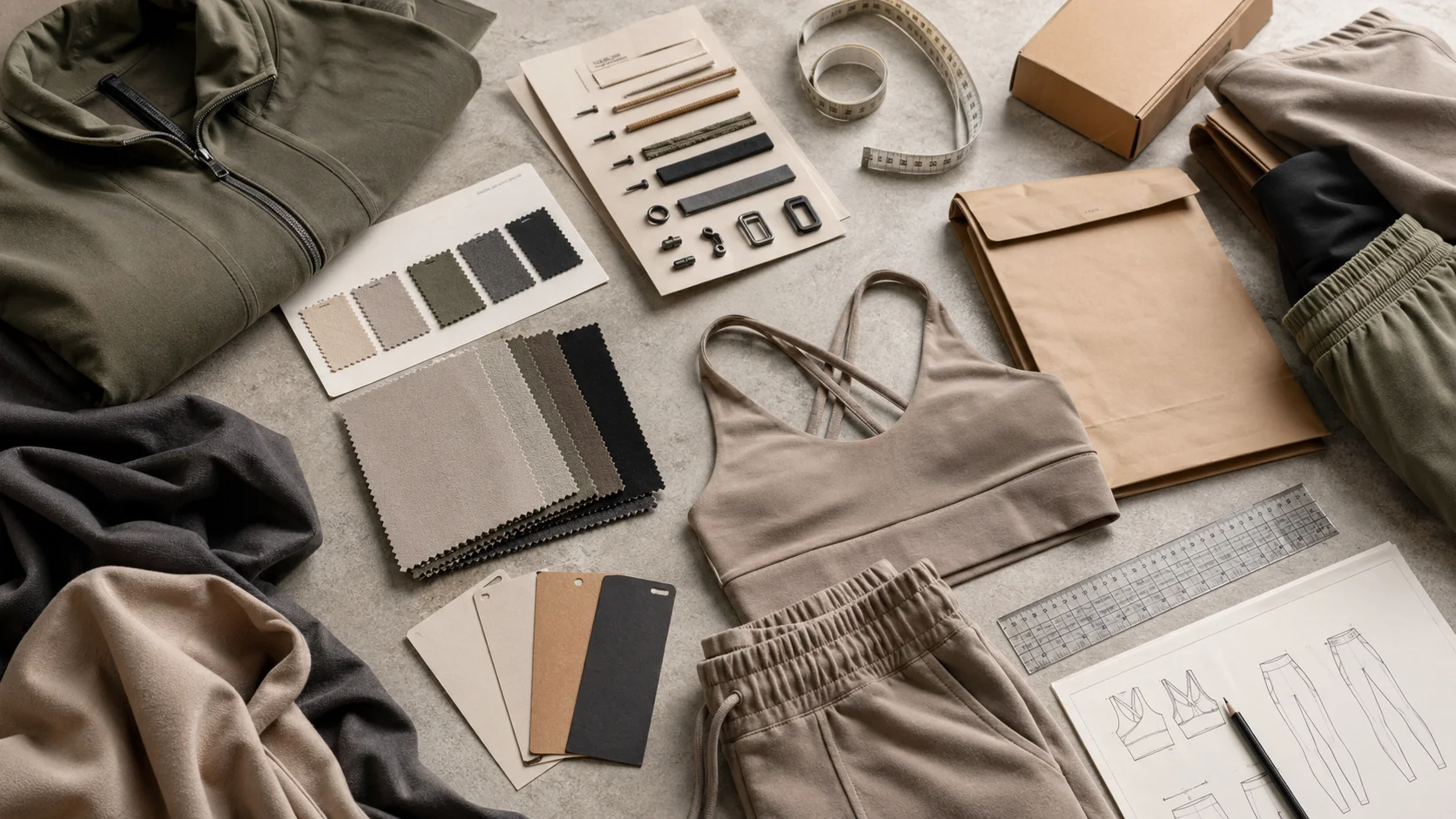
Branded Box Inserts for Clothing Shipments compared by sample evidence, fabric or trim specs, MOQ, AQL terms, cost lines, delivery timing, and rework...
Fast answer: Branded Box Inserts for Clothing Shipments: Tech Pack, Sample Gate, MOQ, and QC Terms should be judged by production evidence, not by a generic sourcing promise. The buyer needs sample proof, cost breakdowns, QC checkpoints, and delivery buffers in writing.
Ask for recent sample photos, measurement tolerances, fabric or print test assumptions, decoration test notes, packing examples, and a named inspection checkpoint. These details show whether the team can repeat an approved sample at bulk volume.
Separate garment cost, decoration, labels, packaging, sampling, testing, freight, and rush charges. Clear cost lines make it easier to reduce colorways, adjust size depth, or reserve more time for sampling.
A tee in a plain poly mailer feels like an errand; the same shirt in a box with branded box inserts for clothing shipments feels like a purchase someone planned. Add tissue and a clean care card. That $48 top can suddenly read like a $78 decision before the fabric is even touched. I watched that happen in under 30 seconds on warehouse floors from Los Angeles to Lisbon. Same garment. Different story. Packagers even pause to admire a well-made insert because it finally gives them a story worth shipping.
And that first minute does the heavy lifting. Customers are not judging cotton weight alone; they are judging whether the brand looks organized, shareable, and worth a second order. A printed insert nudges perceived value upward even when product cost stays stuck at $6.20 or $11.40 a unit. Premium labels use that moment to signal restraint and craft. Mass-market brands use it to make a $29 top feel less disposable. Honestly, this approach works better because it stakes out that premium moment before anyone even touches the fabric, making the care note feel earned (and yes, the stylists still text each other about the best ones).
In factories across China and Turkey—think Guangzhou’s high-speed Heidelberg Speedmaster lines and Istanbul’s nimble art-led studios—the same pattern kept showing up: branded box inserts for clothing shipments can be surprisingly cheap if the specs stay simple, the artwork is locked early, and the run size lands at 5,000 or 10,000 pieces instead of 500. A two-color card on 350 gsm FSC paper may cost under $0.12 in volume, while a rushed 500-piece order with foil and a die-cut edge can jump to $0.60 or more. Presentation is not always expensive. But panic ordering is. In my experience, printers who see art at the last minute treat it like a fire drill (and yes, I have been there), and the quotes leap accordingly. Typical lead times for those setups run 18-22 business days from proof approval to container loading, especially when the insert needs to travel between Guangzhou and a European port.
These inserts behave differently by region. In the United States, direct-to-consumer brands often use them to drive retention, coupon redemption, and repeat purchase within 60 to 90 days. In Europe, the emphasis shifts toward compliance, garment care, and brand storytelling, especially where buyers expect clearer fiber disclosure and sustainability notes. And a card that lifts a U.S. brand’s second-order rate by 4% might instead cut customer service contacts in Germany or the Netherlands by 8% because care instructions are easier to find.
Claims get inflated fast. A branded insert alone will not rescue weak product, late delivery, or sloppy grading. It drives me nuts when execs expect a glossy card to correct a bad garment; that's not the insert's job, and even I get frustrated trying to make that happen. And inserts help. They do not perform miracles.
Branded box inserts for clothing shipments include any printed piece placed inside the parcel to inform, persuade, or reassure the customer. That covers thank-you cards, product story cards, care sheets, loyalty offers, QR codes, size-exchange guides, returns notes, and sustainability claims that can be verified. One card sells the next order. Another reduces friction on this one. The strongest packs do both. Balancing that stack takes trial and error.
Product tier decides the mix. Basics at $18 to $35 usually need one card and one care guide, no more. Denim at $60 to $140 can support a richer story card plus fit notes, especially when the brand needs to explain wash variation or shrinkage expectations. And premium knitwear often works better with a soft-touch foldout and merino care instructions, while children’s clothing calls for safety notes, washing guidance, and maybe a QR code to sizing help. Luxury items can justify a heavier stock card, a certificate-style note, and a serial number.
Too many inserts can cheapen the experience. I saw a $22 tee packed with five loose pieces: a coupon, a founder note, a recycling card, a loyalty flyer, and a folded return guide. It looked like a supermarket receipt exploded in the box. My opinion is that every card needs a job, otherwise the box looks like coupon graveyard. True story. And for lower-price garments, one or two pieces usually beat four. For higher-margin brands, three can work if each one earns its place.
I use a simple framework. If AOV is under $40 and order frequency is high, keep it to 1-2 inserts and focus on utility. If AOV sits between $40 and $120, 2-3 pieces can support storytelling and retention. And above $120, a brand can afford a fuller set, but only if margin stays above 60% and the fulfillment team can pack it without slowing the line.
Product category matters here too. For bras, brands selling through custom bra manufacturing channels often need inserts that explain fit, care, and returns more than brand poetry. Babywear is even stricter. Parents want washing guidance, fabric content, and safety language before they want a discount code, which is why custom baby clothing manufacturing often pairs best with a simple, trust-heavy insert stack.
For brands sourcing globally, one thing worth noting is that Dhaka’s offset houses can produce bundles with OEKO-TEX Standard 100 cotton fibers and GOTS-certified paper slip-ons at $2.50-4.00 per unit at 500 MOQ when wrapped with satin ribbons, because they pair those inserts with matching hangtags on the same press run.
Costs move in bands, not in a straight line. A simple black-and-white 90 x 54 mm card might land at $0.05 to $0.09 in runs of 10,000, while a full-color card on 300 gsm stock often sits around $0.10 to $0.18. Folded inserts climb to $0.18 to $0.35, and a multi-piece pack can reach $0.45 to $0.90 before pack-out labor. And foil stamping, soft-touch coating, and die-cut shapes can add 15% to 60% depending on volume.
Material choice matters as much as print method. FSC-certified paper and recycled board usually cost slightly more than virgin paper, but the gap narrows at 5,000 pieces or above. Soy inks and plastic-free laminates help with recyclability, yet they can raise unit cost by $0.01 to $0.04 per piece. If the insert needs to travel through a high-humidity route, coated stock may protect the artwork, but it can also complicate recycling claims. I have seen brands promise “fully recyclable” packaging and then use a laminated finish that local mills would not accept. And that is how trust leaks out.
The hidden costs are what trip up new buyers. Design setup can run $150 to $500. Plate fees for offset printing may add $75 to $250 per color. Proofing often costs $40 to $120. Freight from Asia to North America can add $0.02 to $0.08 per unit at larger volumes, more if you are shipping air. Warehousing and pack-out labor can exceed the print cost entirely if the insert set is complex. And a three-piece stack assembled by hand at 1,500 orders a day can cost more in labor than the paper itself.
Regional pricing is uneven. In China, large runs of simple inserts are usually 15% to 30% cheaper than North America. Vietnam and India can be competitive, especially on labor-heavy pack-outs, but the tradeoff is often longer proof cycles or slightly less predictable color. Europe tends to price higher on short runs, though turnaround can be faster for EU-based brands that need 3 to 7 day replenishment. Mexico can be efficient for U.S. brands shipping across the border, particularly when a nearby partner keeps the runs short.
A strong brief makes the supplier's job narrower and the quote more reliable. For branded box inserts for clothing shipments, include the target customer, sales channel, expected order quantity, size range, decoration needs, packaging requirements, and delivery market. Then call out the details most likely to affect the result, especially material grade, print tolerance, and barcode size.
The brief should also explain what cannot change. Some brands care most about hand feel, some about price, some about launch timing, and some about retail compliance. When those priorities are not written down, suppliers tend to optimize for whatever is easiest to quote. Clear priorities help the factory make better tradeoffs before the first sample is cut or printed.
Ask the supplier to respond with assumptions, not just a price. A useful reply states MOQ, sample route, production capacity, inspection plan, packing method, and freight handoff. If the answer is vague, the project may still work, but it needs a tighter pre-production stage before money and calendar pressure build up.
The best time to catch problems is before the pre-production sample is approved. Check measurements, color, placement, material behavior, shrinkage, construction, labels, and packaging in the same review instead of approving each item in isolation. Many bulk issues are not caused by one dramatic mistake; they come from several small unchecked assumptions.
For branded box inserts for clothing shipments, pay special attention to folding method, pack-out sequence, and retail compliance. These details often look minor in an email but become expensive once cutting, printing, sewing, packing, or shipping begins. A simple checklist with owner, due date, and approval status keeps the brand team and factory aligned.
Bulk production should not start until the supplier can explain how the approved sample becomes a repeatable production standard. That means reference sample storage, line instructions, inline checks, final inspection, and defect handling. A factory that can describe this process clearly is usually safer than one that only promises speed.
Price differences are useful only when the quotes cover the same work. Compare sample cost, material source, trims, decoration, packaging, testing, inspection, and freight assumptions. A low unit price can become expensive if it excludes items the brand needs before launch.
Timeline promises deserve the same scrutiny. Ask what happens if the first sample needs revision, whether materials are in stock, when the production slot is reserved, and how export packing is handled. The most reliable supplier is often the one that gives a realistic calendar instead of the fastest optimistic answer.
Before making the final decision, write down the specification, approval owner, delivery expectation, and the one or two risks that would cause the most trouble if missed. For branded box inserts for clothing shipments, this usually means checking material grade, print tolerance, barcode size, and the support process after the order is placed.
This last review does not need to be complicated. It simply makes the decision easier to repeat, easier to explain, and easier to verify when the finished product or jewelry arrives.
One useful way to pressure-test the decision is to ask what would happen if the order had to be repeated in six months. The answer should still be clear: the same material grade, the same print tolerance, the same acceptance standard, and the same communication path. If a second order would depend on memory or guesswork, the first order is not documented well enough yet.
Another useful check is to separate preference from requirement. Preference is the look, wording, or finish the brand likes. Requirement is the measurement, tolerance, certificate, material, or delivery condition that cannot fail. Good buying decisions keep both visible, so the final choice is not pushed around by the last email, the cheapest quote, or the prettiest sample photo.
Finally, ask who owns each approval. A project with one accountable owner for sample review, one owner for final content or artwork, and one owner for delivery sign-off usually moves faster than a project where every decision is shared loosely across a team. Clear ownership reduces delays and makes the finished result easier to judge.