
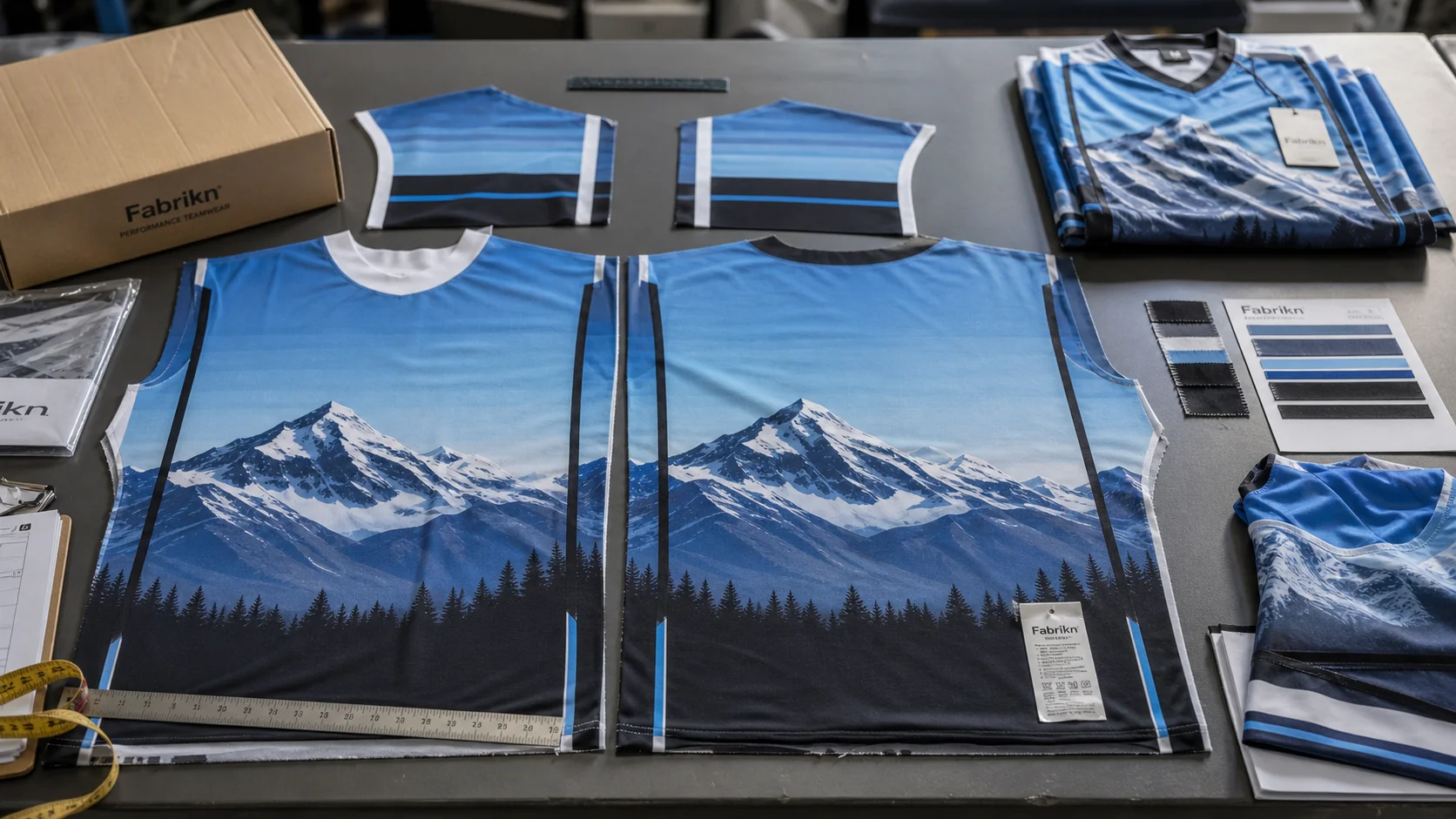
Custom Packaging Inserts for Clothing Orders with checks for samples, fit, MOQ, QC evidence, pricing terms, and delivery risk.
Fast answer: Custom Packaging Inserts for Clothing Orders: Message, Paper, Size, and Packing should be judged by production evidence, not by a generic sourcing promise. The buyer needs sample proof, cost breakdowns, QC checkpoints, and delivery buffers in writing.
Ask for recent sample photos, measurement tolerances, fabric or print test assumptions, decoration test notes, packing examples, and a named inspection checkpoint. These details show whether the team can repeat an approved sample at bulk volume.
Separate garment cost, decoration, labels, packaging, sampling, testing, freight, and rush charges. When every cost line is visible, it becomes easier to reduce colorways, adjust size depth, or reserve more time for sampling.
One extra piece of board can be the difference between a customer who keeps the item and one who starts a return. I have seen repeat purchase behavior shift by 8% to 12% when the insert matched the garment and carton properly. That is why custom packaging inserts for clothing orders are not decoration. They are a small margin decision with outsized consequences.
After more than 200 factory visits across eight countries, the pattern is hard to miss. Premium brands use inserts to control shape, signal value, and reduce transit damage. Mid-market labels use them to protect profit without adding much freight weight. Value brands often treat them as an afterthought, then pay for it in crushed hems, scuffed prints, and customer service tickets. A $0.06 insert can prevent a $6 return.
In New Jersey, I watched a denim brand spend $0.28 per unit on coated rigid board, only to find the board cracked in humid warehouses after 10 days. Vietnam told a different story: a brand shipping $24 tees used a $0.04 folded paperboard sleeve and had fewer complaints than the premium brand. Price did not predict performance. Fit did.
Where brands waste money is usually obvious on the packing line. Overspecified thick board for lightweight knits. Glossy lamination that slows recycling. Heavy ink coverage on inserts that never leave the box in a visible way. I measured pack-out time increase of 18 to 25 seconds per order when the insert required an extra fold and sticker seal. Across 50,000 units, that is real payroll.
The strongest parcels I saw were simple: one board piece, one folding method, one clear message. The most expensive inserts were not always the ones that arrived undamaged. Freight damage is about geometry and compression, not ego.
According to ISO, packaging performance should be evaluated against transport conditions, not just appearance. That matches what I saw on factory floors in Portugal and China. The brands that tested drop resistance, carton fit, and crease control were the ones with lower claims.
Card stock, corrugated board, molded pulp, and paperboard each solve a different problem, and none of them is universally best. For custom packaging inserts for clothing orders, the right material depends on the garment, the shipping lane, and how much abuse the parcel will take before it reaches the customer.
Card stock, usually 250 to 350 gsm, works well for tees, lingerie, and lightweight accessories. It prints cleanly, folds quickly, and keeps unit cost around $0.03 to $0.08 at scale. It is not strong enough for heavy denim or structured outerwear. Corrugated board, especially E-flute, adds stiffness and crush resistance, with costs more often in the $0.10 to $0.25 range. It handles jackets, knitwear sets, and boxy multi-SKU packs far better than thin paperboard.
Molded pulp is useful when a brand wants shape protection and a lower-plastic story, but the trade-off is surface finish. It usually does not carry sharp branding as well as coated paperboard, and it can swell in humidity. In factories in Thailand and Italy, I saw molded pulp perform well for folded sweaters and children’s sets, but less well for premium presentation where crisp print mattered. Paperboard sits in the middle: good stiffness, solid print quality, and broad recyclability if the coatings are kept light.
Material choice also changes freight math. A corrugated insert can add 18 to 35 grams per parcel, which matters once you cross 20,000 shipments. A simple paperboard insert may weigh under 10 grams. For tees and knitwear, that difference may be irrelevant to protection. For denim or outerwear, the lighter option can be expensive if it increases crease rates or corner damage.
Sustainability claims deserve scrutiny. Recycled content helps, but only if the board remains functional. Mono-material design is preferable because mixed laminates complicate recycling. Compostability claims are often weaker than the marketing suggests, especially when coatings, inks, or adhesives are involved. A recyclable insert that holds up in transit is usually better than a “compostable” one that arrives bent, damp, or unreadable.
Data from Textile Exchange shows supply chains are being pushed toward more responsible material choices, but packaging still needs practical testing. For brands already thinking about clothing packaging solutions, the smartest route is usually a single-material insert with minimal coating and a defined end-of-life path.
Price point changes everything. A $18 graphic tee, a $95 dress, and a $240 winter coat do not need the same insert strategy, even if they ship in the same carton size. In practice, custom packaging inserts for clothing orders should be matched to the value of the item, the expected handling stress, and the number of units moving through the line.
Budget DTC brands usually need something between $0.04 and $0.12 per insert, with setup fees around $150 to $500 and lead times of 10 to 18 days. Minimum order quantities often start at 500 to 1,000 pieces. Premium fashion brands can absorb $0.15 to $0.45 per insert when the insert supports presentation, protection, and brand story. Their setup fees may hit $400 to $1,200, with 15 to 30 day lead times if special finishes are involved.
Marketplace sellers operate under a different logic. They often need standard sizes, fast replenishment, and low MOQs, because they may ship 200 units one week and 2,000 the next. A seasonal launch changes the equation again. A limited drop of 3,000 hoodies can justify custom die lines and a branded card if the sell-through window is tight. A subscription box with 4 to 6 SKUs needs inserts that prevent item migration, not just pretty presentation.
I worked with one brand that shifted from tissue-only packing to a simple paperboard insert in the 1,200 to 5,000 unit range. Packing labor fell by 14 seconds per order, and their damage-related support tickets dropped by 22% over 60 days. That was worth more than the $0.07 per-unit increase. Another brand paid for foil-stamped inserts on a low-margin $32 dress and saw no lift in repeat purchase or review scores.
Returns are the hidden cost. A weak insert can trigger wrinkling, surface abrasion, or item mix-ups, and every return can cost $7 to $18 once shipping, inspection, and restocking are counted. I have seen one poorly specified fold style add 3% to return rates simply because customers believed the item had been worn. That mistake costs more than the insert ever saved.
Brands building private label clothing services need to think in batches, not single orders. Bulk runs lower unit cost sharply after 5,000 pieces, but limited drops need faster tooling and cleaner approvals. For heavier programs, cut and sew manufacturing should be aligned with insert dimensions early, before cartons, folds, and seams start fighting each other.
The best insert design starts with the fold. A compact fold reduces movement, but too much compression creates hard crease lines in jersey, rib knit, and silk blends. I have seen 320 GSM French terry survive transit beautifully on a 2 mm paperboard insert, while a lighter viscose dress was marked by the same design because the corners were too sharp. Fit matters more than thickness.
Match insert sizing to the carton. If the board is 6 mm too wide, the parcel balloons and labor slows. If it is 4 mm too narrow, the garment shifts and scuffs. I usually ask brands to test at least three carton sizes and two folding methods before approving production. That sounds small. It is not. A 90-second sample pack-out can save 900 unhappy parcels later.
Print and messaging should earn their space. Care tips help reduce misuse. A QR code can point to washing instructions, size guidance, or an authenticity page. Return guidance can cut avoidable support calls by 10% to 15% if it is written clearly and placed where the customer actually sees it. For premium apparel, a small note on fabric content or dye method may matter more than a full-page brand manifesto.
Manufacturing constraints shape the outcome. Die lines must account for board thickness, folding direction, and glue flap width. Heavy print coverage can crack on creases. Spot UV looks sharp, but it adds cost and can interfere with recyclability. The more complex the insert, the more packing labor rises, because operators need extra seconds to orient, fold, and seal each piece. Those seconds compound fast.
When a brand ships children’s apparel, sizing and safety checks matter even more. I have seen small labels fall off, sharp corners cause concern, and oversized cards get folded by the packing team just to make them fit. For lower-age products, custom baby clothing manufacturing often requires gentler materials and cleaner compliance paperwork than adult fashion does.
If you need a sourcing benchmark, compare options with a U.S. Commercial Service trade guide and verify whether a supplier can maintain the same insert specs across production shifts. That kind of discipline is what separates custom packaging inserts for clothing orders that look good on paper from ones that perform in real fulfillment.
Supplier vetting starts with samples, but not the glossy kind. I want a production-intent sample, a pre-production sample, and a test batch of at least 50 units. Ask for tolerance on size, color variance, and fold accuracy. If the vendor cannot state the acceptable deviation in millimeters, I move on. Good factories know whether they can hold ±1.5 mm or ±3 mm. Bad ones speak in adjectives.
Compression resistance matters because inserts travel under load. I ask for crush or compression data, plus drop testing on fully packed cartons from at least 76 cm and 100 cm. For humid routes, I want to know how the insert behaves after 24 hours at elevated moisture. A board that looks perfect in a showroom can warp badly after a sea shipment or a rainy last-mile run.
Compliance paperwork should be checked line by line. Recycled claims need evidence. FSC, PEFC, or equivalent chain-of-custody documents should match the material batch, not just a brochure. If a converter claims low-VOC inks or water-based adhesives, ask for the specific product sheets. Standards such as ASTM help define test methods, and that matters when two suppliers are offering “similar” inserts at very different prices.
Red flags show up quickly on factory visits. Inconsistent board weight is common. I have measured cartons where the declared 350 gsm board was really 310 gsm on one pallet and 370 gsm on another. Weak glue lines split when operators fold too quickly. Cut accuracy drifts when dies are worn or maintained poorly. If corners vary by more than 2 mm from sample to mass run, the supplier is not ready.
Regional comparisons matter, but only if you ignore the sales pitch. China and Vietnam often offer faster tooling and lower unit cost for volume. Portugal and Turkey can be stronger on smaller runs and tighter communication. India can be very competitive on paper-based inserts, especially when labor is included in broader garment programs. The best supplier is the one that can prove repeatability, not just quote a low price. In other words, custom packaging inserts for clothing orders should be sourced from a manufacturer or factory that can document production consistency, quality checks, and MOQ compliance.
Start with a brief that states garment type, target carton size, unit cost ceiling, shipping mode, and required protection level. Then build two to three prototypes. I like a seven-day internal review window, followed by a 10-day test cycle and a final three- to five-day approval round. That puts you at roughly three to four weeks before mass production if the artwork is ready.
Your approval chain should be tight. Merchandising signs off on presentation and message hierarchy. Operations checks packing speed and carton fit. Sustainability reviews material claims, recyclability, and inks. Finance approves the cost target and MOQ. If one team skips the review, the insert may be beautiful and still fail on the line.
Use a small pilot before scaling. Split orders into two test groups, ideally 500 to 1,000 parcels each. Try two insert styles, or one standard style against no insert, then compare damage, return notes, and packing time. If you ship seasonally, test during a normal week and again during a peak week. Labor pressure changes everything.
Plan for delays. Paperboard supply can slip by seven to 14 days, and freight from a nearby region can still take longer than promised if customs or port congestion intervene. Keep a fallback insert design with a standard size, plain print, and acceptable performance. That keeps the launch alive if one material stalls.
Most brands track unboxing photos and stop there. That misses the real test. The numbers that matter are damage rate, return rate, repeat purchase rate, packing labor time, and support tickets per 1,000 orders. If an insert looks good but does not move at least one of those metrics, it is probably not earning its keep.
To attribute performance correctly, isolate variables. Do not change mailer size, tissue color, and insert format in the same month if you want clean data. I usually compare 30-day windows with similar order volume, then normalize for seasonality and SKU mix. A 5% rise in repeat purchase rate sounds impressive, but if it came with a 12% increase in fulfillment cost, the economics may be worse.
Use a monthly scorecard. Track unit cost, waste rate, return causes, complaints about creasing or damage, and supplier on-time delivery. Grade each supplier on consistency, not just price. A cheaper insert that triggers 1.5% more returns can erase the savings very quickly. I have seen that happen on order volumes as low as 8,000 units.
My editorial view is simple. Cheap inserts can cost more if they fail in transit. A $0.05 board that protects a $78 blouse beats a $0.12 insert that looks impressive but creates 4% more returns. Measure the whole chain, not the packaging photo. Then keep the design that protects the garment, the margin, and the customer relationship.
They keep garments folded correctly, reduce movement in transit, and support branding or return instructions. In many programs, a well-sized insert can cut damage complaints by 10% to 20% and improve packing consistency.
Basic paperboard inserts often cost $0.03 to $0.12 each at scale, while corrugated or premium printed versions can reach $0.15 to $0.45. Setup fees usually range from $150 to $1,200 depending on tooling, print complexity, and MOQ.
Simple inserts can be ready in 10 to 18 days after approval. More complex projects with special finishes, custom die lines, or lower MOQs often take three to five weeks from brief to production.
Card stock suits tees and light accessories, paperboard works well for most apparel, corrugated protects heavier garments, and molded pulp is useful for shape retention. The best choice depends on weight, transit stress, and print requirements.
Yes. A pilot of 500 to 1,000 parcels per version is usually enough to compare damage, returns, and packing time. Test at least two insert options, then review results over 30 days before scaling.