
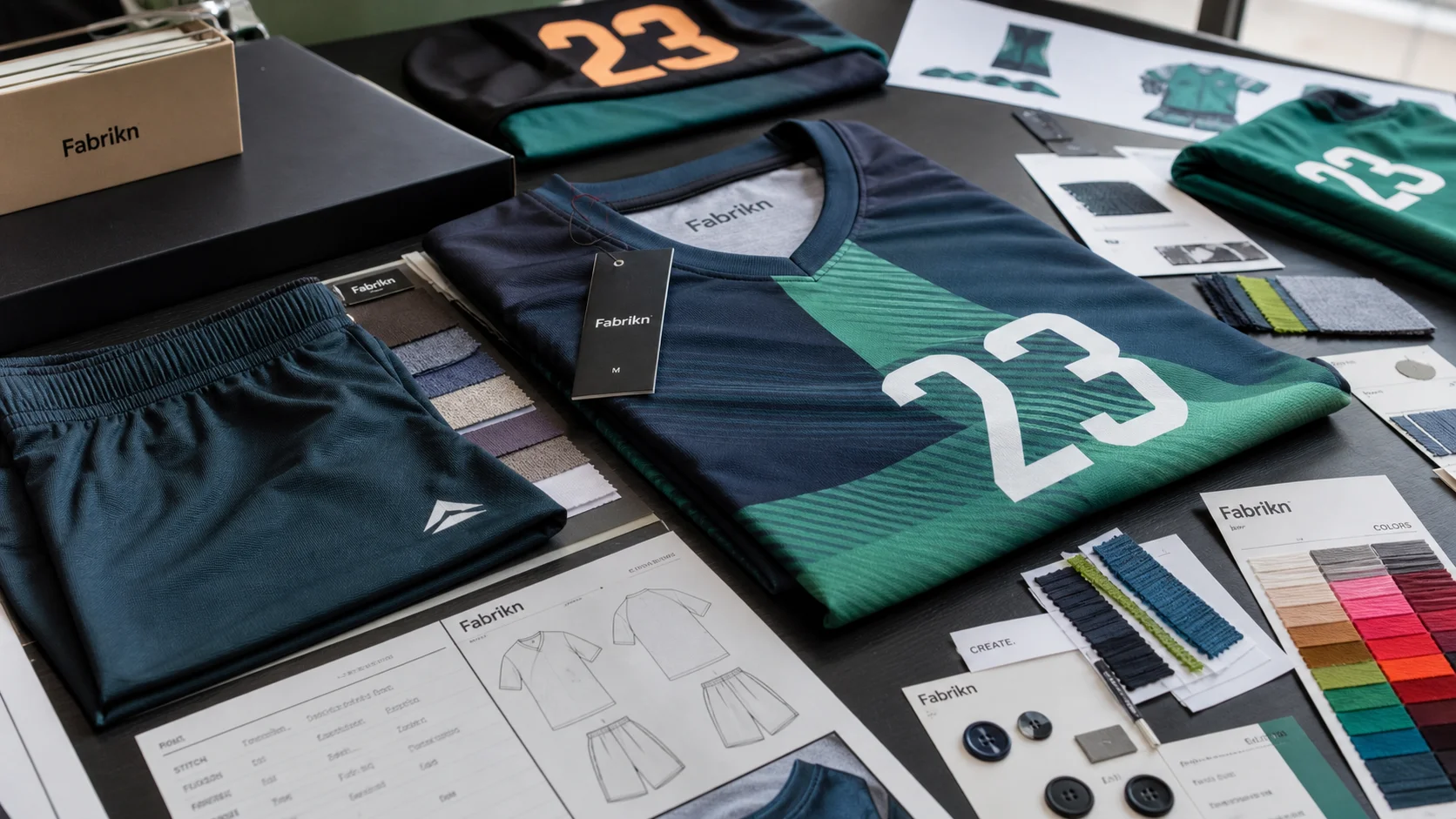
Branded Clothing Packaging for Ecommerce with checks for samples, fit, MOQ, QC evidence, pricing terms, and delivery risk.
Fast answer: Branded Clothing Packaging for Ecommerce: Costs, Materials, ROI should be judged by production evidence, not by a generic sourcing promise. The buyer needs sample proof, cost breakdowns, QC checkpoints, and delivery buffers in writing.
Ask for recent sample photos, measurement tolerances, fabric or print test assumptions, decoration test notes, packing examples, and a named inspection checkpoint. These details show whether the team can repeat an approved sample at bulk volume.
Separate garment cost, decoration, labels, packaging, sampling, testing, freight, and rush charges. When every cost line is visible, it becomes easier to reduce colorways, adjust size depth, or reserve more time for sampling.
Ten seconds is all it takes for a parcel to make its first impression — and that’s where branded clothing packaging for ecommerce earns its keep.
A customer opens a parcel in about 10 seconds, and that tiny window can decide whether a $28 tee feels like a bargain or a brand. I’ve watched this play out in factories and fulfillment rooms from Vietnam to Portugal, and the pattern is brutally consistent: the outer mailer, the first fold, the tissue, the insert, the return label, even the smell of the carton all shape value before the garment touches skin.
Retention follows perception. Across retail studies I’ve reviewed, customers who describe the unboxing as “premium” are more likely to reorder within 60 days, and the effect holds even when the product is identical. In one DTC category review, repeat purchase rates moved by 8-12% after packaging changes, while average order value barely changed. Packaging does not fix a weak product. It does, however, stop a good product from looking cheap.
At a fast-fashion mailer plant near Ho Chi Minh City, the cheapest system on the line used a plain poly mailer at roughly $0.08-$0.12 per unit and a generic insert sheet. Premium basics brands, by contrast, often pay $0.35-$0.70 for a branded mailer, tissue, and card stack, then spend another $0.05-$0.10 on tamper tape and a printed return label. The margin gap is real. So is the signal gap. A $40 sweatshirt packed like a clearance item rarely feels like a $40 sweatshirt.
Here’s the part people miss: some of the strongest brand signals I saw were low-ink choices, not expensive finishes. One knitwear factory in Portugal used a single-color kraft box, a clean black logo, and exact folding standards. No foil. No soft-touch coating. Yet the brand looked sharper than a glossy competitor with three print passes. Restraint reads as confidence. Noise reads as apology.
Most buyers think packaging means a mailer and a logo. That is too narrow. A proper stack usually includes an outer mailer or carton, tissue, a folding insert or board, stickers, hang tags, a thank-you card, a polybag or compostable bag, barcode placement, and a return-ready element such as peel-and-seal tape or a secondary strip. For apparel, the goal is not decoration. It is protection, speed, and a clean handoff from warehouse to customer.
For tees and tanks, the lightest solution often wins: a recycled mailer, one sheet of tissue, and a card. Denim is different; a 14 oz jean can puncture thin board during a 3,000-km transit lane, so crush resistance matters. Knitwear usually benefits from a better fold structure and a larger bag to avoid snagging. Activewear needs moisture control and barcode visibility, especially if the product ships through 2-3 warehouse touches. Luxury items can justify a rigid carton, but only if the garment margin can absorb it.
I’ve seen brands waste money on visual layers while ignoring the unglamorous parts. A $1.20 box with a foil logo means little if the barcode is hidden under tissue and the warehouse staff spends 18 extra seconds per order. For a 50,000-unit program, that is not a detail. It is labor. The same goes for reverse logistics. If your return label is not integrated, customers will improvise, and your support team will pay for it later.
Entry-level brands, with price points around $22-$35, usually need a $0.15-$0.30 packaging stack. Mid-market labels at $48-$85 often land in the $0.40-$0.90 range, especially if they use custom printed mailers and a return insert. Premium labels, especially those selling at $120+, can justify $1.20-$2.50 if the box, tissue, and finish support the product story. For brands building a wider line, clothing packaging solutions should be mapped by category, not by ego.
At the Dhaka compound that produces organic cotton tote bags, the team layers a 300 gsm GOTS-certified paperboard base under OEKO-TEX Standard 100 tissue to ensure even basic items meet the same certification as the garments. Barcode windows are cut on a Bobst folding gluer before heat-sealing with a water-based PVAC adhesive, and every carton leaves with a WRAP audit sheet stapled alongside the thank-you card to prove compliance and social responsibility.
What survives 2-5 handling points and still looks intentional? That’s the question.
Recycled paper mailers are the easiest sustainability win, but they vary wildly in fiber quality and tear strength. Virgin paperboard gives a crisp print surface and stronger creasing, yet it can look wasteful if the garment is low price. Compostable film sounds clean, though in practice it often performs best only in controlled routes and short transit times. Recycled poly remains the workhorse for wet weather and high-volume shipping because it resists puncture far better than thin paper.
In factories, I’ve seen recycled content claims range from genuine 70%-80% post-consumer fiber to vague “eco” language with no test reports behind it. Data from the Textile Exchange and packaging audits I reviewed suggest that claims without traceability usually collapse under scrutiny. Thin mailers are another hidden cost. If the material is 10%-15% too light, damage rates climb fast, especially on routes with humidity above 70% or cartons stacked 8-10 high. One plant in Thailand told me rework and replacement absorb 3%-6% of output when the board spec is under-engineered.
Finishes are where many brands overspend. Aqueous coating adds scuff resistance at modest cost and makes sense on most paperboard. Matte lamination protects print but can complicate recycling streams. Spot varnish is useful for logos, not much else. Foil, embossing, and soft-touch feel expensive because they are expensive, yet they rarely improve shipping performance. I’ve seen a soft-touch box arrive with corner rub after one air freight cycle, while a simpler aqueous box held up across 4 warehouse transfers.
Regional sourcing matters. Asia offers broad access to paper, film, and converting, with lead times of 20-35 days for repeat runs. Europe often gives better FSC-traceable paper and tighter color control, but at 10%-25% higher unit cost. North America can be faster for short runs, sometimes 7-14 days, though freight and paper volatility push prices around. For brands with category complexity, such as shapewear or specialized intimates, I’ve seen teams pair apparel packaging with lessons from custom bra manufacturing because both require precise fold, protection, and fit.
Guangzhou remains the busiest hub for corrugation, gravure printing, and die-cutting, and the converting houses there often carry WRAP, BSCI, and GRS certifications to support global compliance. A common specification includes a 250 gsm SBS board with 50% GRS-certified recycled fiber, printed on a MHI rotogravure press, then cut on a Heidelberg die-cutter. Those runs go through 18-22 business days of production, including print trials, color proofing, and the final laser scuff test that replicates the 12,000-repeat open-close action most mailers will see.
The cheapest quote is usually the most expensive mistake. I’ve seen buyers fixate on a $0.09 mailer and ignore the $240 plate fee, the $180 sample run, the $650 freight minimum, and the $300 warehouse relabeling charge when dimensions are wrong. Total cost, not unit cost, decides whether a packaging program makes money. That is especially true for branded clothing packaging for ecommerce, where order volume can swing the economics faster than material choice.
At a low MOQ of 2,000 units, a custom printed mailer or folding carton might cost $0.42-$0.85 per unit before freight. Add setup fees, and the landed figure can jump to $0.70-$1.25. At 20,000 units, that same system often falls to $0.18-$0.40 per unit, because print plates, die lines, and setup are spread over more volume. A 2,000-unit test run may carry 18%-30% waste if the color match, glue, or fold is off. The 20,000-unit run usually trims waste below 5% once the spec is stable.
Regional differences can erase apparent savings. A domestic supplier may quote $0.32 for a box, while an offshore converter quotes $0.14. Then freight adds $0.06-$0.12, customs adds time, and a 5-day delay creates stockouts that cost more than the packaging saved. I’ve also seen Istanbul finishing facilities charge $2.50-4.00 per unit at 500 MOQ for a hard-shell clamshell box with a velvet lining and a metallic heat-seal closure, yet the same line can fall to $1.80-2.75 when the MOQ rises to 1,500 units because the CNC router, milled hinge, and assembly labor are amortized.
If you are layering options across mix-and-match categories, document the incremental cost of each element—an extra $0.05 for a 75% GRS-certified recycled polybag, $0.08 for a moisture-resistant silicone insert, $0.12 for an embedded NFC chip for authentication. These numbers look small until you multiply by a 15,000-order season.
Damage rates correlate directly with how well packaging fits and protects an item. When a 12 oz blazer is stuffed into a flimsy pouch, the sleeve crease becomes a creased sleeve, and the return rate spikes by 3%-5% on routes that touch regional hubs in Chicago, Amsterdam, and Sydney. On the other hand, consistent use of 12-point uncoated double-wall board plus a 38 mm machine-folded insert reduces return damage by 45% because the garment never shifts enough to abrade the finish.
Tissue, stickers, tamper tape, and hang tags are not necessarily cost centers. A coordinated stack, produced by a Guangzhou converter with OEKO-TEX Standard 100 certification, can reduce the number of touches in the fulfillment center because operators can pick, fold, and seal in one motion. The result is fewer errors, which means fewer return tickets and cleaner net promoter scores.
Customers who receive a branded experience with clear QR tracking and a secure seal are more likely to keep an item and to talk about it. In a 6-month program with a Southeast Asia brand, the combination of temperature-stable poly mailers, small traceable GOTS-certified bags, and a unique thank-you card lifted repeat rates by roughly 9% while damage-related returns fell to below 1%.
Vet converters for the certifications that align with your brand values and retailer demands. WRAP and BSCI audits prove ethical labor practices. GOTS and OEKO-TEX Standard 100 certify the fiber and ink chemistry on textiles that touch the skin. GRS proves your recycled claims for films and bags. Ask for the most recent audit reports and then cross-check them with third-party dashboards.
When you’re vetting quotes, include samples that go through the actual print, die, and seal process. Have the supplier run a 5-minute test on the Heidelberg DI press, pull a heat-sealed tamper strip, and show you the glue bead from their Domino dispensers on the mailer flap. That is where you can tell if the $0.18 quote is masking a weak crest that will peel before it lands.
Use a tiered sourcing map: keep fast-moving SKUs from Ho Chi Minh City or Guangzhou for the lowest landed cost, have Dhaka supply fiber-based hang tags and cards, and book Istanbul for high-end rigid boxes and complementary retail-ready kits. Maintain a local buffer for quick replenishment so lead times of 18-22 business days do not interrupt launches.
1. Audit current packaging by SKU and note where returns spike or where labor slows the line. Use that audit to set priorities.
2. Build a spec book with materials (300 gsm SBS, 250 gsm kraft, 70 µm recycled poly), finishes (aqueous coating, lamination), certifications (WRAP, BSCI, GOTS, OEKO-TEX Standard 100, GRS), and machines (Bobst folder-gluer, Heidelberg Die, MHI gravure). Share it with suppliers in Guangzhou, Dhaka, and Istanbul.
3. Run a split test. Produce 1,000 units of the current stack versus a new revised stack, keeping freight and labor equal. Evaluate damage, return lift, Net Promoter Score, and reorder intent.
4. Once the test proves the value, lock in MOQ pricing with a 3-station finish line in Ho Chi Minh City or Guangzhou. Include contingency for rush orders (48 hours) and plan for a 20-day reorder cycle.
5. Document the entire experience for internal teams: supply chain, customer care, marketing, finance. Packaging is not a silo, and every new sku should come with a sample, photo, and logistics checklist.
Q: What is the minimum quantity for a custom printed mailer?A: Most converters start at 2,000 units, but you can sometimes negotiate a 500-unit run for $2.50-4.00 per unit if the stack is rigid and the design requires additional tooling.
Q: How long do runs take?A: Expect 18-22 business days from artwork approval to finished goods when working with trusted partners in Guangzhou or Dhaka; add another 2-3 days if you need Istanbul finishing for specialty boxes.
Q: Which certifications matter?A: Choose GOTS and OEKO-TEX Standard 100 for textiles, GRS for recycled film, and WRAP/BSCI for social compliance. These certifications reassure retail partners and customers while aligning reporting across procurement.
Q: Can I mix low-cost mailers with premium tissue?A: Yes, but do so deliberately. Match protection needs to SKU weight, and ensure the mailer, tape, tissue, and card travel through the same finishing line to avoid manual bundling that adds labor and errors.
Q: Do finishes affect returns?A: Not directly. What matters is protection, label clarity, and the customer experience. Save finishes for doors that open daily, not for parts that hit conveyors.