
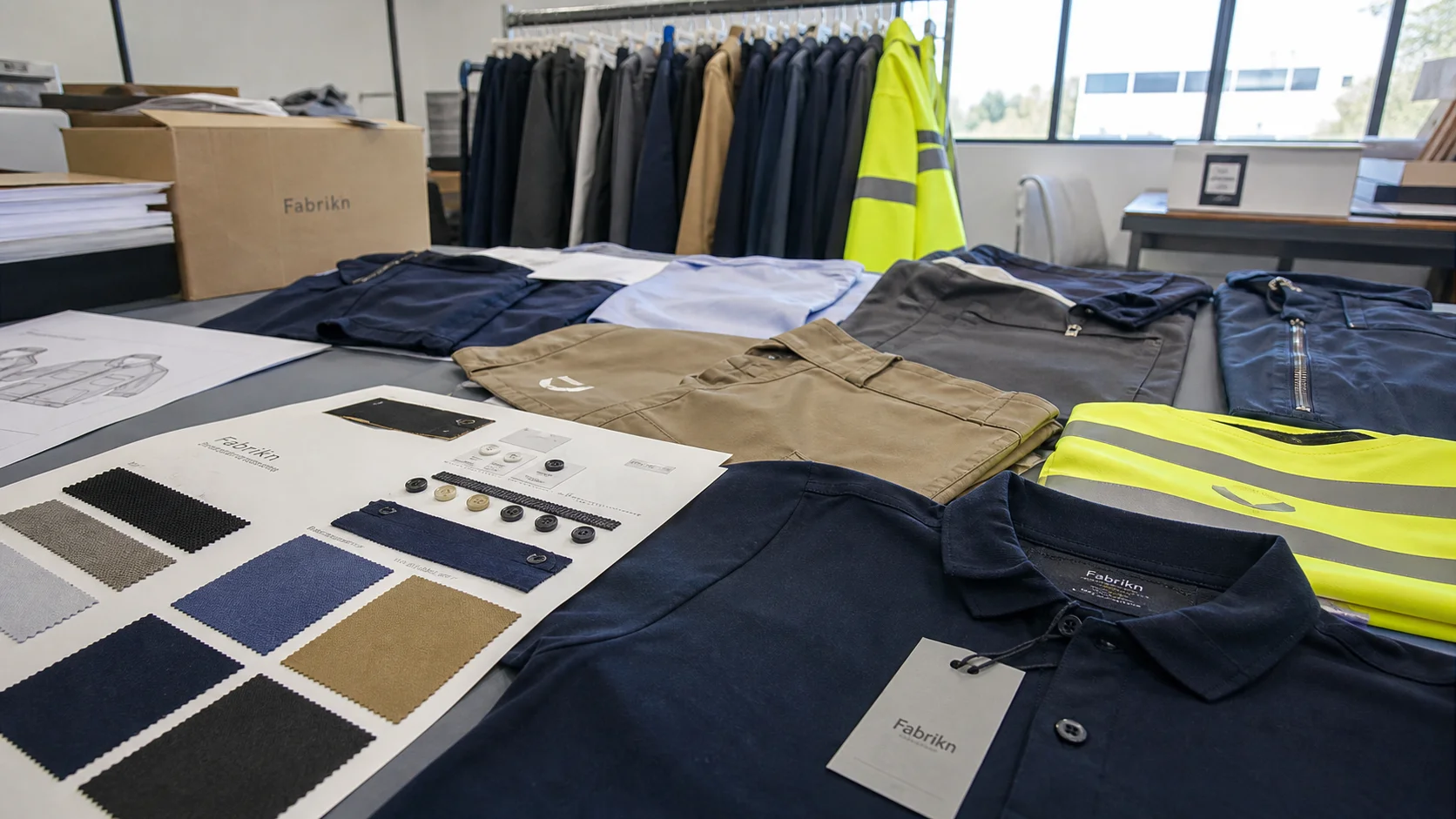
Ecommerce Clothing Unboxing Packaging with checks for samples, fit, MOQ, QC evidence, pricing terms, and delivery risk.
Fast answer: Ecommerce Clothing Unboxing Packaging: Box Strength, Inserts, and Finish should be judged by production evidence, not by a generic sourcing promise. The buyer needs sample proof, cost breakdowns, QC checkpoints, and delivery buffers in writing.
Ask for recent sample photos, measurement tolerances, fabric or print test assumptions, decoration test notes, packing examples, and a named inspection checkpoint. These details show whether the team can repeat an approved sample at bulk volume.
Separate garment cost, decoration, labels, packaging, sampling, testing, freight, and rush charges. When every cost line is visible, it becomes easier to reduce colorways, adjust size depth, or reserve more time for sampling.
The first seven seconds can make a package feel like luxury or like an afterthought. I have watched that judgment land fast, and it is exactly why clothing packaging for ecommerce unboxing videos matters so much. Nearly 70% of shoppers say packaging changes how premium a brand feels. I have also seen repeat purchase rates lift by 8% to 14% after brands fixed presentation, not product quality. That sounds unfair. It is also real.
The camera does not care about the same things a warehouse manager does. Framing changes everything. A matte mailer with a crisp seal can read as expensive, while a rigid box with mirror gloss can look busy and cheap under ring light reflections. Texture matters because lenses pick up grain, wrinkle, and contrast. Sound matters too. A clean tear strip, a soft tissue pull, or a magnetic snap creates a tiny payoff that keeps viewers watching one more second.
I have visited factories in Vietnam, Portugal, and South China where two brands used similar materials but got opposite results online. One spent $1.80 per unit on a rigid box with foil stamping and a foam insert. Heavy in hand. Dull on camera because the opening sequence stalled at the lid. The other spent $0.42 on a printed mailer, $0.08 on a sticker, and $0.06 on tissue. It opened in one motion. The reveal was clean, fast, and far more shareable.
The business case is simple. Packaging is not freight filler or a line item to ignore. It is a content asset. A package that films well can earn organic reach on TikTok and Reels, reduce paid media pressure, and support the premium story before the garment is even worn. Brands that treat packaging as a visual sequence, rather than a box to survive transit, usually get better engagement from the same product and the same ad budget.
A camera-friendly package needs a clear visual hierarchy. First the logo or mark. Then the wrap. Then the insert. Then the garment reveal. If all four elements shout at once, the frame turns muddy. I have seen packaging teams over-design every surface, then wonder why the unboxing clip looks chaotic. The better packages use one or two strong cues and let the rest stay quiet.
Matte finishes usually film better than high gloss because they cut glare from studio lights and phones. A deep navy mailer with a white logo reads faster than a silver foil sleeve. Contrast matters more than decoration. So does fold discipline. A perfectly centered tee in a 320 GSM French terry stack looks premium when the edges align. A wrinkled tote in a box full of tissue noise looks careless, even if the garment cost $45 retail.
Audio and motion cues are part of the product. Magnet snaps feel luxe. Tear strips create a satisfying opening action. Seal pulls tell the viewer exactly where to start. Tissue rustle works only when the paper is not overstuffed or creased. I have watched clips where the clothing was fine, but the package lost the audience because the opening process took 18 seconds and the paper tore unevenly. Attention is fragile. Clothing packaging for ecommerce unboxing videos needs to respect that.
Common factory mistakes are predictable. Overfilled boxes bow at the sides. Wrinkled tissue makes the whole brand look rushed. Weak adhesive lifts during transit. Branding that looks sharp on a PDF can disappear under bright LEDs. For a $20 DTC basic, a clean mailer, one sticker, and a folded insert often outperform a $3.50 rigid box. For premium labels at $120 to $300 retail, thicker board, embossed marks, and a structured closure matter because viewers expect more ceremony.
For brands building private label collections, I often point them toward clothing packaging solutions that keep the opening sequence short and readable. On camera, fewer components can mean a better story.
Material choice is where many brands overspend in the wrong place. Paperboard boxes give strong print quality and a polished face, but they can dent in transit if the board is thin. Corrugated mailers are cheaper to ship, usually lighter by 30% to 55% than rigid setups, and often hold shape better on video. Flexible mailers win on freight, especially for tees, socks, and light knitwear, but they can feel forgettable unless the surface print is sharp and the fold is disciplined.
Regional factory work tells a different story. In China and Vietnam, corrugated packaging is often the cheapest route for scale, with good pricing at 5,000 to 50,000 units. In Portugal and parts of Eastern Europe, paperboard finishing is often stronger, especially for soft-touch lamination, debossing, and precise edge folding at 1,000 to 10,000 units. Flexible poly mailers dominate in large, price-sensitive programs because the labor is simple and the shipping footprint stays low. I have seen brands save $0.22 per order just by moving from a rigid box to a printed kraft mailer. A manufacturer with the right factory process can make that decision easier.
Sustainability claims must survive scrutiny. Recycled content, FSC certification, and plastic-free closures matter only if they are real and documented. According to FSC, certified material is traceable through the chain of custody, which helps when a brand prints sustainability claims on an insert. According to Textile Exchange, brands are under pressure to prove material sourcing, not just announce it. For quality assurance, OEKO-TEX provides standards that help buyers evaluate safer materials and production inputs. On video, those claims are only as credible as the insert and the substrate beneath them.
The thing nobody tells you: a lower-cost material can film better because it holds its shape and reduces visual noise. I have watched a $0.31 corrugated mailer outperform a $2.20 rigid box simply because it opened neatly and sat flat under camera. That matters more for return-heavy categories like basics, leggings, and babywear. In baby apparel, where softness and safety messaging are sensitive, packaging should stay simple and verified; brands often pair it with custom baby clothing manufacturing only after material testing is complete.
Pick the substrate by garment type, return rate, and average order value. A $38 hoodie can travel in a printed mailer if the fold is tight and the print is strong. A $180 coat needs a box or structured bag that protects shape. The packaging should match the product’s visual promise.
Price quotes for packaging get distorted fast because setup fees hide in plain sight. At 500 units, a printed mailer may quote at $0.95 to $1.40 each because plates, tooling, and short-run labor are spread across a tiny batch. At 5,000 units, that same piece can drop to $0.38 to $0.62. At 50,000 units, I have seen it reach $0.17 to $0.29, depending on print color count and substrate. The curve is brutal and very real.
Here is a practical comparison I use when brands ask for packaging with strong video value. A basic mailer usually runs $0.18 to $0.55 at scale. A printed folding box lands around $0.65 to $1.80. A rigid box may sit between $1.90 and $4.50, with much higher freight because of cube size. Premium wrap systems, including tissue, sticker, sleeve, and insert, often cost $0.28 to $0.95 on top of the container. Labor adds another $0.06 to $0.35 per pack depending on the line speed.
Hidden costs matter. A packing station that takes 10 extra seconds per order adds roughly 28 labor hours across 10,000 units. At $4 to $7 per hour in some sourcing regions, that is not trivial. Dimensional weight also bites. A box that expands shipping volume by 20% to 35% can push freight above the product margin on lower-priced apparel. Brands chasing unboxing content sometimes forget the shipping invoice arrives after the applause.
The best visual lift per dollar usually comes from custom stickers, tissue, and printed sleeves. A branded sticker at $0.03 to $0.08 can turn a plain mailer into something that looks planned. Tissue at $0.05 to $0.12 adds motion and color layering. Printed sleeves are often stronger than full box printing because they frame the garment without adding too much weight. For labels using private label clothing services, those small upgrades usually do more for perceived value than a bulky outer box.
My decision rule is blunt. If the packaging cost exceeds 3% to 5% of the product’s retail price, the brand needs a very clear content or retention reason to justify it. If it stays below 2%, the packaging can usually be upgraded with little pain. Spend where the camera sees motion, not where the spreadsheet looks impressive.
On factory floors, the gap between a good package and a usable package is usually labor discipline. Fold consistency, insert placement, and seal alignment are not glamorous, but they decide whether the final clip looks polished. I have watched an operator in Ho Chi Minh City fold 240 tees per hour with a semi-manual board, while a team in North Carolina handled 160 per hour with tighter QC and fewer visual defects. Both could hit the deadline. Only one could keep the same logo line centered every time.
Ten seconds saved per pack sounds minor until you multiply it by 10,000 orders. That is 27.7 labor hours, which can equal several shifts during peak season. A simplified packaging design with 2 components instead of 5 lowers error rates and reduces hand work. Fewer steps also mean fewer camera-visible mistakes, because the same inconsistencies that slow a line tend to show up in the unboxing video.
Failures are predictable. Crooked logos. Torn tissue. Adhesive bleed. Crushed corners. Unreadable inserts. I have seen a premium box fail because the corners collapsed after 300 units were stacked too high in storage. Another label lost trust because the seal was centered by eye, not by jig, and every third parcel looked slightly off. Factories that use line markers, folding guides, and QC sampling at 1 in 25 packs usually outperform teams that inspect only at the pallet stage.
For brands with more complex product sets, such as cut-and-sew outerwear or multi-piece collections, packaging has to align with production logic. I often recommend reviewing cut and sew manufacturing workflows before finalizing the packaging spec, because garment shape changes the fold pattern, the insert size, and the box depth. A sweatshirt in brushed fleece wants a different pack than a slip dress in viscose satin. Packaging should follow the garment, not fight it.
Testing clothing packaging for ecommerce unboxing videos in the dark is expensive. I prefer a five-step rollout: prototype, small batch, creator test, customer test, then scale. Start with three concepts only: one basic, one premium, one hybrid. Keep the garment constant, the background constant, and the opening sequence constant so the results are readable.
Measure what the video actually does. Track watch time, share rate, save rate, return complaints, packing time, and damaged-in-transit rate. A package can look beautiful and still fail if packing slows by 12 seconds or if crush damage rises from 1% to 4%. I ask brands to review at least 25 unboxing clips before making a final call, because a single creator sample can flatter a weak system.
Change one variable at a time. If you switch material, print color, and closure method all at once, you will not know what helped. The cleanest test is often tissue color or sleeve format. A/B testing a $0.06 sticker against a $0.14 printed seal is easier to read than comparing two entirely different box systems.
Before you brief a factory, build a buyer checklist. Request dielines, blank samples, printed samples, fold instructions, and a production photo of the packing sequence. Ask for lead times in days, not vague promises. Get print files approved at 300 dpi and confirm the carton test if the product is fragile. This is the point where execution turns from theory into purchase orders.
Supplier selection is usually where brands mistake cheap quotes for good ones. I do not. I ask for print consistency across 3 samples, sample speed under 7 days, MOQ clarity, and finishing options that match the camera brief. A supplier with a capable production team and the right custom tooling can make or break the final result. Asia often wins on cost and scale, Europe often wins on finishing precision, and North America often wins on short lead time and smaller reorders. The cheapest quote is often the most expensive mistake.
Red flags appear early. Vague material specs. No dielines. Gloss that changes from sample to sample. Lead times that sound like wishful thinking, such as 5 days for custom printed packaging with 3-color work and specialty coating. If the supplier cannot show blank samples, carton test results, and packing instructions, they are not ready for camera-facing packaging. I have walked away from 11 out of 18 quoted programs for exactly that reason.
For brands building apparel lines at scale, packaging should fit alongside production and branding systems. That is why I usually pair this work with private label clothing services only when the supplier can manage repeated print consistency across multiple SKUs and reorder cycles. If the packaging cannot survive a second production run, it is not a real system.
If you are sourcing bulk orders from China or another high-volume region, ask for wholesale pricing breaks, documented quality checks, and MOQ tiers before you approve artwork. The best suppliers make it easy to compare custom options without hiding the true production costs. A good factory partner will also confirm whether your packaging can be packed efficiently on the line, which protects both margin and presentation.
Simple structure, strong contrast, and a clean opening sequence usually perform best. Matte finishes, centered logos, and a clear tear or lift point help viewers understand the package in 5 to 7 seconds. Avoid crowded surfaces and wrinkled tissue.
Basic mailers often range from $0.18 to $0.55 at scale, printed folding boxes from $0.65 to $1.80, and rigid boxes from $1.90 to $4.50. At 500 units, expect higher pricing because tooling and setup fees are spread across fewer pieces.
Most custom packaging runs take 3 to 6 weeks after artwork approval, though rigid boxes and specialty finishes can take 6 to 8 weeks. Small sample runs may arrive in 5 to 10 days if the supplier has stock materials and a short queue.
Yes, but only indirectly. Clear inserts, accurate sizing cards, and better garment presentation can reduce confusion and lower avoidable return complaints by 3% to 8% in some programs. Packaging cannot fix fit issues, but it can reduce friction after delivery.
Small brands often get the most flexibility from suppliers in North America or Europe, where MOQs can start around 300 to 1,000 units for some formats. Asia usually offers better unit pricing at 5,000 units and above, especially for printed mailers and folding boxes.
For brands building visual identity from the first parcel, packaging should work as hard as the garment. I have seen plain pieces outperform luxury ones because the package told a clearer story. Start with one format, one opening motion, and one measurable goal. Then test it against watch time, packing speed, and damage rates before you order the next 10,000 units. The right clothing packaging for ecommerce unboxing videos does not just look good in a clip; it earns its keep in the cart, at the parcel shelf, and on the repeat order.