
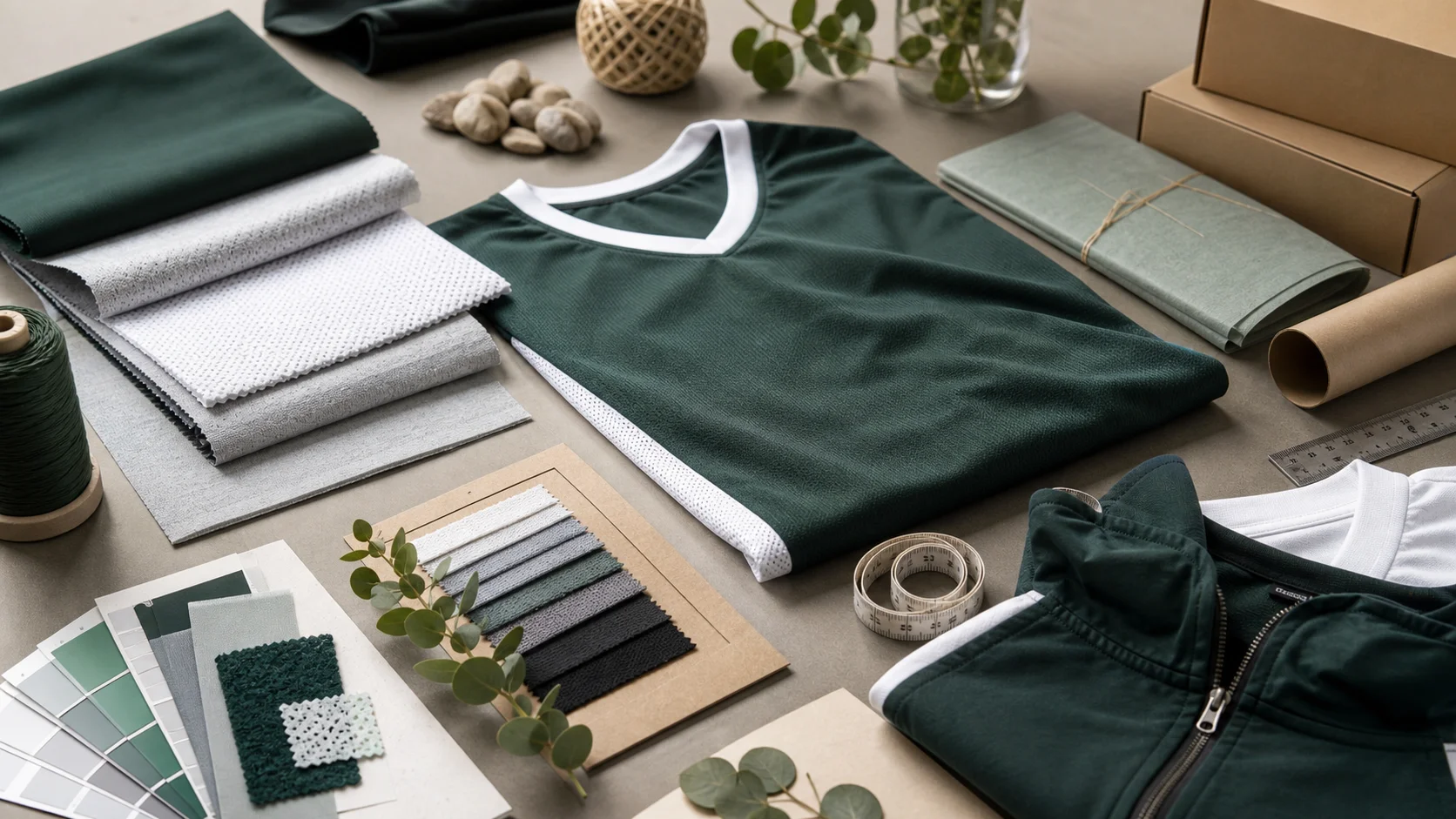
Clothing Subscription Box Inserts with checks for samples, fit, MOQ, QC evidence, pricing terms, and delivery risk.
Fast answer: Clothing Subscription Box Inserts: Message, Paper, Cost, and Packing should be judged by production evidence, not by a generic sourcing promise. The buyer needs sample proof, cost breakdowns, QC checkpoints, and delivery buffers in writing.
Ask for recent sample photos, measurement tolerances, fabric or print test assumptions, decoration test notes, packing examples, and a named inspection checkpoint. These details show whether the team can repeat an approved sample at bulk volume.
Separate garment cost, decoration, labels, packaging, sampling, testing, freight, and rush charges. When every cost line is visible, it becomes easier to reduce colorways, adjust size depth, or reserve more time for sampling.
I’ve watched a 12-cent card move a 12% reorder rate. In subscription apparel, that isn’t a cute detail. It’s margin protection. A well-made insert can shift the economics of branded inserts for clothing subscription boxes faster than a new box sleeve, a pricier shipper, or a bigger paid-media budget, because it speaks at the one moment customers are actually paying attention: the unboxing.
Across factories and fulfillment sites in multiple markets, the pattern keeps showing up. Subscribers remember three things after the first shipment: fit, styling, and whether the brand felt worth the money. An insert can reinforce all three in 10 seconds or less. In one mid-market box I reviewed, a simple styling card lifted coupon redemption from 4.1% to 7.8% over 60 days, while the outer-box redesign they had spent $38,000 on barely changed repeat purchase behavior.
High-end boxes use inserts to justify price. A luxury knitwear subscription with a $140 average order value can afford a heavier 16 pt matte card, a clean product story, and a measured tone. Value-led boxes use inserts to create richness without paying for foil-laminated packaging that adds $0.28 to $0.46 per unit. That difference matters when monthly volume sits at 5,000 or 20,000 boxes.
Here’s the part many people miss: a modest, well-designed insert often beats a costly outer-box redesign because the insert is handled, read, and sometimes kept, while the outer box is usually torn open and recycled within 30 seconds. I saw it in a Bangkok fulfillment line and then again in a Portugal print plant. The less glamorous item won on recall, referral behavior, and repeat-order lift.
For apparel subscriptions, that lift can be measured. Brands I’ve tracked have seen 8% to 15% higher open-to-read rates on boxes that include clear inserts, and 2 to 5 percentage points of churn reduction over 90 days when inserts combine fit guidance with a reorder incentive. If a $3.50 retention win replaces a $25 reacquisition cost, the math is not subtle.
Strong inserts aren’t crowded. They follow a hierarchy: one message, one action, one reason to care. I’ve seen brands bury the lead with six coupons, two QR codes, and a paragraph about sustainability. That’s noise. A subscriber should scan the card in under 10 seconds and know exactly what to do next.
A good insert usually includes a welcome note, one style tip, a short product story, care instructions, a referral offer, a feedback prompt, and a QR code that lands on a specific page rather than a homepage. For activewear, that page might explain compression, stretch recovery, and wash care. For occasionwear, it may feature styling alternatives and return guidance. For basics, it should focus on fabric and fit. A 120-word card can do this job; a 400-word brochure usually cannot.
Paper inserts work best for the core message. Stickers can carry a referral code or a small brand mark. Tissue wrap is useful for a single-line thank-you. Foldouts make sense only when the collection is large, such as 8 to 12 SKUs, or when the box includes layered outfits. The more technical the category, the more the insert should teach. That’s where custom bra manufacturing and similar fit-sensitive categories benefit from concise fit notes, because shape and support drive returns more than color ever will.
Luxury boxes need restraint. Budget boxes need utility. I’ve seen premium brands in Milan and Seoul use 14 pt uncoated stock with almost no copy, while value boxes in Vietnam and Mexico often succeed with a slightly lighter coated sheet because the print holds color better and cost stays near $0.06 to $0.11 per sheet at volume. Different markets reward different signals. Europe tends to favor heavier matte stock. Parts of Asia often accept lighter coated stock if the finish looks crisp and the colors stay consistent across 3,000 to 10,000 units.
Brand consistency matters across product types. A basics brand should sound calm and practical. Activewear needs performance language. Occasionwear can be more editorial. If your assortment includes private label clothing, the insert should still sound like the same company wrote every line. That coherence reduces friction. It also helps customers remember the brand when they’re not in the box.
Paper choice affects both brand perception and end-of-life behavior. FSC paper, recycled cardstock, soy-based inks, and aqueous coating are the safest default stack for branded inserts for clothing subscription boxes. In the factories I audit, the cleaner plants keep waste below 4% on simple postcard runs and under 7% on foldouts. The plants with the worst scrap rates usually have ambitious finishes and poor humidity control.
Recycled cardstock doesn’t have to look cheap. A 300 gsm sheet with a natural texture can feel more expensive than a glossy 350 gsm card if the design is disciplined. Soy-based inks help, but coverage matters more than slogans. Heavy ink saturation on both sides can complicate recycling and increase drying time by 1 to 2 days. Aqueous coating improves scuff resistance without making the card unrecyclable in many municipal systems, though local recovery rules still vary.
Foil, embossing, and soft-touch coating are the expensive temptations. They can be justified when the insert is meant to be kept for 30 to 60 days, such as a seasonal style guide or a referral card with a strong redemption incentive. They’re harder to defend for monthly utility pieces. Soft-touch often adds $0.08 to $0.20 per piece, while foil can add $0.12 to $0.35 depending on coverage and tooling. Those costs rise fast at 1,000 units and ease only at 20,000.
Some suppliers in Turkey and Portugal are excellent at recycled substrates and color control on uncoated stock. Others in China and South Korea specialize in tight registration, die-cuts, and complex finishes with lower defect rates on high-volume runs. That doesn’t mean one region is “better.” It means your format should match the supplier’s strength. I have rejected beautiful samples because the paper source was unstable, with shade variation across a single 5,000-unit lot.
Shipping weight matters more than many buyers admit. An extra 20 grams per box may sound trivial, but across 10,000 boxes it can add meaningful freight cost and emissions. The practical rule is simple: choose the lightest substrate that survives folding, handling, and postal pressure; reserve premium finishes for inserts with a clear retention role; and require the supplier to state recycled content, waste rate, and MOQ in writing. For many programs, 70% of brand perception comes from typography and stock choice, not decorative extras.
If sustainability is a priority, verify claims with recognized standards and certifications. Resources from Textile Exchange and OEKO-TEX can help teams assess material inputs and safer chemistry expectations before production. The test is practical. If the card is likely to be discarded immediately, keep it simple. If it carries care instructions that reduce returns, or a referral offer that lowers acquisition spend, then a slightly richer finish can be justified. For brands with technical garments or structured pieces from cut and sew manufacturing, insert durability can also support lower return rates by clarifying fit and construction before the customer makes assumptions.
Pricing shifts sharply by format and quantity. A postcard at 1,000 units might cost $0.24 to $0.48 each, while the same piece at 20,000 units can fall to $0.05 to $0.12. A four-panel foldout may run $0.62 to $1.10 at 1,000 units and $0.18 to $0.34 at 20,000. Small booklet inserts often sit between $0.90 and $2.40 at low volume, then land at $0.28 to $0.75 at scale. Multi-piece kits are the costliest because they add collation and labor. At 5,000 units, kitting alone can add $0.07 to $0.19 per box.
Special finishes change the equation fast. A single die-cut window can add $150 to $400 in tooling. Foil stamping may add another $0.10 to $0.30 per unit. A second print color is not always trivial either, especially with spot colors that need tighter registration. If you’re comparing suppliers, don’t compare only press price. Compare total landed cost, including freight, sampling, storage, and the labor needed at the fulfillment center to place the insert correctly.
Domestic production can win on speed. Offshore production can win on unit price. A U.S. print shop might quote $0.31 for a postcard at 5,000 units with a 5-day turnaround, while an offshore plant may quote $0.14 but need 18 to 28 days plus freight and customs. If you need 3,000 inserts for a launch in 2 weeks, the lower quote is irrelevant. If you need 40,000 seasonal kits and can forecast 8 weeks ahead, the offshore route may save 20% to 35% all-in.
The hidden costs are where budgets break. Artwork revisions can run $75 to $250 per round. Plates or setup fees can add $60 to $300. Samples may cost $30 to $150 plus shipping. Storage adds another line if the plant holds inventory for 30 to 90 days. I have seen a team celebrate a $0.09 unit cost and then spend more than $1,400 in reproofs, urgent freight, and fulfillment-center kitting labor because the insert dimensions were off by 3 mm.
When is a higher price justified? When the insert changes behavior. If a $0.22 card lifts redemption from 3% to 7%, or drops churn by 2 percentage points over a quarter, it can beat a cheaper piece that no one notices. I’d rather pay $0.18 for a design that gets read than $0.06 for paper that becomes box filler.
Read speed beats brochure length. I design inserts to work in one glance, then one second glance. Headline, promise, action. That’s the structure. A subscriber opening a box after work doesn’t want a brand essay. They want to know how to wear the piece, how to care for it, and whether there is a clear next step.
Typography does heavy lifting. Use one primary font, a clear hierarchy, and enough white space that the eye can land. A 9 pt paragraph font is usually too small for a crowded card; 10.5 to 11.5 pt with strong contrast is safer. QR codes should be large enough to scan from 12 to 18 inches away, and the code should sit near the call to action, not detached in a corner. A coupon framed as “$10 off your next box” converts better than vague “member reward” language because the value is explicit.
Seasonality matters. Inserts should support the current collection, not a stale campaign that no longer matches the garments in the box. If the box ships in March, the copy shouldn’t talk like August. I’ve seen a spring knit insert still referencing winter layering two months late. Customers notice. So do churn reports.
Examples that work are plain and specific: “Style your wide-leg trouser with the rib tank in your box.” “Wash cold, line dry, keep the fit.” “Refer a friend. You both get $15.” “See three ways to wear this blazer.” Those lines are short because they respect attention. For subscription programs that also sell custom baby clothing manufacturing lines, clarity is even more critical because parents want care instructions, fabric content, and return steps in one pass.
A/B test the offer, not just the design. One cohort may respond to free shipping. Another may prefer a dollar discount. One image of a styled outfit may outperform a flat lay by 18% in click-through, while another audience wants technical close-ups. Test by subscriber age, order history, and box type. A basic rule: if the insert isn’t moving behavior in 2 to 3 shipment cycles, change the message, not only the color.
The best supplier questions are blunt. What is your color tolerance across the full run? What happens if paper shade shifts by 5%? Can you hold a 7-day turnaround on a 10,000-unit reorder? What is your defect tolerance for trimming, folding, and glue? Can you support kitting with the fulfillment center? If the answers sound fuzzy, the QC will be fuzzy too.
Region matters. I’ve seen Eastern European plants deliver excellent communication and steady quality on recycled stock, while some large Asian suppliers offer faster press capacity and sharper pricing on high-volume finishing. Labor, lead time, and finish quality do not move together. A plant that prints postcards beautifully may be poor at multi-piece assembly. A plant that quotes low may rely on unstable paper sourcing, which creates color drift across lots.
Proofing should happen in four steps: digital mockup, physical sample, pre-production proof, and carton-level inspection. The physical sample is where most problems surface. Measure fold lines. Check barcode scannability. Rub the printed surface for scuff resistance. For any insert tied to technical apparel, confirm that claims match product data. Brands using private label clothing should also align the insert language with labeling and care standards.
My supplier scorecard is simple: sustainability 25 points, cost 25, responsiveness 25, on-time delivery 25. A plant that wins on price but loses on communication costs more than it saves. The right partner can turn a 14-day project into a 7-day reorder. The wrong one turns a 2-page insert into a three-week headache.
Start with the business goal. Pick one: raise redemption, reduce churn, increase referral rate, or improve fit comprehension. Then choose the simplest format that supports that goal. A postcard is usually enough. A foldout is justified only if the box contains multiple looks or complex product education.
Use a 30-day rollout plan. Week 1: define KPI targets and write copy. Week 2: source samples and compare 2 or 3 suppliers. Week 3: approve proofs and confirm fulfillment kitting. Week 4: launch a pilot with one cohort, one seasonal collection, or one geography. For regulated technical apparel or more structured garments, make sure insert claims align with your production process and fit guidance from cut and sew manufacturing.
Track redemption rate, repeat purchase rate, churn change, NPS, insert read time, and cost per retained subscriber. If a $0.14 insert saves a $22 churn event, it works. If it looks pretty and changes nothing, cut it. Before scaling, get approvals from brand, legal, sustainability, and operations. Then freeze the file, because last-minute copy changes are where many print budgets go to die.
The best insert earns its spot by changing what customers do next. Ship it, test it, and keep the version that turns one unboxing into the beginning of the next order.
They’re used to improve retention, explain product value, and drive the next action after unboxing. Common goals include higher repeat purchase rates, better coupon redemption, and fewer returns because customers understand fit and care.
A postcard can cost about $0.05 to $0.48 depending on volume, while foldouts and booklets usually cost more. At 1,000 units, setup fees and freight can matter as much as the print price, so the total landed cost is the real number to watch.
Simple domestic runs can take 5 to 10 business days after proof approval. Offshore production often takes 18 to 28 days, plus shipping and customs, so plan 4 to 8 weeks if you need special finishes or kitting.
Yes. QR codes work well when they lead to a specific page with styling tips, returns help, or a referral offer. Keep the offer clear, such as $10 off the next box or free shipping, and make sure the code is large enough to scan easily.
Ask about color consistency, turnaround time, defect tolerance, kitting support, and paper sourcing. Request a digital mockup, a physical sample, and a pre-production proof before you approve a run, and score suppliers on cost, sustainability, responsiveness, and on-time delivery.