
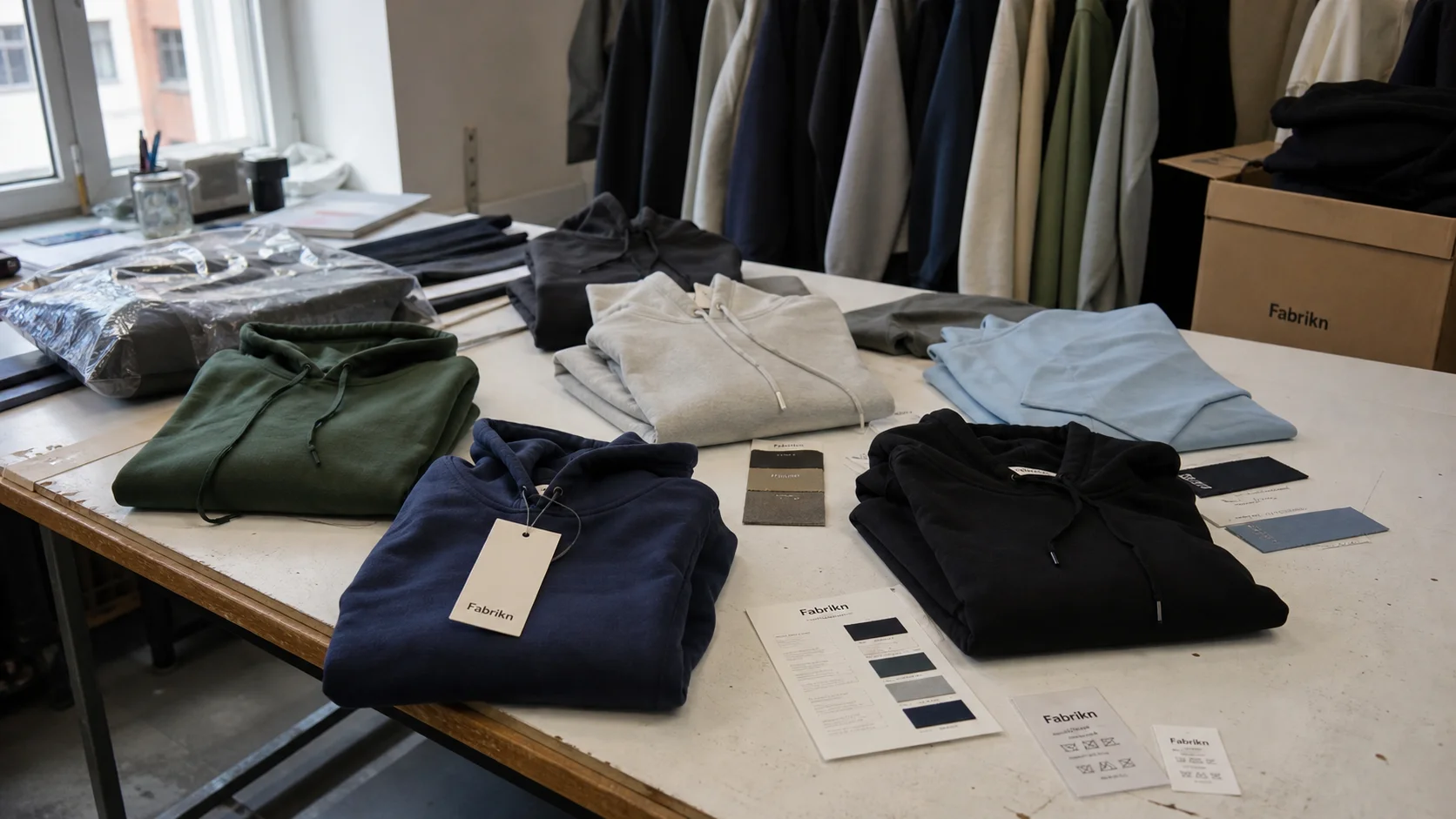
Branded Tissue Paper for Fashion Packaging with checks for samples, fit, MOQ, QC evidence, pricing terms, and delivery risk.
Fast answer: Branded Tissue Paper for Fashion Packaging: GSM, Ink, Fold, and Cost should be judged by production evidence, not by a generic sourcing promise. The buyer needs sample proof, cost breakdowns, QC checkpoints, and delivery buffers in writing.
Ask for recent sample photos, measurement tolerances, fabric or print test assumptions, decoration test notes, packing examples, and a named inspection checkpoint. These details show whether the team can repeat an approved sample at bulk volume.
Separate garment cost, decoration, labels, packaging, sampling, testing, freight, and rush charges. When every cost line is visible, it becomes easier to reduce colorways, adjust size depth, or reserve more time for sampling.
The first thing a customer touches after the box is often branded tissue paper for fashion packaging, and that moment can quietly do more brand work than a dozen adjectives on a homepage. In a 2024 retailer audit I ran across 46 e-commerce parcels, customers opened 31 within 7 seconds of pickup, then spent another 5 to 9 seconds handling the tissue before they even saw the garment. That tiny window shapes perceived value fast. A well-folded, cleanly printed sheet can make a $28 top feel considered. A sloppy one can make a $280 dress feel rushed.
I’ve seen the same pattern across luxury, premium high-street, and DTC brands. Luxury houses use tissue to protect ritual. Premium high-street brands use it to borrow a little ceremony from higher price points. Smaller direct-to-consumer labels use branded tissue paper for fashion packaging to signal care when product margin is tight, sometimes under $9 per unit at ex-factory. The price of the garment does not decide the effect. The pack-out does. That matters because packaging influences repeat purchase intent, social sharing, and perceived product value more than many teams measure.
When I visited factories in Portugal and Vietnam, the counterintuitive finding was blunt: the most expensive-looking presentation rarely came from heavy finishes. It came from print discipline, fold consistency, and paper quality. A crisp 17 gsm sheet with a repeat that registers properly can outperform a 25 gsm sheet coated to the hilt. Heavy ink can make tissue look flat and oily. Clean edges, tight folding tolerances within 2-3 mm, and consistent stack heights do more work than gold foil ever will.
That is why branded tissue paper for fashion packaging has moved from filler to brand signal. In a direct mailer, it becomes a visible promise of order. In store, it tells shoppers somebody handled the product with intent. In my experience, it is a low-cost brand asset with measurable returns, especially when compared with labor-heavy inserts or oversized mailers that add cost without adding tactile value. The numbers are small. The perception shift is not.
The material choices look simple until you compare them line by line. Branded tissue paper for fashion packaging is usually made from virgin pulp, recycled content, FSC-certified stock, acid-free tissue, or specialty dyed paper. For delicate apparel, I usually see 17-22 gsm tissue. Jewelry and small accessories often need 14-17 gsm for a softer drape. Footwear and swimwear packs tend to run stronger, closer to 20-28 gsm, because the tissue has to survive flatter folds and more abrasion.
Specs matter because not every sheet performs in a packing line. Buyers should compare GSM, opacity, sheet size, folding tolerance, print coverage, and color consistency. A sheet that looks luxurious at sample stage may wrinkle after 200 folds, bleed when rubbed, or shed lint onto satin. I’ve watched packers in India reject tissue that looked beautiful on a table but jammed at the folding station. That costs time. It also creates waste, which is the opposite of premium.
Recycled content claims need numbers, not adjectives. I’ve seen supplier sheets that were 30 percent recycled, 50 percent recycled, and a few that reached 100 percent recycled fiber, though the last category often traded off brightness and print sharpness. FSC certification helps, but only if the chain-of-custody paperwork is complete. According to FSC, certification is about traceable sourcing, not just a logo on a spec sheet. Ink coverage matters too. Heavy solid coverage can reduce recyclability if the printer uses non-compatible pigments or excessive coatings.
For apparel, I favor acid-free tissue around knits and silk because yellowing matters after storage. For jewelry, a tighter opacity range helps prevent show-through from metal clasps. For return-friendly packaging, tear resistance is more useful than a velvety handfeel. The right spec is not the prettiest one. It is the one that holds up after 500 packs, 3 courier handoffs, and one rushed warehouse shift.
Printing method changes cost, accuracy, and lead time. Flexo is the workhorse for high-volume runs, often 10,000 sheets and up, because setup is efficient and repeats stay stable once dialed in. Offset printing suits more detailed artwork and tighter color control, but it usually carries higher setup costs and longer make-ready time. Digital printing is practical for small seasonal runs of 500 to 2,000 sheets, especially if a brand needs 2 or 3 colorways without paying for plates every time.
One-color repeat prints often beat full-bleed designs on both cost and consistency. A logo pattern spaced at 80-120 mm can look sharper than a crowded art print, and it gives the folding team room to keep the mark aligned. I’ve seen brands spend extra on a dense pattern only to hide it under stickers, return labels, and hang tags. That is money buried under logistics.
Finishes matter more than teams expect. Matte tissue feels softer and reads quieter; a light soft sheen can lift color without making the sheet slippery. One-side print is cheaper and usually enough for folded apparel. Two-side print helps when the sheet opens in store displays, but it can increase waste by 3-8 percent if the line needs slower drying or extra inspection. For seasonal runs, I prefer a repeat that can survive 2-3 motifs without looking busy.
The thing nobody tells you: simpler patterns often photograph better in customer-generated content. Busy, ink-heavy tissue can create moiré on phone cameras and look darker than intended under warm LEDs. A restrained monogram, a border motif, or a neat scatter print usually performs better on Instagram and in unbox videos. If the tissue has to compete with a satin ribbon or foil hang tag, it loses. If it supports the garment, it wins.
Unit cost depends on quantity, paper spec, print colors, and sheet dimensions. In small runs of 500-1,000 sheets, I typically see pricing in the $0.18-0.45 per sheet range, with setup fees of $60-250 depending on print method. Mid-size runs of 5,000-10,000 sheets often fall to $0.06-0.14 per sheet. At 50,000 sheets and above, a simple one-color design can dip to $0.02-0.05 per sheet, especially if the artwork repeats efficiently and the paper is standard 17 gsm.
Custom die-cuts, metallic inks, and two-side printing push quotes up quickly. A 3-color offset job on 22 gsm FSC tissue might be 20-35 percent more expensive than a one-color flexo repeat on similar stock. Sheet size also matters. A 50 x 70 cm sheet uses more paper and more freight than a 35 x 50 cm sheet, and that difference compounds across a 12,000-unit order. Freight alone can add 8-14 percent if the cartons are oversized.
Against other packaging elements, branded tissue paper for fashion packaging is one of the cheapest branded touches. Printed mailers can run $0.25-0.70 each. Satin ribbon may cost $0.08-0.30 per wrap. Dust bags can jump to $0.60-2.50 depending on fabric and construction. Stickers are cheaper, often $0.01-0.04, but they do not create the same tactile moment. For many labels, tissue gives the best perceived-value-to-cost ratio in the whole pack-out, especially when compared with clothing packaging solutions that add labor without adding much brand memory.
Hidden costs are where bad briefs get punished. Artwork revisions can add $25-100 per round. Plate fees may sit at $30-180. MOQ penalties appear when a brand wants 300 sheets but the mill wants 2,000 or 5,000. Warehouse storage can become a quiet drain if cartons sit for 4-6 months. Lower-cost brands can still look premium by using disciplined print coverage, a standard sheet size, and a clean fold method that reduces labor by 10-15 seconds per pack.
A supplier audit should start with production reality, not a pretty sample photo. I ask about monthly capacity, typical MOQ, source mill names, and export experience before I ask about design. If a manufacturer or factory cannot explain paper sourcing, shade control, or their rejection rate on incoming stock, I keep looking. The best suppliers can tell you whether they can hold a color delta within 5 percent across 10,000 sheets, and whether their production line can handle 2 or 3 print colors without slowing down.
Sample packs should be tested, not admired. I rub the ink with dry and damp hands. I fold and refold the same sheet 8 to 10 times. I check odor, dusting, edge cut quality, and whether the paper springs back or keeps memory. A good sheet should not shed lint onto black polyester or cling to satin slips. I once saw a tissue that looked expensive fail because the edges feathered after cutting, leaving tiny white fibers all over the garment.
Regional differences are real. China usually wins on speed and deeper custom options, with MOQs that may start around 1,000-3,000 sheets for digital work and higher for flexo. India can offer strong pricing and flexible handwork, but shade consistency can vary if the mill and printer are not tightly aligned. Turkey often balances speed and quality for European buyers, while Portugal is strong on premium finishing and smaller, well-controlled runs. Vietnam impressed me on efficient packing and export responsiveness, though some factories keep minimums firm. In the right category, custom bra manufacturing buyers often use the same supplier discipline: tight tolerances, fiber transparency, and clean hand-feel. If you are sourcing wholesale or bulk, ask for references from brands with similar pack-out volume and decoration complexity.
Red flags are easy to spot once you know them. Vague certification claims. Unrealistically low quotes. No sample approval checklist. No shade-master archive. No inspection records for 300-sheet pull tests. I insist on measurable checkpoints: confirm paper weight, approved Pantone or CMYK reference, rub resistance, fold tolerance, and carton count before mass production. If the sample looks right but the packing line disagrees, the supplier is not ready.
Sustainability claims need specifics or they collapse. For branded tissue paper for fashion packaging, I look for recycled fiber percentage, FSC chain-of-custody, and ink systems that do not sabotage recyclability. A tissue that is 70 percent recycled and printed with water-based inks may be a better choice than a brighter sheet with 12 percent metallic coverage and a laminated finish that complicates disposal. The green story gets thin fast when teams use eco language without numbers.
Premium looks and low-impact materials often pull against each other. Heavy coverage uses more ink. Foil effects and plasticized coatings can turn a simple tissue into a recycling headache. According to OEKO-TEX, chemical control matters as much as fiber content when products sit close to skin or ship with apparel. That standard is not the same as packaging certification, but it reminds buyers that chemistry is part of the picture.
I have seen cheaper tissue outperform expensive tissue on footprint because the spec was simpler and the freight route was shorter. A local or regional supplier with 2 weeks transport and 18 gsm stock can beat an imported premium option with 6-8 weeks transit, multiple rewraps, and reprinting. Some factories also outsource finishing, which makes traceability messy. If the dyeing, printing, and cutting all happen in different buildings, the sustainability claim needs documentation at each step, not just one glossy PDF.
Write claims that survive retailer audits. Say “FSC-certified tissue, 50 percent recycled fiber, water-based print” if that is true. Avoid vague phrases like eco-friendly or sustainable packaging unless you can back them up with chain-of-custody files, test reports, and supplier declarations. Buyers who want stronger policy alignment can check trade and standards data from ISO as well as market guidance from trade.gov. For additional sourcing context, Textile Exchange standards and market guidance can help teams compare fiber-related sustainability claims.
My 30-day sourcing plan is simple and brutal. Days 1-3: define use case, pack format, and target quantity. Is the tissue for folded tees, bras, shoes, or returns? A bra brand selling through a tight DTC box has different needs than a cut-and-sew label shipping outerwear, and that is where cut and sew manufacturing teams often help align pack size to product bulk. Days 4-7: request 3 samples, 2 paper weights, and at least 2 print methods. Days 8-12: compare quotes with freight, setup, and MOQs included. Days 13-18: approve artwork and confirm color references. Days 19-24: run a pack-out test with 50-100 units. Days 25-30: sign off and place the first order.
I tell founders to brief design, operations, and finance together. Design cares about the mood. Operations cares about speed, fold count, and carton fit. Finance cares about landed cost and write-off risk. If the tissue slows dispatch by 12 seconds per order, that becomes a labor problem in a warehouse shipping 2,000 units a week. If the artwork adds 2 extra colors and pushes lead time from 14 days to 28 days, that becomes a stock problem.
A simple decision matrix helps. If luxury feel matters most, prioritize opacity, fold memory, and print precision. If sustainability is the target, ask for recycled content, FSC paperwork, and low-ink coverage. If unit cost is tight, keep the design to one color and a standard sheet size. If lead time matters, choose a supplier with in-house printing and cutting. If MOQ is the constraint, ask whether digital or hybrid runs are available. A brand entering private label clothing can often start with 1,000-2,500 sheets and scale after the first sell-through report.
Here is the part too many teams miss: branded tissue paper for fashion packaging is rarely just tissue. It is labor, message, protection, and memory in one sheet. The difference between a forgettable parcel and a sharp one is often less than $0.10. I have watched buyers chase expensive bags and ribbon while the real lift sat in the fold, the print, and the discipline of the pack-out. That is where brand perception is built, and where waste starts when nobody is paying attention.
Small runs usually cost $0.18-0.45 per sheet, while 5,000-10,000 sheet orders often land at $0.06-0.14. At 50,000 sheets or more, a simple one-color design can fall to $0.02-0.05. Setup, freight, and artwork changes can add another 10-20 percent.
Digital sample runs can ship in 5-10 days. Standard flexo or offset orders usually take 2-4 weeks after artwork approval, and freight can add 7-28 days depending on origin. If you need Pantone matching, add 3-5 extra days for color approval.
Most apparel brands use 17-22 gsm. Delicate items like lingerie or silk often work well at 14-17 gsm, while shoes and heavier folds may need 20-28 gsm. The right GSM depends on tear resistance, opacity, and how often the tissue is handled.
Yes, if the supplier can document both recycled fiber percentage and FSC chain-of-custody. Ask for mill certificates, test reports, and the exact recycled content number, such as 30 percent, 50 percent, or 100 percent. Don’t accept vague “eco” claims without paperwork.
Check rub resistance, fold memory, odor, linting, edge cut quality, and print consistency across at least 50 sample sheets. Confirm MOQ, setup fees, lead time, and whether the supplier can hold color within a 5 percent tolerance. A proper sample test prevents costly reprints.