
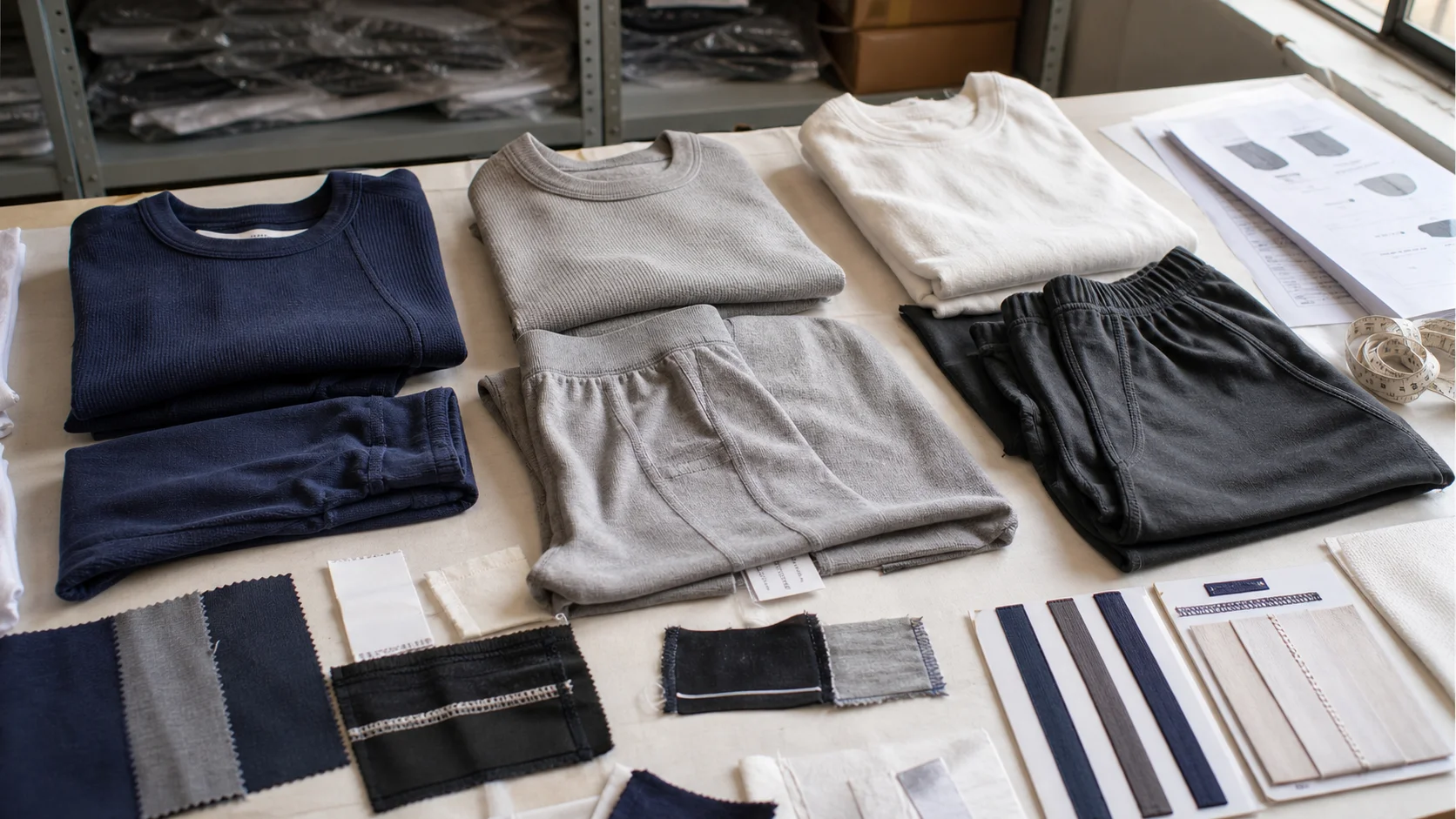
A product-specific compliance outline for school operations teams buying bulk base layer sets, covering sizing, fabric, safety, labeling, packing, MOQ,...
Base Layer Set Checklist for School Bulk Buyers - Fabrikn production reference
Buying base layer sets for a school is not the same as buying a simple uniform accessory. A base layer sits against the skin, is worn during sport or cold-weather activity, and often needs to work across different age groups, body shapes, climates, and washing habits. For school operations teams, the risk is not only price. The real risk is ordering a product that looks acceptable on paper but fails in fit, comfort, durability, labeling, or delivery timing.
This bulk base layer set compliance checklist is written for school procurement teams, operations managers, uniform coordinators, athletic departments, and sourcing staff who need a practical buying framework. It focuses on MOQ, cost, sourcing, fabric specifications, trim choices, sample approvals, inspection points, and the tradeoffs that affect school bulk orders.
Purchasing judgment: base layer sets should be treated as a fit-sensitive apparel program, not a low-risk commodity. The cheapest quote can become expensive if the garments shrink, itch, pill, bleed color, arrive late, or create sizing complaints across teams and year groups.
School base layer sets are usually purchased for sports teams, outdoor education, winter uniforms, ski trips, rowing, football, rugby, athletics, or general cold-weather wear. The garments may look simple: a long sleeve top and leggings or tights. In production terms, they carry several sensitive requirements. Stretch recovery, seam comfort, fabric weight, opacity, moisture handling, waist fit, sleeve length, and wash durability all matter.
Operations teams need a checklist because the order touches several stakeholders. Students want comfort. Parents expect value. Coaches want performance and consistent team appearance. Finance teams want a controlled budget. School administrators need reliable delivery and low complaint volume. The supplier needs clear specifications before quoting.
A weak specification creates room for substitution. A supplier may quote a lighter fabric, lower elastane content, basic overlock seams, generic labels, or non-compliant packaging. These choices may reduce unit cost, but they can increase returns and complaints. Base layer garments are especially exposed because students wear them repeatedly and wash them frequently.
The checklist should answer five questions before any purchase order is issued:
If these points are not locked early, the final order becomes harder to control. A school bulk buyer should not rely on product photos alone. Photos do not confirm GSM, shrinkage, colorfastness, seam stretch, waistband recovery, or fabric hand feel.
The first sourcing decision is not the supplier. It is the use case. A base layer set for winter outdoor PE is different from one used under a match kit. A ski-trip base layer may need more warmth and a softer brushed interior. A football or rugby base layer may need higher stretch recovery, close fit, and strong seams. A general school uniform base layer may prioritize modesty, durability, and easy care.
School operations teams should define the following before requesting quotes:
Purchasing judgment: for most schools, black or navy base layers with modest branding are easier to manage than multiple team colors. Color-specific programs can look better on the field, but they add MOQ pressure, shade-control risk, and leftover stock complexity.
If the base layer is worn under a competition uniform, check sports association rules before ordering. Some leagues restrict visible undergarment colors, logos, sleeve coverage, or compression garments. This is a common operational miss: the product is acceptable to the school but not acceptable on match day.
MOQ is one of the biggest constraints in school apparel sourcing. Base layer sets are usually ordered by color, size, and style. A set includes at least two pieces, so the production plan must control both the top and bottom. When branding is added, MOQ may also depend on printing method, fabric dyeing, trim sourcing, and packaging.
Typical MOQ ranges vary by supplier and customization level. For a plain stock base layer set, a distributor may accept 50 to 100 sets. For custom logo decoration on stock blanks, 100 to 300 sets is more common. For cut-and-sew custom production using available fabric, 300 to 500 sets per color may be realistic. For custom-dyed fabric or fully custom technical specifications, 500 to 1,000 sets per color can be required. These ranges are not fixed, but they are useful planning numbers for school buyers.
Order Type Typical MOQ Range Best For Main Tradeoff Plain stock base layer sets 50–100 sets Small teams, urgent orders, trial programs Limited control over fabric, fit, and color Stock sets with school logo 100–300 sets Schools needing modest customization Branding quality depends on decoration method Custom cut-and-sew using available fabric 300–500 sets per color School-wide programs or large sports departments Longer development and sample approval time Fully custom fabric, color, and trims 500–1,000+ sets per color Multi-campus or annual uniform programs Higher commitment and more leftover inventory riskSize breakdown affects MOQ in practice. A supplier may accept 300 sets total, but the factory still needs efficient cutting ratios. If a school orders too many fringe sizes, such as very small junior sizes or larger adult sizes, production may become less efficient. Buyers should build a size curve using real enrollment, sports participation, or past uniform sales data.
A typical school base layer size curve may overweight middle sizes. For example, a secondary school order might concentrate in youth large, adult small, adult medium, and adult large. Primary schools may need more youth small through youth large. Staff sizes should be planned separately, not hidden inside the student size curve.
Purchasing judgment: if the school has uncertain demand, start with a core color and controlled size range. A smaller, cleaner program is usually safer than offering too many variations in the first season.
Fabric is the main performance driver. A base layer set should stretch, recover, feel smooth, handle sweat, and survive repeated washing. For school use, durability and easy care are usually more important than elite compression. Students will wear the garments in different ways, wash them at home, and sometimes put them in tumble dryers even when care labels advise against it.
Common fabric compositions include polyester elastane, nylon elastane, cotton elastane, viscose blends, and thermal brushed polyester blends. Polyester elastane is common for sports because it is durable, moisture-wicking, and cost-effective. Nylon elastane can feel smoother and stretch well, but it is often more expensive. Cotton elastane is comfortable but slower drying and less suitable for intense sport. Brushed thermal fabrics add warmth but may increase pilling risk if the surface is not stable.
For school bulk buying, a practical fabric specification may include:
Request fabric test reports when the order size justifies it. For smaller school orders, full lab testing may be too expensive, but the supplier should still provide fabric composition, GSM, and wash-care information. For larger programs, lab testing can be worth the cost because a failed base layer program can affect hundreds of students.
Thermal claims should be handled carefully. Words like “thermal,” “heat retention,” and “performance” are often used loosely. Ask what makes the fabric thermal. It may be brushed interior, heavier GSM, hollow yarn, waffle knit, or finishing. A brushed interior feels warm but can trap lint and may pill faster if the fabric quality is weak.
For buyers comparing suppliers, fabric swatches are not optional. A swatch gives early evidence of weight, stretch, touch, color, and opacity. It does not replace a fit sample, but it helps eliminate unsuitable quotes before sampling costs increase.
Base layer fit is a frequent complaint area. Too tight, and students refuse to wear it. Too loose, and it fails as a base layer under uniform or sports kit. School buyers should decide whether the product is compression fit, active slim fit, or regular thermal fit. These are not interchangeable.
Compression fit is close to the body and may support sports performance, but it can be uncomfortable for general school use. Active slim fit is usually the safest middle option. Regular thermal fit works better for warmth and modesty, but it may bunch under sports jerseys.
A clear size specification should include garment measurements, not only body measurements. Key points include chest width, body length, sleeve length, shoulder or raglan measurement, waist relaxed, waist stretched, hip, inseam, front rise, back rise, thigh, ankle opening, and cuff measurements. For raglan sleeve tops, sleeve length measurement method must be clear because suppliers may measure from center back neck or from neckline seam.
Size grading must be realistic across ages. Children do not scale like adults. A youth small to youth XL range cannot simply be a reduced adult pattern. Rise, sleeve proportion, shoulder width, and waist-to-hip ratio need attention. For girls’ and boys’ fits, the school should decide whether separate patterns are necessary. Separate fits improve comfort but increase MOQ, sampling, stock management, and exchange complexity.
Fit Option School Benefit Risk Best Use Compression fit Performance look, close under kit Higher size complaints, modesty concerns Competitive sports teams Active slim fit Balanced comfort and layering Needs careful grading Most school sports programs Regular thermal fit Comfortable and warmer Can bunch under uniform Outdoor education, winter wearPurchasing judgment: active slim fit is often the safest choice for bulk school orders. Compression should be reserved for teams that specifically want that feel and can manage more precise size allocation.
Trims on base layer sets are simple but important. The waistband, cuffs, neck label, care label, logo application, thread, and packaging all affect the user experience. A scratchy label or tight waistband can create more complaints than a small color variation.
For waistbands, buyers should specify width, stretch, recovery, and softness. A 3–4 cm elastic waistband is common for leggings, but younger students may prefer softer elastic. Exposed elastic can reduce bulk, while encased elastic may feel more comfortable. Drawcords are usually unnecessary for base layer leggings and may create safety or laundering concerns for younger students.
Labels should be skin-friendly. Printed neck labels or heat transfer labels can improve comfort, but poor transfers may crack or peel. Woven labels are durable but can irritate the neck if not placed correctly. Care labels should include fiber content, size, country of origin where required, washing instructions, and any school or supplier coding needed for distribution.
Logo application should match fabric stretch. A rigid print on a stretchy base layer may crack. Heat transfers must be tested for stretch and wash resistance. Embroidery is usually not ideal for thin stretch base layers because it can distort fabric and feel rough against skin. Small heat transfers or stretch-compatible prints are often better.
Packaging affects school distribution. Individual set packing by size is easier for school stores and parent pickup, but it adds cost and plastic use. Bulk packing reduces cost and packaging waste, but it increases sorting time and error risk. If sustainability is a school priority, ask about recycled polybags, paper bands, or bulk packing options. Check whether the school actually has staff time to sort bulk cartons before choosing the lowest-cost packaging.
Sampling is where many school orders either become controlled or start drifting. A supplier should not move into bulk production based only on a catalog image. At minimum, school buyers should approve fabric, fit, color, branding, labels, and packaging before production.
A practical sample approval process includes four stages:
For smaller or urgent orders, some stages may be combined. That saves time but increases risk. A pre-production sample is especially important for custom base layer sets because it represents what the factory intends to make in bulk. If the school approves a sample with incomplete details, the supplier has more room to interpret.
Sample comments should be written clearly. Avoid vague feedback such as “make it better” or “fit seems off.” Use measurable comments: increase body length by 2 cm, reduce sleeve opening by 1 cm, change logo placement to 7 cm below front neckline, use softer waistband elastic, or improve opacity in white fabric.
Wash testing should happen before bulk approval where timing allows. Wash the sample according to the proposed care label, then measure shrinkage and inspect twisting, pilling, seam puckering, print cracking, and color change. One wash is not a full durability test, but it can reveal obvious failures.
Purchasing judgment: never approve bulk production until the school has seen the logo on the actual fabric or a comparable stretch fabric. A logo that works on a polo shirt may fail on a base layer.
Teams that need structured development support can review sourcing and production options through Fabrikn services. For school operations teams still defining requirements, early specification work is often more valuable than rushing into supplier price comparisons.
Base layer set cost is shaped by fabric, construction, order quantity, size range, branding, packaging, testing, and lead time. A low quote may be valid if the specification is simple. It may also hide a lighter fabric, lower elastane percentage, basic stitching, weak packaging, or limited inspection.
When comparing quotes, school buyers should request a costed specification summary. The quote should state whether the price includes top and bottom, logo, labels, packaging, freight, duties, taxes, samples, testing, and inspection. If two suppliers quote different inclusions, the cheaper number may not be cheaper in final landed cost.
Cost Driver Lower-Cost Option Higher-Cost Option Purchasing Judgment Fabric Standard polyester elastane Higher GSM, nylon blend, brushed thermal Do not reduce GSM below functional needs Construction Basic overlock seams Flatlock or comfort seam construction Comfort seams matter for tight base layers Branding Small single-color print Multi-color transfer or custom trims Keep branding modest for better value Packaging Bulk packed by size Individual set packing Choose based on school distribution capacity Testing Supplier internal checks Third-party lab testing Consider lab tests for large programsConstruction deserves special attention. Flatlock seams are often preferred in base layers because they sit flatter against the body. They may cost more and may not be available from every factory. Overlock seams can be acceptable if they are soft, secure, and well placed, but bulky seams can irritate students during sport. The inner leg, underarm, neck, and waistband areas should be inspected closely.
Branding can also distort cost discipline. Large logos, reflective elements, multiple placements, and team-specific customization add cost and create more approval points. For school operations, a small school logo or tonal mark is often more practical than a complex design. If the set is mainly worn under other garments, expensive decoration has limited value.
Freight timing can change total cost. Air freight may rescue a late order, but it can damage the budget. Sea freight is cheaper for larger imports but requires longer planning. Local or regional stock programs may cost more per unit but reduce delivery risk. The correct choice depends on order timing, quantity, and how critical the launch date is.
Lead time depends on fabric availability, sample rounds, branding approval, production capacity, quality inspection, packing, and freight. School calendars are unforgiving. A base layer set needed for the start of winter sport cannot arrive three weeks late and still be considered successful.
Typical lead-time planning may look like this:
These timelines are only planning ranges. Peak season can extend them. School uniform and sportswear demand often clusters before term starts, winter sport, and summer sport seasons. Supplier capacity may be tight during these windows.
Operations teams should build backward from the required in-school distribution date, not the match day. If students need the garments by the first week of winter sport, the school may need goods delivered two to three weeks earlier for receiving, checking, sorting, exchanges, and late additions.
Lead-time dependencies to confirm with the supplier include:
Purchasing judgment: if the order is time-critical, avoid custom-dyed fabric unless the program is planned well ahead. Available fabric in a standard color is usually the safer operational choice.
Inspection for base layer sets should focus on fabric performance, measurements, workmanship, labeling, and packing accuracy. A visual check alone is not enough. Stretch garments can look acceptable on a table but fail when worn.
Common inspection risks include shade variation between tops and bottoms, inconsistent stretch, poor recovery, twisting after wash, skipped stitches, seam popping, waistband rolling, print cracking, label irritation, incorrect size labels, and mixed-size sets. The last issue is especially relevant because a set has two garments. If the top and bottom are not paired correctly, school distribution becomes messy.
A practical inspection checklist should include:
For larger orders, an AQL inspection may be appropriate. The acceptable quality limit should be agreed before production. School buyers should define what counts as critical, major, and minor defects. A missing care label may be major. A sharp trim or unsafe component may be critical. A small loose thread may be minor if it does not affect performance.
Measurement tolerance should be realistic for stretch garments. A tolerance of plus or minus 1 cm may be appropriate for some points, while larger areas may allow more. The key is consistency and fit impact. A sleeve that is 1.5 cm short may be acceptable in one size but not if the full size run is short.
Inspection should happen before shipment when goods are produced offshore or in large volume. Once goods arrive at school, the leverage to correct defects is lower. Rework during term time is disruptive, especially when parents have already paid or students need the garments for scheduled activities.
The right supplier for a school base layer program is not always the cheapest supplier. The better choice is usually the supplier that can control specification, communicate clearly, meet the school calendar, and handle size and packing requirements. For school operations, reliability has direct value.
When evaluating suppliers, ask for clear answers on the following:
Supplier communication is a useful quality signal. If a supplier cannot explain fabric weight, measurement tolerance, or logo method before order placement, they may struggle during production. Fast replies are helpful, but technical clarity is more important than speed alone.
School buyers should also consider whether the supplier is suitable for repeat programs. A one-off trip order can tolerate a simpler product. A school-wide annual base layer program needs continuity. Reordering the same color, fit, and fabric next year may be difficult if the first supplier used an unstable stock fabric or undocumented pattern.
For teams assessing manufacturing support, Fabrikn’s background can help procurement staff understand how sourcing partners position their production and service model. When specifications are ready and order variables need review, buyers can use Fabrikn’s contact page to start a more specific sourcing discussion.
The following table gives school operations teams a practical way to decide which base layer sourcing route fits the order. It is not a substitute for supplier due diligence, but it helps align MOQ, cost, timing, and risk.
School Situation Recommended Route Why It Works Watchout Small team needs garments quickly Stock base layers with optional logo Lower MOQ and faster delivery Limited fit and fabric control Large sports department needs consistent kit Custom cut-and-sew in standard fabric Better control of fit, branding, and packaging Requires sample approval time School wants exact brand color Custom dyed fabric Improves color match and brand consistency Higher MOQ and longer lead time Outdoor program needs warmth Thermal brushed or heavier GSM fabric Better cold-weather comfort Check pilling and drying time Parent-paid optional item Core color with broad size range Reduces leftover stock and exchange issues Demand forecasting must be carefulBefore issuing a purchase order, the school operations team should confirm the full checklist below. This is the practical control document that keeps sourcing, finance, sports staff, and suppliers aligned.
The most common mistake is buying on price before confirming specifications. Base layer sets can vary widely while looking similar in photos. A small difference in fabric weight, elastane content, or seam construction can change comfort and durability.
Another mistake is ignoring the size curve. Schools often order too evenly across sizes or copy a previous size curve from a different product category. Base layers fit closer than hoodies or polos, so sizing behavior may be different. If returns are difficult, conservative size planning matters.
Late ordering is also a major risk. Custom apparel does not move well under school calendar pressure. Rushed approvals lead to missed details, and urgent freight can erase savings from offshore production. If a school needs the garments for winter term, sourcing should begin well before the season.
Color control can become expensive. Exact school color matching may require lab dips, custom dyeing, and higher MOQ. If the garment is mostly worn under other kit, standard black or navy may deliver better value. Exact color is worth paying for when the base layer is visible and part of the school’s official presentation.
Poor packaging decisions create downstream labor. Bulk packing looks efficient in the quote, but school staff may spend hours sorting tops, bottoms, and sizes. Individual set packing costs more, but it can reduce distribution errors. The right answer depends on the school’s staffing and sales process.
For most school bulk buyers, the safest base layer set program is a standard black or navy active slim fit made from midweight polyester elastane, with modest stretch-compatible branding, soft labeling, and clear set packing by size. This route balances MOQ, cost, comfort, and operational control.
Schools with larger annual volumes can justify more customization, including exact colors, bespoke grading, and thermal fabric development. Smaller teams should be careful with custom features because each variation adds approval time and MOQ pressure. The best sourcing decision is not the most customized product. It is the product that the school can buy, distribute, wash, reorder, and defend against complaints.
A strong compliance checklist protects the school before money is committed. It gives suppliers clear instructions, gives finance teams better cost visibility, and gives students a better garment. In bulk apparel sourcing, clarity is usually cheaper than correction.
Get a free quote from Fabrikn — your trusted B2B clothing manufacturer with 10+ years of experience. MOQ as low as 200 pieces.
Get a Free Quote →Typical MOQ can range from 50 to 100 sets for plain stock products, 100 to 300 sets for stock items with school branding, 300 to 500 sets for custom cut-and-sew production, and 500 to 1,000 or more sets for custom-dyed or fully bespoke programs. The exact MOQ depends on fabric, color, branding, and supplier setup.
Polyester elastane is often the most practical choice for school sports because it balances durability, stretch, moisture handling, and cost. A common range is 88–92% polyester with 8–12% elastane. For colder conditions, a heavier GSM or brushed thermal fabric may be suitable, but pilling and drying time should be checked.
Active slim fit is usually the safest option for school bulk orders. Compression fit can work for competitive teams, but it creates more sizing and comfort risk. Regular thermal fit is comfortable for cold weather but may not layer smoothly under sports uniforms.
Stock products with simple branding may take 2–5 weeks after artwork approval. Custom production using available fabric may take 6–10 weeks after sample approval. Custom dyed fabric or special trims may take 10–16 weeks or longer. School teams should add time for sampling, inspection, freight, receiving, and distribution.
Check fabric weight, stretch, opacity, fit, garment measurements, seam comfort, waistband recovery, logo placement, label comfort, and wash behavior. A pre-production sample should represent the final fabric, trims, branding, and packaging before the factory begins bulk cutting.
Individual set packaging is useful when schools need easy distribution by size or parent order. Bulk packing is cheaper and can reduce packaging waste, but it requires more sorting time and increases the risk of mixed sets. The better choice depends on the school’s staff capacity and distribution process.
The main risks are incorrect size labels, mismatched tops and bottoms, shade variation, poor stretch recovery, seam popping, waistband rolling, print cracking, opacity problems, and shrinkage after washing. Inspection should include measurement checks and set-pairing checks, not only visual review.
Use a standard color, limit branding placements, choose a proven midweight fabric, avoid unnecessary custom trims, and keep the size range practical. Cost should be reduced through specification discipline, not by accepting unclear fabric, weak seams, or unreliable lead times.