
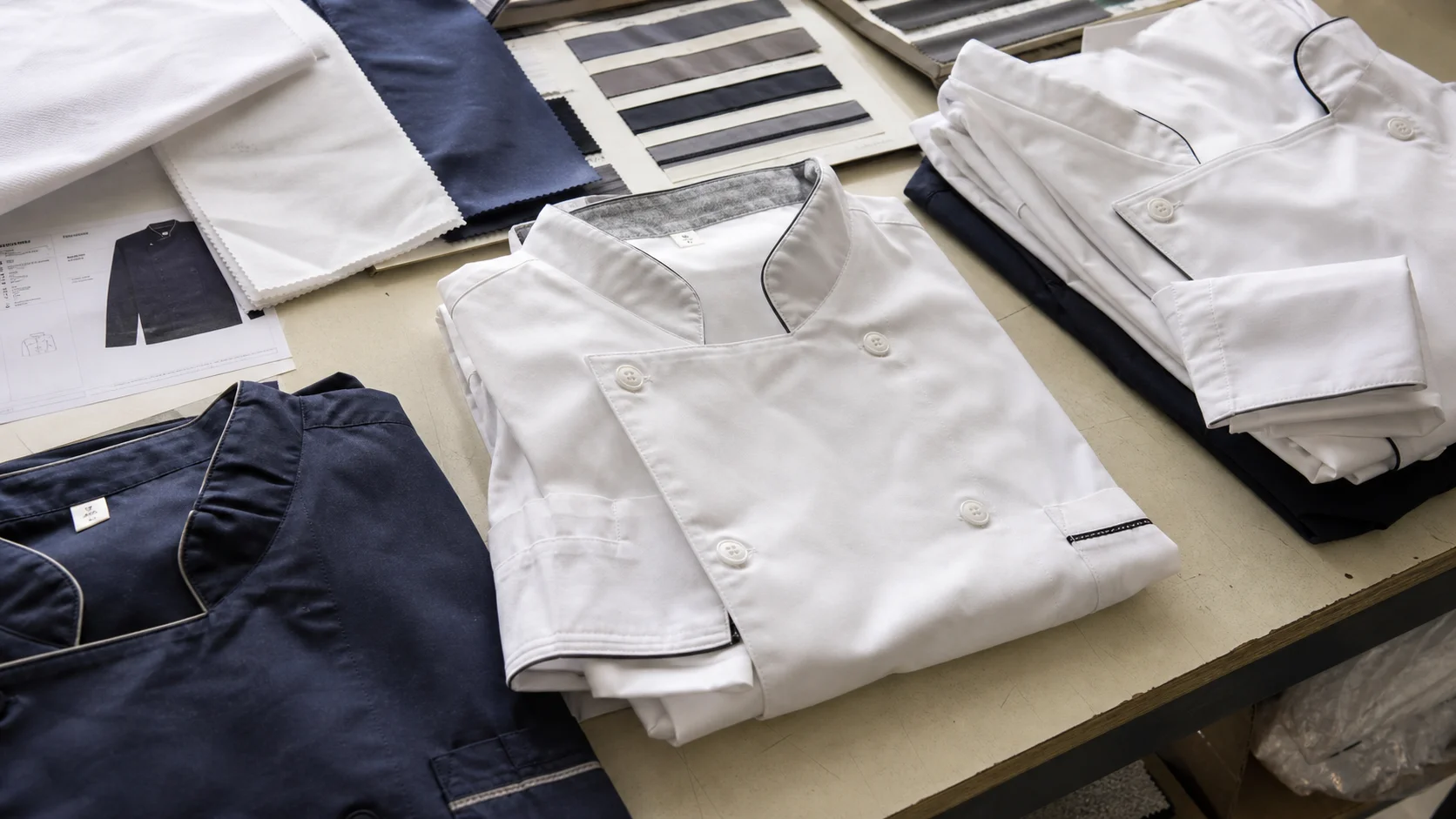
A practical fit-block review for bulk chef coats used by warehouse safety teams, focused on movement, snag risk, sleeve length, size grading, and...
Bulk Chef Coat Fit Block Review for Safety Teams - MOQ, Cost & Sourcing manufacturing guide
Warehouse safety teams buying chef coats in bulk have a different job than a restaurant manager ordering uniforms for a small kitchen. The garment still needs to look professional, but the bigger sourcing concern is repeatable fit, safe movement, controlled shrinkage, predictable replenishment, and a cost structure that will survive multiple purchase cycles.
A bulk chef coat fit block review is the technical checkpoint that decides whether the garment pattern works for the actual workforce before the buyer commits to production. For warehouse safety teams, this review matters because staff may be moving between food handling areas, cold rooms, packing lines, quality control zones, loading areas, and sanitation tasks. A coat that looks acceptable on a sample hanger can fail quickly when workers bend, reach, lift, layer garments underneath, or work near equipment.
This guide looks at fit block review from a sourcing and MOQ perspective. It covers what to check, how to structure samples, what costs are worth paying for, where factories commonly miss details, and how safety teams should make purchasing decisions when buying chef coats at scale.
A chef coat used in a warehouse or production-adjacent food environment is not just a hospitality garment. It may function as part of a hygiene program, visitor control system, allergen control process, or general protective workwear package. That changes the buying logic.
In a small kitchen, an imperfect fit may be handled by swapping sizes. In a warehouse safety program, poor fit can create repeated operational issues: sleeves dipping into product zones, tight shoulders limiting safe lifting, loose fronts catching on equipment, or workers leaving coats unbuttoned because the block does not suit body shapes on shift.
The fit block is also a cost control tool. If the base pattern is wrong, every later reorder repeats the problem. Buyers may then pay for rush replenishment, excess size exchanges, worker complaints, or stock that sits unused because the size curve does not match the team.
Practical purchasing rule: do not approve a bulk chef coat order only from a flat measurement chart. Review the fit block on people who represent the real workforce and the real tasks.
Safety teams should treat fit as a risk variable, not a cosmetic preference. The correct block helps workers move safely, supports compliance, and reduces avoidable uniform waste.
A fit block is the base pattern shape used to build the garment across all sizes. It includes chest width, shoulder slope, sleeve pitch, armhole depth, body length, sweep, collar shape, cuff dimensions, button placement, and the relationship between these measurements after grading.
For chef coats, the block usually falls into one of several practical categories:
The right choice depends on job function. A warehouse safety team usually needs utility over sharp tailoring. A coat that is too fitted may look neat in product photography but perform badly when workers reach above shoulder height, wear base layers in cold areas, or carry cartons.
Fit block review should answer four questions before production:
Warehouse safety teams should define the use case before asking suppliers for samples. A coat used for a visitor tour has different requirements from a coat worn daily in a chilled packing area.
Workers may lift, scan, stack, push carts, clean surfaces, and reach overhead. The coat should allow forward arm movement without pulling hard across the back. Sleeve pitch matters here. A sleeve that hangs nicely when the arms are down can restrict movement when the arms extend forward.
Check the back width and armhole depth during fitting. Too much tightness creates strain. Too much looseness can create fabric bulk that catches or folds awkwardly under aprons or vests.
Cold storage, early shifts, or seasonal warehouses may require base layers, thermal tops, or light fleece underneath. If layering is common, the fit block needs extra ease through chest, bicep, and forearm.
Buyers should avoid approving samples tested only over a thin T-shirt if the garment will be worn over heavier layers. This is a frequent reason bulk chef coats feel smaller in actual use than they did during office review.
Double-breasted chef coats often use cloth knot buttons, plastic buttons, snaps, or hidden closures. For safety teams, closure choice affects both hygiene and usability. Loose knot buttons can detach. Weak snaps can pop open. Standard buttons may be easier to inspect but can break if low-quality resin is used.
In high-volume programs, snaps are common because they are fast and consistent. The tradeoff is that snap placement and pull strength must be tested. Poor snap tape or misaligned snaps can make the garment look twisted after laundering.
Sleeves are one of the most important safety points. Long loose sleeves may be unacceptable near conveyors, mixers, heat sealers, or moving stock. Short sleeves may be cooler but provide less coverage.
Common choices include long sleeves with turn-back cuffs, long sleeves with snap cuffs, three-quarter sleeves, and short sleeves. For warehouse safety teams, adjustable cuffs often give the best control, but they add cost and inspection complexity.
Bulk uniform buyers often focus on total quantity first. Size planning deserves equal attention. A chef coat program can fail even when the approved medium sample looks good, because the grading across sizes is not suitable.
Typical bulk chef coat size ranges may include XS to 5XL, with some suppliers offering XXS or 6XL by request. Extended sizes can affect MOQ, price, and lead time because they may require additional pattern grading, fabric consumption, and separate cutting markers.
Size Planning Area What to Check Purchasing Risk Core sizes S to XL fit on multiple body types High exchange rate if size curve is guessed Small sizes Shoulder width, body length, sleeve length Garments may look oversized and unsafe Extended sizes Chest, sweep, bicep, armhole depth Restricted movement or front pulling Unisex grading Balance across different torso shapes One block may not serve the full teamA sensible review process includes fitting at least one middle size and one upper size before bulk approval. For larger workforces, buyers should test multiple sizes across departments. The goal is not perfect tailoring. The goal is safe, comfortable, repeatable coverage.
Size curve planning should be based on current workforce data where available. If data is not available, use conservative opening quantities and plan replenishment after the first issue cycle. Guessing a full annual buy without size history can create dead stock quickly.
MOQ depends on fabric availability, color, trims, decoration, size range, and whether the buyer uses an existing supplier block or requests a custom pattern. Typical MOQ ranges for bulk chef coats can vary widely:
These are planning ranges, not fixed rules. A supplier may accept lower quantities at a higher unit price, or combine fabric buying across similar styles. Buyers should ask whether the MOQ is driven by garment production, fabric mill minimums, trim purchasing, cutting efficiency, or decoration setup.
For warehouse safety teams, the best MOQ decision is usually not the cheapest unit price. It is the quantity that balances price, size coverage, storage, reorder timing, and risk of fit changes after rollout.
Lower MOQ is useful when the workforce size is changing, the fit block is unproven, or the safety team is testing a new garment standard. Paying a slightly higher unit cost can be cheaper than holding hundreds of coats in the wrong size mix.
Higher MOQ can be justified when the fit block has been approved through wear testing, the size curve is known, fabric is stable, and reorders are predictable. Larger buys may reduce unit cost, but they also increase exposure to policy changes, staff turnover, and storage limits.
Buyers sourcing an ongoing program can review manufacturing support through a partner such as Fabrikn services to structure sampling, production, and quality checkpoints before committing to a full-volume order.
Chef coat fit cannot be separated from fabric. A pattern approved in one fabric may fit differently in another. Weight, shrinkage, weave, stretch, and finishing all affect how the garment sits and moves.
Common chef coat fabrics include polyester-cotton blends, cotton twill, poplin, and performance blends. For warehouse safety teams, poly-cotton twill is often chosen because it balances durability, wash performance, and cost. Cotton-rich fabrics may feel breathable but can shrink more and wrinkle heavily. Higher polyester content can improve drying time and shape retention, but may feel warmer and less breathable.
Fabric Type Typical Benefit Tradeoff 65/35 poly-cotton twill Durable, stable, widely available Can feel warm in high-activity zones 100% cotton twill Breathable, traditional hand feel Higher shrinkage and ironing needs Lightweight poly-cotton poplin Lower cost, cooler feel Less abrasion resistance Stretch blend Improved mobility Higher cost and more laundering sensitivityFabric weight should match the work environment. A 150 to 180 gsm fabric may suit light-duty or warm environments, while 190 to 240 gsm may offer better durability for repeated industrial laundering. Heavy fabric can improve structure but may reduce comfort during active work.
Shrinkage is a major fit risk. Even a well-approved block can become too tight after washing if shrinkage is not controlled. Buyers should request expected shrinkage after washing, preferably tested according to a defined method.
For bulk programs, acceptable shrinkage is commonly targeted below 3% to 5%, depending on fabric and laundering conditions. Industrial laundering can be harsher than domestic washing, so safety teams should confirm the actual cleaning process before approving specifications.
Trims should be specified clearly. Vague trim descriptions create inconsistent production. A purchasing spec should include button type, snap material, thread color, label placement, cuff closure, pocket count, and any logo decoration.
Warehouse safety teams should pay attention to seam strength and reinforcement. Shoulder seams, armholes, side seams, and cuff areas receive stress during movement. Bar tacks may be needed at pocket corners, side vents, or stress points.
Seam allowance and stitch density should be part of the tech pack. Inconsistent stitching may not be visible from a distance, but it can reduce garment life. Low-cost production often saves time through fewer stitches per inch or weaker reinforcement. That saving rarely looks good after repeated laundering.
A disciplined sample approval process reduces avoidable production problems. It does not need to be slow, but it should be structured.
Start with a written specification. Include style reference, size range, body measurements, fabric composition, fabric weight, color standard, trims, closure type, pockets, labels, logo placement, packaging, and inspection requirements.
Do not rely only on reference photos. Photos are useful for communicating style, but they do not define measurable production standards.
The first fit sample tests the block and general construction. Review it on live wearers, not only on a mannequin. Ask wearers to reach forward, lift arms, bend, sit, twist, and close the garment fully.
Record comments in measurable terms. “Too tight” is less useful than “pulling across back when arms extend forward” or “cuff opening too wide near wrist.”
A size set checks grading across the range. For safety teams, this step is important if ordering XS through 4XL or 5XL. A medium sample cannot prove that extended sizes will move correctly.
If budget or timing limits full size set review, prioritize middle size, smallest expected size, and largest expected size. That gives a clearer view of grading risk.
Wash the sample under conditions close to actual use. Measure before and after washing. Check shrinkage, twisting, puckering, color change, snap function, button security, and seam appearance.
A garment that passes first fitting but fails after laundering should not move into bulk production without correction. Laundering problems scale badly across large orders.
The pre-production sample should use approved fabric, approved trims, correct labels, and final construction. This is the sample production should follow. Buyers should sign off only when the garment matches the spec and fit comments have been closed.
For more complex sourcing programs, buyers can discuss sampling and production controls through Fabrikn contact before placing a bulk order.
Chef coat cost is shaped by more than fabric. Fit block changes, size range, trims, labor time, decoration, packaging, compliance testing, and inspection all affect the final price.
Cost Driver Why It Matters Buyer Judgment Fabric weight Higher gsm increases material cost Pay for durability where laundering is heavy Custom block Pattern work and extra samples add cost Worth it for large ongoing programs Extended sizes More fabric and lower cutting efficiency Plan honestly; poor coverage creates operational issues Snaps or specialty closures Trim cost and quality control increase Useful if speed and secure closure matter Embroidery or branding Setup, stitch count, and placement checks Keep branding simple for safety garments Inspection Adds service cost Usually justified for bulk uniform rolloutsThe cheapest coat is rarely the lowest-cost program. If a low unit price comes from thin fabric, weak buttons, uncontrolled shrinkage, or poor grading, the buyer may pay later through replacements and worker dissatisfaction.
A practical cost strategy is to separate “must hold” requirements from flexible preferences. Must-hold items may include fabric composition, shrinkage tolerance, sleeve safety, closure strength, size coverage, and wash durability. Flexible preferences may include decorative piping, premium labels, complex logo positions, or specialty packaging.
Lead time for bulk chef coat production depends on fabric availability, sample rounds, trim sourcing, factory capacity, decoration, inspection, and shipping mode. Buyers should not treat quoted lead time as a single fixed number until all inputs are approved.
Typical lead-time planning may look like this:
These ranges are not promises. They are useful planning assumptions. Rush timelines can be possible, but they often reduce the buyer’s ability to test fit, wash performance, and production consistency.
Safety teams should build a calendar backward from issue date. Include time for internal wearer trials, purchase order approval, sample shipping, and receiving checks. A garment program that needs to be issued by a compliance deadline should not leave fit approval to the final month.
Bulk chef coat inspection should cover both visual quality and functional safety. A coat can look acceptable in cartons but still fail during use.
Define tolerances for key measurements such as chest, body length, shoulder, sleeve length, bicep, cuff, and sweep. Common garment tolerances may range from plus or minus 1 cm to 2 cm depending on measurement point and size, but the buyer should agree this before production.
Large variance across the same size creates issue problems. Workers may receive two coats marked the same size that fit differently.
Check missing buttons, loose buttons, weak snaps, misaligned fronts, and closures that pull open too easily. Snap defects deserve particular attention because they may require special equipment to repair.
White chef coats can vary in brightness and undertone. Colored coats can show shade variation between fabric lots, panels, or production batches. Buyers should define whether shade bands are acceptable and keep approved color standards on file.
Look for stains, slubs, holes, weaving faults, skewing, and fabric shade lines. White or light-colored coats show defects clearly, especially under warehouse lighting.
Open seams, skipped stitches, loose threads, uneven topstitching, and weak bar tacks are common inspection findings. Some are cosmetic. Others affect garment life and safety.
Warehouse rollouts depend on correct size labeling and carton organization. Mixed sizes, wrong polybag labels, or unclear carton marks slow distribution and create unnecessary returns. Ask for a packing list by size and carton before shipment.
Before approving a bulk chef coat fit block, safety teams should complete a practical buying review. The checklist below keeps the discussion grounded in use, not just appearance.
For buyers comparing sourcing partners, company background and operating approach can be reviewed through Fabrikn about us. Supplier fit matters because uniform programs usually need repeat orders, issue support, and consistent documentation.
If the chef coat is part of a warehouse safety program, prioritize fit reliability, wash stability, and closure security over styling extras. Decorative piping, complex logo placement, and premium packaging should come after the garment has proven it can move safely and survive laundering.
Use an existing block when the supplier has a proven utility fit and the workforce does not need unusual coverage. Request a custom block when the order is large, ongoing, or tied to strict safety requirements. Custom development costs more at the start, but it may reduce long-term exchange rates and complaints.
Do not overbuy the first order unless the fit block has been tested across real users. A smaller initial production run with planned replenishment may be the better commercial decision. Once the block, fabric, and size curve are stable, larger MOQs can make sense.
For warehouse safety teams, the best bulk chef coat is not the one with the cleanest product photo. It is the one workers will keep properly closed, move in safely, wash repeatedly, and reorder without surprises.
Get a free quote from Fabrikn — your trusted B2B clothing manufacturer with 10+ years of experience. MOQ as low as 200 pieces.
Get a Free Quote →A bulk chef coat fit block review is the evaluation of the base garment pattern before production. It checks whether the coat shape, ease, sleeves, length, closures, and grading work for the intended workforce and tasks.
Warehouse teams need coats that support movement, hygiene, and safe work around equipment. Poor fit can create sleeve hazards, restricted lifting, open closures, or low worker compliance.
Stock or semi-stock programs may start around 50 to 200 pieces. Custom chef coats often start around 300 to 500 pieces, while custom fabric or dyeing can require 800 to 1,500 pieces or more. Exact MOQ depends on supplier, fabric, trims, decoration, and size range.
Unisex chef coats can work well for warehouse programs if the grading is reviewed carefully. Buyers should test small, middle, and upper sizes because one unisex block may not fit every body type equally well.
Poly-cotton twill is often a practical choice because it balances durability, cost, and laundering performance. Cotton-rich fabrics may feel more breathable but can shrink and wrinkle more. The best fabric depends on work temperature, washing method, and durability needs.
Samples should be fitted on real wearers performing normal movements such as reaching, bending, lifting, and closing the coat fully. Buyers should also wash test the sample and compare measurements before and after laundering.
Common risks include inconsistent measurements, weak buttons or snaps, shade variation, fabric defects, poor stitching, incorrect size labels, and mixed carton packing. These should be covered in the inspection checklist before shipment.
Snaps can be faster and secure when quality is controlled. Buttons may be simpler and easier to repair. The better choice depends on hygiene rules, worker preference, laundering method, and inspection capacity.
Custom programs often require several weeks for sampling and 30 to 60 days for bulk production after approval. Fabric availability, trims, factory capacity, decoration, inspection, and shipping can extend the timeline.
Buyers should approve the final specification, fit sample, size set or key sizes, fabric, trims, wash performance, color standard, logo placement, measurement tolerances, packaging, and inspection requirements.