
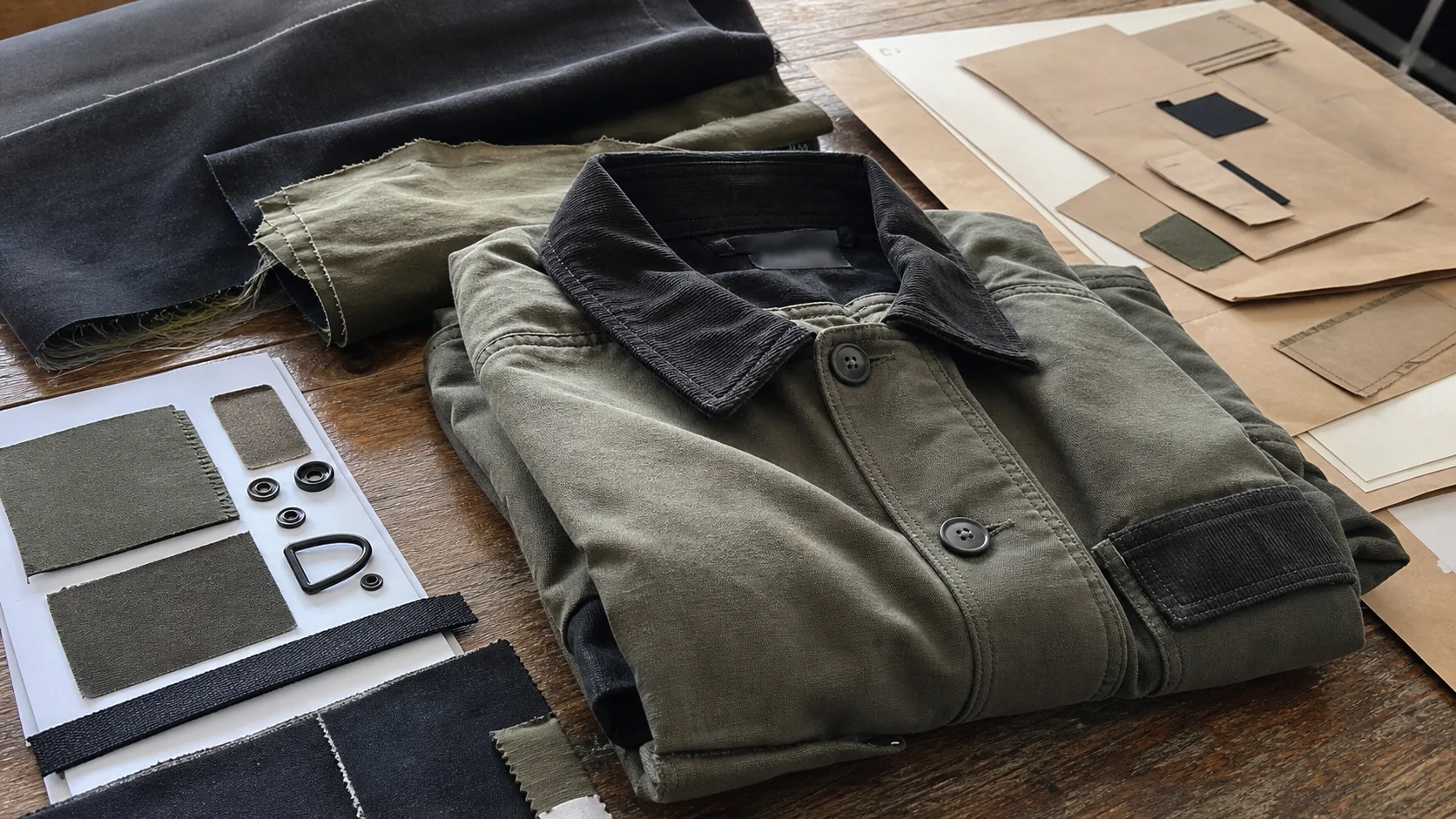
A practical quality inspection outline for security contractors buying bulk chef coats, focused on shrinkage risks, fabric controls, wash testing,...
Chef Coat Shrinkage Control Plan for Buyers - Fabrikn production reference
Category: Quality & Inspection
Bulk chef coat shrinkage control is not a minor laundry issue. For security contractors managing uniforms across facilities, cafeterias, detention kitchens, training centers, event operations, or outsourced food-service teams, shrinkage can turn an approved garment into a fit complaint, a replacement cost, or a contract compliance problem.
A chef coat may look correct at incoming inspection, yet fail after the first industrial wash. Sleeves pull back, chest width tightens, plackets twist, and the coat no longer layers comfortably over base garments. In bulk procurement, the buyer needs a shrinkage control plan before production starts, not after cartons arrive.
This article outlines a practical shrinkage control plan for buyers sourcing chef coats in volume, with attention to fabric selection, sample approval, wash testing, pattern allowance, production controls, inspection points, and supplier accountability.
Security contractors often buy uniforms under strict operational requirements. A garment is not only judged by appearance. It must support role identification, movement, comfort, laundering, and replacement planning. When chef coats are issued to food-service personnel working inside secured sites, support kitchens, command facilities, hospitality units, or managed service contracts, the uniform must remain consistent after repeated cleaning.
Shrinkage creates several problems for bulk buyers:
For security contractors, the purchasing judgment is simple: chef coats should not be approved only on pre-wash appearance. A bulk order needs confirmed after-wash dimensions and a defined tolerance system. If the coat is expected to enter industrial laundry, domestic wash testing alone is not enough.
Shrinkage usually comes from fabric behavior, garment construction, washing conditions, or a combination of all three. Buyers should avoid treating shrinkage as a single number. Length, width, sleeve, collar, and seam distortion may all behave differently.
Relaxation shrinkage occurs when fabric tension from weaving, knitting, dyeing, finishing, cutting, or sewing is released during washing. This is common in woven cotton and cotton-rich chef coat fabrics. A garment can look crisp when pressed, then contract once the fabric relaxes in water and heat.
Progressive shrinkage appears over multiple wash cycles. A coat may pass a one-wash test but continue shrinking after three or five washes. For security contractors relying on regular laundry schedules, this risk matters. Testing only one cycle may understate the real problem.
Chef coats are often washed at warm or hot temperatures due to hygiene requirements. High drying heat can accelerate shrinkage, especially in cotton-heavy fabrics. If the buyer’s laundry process uses tumble drying, the test method must include tumble drying rather than line drying.
Even when the body fabric performs acceptably, trims can create distortion. Plackets, collars, cuffs, interlinings, piping, labels, embroidery backing, and thread must be compatible with the shell fabric. A stable shell paired with a shrinking interlining can cause puckering and twisting.
Fabric choice is the strongest upstream control point. Buyers should balance appearance, comfort, durability, laundry conditions, and price. A cheaper fabric can become expensive if it causes higher rejection or replacement rates.
For bulk chef coat shrinkage control for security contractors, polyester-cotton twill is often the practical choice. It usually gives better dimensional stability, easier care, and stronger performance in repeated washing. The tradeoff is reduced breathability versus pure cotton. If workers operate in hot kitchens, this tradeoff needs to be considered with ventilation, fabric weight, and garment design.
Common chef coat fabric weights may range from about 150 gsm to 240 gsm, depending on climate, durability requirements, and style. Lighter fabrics can improve comfort but may show puckering, transparency, and seam distortion more easily. Heavier fabrics can feel more durable but may be warmer and slower to dry.
Useful fabric specifications include:
A buyer’s technical package should define shrinkage before purchase order release. Vague instructions such as “low shrinkage fabric” are not enough. The supplier needs measurable requirements and the buyer needs a basis for acceptance or rejection.
A practical target for many woven chef coats is often around 3% or less shrinkage in key dimensions after controlled washing, although the correct limit depends on fabric type, laundry process, and buyer tolerance. Cotton-rich fabrics may require a more cautious allowance. The buyer should not accept a supplier’s general claim without test evidence.
Technical support and sourcing alignment can be built through a structured development process. Buyers reviewing factory capability, apparel services, and quality planning can start with Fabrikn services for broader manufacturing support.
Minimum order quantity affects shrinkage control because fabric sourcing, dyeing, and finishing are often tied to production volume. Low-volume orders may use available stock fabric, while larger programs may allow custom fabric finishing and tighter control.
MOQ varies by supplier, fabric type, color, trim complexity, and customization. Common ranges buyers may encounter include:
Lower MOQ can be useful for pilot testing, but it often limits control over fabric finishing. Larger MOQ can improve consistency if the buyer locks one fabric lot or requires approved lots before cutting. The tradeoff is inventory exposure. Security contractors with multiple sites should estimate issue rates, spare stock, and expected turnover before committing to large volumes.
Shrinkage control connects directly to size ratios. If garments shrink more than expected, larger sizes may be consumed faster. Buyers should approve size specs based on after-wash fit, not only pre-wash measurements. A size set should be tested across the size range, especially small, large, and extended sizes, because grading can reveal tension and proportion issues.
Sample approval should be staged. One attractive salesman sample does not prove bulk shrinkage control. Buyers should require development samples, fit samples, size sets, pre-production samples, and wash-tested samples as needed.
Security contractors buying for multiple operating teams should include real-use feedback before bulk rollout when possible. Fit should be checked with expected base layers, aprons, protective items, or site-specific accessories. A coat that fits in a showroom may restrict movement during actual work.
A shrinkage control plan needs clear testing rules. Without a written method, supplier and buyer may test under different conditions and reach different conclusions.
Buyers should specify the intended laundering process. Important variables include:
If security contractor sites use external laundries, the buyer should obtain the laundry profile before finalizing garment specifications. Industrial laundering is more aggressive than domestic washing. High mechanical action, higher drying heat, and chemical exposure can affect shrinkage, color, trims, and labels.
Measurements should be taken on a flat garment before washing and after conditioning. Common chef coat measurement points include:
Garments should be measured using the same method each time. Pulling, stretching, or measuring before the garment relaxes can distort results. A measurement manual or diagram reduces disputes.
Testing should occur at multiple stages:
For very large orders, buyers may divide testing by fabric lot, color lot, or production batch. A single passing sample from one roll does not guarantee all fabric rolls are stable.
Pattern allowance is often misunderstood. Adding extra measurement to compensate for shrinkage can help, but it should not be used to hide unstable fabric. The better approach is to reduce fabric shrinkage first, then adjust pattern dimensions carefully based on confirmed wash data.
Buyers should request two measurement tables when shrinkage is material to performance:
This is especially important for fitted chef coats, women’s chef coats, and extended sizes. A small shrinkage percentage can have a larger comfort impact when the garment has limited ease.
Size grading should not simply expand every dimension mechanically. Sleeve length, shoulder slope, armhole shape, and chest ease must remain functional after wash. Shrinkage can expose poor grading because tight areas become tighter first.
Buyers should review size set measurements before and after wash. If only medium is tested, the order may still fail in 2XL, 3XL, or smaller sizes. Extended sizes often carry higher return sensitivity because fit expectations are less forgiving.
Factory controls should start before cutting. Once unstable fabric is cut and sewn, shrinkage problems become difficult and costly to fix.
Bulk fabric should be inspected for width, shade, weight, defects, and shrinkage performance. Fabric relaxation before cutting is important, especially if rolls arrive tightly wound. Cutting fabric too soon after spreading can create measurement drift.
Key controls include:
Cutting accuracy affects shrinkage perception. If panels are already short before washing, the garment will fail after wash even if fabric shrinkage is acceptable. Sewing tension also matters. Tight stitching can cause seam puckering after laundering.
Buyers should request inline controls for:
Chef coats often include buttons, snaps, fabric-covered buttons, labels, embroidery, piping, contrast cuffs, mesh panels, or thermometer pockets. Each trim can introduce shrinkage or distortion risk.
Interlining is a common issue. If collar and placket interlining shrinks differently from shell fabric, the coat may pucker after wash. Thread should also be suitable for wash temperature and fabric type. Labels must remain legible after laundering, especially where size, care, and contract identification matter.
Final inspection should include more than visual appearance. A chef coat can pass carton count and workmanship checks while still failing performance requirements.
Many buyers use AQL inspection for visual and measurement defects. AQL can help manage bulk quality, but shrinkage testing is different because it is destructive or semi-destructive and requires time. Buyers should define how many garments will be wash-tested and what happens if they fail.
For high-risk bulk programs, an inspection plan may include:
The acceptance rule must be clear. If shrinkage exceeds the agreed limit, the buyer may require rework, replacement, sorting, discount, or shipment hold. These terms should be agreed before production, not negotiated after failure.
Shrinkage control adds time, especially when fabric testing and sample washing are required. Buyers should plan the calendar realistically.
Rushed timelines increase risk. If the buyer skips pre-production wash testing to save one week, the order may face months of complaints after issue. The better purchasing decision is to build testing into the critical path from the start.
Buyers preparing a bulk chef coat program can discuss scope, technical requirements, and timelines through Fabrikn contact before finalizing a production plan.
Security contractors may have requirements beyond standard restaurant apparel. These should be included in the shrinkage control plan because they can affect fabric, trims, washing, and inspection.
Chef coats may need contract-specific labels, color coding, embroidered logos, department identifiers, or role markings. Embroidery can affect fabric stability in the chest area if backing shrinks or if stitch density is too high. Heat-transfer labels must be tested under the same wash and dry conditions as the garment.
Some secured environments avoid loose parts, sharp components, or detachable trims. Snap types, buttons, and closures should be reviewed for the operating environment. If removable buttons are used, replacement control and laundry loss should be considered.
Bulk buyers may need carton labels by site, size, color, or department. Shrinkage failures become harder to isolate if fabric lots and production batches are mixed without records. A simple traceability plan can help identify whether a problem affects one batch or the entire order.
A buyer’s final specification should be customized, but the following example shows the level of detail usually needed for shrinkage control.
Component Recommended Specification Detail Shell fabric Poly-cotton twill, stated fiber content, target gsm, approved hand feel and color standard. Shrinkage Maximum agreed shrinkage after specified wash cycles, measured by garment dimension and fabric lot. Thread Polyester thread suitable for intended wash temperature and industrial laundering if required. Interlining Compatible shrinkage with shell fabric; collar and placket must remain flat after wash. Closures Buttons or snaps tested for laundry durability, attachment strength, and appearance after wash. Labels Care, size, brand, and contract labels must remain readable and securely attached after wash. Packaging Size and carton labeling aligned with buyer distribution plan; avoid mixed lots unless documented.Shrinkage control should be reflected in the purchase agreement. Technical requirements without commercial consequences are weak controls.
Useful terms include:
The buyer should also decide who pays for failed testing and retesting. If the supplier controls fabric sourcing and production, it is reasonable to expect the supplier to carry responsibility for nonconforming goods. If the buyer nominates fabric or trims, responsibility should be allocated more carefully.
Use this checklist before placing a bulk chef coat order:
A bulk chef coat shrinkage control plan is worth the effort when garments are issued under a formal contract. The safest route for most security contractors is a stable poly-cotton woven fabric, confirmed wash testing, controlled trims, and a sealed pre-production sample. Pure cotton may be acceptable where comfort and breathability are priorities, but it needs tighter testing and realistic shrinkage allowance.
Do not rely on supplier claims such as “pre-shrunk” without documentation. Do not approve bulk production from an unwashed sample. Do not assume one medium-size sample represents every size and fabric lot.
The best plan is simple: define the laundry conditions, test the fabric and garment, approve after-wash measurements, control production lots, and inspect against written standards. That approach reduces complaints, protects uniform consistency, and gives the buyer a fair basis for supplier accountability.
For buyers comparing manufacturing support, production processes, and company background, Fabrikn about us provides additional context on apparel sourcing and supply support.
Get a free quote from Fabrikn — your trusted B2B clothing manufacturer with 10+ years of experience. MOQ as low as 200 pieces.
Get a Free Quote →Many buyers target around 3% or less shrinkage in key dimensions after the agreed wash method, but the right limit depends on fabric type, garment fit, and laundry conditions. Cotton-rich coats may need more caution than polyester-cotton blends.
Both stages matter. Fabric and pre-production samples should be tested before cutting bulk fabric. Random production garments may also be wash-tested before shipment, especially for large orders or industrial laundry use.
Polyester-cotton blends usually offer better dimensional stability than 100% cotton. The tradeoff is that they may feel less breathable. For security contractors buying large uniform quantities, poly-cotton is often the more practical choice unless comfort requirements strongly favor cotton.
Typical MOQ may range from about 300 to 800 pieces for stock fabric styles and around 800 to 2,000 pieces or more for custom fabric, custom color, or complex branding. Actual MOQ depends on supplier capability, fabric sourcing, trims, and size distribution.
One wash cycle can identify immediate relaxation shrinkage, but three to five cycles give a better view of progressive shrinkage. Buyers using industrial laundering should consider multi-cycle testing that reflects real site conditions.
Pattern allowance can help, but it should not replace fabric control. If the fabric is unstable, adding extra size may create poor pre-wash fit and inconsistent after-wash results. Stable fabric plus measured pattern adjustment is the better approach.
Chest width, body length, sleeve length, shoulder width, bottom sweep, collar, cuff opening, and placket alignment are important. Sleeve and body length usually produce the fastest wearer complaints when shrinkage is excessive.
Trims can shrink or distort differently from the main fabric. Interlining, embroidery backing, thread, labels, buttons, and snaps should be tested with the garment. A stable shell fabric can still produce a poor coat if trims are incompatible.
The purchase order should reference the approved sample, fabric specification, shrinkage limits, wash test method, measurement tolerance, inspection standard, packing requirements, and corrective action terms for failed shrinkage results.
Final inspection alone is not enough if it only checks visual quality and pre-wash measurements. Shrinkage control requires fabric testing, sample wash testing, production controls, and clear acceptance criteria before shipment.