
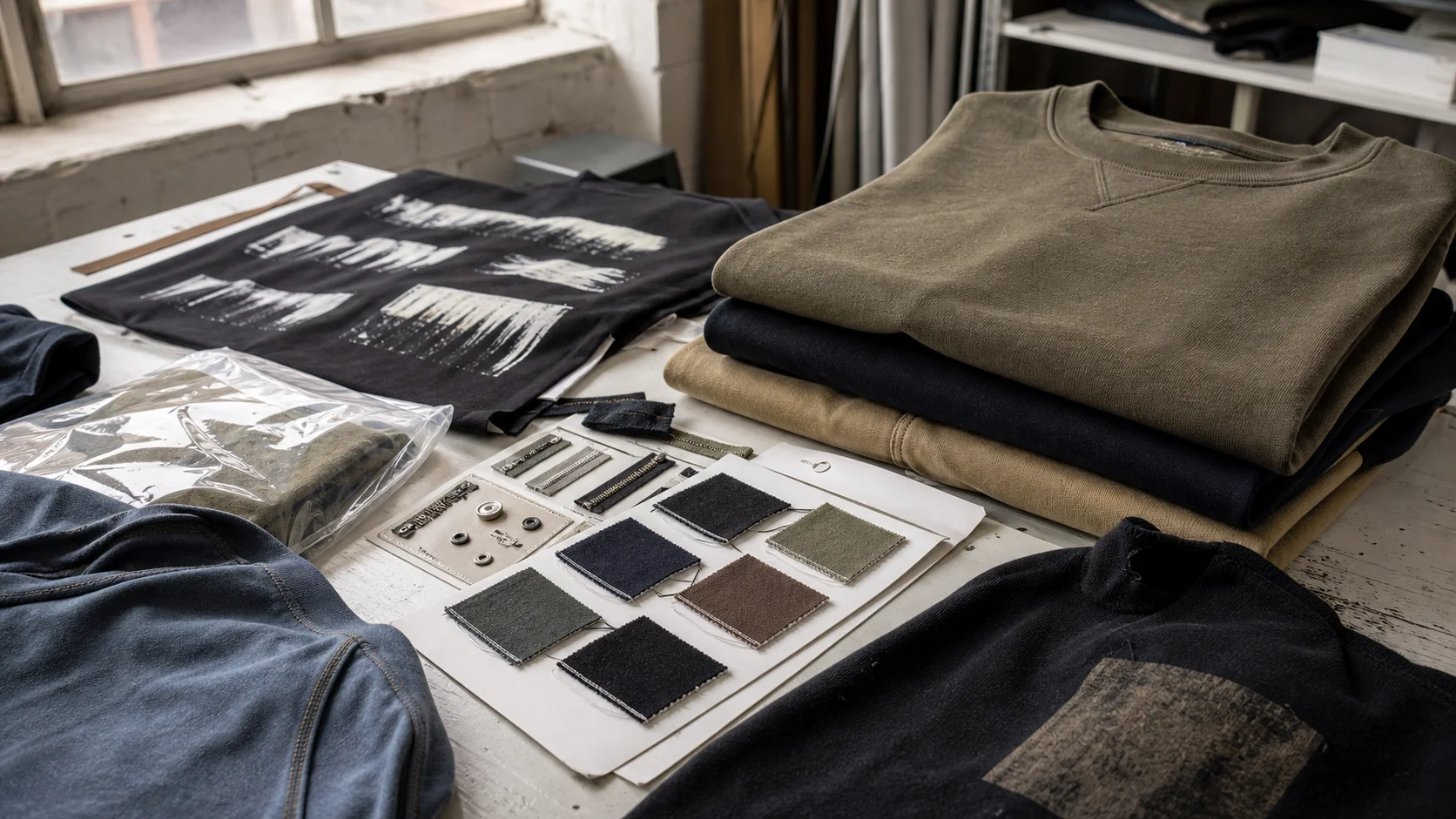
A focused outline for resort procurement teams evaluating bulk chef coat shrinkage testing, wash performance, fabric specs, and sourcing decisions for kitchen uniform programs.
Bulk Chef Coat Shrinkage Testing for Resort Buyers - Fabrikn production reference
For resort kitchen sourcing, shrinkage testing is not a technical side issue. It is a purchasing control point that affects fit consistency, replacement cost, embroidery placement, logo presentation, staff comfort, and long-term uniform planning. When bulk chef coats arrive with unexpected shrinkage, the problem rarely stays isolated to measurements on a spec sheet. It turns into reordering pressure, kitchen team complaints, inconsistent appearance across outlets, and avoidable strain on uniform budgets. In practical sourcing terms, even a 2 cm loss in body length or 1.5 cm loss in sleeve length after the first 3 to 5 industrial washes is enough to trigger size complaints in banquet and open-kitchen teams.
Resort buyers face a distinct challenge compared with standard restaurant operators. A resort often manages multiple foodservice concepts at once: fine dining, all-day dining, banquet kitchens, beach clubs, room service, staff canteens, and pastry operations. That means chef coats may need to perform under varied laundering conditions, different shift intensities, and a mix of climate exposures. A bulk order that looks acceptable at ex-factory stage can still become a problem if fabric stability was not tested against realistic wash conditions. Common resort laundry conditions are 60°C to 75°C washing, followed by tumble drying or tunnel finishing, which is much harsher than a basic home-laundry sample test.
That is why bulk chef coats shrinkage testing for resort kitchen sourcing should be built into the pre-production and bulk approval process, not handled as a last-minute check. Buyers who clarify shrinkage tolerance early tend to make better decisions on fabric blends, garment finishing, decoration methods, and reorder planning. The result is not perfection in every lot. The goal is controlled performance within agreed tolerance. A common bulk standard is maximum residual shrinkage of 3% in warp and 3% in weft after 3 wash cycles, with some premium poly-cotton programs held to 2% or below.
Buyers comparing suppliers should also look beyond unit price. Low quoted pricing can hide cost later if the supplier uses unstable base fabric, skips proper pre-shrunk finishing, or does not match test standards to the actual care conditions used in the resort laundry. A slightly higher garment cost with better shrinkage control can be the cheaper purchase over the life of the uniform program. As a typical market range, a basic 65/35 poly-cotton chef coat in 190-210 gsm may quote around $7.50-11.00 per unit at 500 pieces, while a cotton-rich twill or branded-performance version can run $11.50-18.00 depending on trim count, embroidery, and finishing.
If you are reviewing sourcing options for chef wear, it helps to align shrinkage testing with broader development and production controls. Pages such as services and about us can support internal vendor review when mapping manufacturing capability against uniform performance requirements. Buyers commonly also screen whether a supplier can provide current social or textile compliance documents such as WRAP, BSCI, OEKO-TEX STANDARD 100, or GOTS where organic cotton content is specified.
Shrinkage is the dimensional change that happens after washing, drying, steaming, or finishing exposure. In chef coats, this usually shows up in body length, chest width, sleeve length, cuff opening, collar shape, placket balance, and overall drape. For resort kitchens, even small dimensional shifts matter because garments are worn repeatedly, washed frequently, and expected to maintain a clean professional appearance. Typical checkpoints on a chef coat spec include center back length, 1 inch below armhole chest, shoulder width, sleeve length from shoulder point, cuff opening, collar stand height, and pocket position.
Most buyers focus first on fabric weight, color, and construction. Those are important, but they do not replace dimensional stability testing. A 65/35 poly-cotton twill chef coat and a 100% cotton chef coat may look similar on a hanger. Their post-laundry behavior can be very different. The issue is not only how much a garment shrinks, but where it shrinks and whether the shrinkage remains balanced. Common fabric constructions in this category are 20x16 twill, 45x45 poplin, or 32x32 compact poplin, and those construction differences often matter as much as fiber content.
Unbalanced shrinkage creates some of the most visible wear issues. A coat may twist at the side seam, pull at the button line, ride up at the front hem, or cause embroidery to appear slightly distorted after repeated washing. In practical terms, this can shorten useful wear life even if the garment is technically still usable. This is why many uniform buyers ask for side seam torque checks, placket flatness review, and collar roll consistency after wash rather than only relying on a single length-and-width result.
Resort buyers should treat shrinkage as a measurable specification. A common commercial target for chef coats might be within 2% to 3% after wash, depending on fabric type, wash method, and brand standard. Some cotton-rich programs may accept slightly higher shrinkage if the fit block accounts for it in advance. The key point is that the acceptable tolerance must be written, tested, and approved before mass production proceeds. Where industrial laundering is involved, buyers commonly ask suppliers to reference AATCC 135 or ISO 6330 test methods and then note any deviations needed to reflect the actual laundry process.
Chef coats for resorts are commonly made in cotton, polyester-cotton blends, cotton-rich twills, light canvas, poplin, or specialty performance fabrics. Each category brings a different shrinkage profile and a different sourcing tradeoff. Useful buying details here include fabric weight, yarn count, weave, finish, and whether the mill can provide test reports from the actual bulk lot rather than only from development fabric.
100% cotton remains popular for comfort, breathability, and a natural hand feel. It is often preferred for premium culinary presentation or hot-kitchen wear. The tradeoff is higher shrinkage risk unless the fabric is properly compacted, sanforized, enzyme washed, or otherwise stabilized. Cotton chef coats can perform well, but buyers need to demand test evidence rather than assume the finishing is adequate. Typical resort programs use 100% cotton twill or poplin around 180-220 gsm, and common residual shrinkage after proper finishing is still often around 3% to 5% after repeated wash unless the block is engineered with allowance.
Blends such as 65/35 or 60/40 polyester-cotton are widely used because they generally offer better dimensional stability, easier care, and better wrinkle control. For high-volume resort operations, this can be the practical choice. The compromise is that blends may feel less breathable than cotton-dominant options, especially in tropical or humid kitchens. A common sourcing spec is 65/35 twill at 195-210 gsm with reactive or disperse dyeing depending on shade, and many buyers see more consistent bulk results when this fabric is finished on a compactor and checked for skew before cutting.
These fabrics aim to balance comfort and durability. Buyers often choose them when they want a more premium hand feel without taking on the full instability risk of all-cotton fabric. Results depend heavily on finishing quality and actual fabric construction. Two fabrics with similar fiber labels can behave differently if yarn quality, weave density, or finishing controls differ. Typical examples are 58/42 or 52/48 cotton-poly twills in the 200-230 gsm range, often with stain-release or easy-care finishing; buyers should confirm whether the finish was applied by pad-dry-cure and whether it changes the hand feel or post-wash shrinkage result.
Some chef coats use stretch blends, moisture-management finishes, stain-release coatings, or recycled fiber mixes. These can be attractive for resort branding and comfort messaging, but every added fabric treatment creates another variable. A stain-release finish may influence post-wash behavior. Stretch yarns can affect dimensional recovery. Buyers should ask whether shrinkage testing was done before and after decoration and finishing. Common specialty constructions include 3% to 5% spandex mechanical-stretch twills, recycled polyester blends certified to OEKO-TEX STANDARD 100, or organic cotton blends supported by GOTS documentation when chain-of-custody is required.
A practical buying judgment: if the resort laundry is industrial and high-heat, do not rely on showroom fabric feel alone. Choose stability first, then optimize comfort within that limit. It is common for buyers to request a 1 to 2 meter fabric cutting from the actual bulk lot for a confirmatory wash before giving cutting approval.
Bulk shrinkage testing should begin before production, continue during sampling, and be confirmed again on bulk fabric or finished garments. Resort buyers benefit from a simple control sequence rather than a loose promise from the factory. In practice, the cleanest system is fabric test before cutting, garment test after PPS approval, and a final verification during inline or final inspection.
The first step is defining the wash and dry condition that reflects real use. This is where many sourcing programs go wrong. A supplier may test using a mild domestic wash cycle, while the resort laundry uses hotter washing, stronger chemistry, and tumble or tunnel finishing. If the test method does not match use conditions, the result is not commercially reliable. As a typical standard, buyers specify 60°C wash, medium-to-high tumble dry, and 3 consecutive cycles, but some hospitality laundries require validation closer to 71°C conditions.
Buyers should state whether the garments will be washed in-house, by an external industrial laundry, or through mixed channels. If possible, share the approximate temperature range, drying process, and whether chlorine, peroxide, or other treatment is used. Lead time can depend on this step because mills or third-party labs often need 2 to 4 business days to run wash, dry, condition, and re-measurement testing once the exact standard is agreed.
Bulk fabric testing before cutting reduces risk early. The supplier should mark the test area, wash according to the agreed method, and measure dimensional change in both warp and weft directions. This stage helps catch unstable lots before they become finished garments. A common method is to mark a 50 cm x 50 cm template, run the fabric through the agreed wash cycle, then condition it for at least 4 hours before final measurement.
A chef coat sample should also be washed as a sewn garment. Fabric-only tests are useful, but garment construction can change the outcome. Fusing, plackets, collar stands, pockets, and seam tension all affect post-wash appearance. Buyers commonly ask for one size M or L wear-test sample and one full-size-set PPS sample, with collar points, front placket, cuffs, and chest pocket top edge checked after wash.
Measurements should be taken before and after washing, then compared against the approved shrinkage tolerance. It is better to measure several key points, not only overall body length. A coat that passes average shrinkage but fails heavily in sleeve length can still create user dissatisfaction. Typical checkpoints are body length, chest width, sweep, shoulder, sleeve, cuff, collar, pocket placement, and front overlap, with acceptance often set at no more than 2 cm variation from approved post-wash spec for core sizes.
For large orders, a single approved sample is not enough. Buyers should request confirmation from the actual bulk lot, especially if production is split across fabric batches, colors, or cutting dates. A common sourcing control is one wash test per fabric lot and one finished-garment wash test per colorway before 30% of stitching output is completed. If the order is 1,000 pieces or more, many buyers also request an inline checkpoint after the first 100 to 150 pieces are sewn.
Where relevant, suppliers may use common finishing and garment-making equipment such as sanforizing or compacting ranges at the fabric mill, fusing presses for collars and plackets, single-needle lockstitch machines, overlock machines, bartack machines for stress points, and steam tunnels or vacuum ironing tables in finishing. These process details matter because unstable fusing, over-tensioned seams, or aggressive steam finishing can change the final post-wash result.
Sample approval should not stop at visual signoff. For chef coats, a proper approval sequence usually includes lab dip or shade approval if dyed, fabric hand-feel confirmation, measurement approval, construction review, wash test review, and decoration placement approval. In many factories, the most useful control milestones are development sample, size-set sample, pre-production sample, and pilot run review from the first bulk cutting lot.
A common bulk control package includes the approved spec sheet, graded measurement chart, bill of materials, seam construction list, stitching SPI target, artwork file for embroidery or print, care label wording, and a wash test report. For chef coats, buyers often specify 10 to 12 SPI on main seams, bartacks at pocket corners, and fused front plackets with medium-weight woven interlining around 40-60 gsm depending on fabric weight.
Lead time usually depends on how many approval rounds are needed. A straightforward repeat style in stocked white or black fabric may move from PPS approval to shipment in roughly 18-22 business days. A new development with custom dyed fabric, woven labels, embroidery digitizing, and wash-test revisions more commonly takes 35-55 business days after final spec confirmation. Delays often come from waiting on fabric test results, revised collar pattern corrections, or buyer comments on post-wash measurements.
Supplier compliance is also part of bulk control. Many hospitality buyers ask for current WRAP or BSCI audit status before placing volume orders, and fabric or trim declarations may also be requested for OEKO-TEX STANDARD 100 or GOTS-based programs. These certifications do not replace garment testing, but they are common filters during vendor onboarding.
MOQ and lead time decisions shape both price and shrinkage risk. For chef coats, common MOQs vary by fabric source and decoration complexity. A supplier using stocked 65/35 white twill may accept 100-150 pieces per style, while a custom-dyed cotton-rich twill with branded trims often requires 300-500 pieces per color. Embroidery, piping, contrast panels, or special snap hardware can push the practical MOQ higher because setup and trim purchasing become less efficient.
Typical pricing also changes with MOQ. As a common range, simple stock-fabric chef coats may land around $8.00-10.50 per unit at 150 pieces, $7.00-9.25 at 500 pieces, and lower again above 1,000 pieces if the specification is stable. Cotton-rich or specialty-fabric versions with embroidery and contrast details often run $10.50-16.00 at 300-500 pieces. Buyers should compare price against post-wash performance, not only against the opening quote.
Lead times usually depend on fabric availability, lab testing, trim readiness, and sample approval speed. A repeat order in stock fabric can often be produced in 18-22 business days after deposit and approval. A first-time order with custom fabric knitting or weaving, dyeing, finishing, and third-party testing commonly requires 30-45 business days, and complex programs can extend beyond that if multiple revisions are needed. If the fabric mill must re-run compaction or adjust finishing to meet shrinkage tolerance, that can add another 5-7 business days.
One common buying tradeoff is stocked fabric versus custom fabric. Stocked fabric reduces lead time and MOQ but offers less control over exact weight, hand feel, and dye lot continuity. Custom fabric gives more control over performance and branding, but it increases development cost, usually requires bulk fabric minimums, and adds dependency on mill testing and approval. Buyers who need frequent reorders often choose a stable stock 65/35 twill and reserve custom fabric programs for executive chef or front-facing culinary teams.
Decoration can change shrinkage performance and visual balance after washing. Chef coats are most commonly decorated with left-chest embroidery, sleeve embroidery, woven labels, name tapes, or less often screen print and heat transfer for promotional culinary events. Every method adds a construction variable, so decoration should be approved on the washed sample, not only on the unwashed sample.
Embroidery is the most common resort choice because it presents well and holds up in commercial laundering when done correctly. Useful sourcing details include stitch count, backing type, thread brand or equivalent, and placement tolerance. A typical left-chest logo may run 6,000-12,000 stitches, with unit add-on cost often around $0.60-1.50 depending on size and color count at 300-500 pieces. Buyers should check puckering around the embroidery, especially on lighter poplin fabrics, and many factories use Tajima or Barudan multi-head embroidery machines for this work.
Heat transfers and screen prints are less common on core chef coats but do appear on event wear or branded back panels. These methods can create stiffness, affect breathability, and react differently to high-heat laundry. Buyers should ask for wash resistance results after at least 10 cycles when transfers are used, and confirm whether the transfer adhesive or print ink is compatible with the intended care process.
Name tape application, contrast piping, and woven labels also deserve attention. A woven neck label or side seam label should not distort after hot wash, and name tapes should be positioned with clear tolerances, commonly within plus or minus 0.5 cm of approved placement. For piping or contrast binding, buyers should confirm whether the trim fabric has the same or lower shrinkage than the body fabric, otherwise seam puckering may appear after laundering.
Pre-shipment inspection should cover more than counting cartons and checking logo appearance. For chef coats, common defect risks include post-wash measurement failure, collar bubbling from poor fusing, placket torque, uneven sleeve length, skewed pocket placement, embroidery puckering, oil marks, needle damage, loose threads, missing bartacks, and shade variation between panels or lots.
A common inspection approach is AQL 2.5 for major defects and 4.0 for minor defects, though buyers may tighten this for premium resort programs. Useful checkpoints usually include measurement audit on selected sizes, workmanship review, metal contamination check if required by the buyer, carton assortment verification, and wash-test confirmation from retained samples. Many QC teams also check 5-point or 4-point fabric records if available from the mill before bulk cutting begins.
Inspection should include construction details that affect durability: seam security at armholes, bartack reinforcement at pocket corners, button or snap attachment strength, and smooth collar stand alignment. On chef coats with concealed snaps or press studs, buyers commonly request pull-strength checks because repeated industrial laundry can loosen attachments if the setting pressure is inconsistent.
Lead-time pressure is a common source of quality failure here. If final inspection happens only 1 or 2 days before vessel or courier cutoff, there is little room for rework or replacement. A safer sourcing practice is to schedule final inspection when 100% of goods are packed but at least 3 to 5 business days remain before shipment handover, so failed measurements, trimming issues, or carton corrections can still be fixed.
A workable chef coat spec sheet should be detailed enough that a supplier, QC team, and buyer all interpret the style the same way. At minimum, it should state fabric composition, fabric weight, weave, color, shrinkage tolerance, measurement chart with tolerances, seam construction, thread color, closure type, label details, packaging instructions, and wash test standard. A typical measurement tolerance is plus or minus 1 cm on core points before wash, with a separately approved post-wash spec for programs where shrinkage matters heavily.
A useful sourcing habit is to include one approved washed garment as the “gold seal” reference along with the paper spec. This reduces disputes later because the factory and QC team can compare bulk output against an actual post-laundry standard, not only a pre-wash sample.
Get a free quote from Fabrikn — your trusted B2B clothing manufacturer with 10+ years of experience. MOQ as low as 200 pieces.
Get a Free Quote →What shrinkage level is usually acceptable for bulk chef coats?For most commercial programs, a common target is within 2% to 3% after the agreed wash test, though 100% cotton styles may run higher unless the pattern is built with shrinkage allowance. Buyers should always define the exact test condition because a 40°C home wash result is not equivalent to a 60°C to 75°C industrial laundry result.
What fabric is most commonly used for resort chef coats?65/35 polyester-cotton twill around 190-210 gsm is one of the most common choices because it balances durability, care ease, and dimensional stability. Cotton-rich twills in the 200-230 gsm range are also common for premium programs where comfort and a softer hand feel matter more.
How long does production usually take?For a repeat order in stocked fabric, 18-22 business days after approval is common. New developments with custom fabric, embroidery setup, testing, and multiple approvals often take 30-45 business days, and sometimes 35-55 business days if fabric finishing adjustments or sample revisions are needed.
What certifications are relevant when screening suppliers?Common certifications or audit standards requested by buyers include WRAP and BSCI for social compliance, OEKO-TEX STANDARD 100 for restricted substances at the textile level, and GOTS when the garment uses certified organic cotton and chain-of-custody matters. These are useful sourcing filters, but they do not replace wash testing and bulk inspection.
Does embroidery affect shrinkage or appearance?Yes. Embroidery can cause puckering or distortion if the fabric is light, unstable, or backed incorrectly. Buyers usually review embroidery on a washed sample and check stitch count, backing, and placement tolerance before bulk approval.
What should be checked before shipment?At minimum, buyers commonly check measurements, wash-test retention sample results, collar and placket shape, pocket placement, embroidery quality, shade consistency, trim attachment strength, packing ratio, and carton markings. Scheduling final inspection 3 to 5 business days before shipment is a common safeguard.