
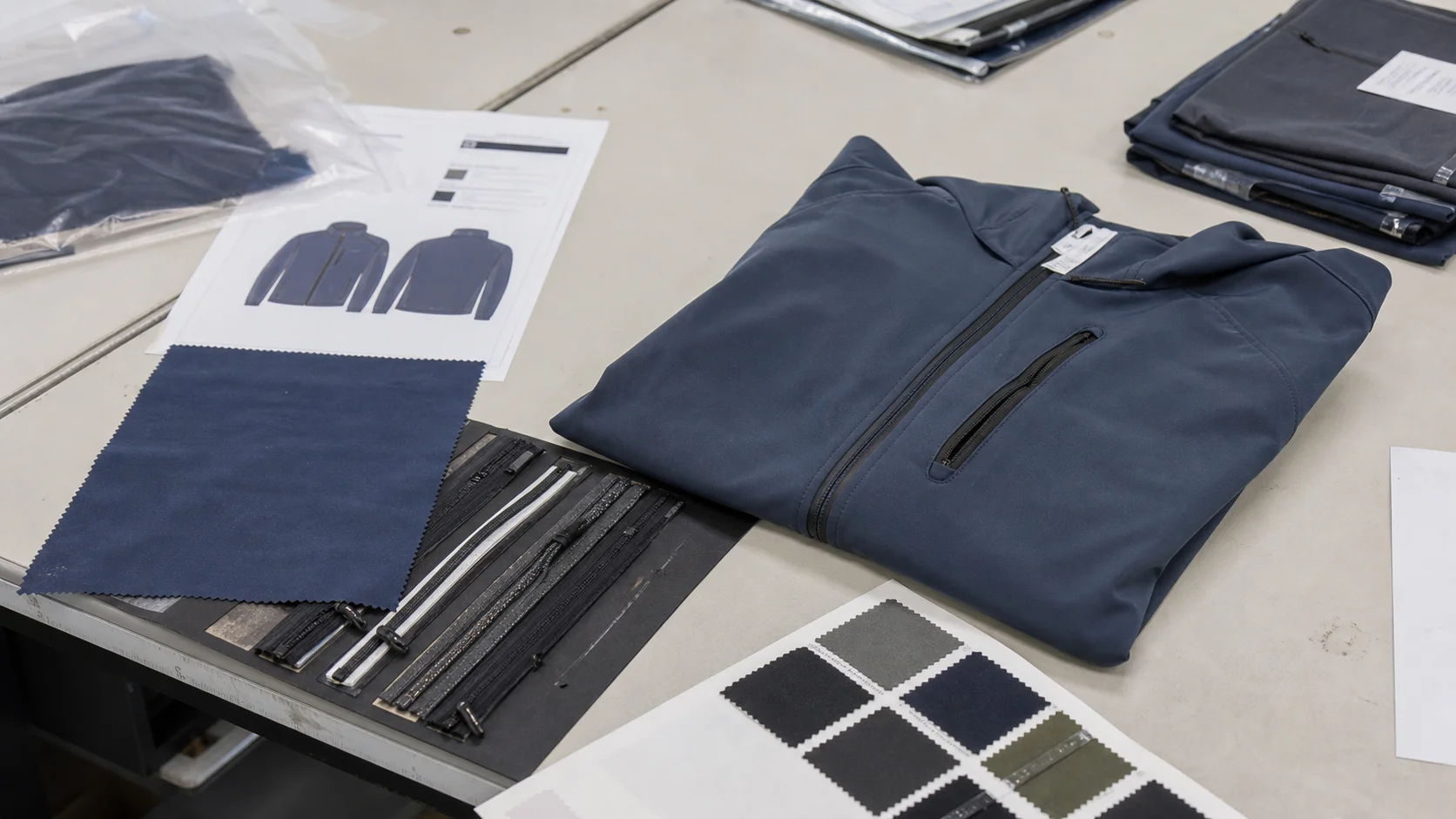
A product-specific outline for hospitality procurement groups evaluating bulk chef coats with compliance documentation, covering fabric specs, labeling, testing records, sizing, branding, and rollout requirements.
Bulk Chef Coats With Compliance Docs for Buyers - Fabrikn production reference
Buying bulk chef coats with compliance documentation for hospitality procurement groups is rarely a simple uniform purchase. For hotels, restaurant chains, catering operators, institutional foodservice teams, and contract hospitality groups, the product has to perform in daily use while also clearing internal sourcing controls. Price still matters, but price alone is not a safe purchasing standard when the order will be distributed across multiple kitchens, brands, or regions. In common sourcing programs, a basic poly-cotton chef coat may land around $8.00-12.00 per unit at 300-500 pieces, while a higher-end cotton-rich or branded style with embroidery and custom trims often moves into the $13.50-22.00 range depending on fabric weight, trim pack, and packaging.
Chef coats sit in a demanding category inside outerwear and jackets. They need to balance professional presentation, wash durability, movement, heat tolerance, and practical details such as pocket placement, closure strength, and collar shape retention. Once the garments are being sourced in volume, compliance documentation becomes part of the buying decision rather than an afterthought. A common hospitality construction is a 65/35 polyester-cotton twill at 190-220 GSM with bar tacks at pocket corners, reinforced underarm seams, and either resin buttons or stainless spring snaps chosen for repeated industrial laundering.
Procurement teams often face pressure from several directions at once. Operations teams want reliable replenishment. Brand teams want a consistent appearance. Finance wants controlled cost. Legal and compliance stakeholders want documentation that supports supplier approval, material traceability, and restricted substance expectations. A bulk program that ignores one of these areas usually creates friction later. In practice, many buyers also ask whether the factory can provide current social audit records such as WRAP or BSCI, and whether any organic or skin-contact claims are supported by product-relevant GOTS or OEKO-TEX documentation.
That is why experienced buyers tend to judge chef coat suppliers on two tracks at the same time: product execution and document readiness. A supplier that offers low pricing but weak paperwork can create onboarding delays. A supplier with polished documents but inconsistent garment quality can trigger repeat claims, replacement orders, and site-level complaints. Typical pre-production control points include size set approval, lab dip or shade band approval for dyed colors, trim card sign-off, and a pre-production meeting that confirms stitching, labeling, and carton assortment.
For hospitality procurement groups, the better approach is to source chef coats as a managed apparel program. That means confirming style specs, fabric performance, trim standards, size grading, packaging method, documentation sets, and inspection checkpoints before production begins. Buyers looking for sourcing support or product development structure often start by reviewing a supplier’s services offering to see whether compliance and production management are handled together.
In practical terms, compliance documentation for bulk chef coats usually refers to the records that help buyers verify what was made, what materials were used, and whether the order meets the procurement group’s internal and external requirements. The exact paperwork varies by market and by buyer policy, but the underlying goal is consistent: reduce sourcing risk. Common document packs are assembled against the exact purchase order, style number, color, and ex-factory date so they can be checked during onboarding or post-shipment audit.
Common compliance documents requested during chef coat procurement may include:
Not every order needs the same file set. A regional restaurant group may only require basic composition, labeling, and inspection records. A larger hospitality procurement organization with formal vendor onboarding may require broader document control before approving the shipment. For example, a buyer using organic cotton claims will usually expect valid GOTS scope or transaction support for the claimed material, while a buyer focused on skin-contact safety may prioritize OEKO-TEX Standard 100 test evidence for the finished fabric or relevant components.
Buyers should be careful about assuming that a generic certificate covers the exact product they are purchasing. One common sourcing mistake is accepting broad compliance language without checking whether the document applies to the actual fabric, dyeing lot, trim package, or production period used for the chef coats in the order. When documentation is not product-specific, it may satisfy a sales discussion but fail an internal audit. A typical checkpoint is matching the mill test report lot number, fabric roll references, and purchase order style code before bulk release.
Purchasing judgment: ask for documents that can be linked back to the exact style, fabric, color, and production lot. General claims are easy to send. Traceable records are what reduce risk.
Bulk chef coats should be purchased against a written specification sheet, not a photo reference alone. Hospitality groups that scale uniform programs successfully tend to lock down technical details early because appearance issues usually start with vague product briefs. In common sourcing practice, a complete tech pack for chef coats usually includes a measurement chart with POM tolerances of around +/-0.5 inch on major body points and +/-0.25 inch on smaller components such as collar height or cuff width.
A typical chef coat specification should cover:
Procurement teams should also define whether the garment is intended for executive chefs, line cooks, pastry teams, banquet kitchen staff, open-kitchen concepts, or front-of-house culinary presentation. Those use cases can change the preferred styling and performance requirements. For open-kitchen concepts, buyers commonly request cleaner silhouettes, hidden plackets, and embroidery positioning within 8-10 cm of the wearer’s left chest for brand consistency.
For example, a luxury hotel group may prioritize crisp appearance, premium hand feel, and embroidered branding. A high-volume contract caterer may lean toward easier-care fabrics, simpler closures, broader size runs, and faster replenishment. Neither approach is wrong, but each drives different cost and sourcing decisions. A premium spec might use 220 GSM cotton-rich twill with satin stitch embroidery and dyed-to-match melamine buttons, while a volume spec more often uses 190-200 GSM poly-cotton with stock snaps and simplified packaging to protect replenishment speed.
Fabric selection is one of the most important decisions in bulk chef coat sourcing. It affects comfort, wash behavior, appearance retention, and unit cost. In this category, buyers usually compare cotton-rich options with polyester-cotton blends, and sometimes with stretch-infused fabrics for improved movement. Common mill finishes include sanforized or pre-shrunk finishing for cotton-rich fabrics and resin or easy-care finishing for poly-cotton programs where wrinkle recovery matters.
Cotton-rich chef coats are often chosen for comfort, breathability, and a more natural hand feel. They can support a more premium presentation, especially in upscale hospitality settings. The tradeoff is maintenance. Cotton-heavy fabrics are generally more prone to wrinkling, shrinkage pressure, and shape change if laundry conditions are aggressive. Typical constructions are 100% cotton twill or 80/20 cotton-poly blends in the 200-230 GSM range, and common buyer expectations are under 3% residual shrinkage after the agreed wash test.
Polyester-cotton blends remain common in hospitality procurement because they are usually easier to maintain at scale. They often hold color well, dry faster, and support better wrinkle resistance. For many chain operations, this is the safer commercial choice. The tradeoff is that some blends can feel less breathable or less premium if the fabric quality is not selected carefully. A very common specification is 65/35 polyester-cotton twill at 190-210 GSM, which typically balances cost, durability, and industrial laundry practicality better than lighter plain weaves.
A small percentage of elastane can improve mobility, especially in modern slim-fit chef coats. Buyers should assess stretch blends cautiously for high-temperature laundering environments because recovery performance depends heavily on fabric construction and care conditions. A stretch claim on paper is not enough; wash testing matters. Where used, stretch is often limited to 2-3% elastane in a woven twill or added only in side panels made on circular knitting machines to reduce cost and protect body fabric stability.
Chef coat fabrics often fall in a practical midweight range, roughly around 180 to 240 GSM, depending on style and intended use. Lighter weights can improve comfort in hot kitchens but may show wear earlier or feel less substantial. Heavier weights can elevate appearance and durability but may reduce comfort during long shifts. In common sourcing terms, 180-190 GSM is often chosen for warmer climates or lower-cost replenishment, 200-220 GSM is the commercial mainstream, and 230-240 GSM is more typical for executive or presentation-driven styles.
Trim package choices also affect performance and claim rates. Buyers should review:
Low-cost trims are a frequent source of hidden problems. A chef coat body fabric may perform well while the snaps fail, embroidery puckers, or collar edges distort after laundering. This is why the bill of materials should be reviewed as carefully as the shell fabric. Common production processes that influence results include fusing press settings for collars and plackets, button-sew machine tension, snap pressing pressure, and embroidery machine hooping control.
MOQ, sampling, and lead times are often where chef coat sourcing plans become more realistic. For stock-supported base fabrics and standard trims, common MOQs start around 100-150 pieces per color for a simple style, but fully custom developments often require 300-500 pieces per color or 600-1,000 pieces total to keep pricing efficient. If buyers request custom-dyed fabric, special weave development, or branded trims, the effective MOQ usually increases because mills and trim suppliers apply their own minimums before garment production begins.
Sampling also needs to be separated into stages. A proto sample commonly takes 7-10 business days if stock fabric is available. A fit sample and revised salesman sample may add another 7-14 business days each depending on pattern changes and embroidery approvals. A pre-production sample is usually expected after all fabric, trims, labeling, and packaging details are locked. When multiple approvals are required across procurement, operations, and brand teams, internal sign-off often adds more delay than sewing time.
Typical bulk lead times for chef coats are often 18-22 business days for repeat orders using approved stock fabric and unchanged trims, 30-45 business days for new custom orders using readily available fabric, and 45-60 business days if custom dyeing, woven labels, branded snaps, or embroidery digitizing are still pending. Common lead-time dependencies include greige fabric availability, lab dip approval, embroidery strike-off approval, trim booking, line capacity, and final carton marking confirmation.
Buyers should also ask whether the quoted lead time starts from purchase order date, deposit receipt, lab dip approval, or pre-production sample approval. Suppliers do not always count from the same milestone. A quote that looks fast can become misleading if bulk production only starts after fabric booking and trim approval are complete. In practical sourcing terms, one delayed item such as custom snaps or woven neck labels can hold the sewing line even if shell fabric is already in-house.
Bulk chef coat programs usually fail in a small number of predictable ways, so inspection planning should focus on those risks before production starts. Common defects include shade variation between panels, collar bubbling after fusing, front placket twisting, loose or cracked snaps, uneven embroidery placement, broken stitches at armholes, pocket misalignment, and measurement issues on chest, sleeve, and body length. White chef coats also require close inspection for oil marks, rust stains from metal contact points, and needle contamination that may not be visible under weak lighting.
Typical inspection checkpoints begin with fabric inspection before cutting, often using a 4-point system to flag weaving faults, stains, slubs, or bowing. During cutting, buyers or inspectors commonly check marker alignment, size ratio accuracy, and shade segregation by roll to avoid panel mismatch. Inline sewing inspection usually focuses on SPI consistency, seam security, clean topstitching, collar symmetry, and correct attachment of buttons or snaps. Final random inspection often follows AQL 2.5 for major defects and 4.0 for minor defects, though exact levels depend on buyer policy.
Useful measurement checkpoints commonly include chest width, shoulder width, sleeve length, back length, collar stand height, cuff width, and pocket position measured against the approved spec sheet. For trims, common pull checks are done on snaps, buttons, and hanger loops. For wash-sensitive programs, a buyer may also request a garment wash test or trial laundry run before shipment to confirm shrinkage, puckering, twist, and label legibility after repeated cycles.
Because chef coats are often worn in high-visibility environments, presentation defects matter almost as much as structural ones. A sourcing team should require sealed sample approval, a trim card, and a packing sample before final production. Common end-of-line checks include thread trimming, metal detection where buyer policy requires it, polybag labeling accuracy, carton assortment verification, and barcode scan checks if the program feeds directly into uniform inventory systems.
Procurement groups should evaluate chef coat suppliers against a scorecard rather than relying on unit price or sales responsiveness alone. Common scorecard categories include technical capability, document readiness, sampling accuracy, on-time delivery, repeat-order consistency, and claim handling speed. For apparel programs that need audit support, buyers often ask for current WRAP or BSCI audit status, plus evidence that the supplier can maintain style-level records rather than only general company certificates.
Technical capability should be reviewed at the process level. Buyers commonly ask whether the supplier handles pattern making digitally, whether size grading is done in-house, whether embroidery is run on multi-head machines, and whether snap setting, button sewing, fusing, and finishing are controlled through standard operating procedures. A supplier that can explain its inline quality gates, needle control, and final packing workflow is usually more reliable than one presenting only finished sample photos.
Sampling accuracy is especially important for hospitality groups with multiple approval stakeholders. A common sourcing issue is a strong first sample followed by bulk production that drifts from the approved construction. Buyers can reduce this risk by checking whether the supplier issues a pre-production sample, maintains sealed samples, and records key approvals such as fabric hand feel, embroidery thread color, placement, and carton assortment. Repeat-order buyers should also ask whether the supplier keeps approved patterns, grading, and BOM data for replenishment runs.
Commercial evaluation should include more than ex-factory cost. Typical questions include whether price includes embroidery, polybags, carton marks, spare buttons, and export packing; whether there are surcharges for split size ratios or extended sizes; and what the claim settlement process looks like if a lot fails inspection. A common benchmark is to ask for at least two recent production references in similar product categories, even when the buyer does not request exact customer names.
Chef coat pricing moves most noticeably with fabric, trims, branding, and order complexity. As a common guide, a basic stock-fabric chef coat with standard buttons, no embroidery, and simple individual polybag packing may cost around $8.00-10.50 per unit at 500 pieces. The same garment can rise to $11.50-14.50 with heavier 220 GSM fabric, custom labels, and chest embroidery, and move above $16.00-22.00 when buyers add premium cotton-rich fabric, contrast piping, hidden plackets, specialty snaps, or more complex packaging.
Fabric is usually the largest cost driver. As a practical fabric example, stock 65/35 poly-cotton twill commonly sources around $2.50-4.00 per unit equivalent at 500 MOQ depending on weight and finish, while cotton-rich twill or specialty stretch woven fabric often adds noticeable cost. Trim complexity also matters: branded snaps, woven labels, custom hangtags, embroidery with high stitch count, and extra reinforcement operations all increase labor and material consumption.
Order fragmentation is another common cost issue. A buyer may achieve an attractive average unit price at 1,000 pieces total, but if that order is split across many colors, embroidery variants, or size packs, the effective cost usually rises. Smaller color runs mean more changeovers in cutting, embroidery, sewing, finishing, and packing. In common factory terms, a 1,000-piece order in one color is more efficient than five 200-piece color splits, even when the total quantity is the same.
The practical tradeoff is that the cheapest construction is not always the lowest total cost. A slightly higher spend on better snaps, stronger thread, stable interlining, or pre-shrunk fabric can reduce returns and emergency reorders. For hospitality groups managing many sites, avoiding one failed delivery window or one large replacement claim often saves more than the initial per-unit price difference.
For multi-site rollouts, the most reliable ordering process is usually phased rather than rushed into one shipment without validation. A common approach is to begin with sample approval and wearer trials, then place a pilot bulk run, and only then release the wider rollout. Even a 50-100 piece wear test across several kitchen roles can reveal issues with heat comfort, sleeve length, pocket usability, or shrinkage before the main order is cut.
Once the style is confirmed, buyers should issue a single master specification covering style code, approved fabric, approved trims, measurement chart, branding artwork, packaging rules, and carton assortment by site. For hospitality groups shipping by location, common carton controls include size-break stickers, site-specific carton marks, and pre-assigned pack ratios so distribution centers do not have to reopen every carton to sort garments manually.
Production planning should also match rollout timing to operational peaks. If the uniforms are needed before a hotel opening, seasonal menu launch, or catering contract start date, the order calendar should include approval buffers. In common sourcing schedules, buyers often allow 5-7 business days for internal approvals, 7-14 business days for sample revisions, and 30-45 business days for first bulk production, then add transit and receiving time on top.
A useful control for multi-site programs is to keep a replenishment continuity plan. That usually means booking extra fabric or confirming a restockable base fabric, retaining approved trims, and saving digital embroidery files, patterns, and grading. Without that preparation, a later top-up order of 150-300 pieces can end up with different fabric hand feel, shade drift, or trim substitutions compared with the launch order.
Document control does not stop when the chef coats arrive. Hospitality procurement groups often need to retrieve records months later for audit requests, claim reviews, replenishment matching, or internal vendor evaluations. A well-managed file set typically includes the purchase order, approved tech pack, sealed sample reference, mill composition declaration, test reports, inspection reports, packing list, carton assortment, commercial invoice, and shipment reference all stored under the same style and order code.
This matters because many post-delivery problems are traceability problems. If a site reports excessive shrinkage, broken snaps, or shade mismatch on a refill order, the buyer needs to know whether the issue is linked to a different fabric lot, a trim substitution, a new production line, or a change in wash conditions. Without order-level records, teams tend to argue from memory instead of evidence. Common best practice is to retain these records for at least 12-24 months, especially for repeat uniform programs.
Document control also supports certification claims after delivery. If the chef coat program was sold with OEKO-TEX, GOTS, WRAP, or BSCI references, procurement teams should keep the exact certificates, scope references, or audit reports used during approval rather than only a marketing presentation. The useful sourcing detail here is simple: retain the version that was valid at order time and connect it to the purchase order or shipment file.
For repeat orders, accurate document history speeds up sourcing and reduces variation. A buyer that can retrieve the exact BOM, embroidery file, measurement spec, carton assortment, and prior inspection results can usually reorder faster and with fewer surprises. In practical terms, good document control helps convert a one-time chef coat purchase into a stable, lower-risk uniform supply program.
Bulk chef coat sourcing for hospitality procurement groups works best when buyers treat the category as a controlled apparel program rather than a simple price comparison. The most reliable outcomes usually come from locking the fabric, trims, measurements, packaging, certifications, and inspection checkpoints before bulk production starts. Common commercial benchmarks such as $8.00-12.00 per unit for standard programs, 18-22 business days for repeat runs, and AQL-based final inspection are more useful than vague promises because they give procurement teams something concrete to compare.
Compliance documentation adds value only when it is traceable to the exact style, fabric, trim package, and production lot being purchased. That means buyers should look beyond generic statements and request records tied to actual material lots, approved labels, and production dates. Certifications and audit references such as GOTS, OEKO-TEX, WRAP, and BSCI can be useful, but only when they are relevant to the specific product claim or supplier approval requirement.
The practical takeaway is straightforward: define the chef coat technically, validate the supplier operationally, and control the paperwork as carefully as the garment itself. That is usually the difference between a low-friction rollout and a uniform program that creates avoidable claims, delays, and replenishment problems.
Get a free quote from Fabrikn — your trusted B2B clothing manufacturer with 10+ years of experience. MOQ as low as 200 pieces.
Get a Free Quote →What is a common MOQ for custom bulk chef coats?A common starting point is around 300-500 pieces per color for fully custom programs, although simple styles using stock fabric may start closer to 100-150 pieces per color.
What fabric is most common for hospitality chef coats?A 65/35 polyester-cotton twill around 190-210 GSM is one of the most common commercial choices because it balances cost, durability, wrinkle resistance, and wash practicality.
How long do bulk chef coat orders usually take?Repeat orders using approved materials commonly run about 18-22 business days, while first custom orders often take 30-45 business days after approvals. Custom dyeing, branded trims, and sample revisions usually extend that timeline.
Which certifications matter in chef coat sourcing?Commonly requested documents include OEKO-TEX for restricted substances or skin-contact assurance, GOTS when organic cotton claims are involved, and WRAP or BSCI for social compliance review during supplier onboarding.
What are the most important inspection points?Common checkpoints include fabric shade consistency, measurement accuracy, collar and placket construction, snap or button attachment strength, embroidery placement, stain control on white garments, and final packing accuracy by size and site.