
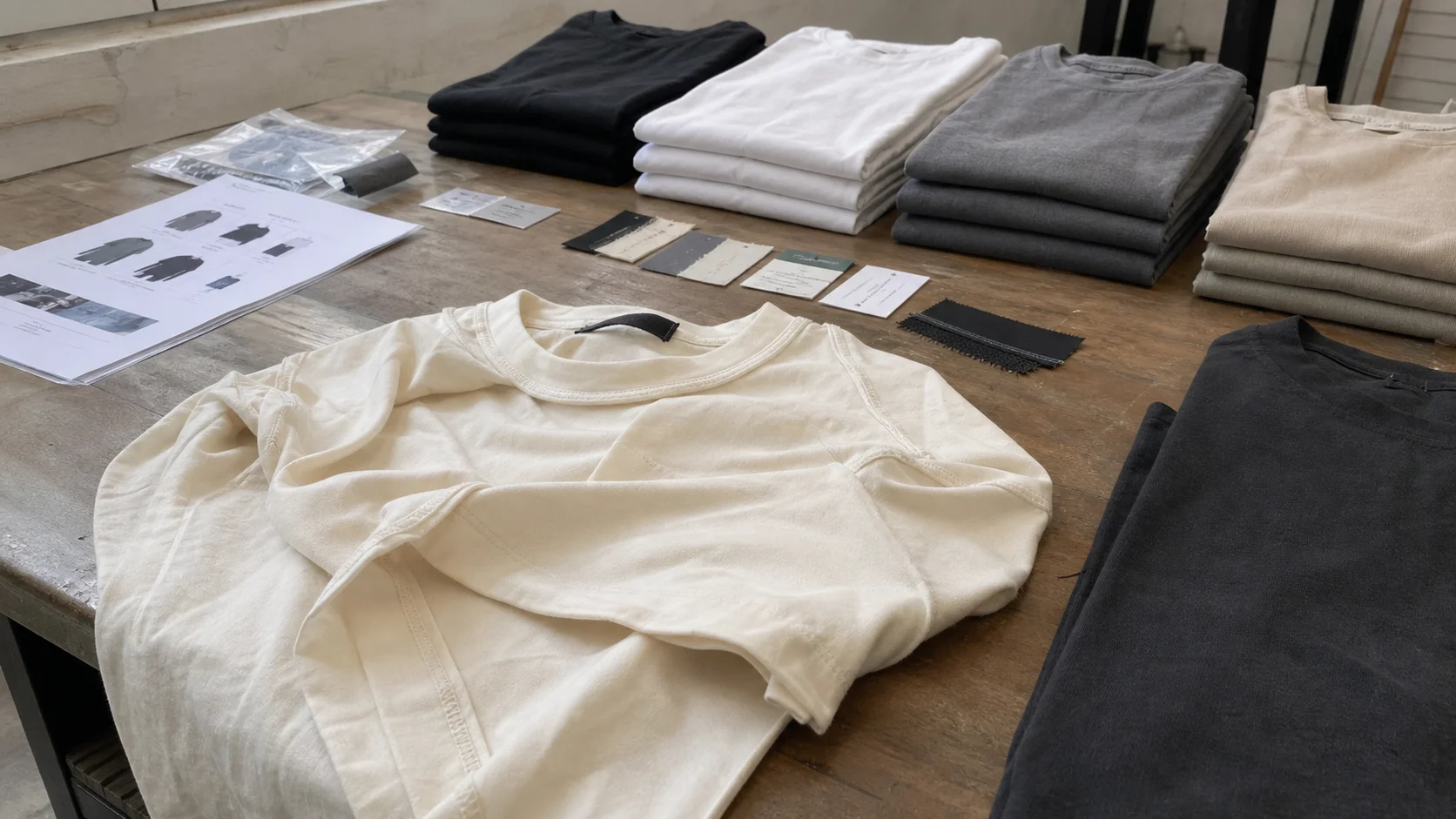
An SEO-focused outline for restaurant chain buyers who need bulk chef coats with durable seams, testing criteria, failure modes, and production checks that...
Bulk Chef Coats Seam Strength Testing - Fabrikn production reference
Restaurant chain buyers do not need a generic product page when they are evaluating bulk chef coats. They need a sourcing guide that answers a narrow question: will the seams hold up under repeated commercial laundering, hot kitchens, fast changeovers, and the day-to-day stress of real operations? Seam strength testing is one of the clearest ways to separate a low-risk purchase from a costly repeat-buy problem. It is not the only quality check, but it is one of the first numbers worth asking for when the order is large, the uniform program is standardized, and the garment will be worn hard.
For bulk chef coats, seam performance affects fit retention, appearance, and service life. Weak stitching can lead to popped side seams, opened armholes, fraying at stress points, and shortened replacement cycles. Those failures are expensive across a chain because the damage is multiplied by volume. A single bad garment becomes a pattern issue when it shows up in every location. That is why seam strength testing belongs in the buying conversation before purchase order release, not after the first wear trial.
This guide focuses on bulk chef coats seam strength testing for restaurant chain buyers, with practical detail on testing methods, useful specification targets, sample approval steps, inspection risks, and the tradeoffs that matter when sourcing at scale. Decoration and printing decisions are included where they affect seam performance, because embroidery placement, heat transfer application, and pocket build can all change how a coat behaves in use.
Chef coats are not fashion garments. They are utility uniforms exposed to heat, abrasion, washing, ironing, stretching, and frequent movement through the shoulders and torso. A coat that looks acceptable on day one can fail early if the seam construction is too light for commercial use. Restaurant chain buyers usually feel this in one of three ways: complaints from store managers, rising replacement orders, or a visible drop in uniform consistency across locations.
Seam strength matters most in high-stress areas. Side seams, armholes, sleeve inseams, shoulder joins, pocket openings, vents, and front placket attachments all see repeated tension. When bulk chef coats are made for chain use, the construction has to tolerate not just initial fit, but months of service and laundering. That is where fabric choice, stitch density, seam type, and thread quality all intersect.
For chain programs, seam testing should be treated as a risk filter. It does not guarantee the garment will never fail, but it gives buyers a defensible basis for rejecting weak construction before scale magnifies the problem.
Seam strength testing measures the force required to break or distort a sewn seam under controlled conditions. In practical terms, it helps answer whether the construction can survive stress without splitting at the stitch line, tearing the fabric adjacent to the seam, or elongating beyond acceptable limits. Buyers often ask for seam strength data alongside fabric weight, shrinkage, colorfastness, and pilling results because a strong fabric can still be undermined by poor sewing.
Common lab methods include grab or strip testing on the sewn area, depending on the standard used by the supplier or testing house. Buyers do not need to dictate the lab protocol in every case, but they do need clarity on what was tested, on which seam construction, with what thread, and after what conditioning. A result taken from an unwashed sample is less useful than one taken after wash cycles that approximate commercial care.
Ask for test reports that identify:
That last point matters. A seam that fails because the fabric tears next to a well-made stitch line tells a different story from a seam that opens because the thread is weak or the stitch density is too low. Buyers should read the failure mode, not just the numeric result.
There is no single universal seam strength number that fits every chef coat program. The right target depends on fabric weight, end use, laundering frequency, and whether the coat is intended for executive dining rooms, high-turnover quick-service operations, or back-of-house production kitchens. A lightweight fashion-forward coat may accept lower values than a heavy-duty chain uniform built for repeated commercial laundering.
Even so, buyers can still use practical benchmarks. For bulk chef coats, it is common to request that seam strength meet or exceed the performance of an approved control sample, with a defined minimum result for the main stress seams. Where the factory cannot tie the result to an internal reference standard, ask for a range based on comparable fabric weight and construction. The better suppliers can explain why a seam was built a certain way and what the expected service life should be.
A sensible technical brief often includes the following elements:
Spec Area Typical Buyer Direction Why It Matters Fabric 65/35 poly-cotton, cotton-rich twill, or performance blend depending on laundering needs Controls shrinkage, comfort, and seam stress behavior Fabric Weight Often in the 180 to 240 gsm range for standard chef coats Heavier fabrics can hold seams better, but may reduce comfort Thread Poly core-spun or high-tenacity polyester, matched to fabric and wash profile Thread failure is a common cause of seam opening Stitch Density Defined by seam type and stress area, often tighter at load points Too loose weakens the seam; too tight can perforate fabric Reinforcement Bar-tacks or extra stitching at pockets, vents, and stress points Improves durability in high-movement zones Wash Requirement Commercial laundering spec with expected shrinkage limit Many failures appear after wash, not at first fitIt is better to specify a construction standard than to chase a single headline number. A coat with reasonable seam strength, stable shrinkage, and balanced comfort often outperforms a heavier garment that feels stiff and gets rejected by staff. That is the tradeoff buyers need to manage.
Bulk buying should not begin with a blind order. The sample approval process is where seam strength issues are caught early, before they spread across the program. For restaurant chains, the cleaner process is usually four steps: proto sample, fit sample, pre-production sample, and top-of-production reference. Not every supplier uses those exact names, but the function is the same. Each stage should confirm both appearance and construction.
When seam strength is a priority, buyers should inspect samples in a way that goes beyond a visual check. Pull the seams by hand. Check for stitch skipping. Examine stress points after laundering if time allows. Review whether pocket corners are reinforced, whether the sleeve seam lies flat, and whether embroidery or printing has affected the fabric around the stitch line. A sample that looks neat but shows puckering or weak recovery is a warning sign.
The approval pack should include:
Buyers should not sign off a sample on visual fit alone. If the coat is being purchased in bulk for chain deployment, seam construction is a commercial risk item. A supplier that resists documenting construction details is making the buyer carry too much uncertainty.
Fabrikn’s service pages can help anchor a formal sourcing workflow, especially when a buyer needs to align production specs, decoration methods, and communication around one uniform program. See services and contact us for the starting points in a controlled sourcing process.
MOQ for bulk chef coats varies by fabric, customization level, and decoration method. In practice, many suppliers will quote somewhere in the low hundreds per style and color, with more favorable pricing once an order moves into the several-hundred to low-thousand unit range. True minimums depend on fabric mill availability, trim sourcing, and whether the coat uses custom labels, buttons, embroidery, or special packaging.
Lead time is rarely just sewing time. For bulk chef coats, production timing is usually shaped by fabric reservation, lab dips or color approval, sample sign-off, trim procurement, decoration setup, and final inspection scheduling. A buyer who compresses the approval window often creates a quality risk. The factory may still ship on time, but seam audits become thinner, rework pressure rises, and the chance of overlooked defects increases.
Plan around these dependencies:
For chain rollouts, a realistic production timeline often stretches beyond the sewing floor schedule alone. Buyers should ask suppliers what portion of the lead time depends on pre-production approvals and what portion depends on actual manufacturing capacity. That question often reveals whether the quoted delivery is reliable or optimistic.
Chef coats often sit under the Decoration & Printing category because branding is part of the purchase decision. Embroidered names, chain logos, department identifiers, and sleeve or chest marks are common. These details are not cosmetic only. Decoration placement can affect seam behavior if it is too close to stress zones or if the backing material stiffens the fabric near the stitch line.
Embroidery is generally durable, but dense thread coverage can reduce flexibility in the decorated area. Heat transfers and printed marks may be lighter, yet they require careful testing for wash durability and compatibility with the fabric finish. On a chef coat, decoration close to the pocket opening, placket, or shoulder seam can create puckering or limit movement. That risk is small on paper and visible in wear.
Useful buyer checks include:
A decoration decision should not weaken a uniform that otherwise passes seam testing. If the branding requirement compromises comfort or durability, the specification needs to be adjusted. Chain buyers should treat decoration as part of garment engineering, not as an afterthought.
Inspection is where weak seam performance becomes visible, but only if the inspection plan is designed well enough to catch it. A quick carton check is not enough. Buyers need to look for seam slippage, skipped stitches, uneven seam allowances, puckering, open corners, and thread breakage after handling. The risk rises when the order spans several size runs or multiple colors, since variation tends to show up first in the less controlled combinations.
Common inspection failures include:
Final random inspection should not be treated as a paperwork exercise. Buyers need enough units opened and handled to reveal the quality pattern. If the order is large, a narrow inspection sample can miss a recurring stitch issue that only appears after the first few hundred units. That is a costly miss because replacement uniforms usually arrive after stores have already absorbed the initial shipment.
Practical control points:
Control Point What to Check Risk if Missed Inline inspection Stitch consistency, seam allowance, thread tension Systematic construction defect continues through the run Pre-shipment inspection Size consistency, decoration placement, wash appearance Defective units ship in volume Wash validation Shrinkage, seam puckering, thread integrity Uniform failure after first launder cycleRestaurant chain buyers should spend where failure is expensive. Seam construction, thread quality, and wash performance are worth paying for because they drive replacement frequency. Decorative excess, overly complex patterning, and premium features that do not improve durability are easier to trim if budget is tight. That does not mean buying the cheapest coat with the strongest seam claim. It means buying the coat that balances durability, comfort, and repeatability across a large fleet.
A heavier fabric can improve seam stability, but it may also run hotter in kitchen use and reduce staff acceptance. A very light fabric may feel better on the body, yet it can tear sooner at the seam line or distort after wash. Buyers should compare options with the actual wearing environment in mind. For long shifts, repeat laundering, and a standardized chain look, a moderate-weight fabric with reliable seam construction is often the most defensible choice.
One sound rule: do not let decoration override construction. A logo is not useful if the coat fails at the side seam. The better suppliers can explain how the garment was engineered for both visual consistency and service life. That is the level of detail chain buyers should expect.
Fabrikn’s about us page is useful for buyers who want to understand the company’s positioning before starting a program conversation. For deeper purchasing work, the right order is usually credentials, service scope, and then a clear specification discussion, not the other way around.
When evaluating suppliers for bulk chef coats seam strength testing, buyers should keep the review practical. The goal is not to collect paperwork. The goal is to reduce the chance of early garment failure across the chain.
Suppliers who answer clearly on construction details usually reduce downstream friction. Suppliers who answer vaguely may still produce acceptable goods, but the buyer takes on more risk. For chain programs, that risk compounds fast.
Get a free quote from Fabrikn — your trusted B2B clothing manufacturer with 10+ years of experience. MOQ as low as 200 pieces.
Get a Free Quote →It is a quality check that measures how much force a sewn seam can take before it breaks, opens, or distorts. For chef coats, the test helps confirm that the garment can survive commercial wear and repeated laundering.
Side seams, armholes, shoulders, sleeve seams, pocket openings, plackets, and vents deserve the most attention. These zones see the highest tension in kitchen use.
MOQ commonly starts in the low hundreds per style, color, and construction setup, then improves with higher volume. Decoration, custom trims, and fabric sourcing can raise the minimum.
Both are useful, but after-wash testing is more relevant for restaurant chains. A seam that passes before laundering may still fail after shrinkage, heat, and detergent exposure.
It can, if the embroidery is dense, placed too close to a stress seam, or backed too heavily. Proper placement and testing usually avoid the issue.
Ask for fabric composition, weight, thread specification, seam type, stitch density, test method, wash condition, and the failure mode from seam testing. That set of details is far more useful than a single numeric result alone.
Use a clear approved sample, require inline and pre-shipment checks, test wash performance, and inspect enough units to catch recurring stitch or seam problems before release to stores.
For chain buyers, bulk chef coats should be judged as a workwear system, not a simple garment buy. Seam strength testing gives the sourcing team a practical way to compare suppliers, control failure risk, and protect uniform consistency across locations. The right choice usually comes from a mix of sound construction, realistic fabric weight, disciplined sample approval, and clear inspection rules. That is the standard worth applying before a bulk order goes into production.