
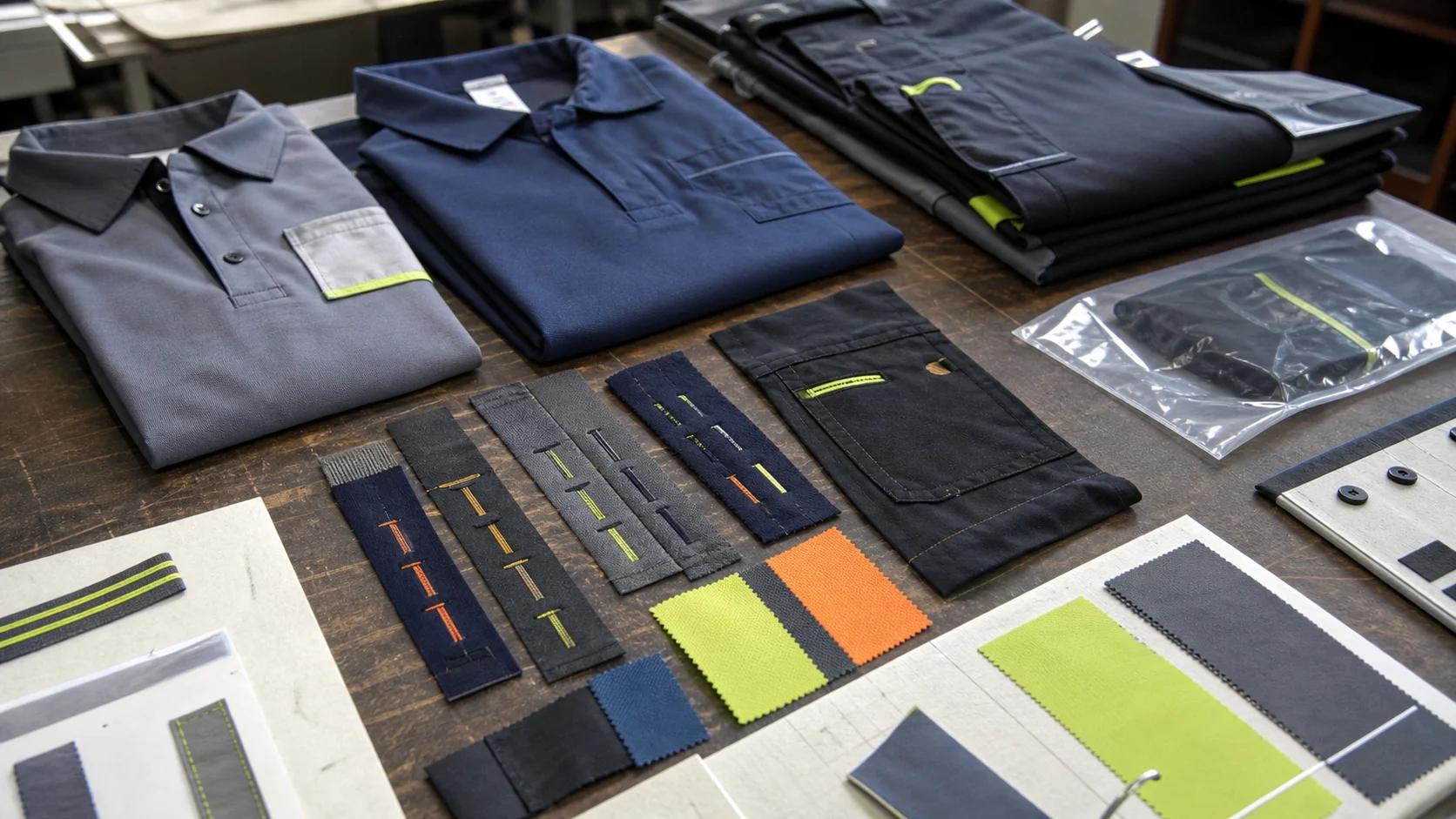
A practical SEO guide for buyers planning bulk cleaning crew uniforms, focused on contrast bartack maps, fabric testing, decoration placement, durability...
Contrast Bartack Maps for Cleaning Crew Orders - Decoration & Printing manufacturing guide
Contrast bartack maps matter more in cleaning crew apparel than many buyers expect. A bartack is a reinforced stitch cluster placed at stress points such as pocket ends, belt loops, placket corners, tool tabs, and seam junctions. A bartack map is the placement plan that tells the factory exactly where each reinforcement belongs, what color it should be, how dense it should be, and how it should be verified during production. For cleaning crews, where garments are exposed to repeated laundering, abrasion, chemical splash, and constant bending, the map is not cosmetic paperwork. It is a control document that helps prevent early failure and keeps the order consistent across sizes, sizes runs, and repeat production.
Bulk orders for cleaning crews usually sit in the middle ground between industrial workwear and promotional uniforms. Buyers want the garments to look clean and coordinated, but they also need strong reinforcement in high-wear zones. Contrast bartacks can serve both purposes. A visible bartack can identify functional stress points, support branding through color contrast, and make inspection easier on the sewing line. Poorly controlled contrast bartacks can also create problems: color mismatch, uneven density, fabric puckering, broken needles, weak reinforcement, and rejected cartons during final inspection.
This guide focuses on bulk contrast bartack map fabric testing for cleaning crew orders. The goal is practical sourcing control: what to test, what to specify, where factories usually cut corners, and how to reduce risk before the purchase order is locked.
A bartack map is a simple document with outsized impact. It identifies where reinforcement stitches should be placed, how many needle passes are expected, and what thread or yarn color should be used. In a contrast bartack program, the bartack thread intentionally differs from the base fabric or garment thread color. The contrast can be subtle, such as a shade darker than the body fabric, or high-visibility, such as white bartacks on navy uniforms.
For cleaning crew uniforms, a proper map usually includes the following points:
The map should sit alongside the tech pack, not replace it. Buyers sometimes assume a line drawing is enough. It is not. A drawing shows the garment silhouette. A bartack map shows the reinforcement logic. That distinction matters when orders are scaled into the thousands.
Cleaning crews put garments through a harsher life cycle than standard office uniforms. Repeated kneeling, reaching, wiping, and bending stresses seams around pockets, crotch points, side vents, cuffs, and closures. If the reinforcement is weak or inconsistent, the failure is visible early. If the bartack color is wrong, the garments may still function, but the whole order can look off-brand and uneven.
Contrast bartacks can be useful for operational reasons too. They can identify reinforced stress points at a glance during receiving inspection or field use. That is especially useful in garments with multiple pockets or accessory loops, where staff need to quickly confirm the product matches the approved sample.
There is a tradeoff. Higher-contrast thread draws attention to stitch quality, which means the factory’s sewing consistency has to be better. Any variation in thread tension, loop formation, or bartack placement becomes obvious. Buyers who want contrast for branding should expect tighter inspection standards and a more disciplined sample approval process.
Practical rule: if the bartack color is meant to be seen, treat it like a visible design element. If it is only there for reinforcement, keep the contrast modest and approve a reference standard before bulk sewing starts.
Bulk contrast bartack map fabric testing should begin before the factory commits to mass cutting. The core question is not only whether the fabric looks right. It is whether the fabric can accept reinforcement stitches without distortion, skipping, or premature failure after laundering.
Different cleaning crew fabrics react differently to bartacks. Lightweight polyester blends can pucker under dense reinforcement. Heavier twills may tolerate bartacks well but can show needle damage if the needle size is too large. Stretch panels, if used, need special caution because bartacks can restrict recovery or create seam stress. Testing should confirm that the needle penetrates cleanly and the stitch formation is stable on the intended fabric weight.
Cleaning uniforms are often washed frequently and sometimes at elevated temperatures. Fabric shrinkage can distort bartack placement after laundering, especially near pockets and hems. Buyers should ask for pre-production wash testing on the base cloth and on the finished sample. If the bartack sits too close to a shrink-prone seam, the reinforcement may become misaligned after the first few washes.
Contrast bartacks only work when the thread keeps its shade through wash and chemical exposure. The thread should be checked against the expected laundering conditions, including detergent use and any bleach exposure if relevant to the end user. A visible color shift can turn a neat contrast effect into a sloppy one. When the order is for facility cleaning teams, the buyer should treat colorfastness as a functional requirement, not a cosmetic preference.
A bartack can reinforce a weak area, but it cannot rescue a poor pattern or thin fabric. The seam structure around the bartack must be tested for load-bearing performance. Tug tests, wash-cycle tests, and abrasion checks are useful here. The point is to find whether the fabric, seam construction, and bartack density work together rather than separately.
Cleaning crew garments often include zippers, snaps, reflective tape, elastic inserts, pen pockets, or hanging loops. The bartack map should account for any hardware that might interfere with the sewing path. Metal parts can damage needles, which then affects stitch quality. Thick trims can also cause the bartack to sit unevenly or shift off placement. A good map will either show clearance zones or specify alternate reinforcement points.
The most common reason for late-stage bartack disputes is incomplete specification. A buyer may describe the garment as “reinforced with contrast bartacks,” but the factory still has to guess the exact standard. That guesswork leads to variation across sizes and production lots.
These are the spec points that should be clear before bulk approval:
For bulk orders, it is also wise to specify the acceptable range rather than a vague ideal. A factory can work to a tolerance. It cannot work to “make it look nice.”
MOQ depends on the garment type, fabric, and whether contrast thread requires a special setup. For many cleaning crew uniforms, the practical MOQ often falls in the range of 300 to 1,000 pieces per colorway or style, though some suppliers will quote lower for repeat programs and higher for custom fabrics or specialty trims. If the contrast bartack color requires a dedicated thread buy, the MOQ may be driven by thread lot minimums rather than garment sewing capacity. Buyers should confirm whether the MOQ changes when the bartack color is not part of the factory’s standard thread stock.
Lead time is usually controlled by four variables: fabric availability, dye or thread matching, sample approval speed, and production line capacity. Contrast bartacks can add time when the thread color must be matched or when the factory needs to test sewing behavior on the chosen fabric. A straightforward re-order may move quickly. A new program with custom fabric, new trims, and a newly approved bartack map will take longer. Buyers should build in time for sampling and one corrective round, because skipping that step often costs more time later.
Order Element Typical Risk Buyer Control Base fabric Shrinkage, puckering, needle damage Pre-production wash and stitch test Contrast thread Color mismatch, fading, thread breakage Swatch approval and wash check Bartack placement Misalignment, size inconsistency Measured map and size grading notes Production timing Compressed approval window Lock sample deadlines before PO releaseA structured sample process is the best control against expensive bulk mistakes. Buyers should not approve a cleaning crew order after looking at one loose sample under office lighting. The approval sequence should test the garment as a system.
The proto sample confirms the general garment shape, pocket layout, and bartack count. At this stage, the contrast color can be approximate if the correct thread has not arrived yet. The purpose is construction validation, not final approval.
If the garment has size-dependent bartack placement or reinforcement around movement zones, the fit sample should confirm comfort and movement. Bartacks placed too close to a seam line can create stiffness or pressure points. That may not show up on the hanger, but it will show up in wear.
Not every supplier uses the same terminology, but the buyer should request a visual reference for the contrast thread. A thread strike-off on the intended fabric is the most useful check because thread color can look different once stitched into the garment. Light, shadow, and fabric texture all affect appearance.
The pre-production sample is the final approval point before bulk cutting. It should reflect the approved bartack map, approved thread color, final trims, wash instruction labels, and packaging method. If the PP sample is not correct, the bulk order should not move forward. This is the moment where small deviations are cheapest to fix.
One approved sample should be retained as the factory and buyer reference. It should show the exact bartack location, thread color, and garment finish. That sample becomes the standard for in-line inspection and final inspection. Without it, disputes become subjective.
For buyers working through a new supplier, it helps to ask for a clear communication path and document control process. The supplier’s main responsibilities, production updates, and approval checkpoints can often be clarified through the manufacturer’s service pages, such as services overview and contact page. A brief review of the supplier background on about page can also help verify whether the vendor is positioned for repeat bulk programs or only short-run orders.
Contrast bartacks are simple in theory and surprisingly easy to mis-execute in production. Inspection needs to look beyond appearance and check whether the reinforcement is actually where it should be and whether it can survive wear.
In-line inspection should confirm placement and thread quality early enough to stop repeat defects. Final inspection should check carton-level consistency, because a clean first ten pieces can hide a large problem later in the run. A contrast bartack defect often repeats in a visible pattern if the sewing machine setup is off. That makes early detection valuable.
There is also a packaging risk. Dark garments with light bartacks can show rub marks if packed too tightly or if cardboard inserts are abrasive. Buyers should check whether the packaging method affects the appearance of the contrast thread, especially for garments that will be stored before deployment to cleaning teams.
Not every cleaning crew order should use contrast bartacks. The decision depends on brand requirements, laundering conditions, and how much visual control matters in the end use.
Contrast bartacks make sense when:
Neutral or matching bartacks make more sense when:
The right answer is usually not “always contrast” or “never contrast.” It is whether the added visibility improves the product enough to justify the tighter production control. For a bulk cleaning crew program, that judgment should be based on end use, not preference alone.
A good bulk program follows a predictable path. Cutting corners at the start usually creates the most expensive problems at the end.
This workflow is basic, but it prevents the most common sourcing errors. Buyers who skip the measured bartack map often end up arguing over visual perception. Buyers who skip sample sequencing often discover that the contrast thread looks fine on a sample but poor on the actual production fabric. The cost of an extra approval round is usually lower than the cost of correcting a full order.
When the order is large or repeat-based, it is sensible to ask the supplier to document the final approved standard in writing and keep the same thread, machine settings, and placement references for reorders. A small shift in thread sheen or needle setup can make a repeat order look inconsistent even if the garment pattern is unchanged.
Best practice: treat the bartack map as a production control document, not a design note. That mindset keeps the factory focused on measurable standards and makes inspection less subjective.
Contrast bartack maps are a small part of the spec sheet, but they carry real weight in bulk cleaning crew orders. They affect appearance, durability, inspection consistency, and re-order stability. The strongest programs combine a clear placement map, tested fabric behavior, approved contrast thread, and sample control before bulk production begins. Buyers who manage those points reduce rework and get uniforms that hold up in daily use.
For sourcing teams handling cleaning crew apparel, the useful approach is simple: specify the reinforcement clearly, test the fabric under realistic use conditions, approve the visual standard before cutting, and inspect the run with a measured reference in hand. That is the difference between a uniform program that looks finished and one that looks managed.
Get a free quote from Fabrikn — your trusted B2B clothing manufacturer with 10+ years of experience. MOQ as low as 200 pieces.
Get a Free Quote →It is a placement and specification sheet that shows where bartacks should be stitched, what color thread should be used, and what size or density is required. In bulk orders, it helps the factory reproduce the same reinforcement across the full production run.
Cleaning crew uniforms face repeated bending, abrasion, and frequent washing. Bartack testing checks whether the reinforcement holds on the chosen fabric, whether the contrast thread keeps its color, and whether the stitch pattern causes puckering or damage.
MOQ often lands around 300 to 1,000 pieces per style or colorway, depending on fabric, thread availability, and supplier setup. Special thread colors or custom trims can push the MOQ higher.
At minimum, the buyer should approve the bartack map, thread color reference, fabric behavior under wash, and the PP sample. A retained golden sample is also useful for later inspection.
The most common issues are color mismatch, uneven stitch density, skipped stitches, puckering, and wrong placement. These defects are easier to prevent than to correct after bulk sewing has started.
It can. If the thread color needs to be matched or special ordered, the program may need extra time for sampling and approval. Fabric availability and sample turnaround are usually the biggest lead-time drivers.
A supplier’s service page is a useful first stop for understanding what kinds of support are available, followed by direct contact for sample planning and spec confirmation. Useful starting points include services, contact us, and about us.