
A 2500-word SEO outline for facilities managers evaluating bulk contrast bartack map seam strength, inspection points, durability risks, and...
Contrast Bartack Seam Review for Facility Buyers - Decoration & Printing manufacturing guide
Bulk contrast bartack map seam strength review for facilities managers is not a decorative detail only. It is a purchasing checkpoint that connects garment durability, worker identification, laundering tolerance, repair cost, and brand presentation. When facilities teams buy uniforms, utility vests, work shirts, aprons, cargo trousers, coveralls, or job-specific outerwear in volume, seam reinforcement decisions can affect the real cost of ownership more than the base garment price suggests.
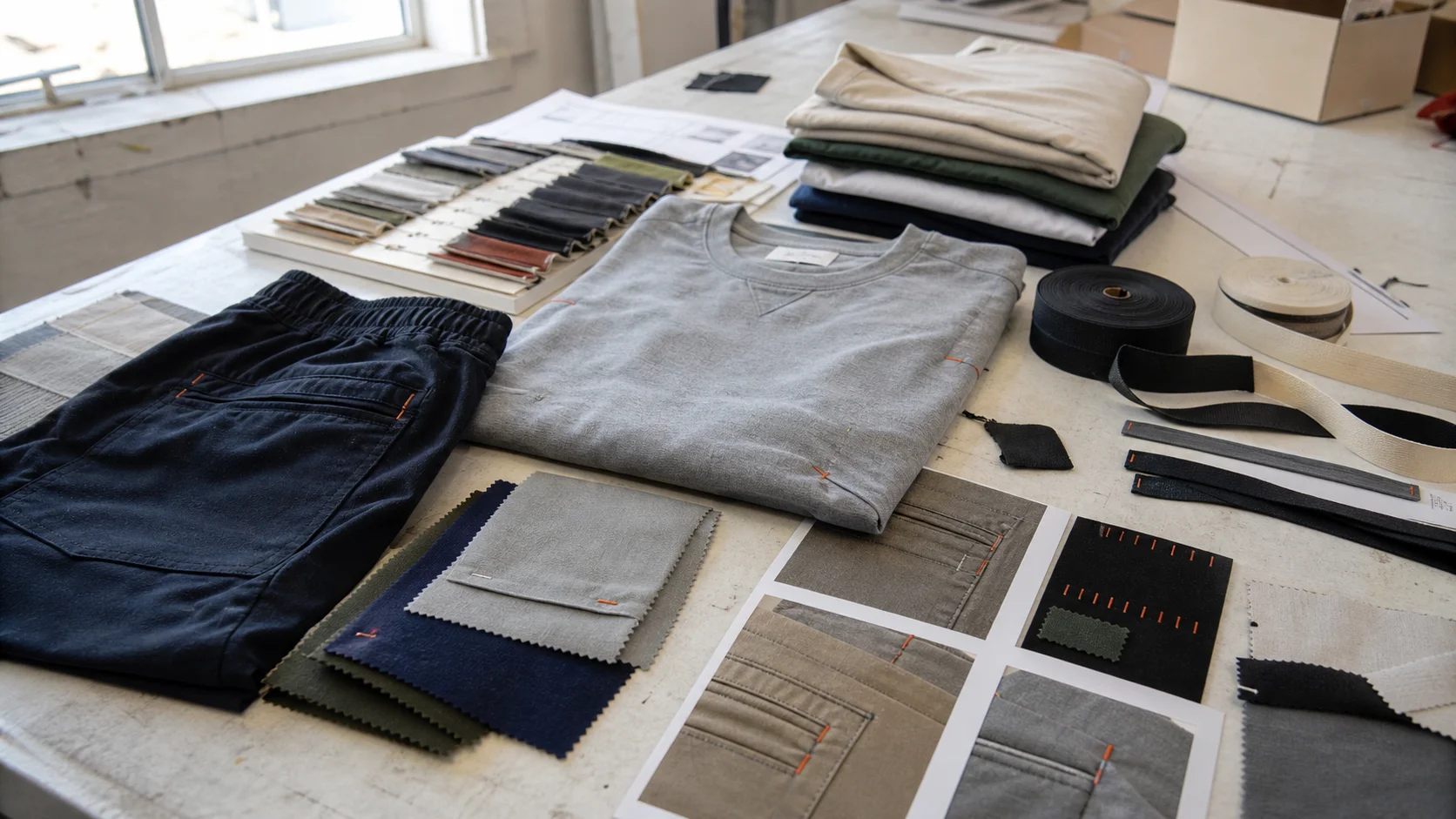
Contrast bartacks are short, dense reinforcement stitches sewn across stress points. They are often placed at pocket corners, side vents, belt loops, placket ends, zipper bases, tool compartments, apron ties, cargo flaps, sleeve tabs, and other high-pull zones. A map seam layout shows where these reinforcement points sit across the garment. For facility buyers, the question is not simply whether the bartack looks clean. The better question is whether the stitch, thread, placement, and base fabric work together under the way staff actually wear and launder the product.
In the Decoration & Printing category, contrast bartacks also carry visual weight. They can match a logo color, identify departments, support a safety-color system, or add a premium utility look. The tradeoff is clear: contrast stitching makes workmanship easier to inspect, but it also makes defects more visible. A skipped stitch, wrong thread shade, loose tail, or crooked reinforcement can stand out immediately on a bulk order.
This review is written for facilities managers, procurement teams, uniform program owners, and sourcing staff who need practical decision criteria before approving bulk production. It covers seam strength, fabric and trim specifications, sample approval, MOQ expectations, lead-time dependencies, inspection risks, and purchasing tradeoffs.
Facility uniforms are not worn like lifestyle apparel. Staff bend, carry, reach, kneel, clip tools to pockets, move between indoor and outdoor areas, and often wash garments repeatedly under commercial or semi-commercial conditions. The highest failure points are rarely the flat body panels. They are usually concentrated at stress points where fabric, seam, and hardware meet.
A bartack is designed to distribute force across a compact stitched area. In bulk workwear and facility garments, it helps prevent pocket corners from tearing, belt loops from pulling loose, zipper openings from splitting, and apron straps from separating. A contrast bartack does the same job, but uses a visibly different thread color. That makes it useful for styling and inspection, while increasing the need for shade discipline.
For facilities managers, contrast bartacks can serve several purposes:
The practical caution is that contrast stitching can expose poor production control. A tone-on-tone bartack may hide minor needle tracking issues. A bright contrast bartack on a dark garment will not. If the garment is used in customer-facing environments, visual inconsistency becomes a brand issue as well as a quality issue.
Purchasing judgment: choose contrast bartacks when inspection visibility, department coding, or brand detail matters. Choose tonal bartacks when the garment will be heavily abraded, washed harshly, or judged mainly on low visual maintenance.
A bartack map is a technical guide showing every bartack location on the garment. For a facility uniform program, this document should be treated like a production control tool, not a loose design suggestion. It reduces interpretation errors between sampling, cutting, sewing, finishing, and inspection teams.
A useful bartack map should show:
For bulk facility garments, bartack placement should follow the real stress path of the garment. Pocket openings need reinforcement at the upper corners because hands and tools pull outward. Side vents need reinforcement at the top because stride and torso movement pull the seam open. Cargo pockets need reinforcement where the flap and pocket body are loaded. Belt loops need secure stitching at top and bottom because pulling force is vertical.
The most common mistake is copying a decorative bartack layout from a sample without testing whether it reinforces the correct stress point. A bartack placed too far from a pocket corner may look acceptable on a flat garment but fail to protect the edge during use. A bartack placed too close to a fabric edge can cut into the fabric, especially on lighter cotton blends or heavily washed materials.
Garment Area Typical Bartack Purpose Buyer Risk if Missed Pocket corners Prevents pocket mouth tearing Early pocket failure, loose tools, repair claims Belt loops Secures vertical pull points Loop detachment after repeated wear Side vents Stops seam splitting at movement zones Open side seams and visible damage Zipper base Reinforces opening stress Zipper seam separation Apron ties Strengthens tie attachment Tie pull-out during laundering or use Cargo flaps Stabilizes flap and pocket edges Uneven flap wear and seam distortionA seam strength review should look at both the bartack and the surrounding construction. Dense stitching can be strong, but it can also damage weak fabric if the needle size, thread size, or stitch density is wrong. A strong bartack on an unsuitable fabric can create a perforation line, leading to tearing around the reinforcement instead of through the seam.
Facility buyers should request a sample review focused on stress points. This does not need to be overcomplicated, but it should be systematic. Pull the pocket mouth by hand. Flex the side vent. Tug belt loops vertically. Open and close zipper areas repeatedly. Inspect the back side of each bartack for thread nesting, tension imbalance, skipped stitches, or fabric puckering. The underside often tells more about sewing stability than the top face.
For higher-risk programs, especially uniforms used in maintenance, logistics, janitorial, construction support, groundskeeping, warehouse, or industrial service environments, ask whether formal seam testing is available through a third-party lab or internal quality process. Common review points may include seam slippage, seam rupture, tear resistance, and wash durability. Testing requirements should be agreed before bulk production because they affect sample timing and cost.
Several factors influence bartack seam strength:
For most facility uniform categories, bartack length often falls in a practical range of roughly 6 mm to 16 mm, depending on garment type and stress point. Pocket corners on shirts may use shorter bartacks. Cargo trousers, tool pockets, and aprons may need longer or denser reinforcement. The buyer should avoid approving a single generic bartack specification across every position unless the garment has been reviewed carefully.
Purchasing judgment: seam strength is not proven by a dense-looking bartack alone. The buyer should approve the fabric, thread, needle result, placement, and wash performance together.
Contrast bartack performance depends heavily on the base material. A 240 gsm cotton-poly twill behaves differently from a 150 gsm poplin or a coated polyester canvas. Uniform sourcing teams should specify fabric by composition, weight, weave, finish, color, shrinkage tolerance, and care method before finalizing bartack details.
Common facility garment fabrics include cotton-poly twill, polyester-cotton poplin, ripstop, canvas, oxford cloth, softshell, fleece-backed knits, and treated fabrics for stain release or water resistance. Each fabric changes the sewing result. A crisp poplin may show puckering around dense contrast stitches. A heavy canvas may require stronger thread and correct needle selection. A stretch fabric may distort if the bartack locks down an area without allowing recovery.
Thread should be specified clearly. Polyester sewing thread is widely used in uniform production because it resists abrasion and laundering better than many cotton threads. Bonded nylon may be used in some heavy-duty applications, though it is not always ideal for high-heat laundering or every fabric type. For contrast bartacks, thread shade should be approved under the lighting conditions relevant to the buyer’s use. A thread that looks bright red in a sampling room may look orange under warehouse lighting or too dark after washing.
Trim compatibility also matters. Zippers, snaps, buttons, reflective tape, hook-and-loop closures, drawcords, webbing, and labels can all change the stress profile of a garment. A reinforced pocket with hook-and-loop closure may need stronger bartacks than an open patch pocket because the user repeatedly pulls against the closure. A badge loop on a security shirt may need reinforcement if staff attach access cards, radios, or keys.
Specification Area Recommended Buyer Detail Why It Matters Fabric composition Example: cotton/poly blend, polyester, nylon blend Controls durability, shrinkage, and stitch behavior Fabric weight State gsm or oz/yd² where possible Prevents weak reinforcement on unsuitable cloth Thread type Polyester or other approved thread Affects wash, abrasion, and tensile performance Thread shade Approved color standard or lab dip Reduces contrast color disputes Needle result No visible cutting, holes, or puckering Protects fabric around dense stitches Trim stress Review closures and load-bearing points Ensures reinforcement matches real useFacilities managers sourcing decorated uniforms can review service options through Fabrikn services when aligning garment construction with decoration and production needs. The important point is to settle construction details before approving decoration placement. Reworking bartacks after logos, prints, or heat transfers are placed can create unnecessary defects and delays.
Contrast bartacks sit at the intersection of construction and decoration. They are sewn details, but they affect the finished appearance in the same way embroidery, screen printing, heat transfer, woven patches, and reflective applications do. Buyers should review them as part of the full decoration package.
Decoration conflicts usually appear in three areas: placement, heat exposure, and visual balance. Placement conflicts occur when a logo, patch, or printed panel is too close to a bartack point. The stitching may distort the print area, or the decoration process may flatten or damage the bartack. Heat exposure matters when transfer printing or heat-applied reflective materials are used near synthetic thread. Visual balance matters because a bright bartack color can compete with the logo instead of supporting it.
For printed or decorated facility uniforms, the tech pack should show both decoration artwork and bartack map on the same garment view. Separate files are easy to misread. A pocket logo may look centered until the contrast bartack is added at one corner. A sleeve print may be fine on a sample size but too close to a tab bartack on larger or smaller sizes.
Several decoration-specific checks are worth making before bulk approval:
Contrast bartacks can support branding well when used with restraint. A navy work shirt with orange bartacks and an orange logo can look intentional. A uniform with multiple decoration colors, reflective tape, contrast piping, and bright bartacks can become visually noisy. Facility buyers should decide whether the garment needs a branded utility look or a cleaner institutional appearance.
Purchasing judgment: contrast bartacks should either reinforce the brand system or improve inspection control. If they do neither, tonal reinforcement may be the better bulk choice.
Minimum order quantity depends on garment type, fabric availability, decoration method, custom thread color, size range, and factory setup. For facility buyers, MOQ should be discussed early because contrast bartacks can change thread setup, production handling, and quality checks.
Typical MOQ ranges vary widely. Stock garment decoration programs may begin at relatively low quantities, often around 50 to 100 pieces per style or logo setup, depending on supplier policy and decoration method. Cut-and-sew custom uniform programs commonly start higher, often around 300 to 500 pieces per style and color. More specialized fabrics, custom-dyed materials, private-label trims, or complex utility garments may require 800 to 1,000 pieces or more. These are practical market ranges, not guaranteed rules.
Contrast bartacks can affect MOQ in several ways. If the thread color is standard and already available, the impact may be limited. If a custom thread shade is required, the supplier may need to source thread cones specifically for the order. If multiple departments require different bartack colors on the same garment body, the order may be split into smaller production lots, raising handling cost and increasing the risk of mix-ups.
Program Type Typical MOQ Range Contrast Bartack Impact Stock garment with decoration About 50-100+ pieces Usually limited if bartacks are already part of the garment Custom light uniform shirt About 300-500+ pieces Thread setup and placement approval required Custom work trouser or cargo pant About 500-800+ pieces More stress points and more inspection time Technical outerwear or utility vest About 800-1,000+ pieces More trims, thicker seams, and stricter testing needs Multi-department color-coded program Depends on split quantities Higher risk of thread color and packing errorsFacilities buyers should avoid pushing MOQ too low if the garment has many custom reinforcement points. Small production lots can be valid, but they may carry higher unit prices, limited fabric choices, fewer sampling rounds, and more manual handling. A better approach is to standardize the garment body and vary decoration, labels, or limited thread details only where the operational benefit is clear.
For buyers who are still defining quantities, contacting a supplier early through Fabrikn contact can help clarify whether the program is better suited to decorated stock garments, semi-custom production, or full cut-and-sew development.
Sampling should not be rushed for contrast bartack programs. A small sewing detail can become a large bulk issue when repeated thousands of times across pockets, loops, vents, and trims. The approval process should separate fit, construction, decoration, and laundering review so the buyer knows exactly what is being approved.
A practical sample approval path often includes several stages:
Not every order needs every stage in full, especially if the buyer is using a proven stock garment. Custom facility uniforms with contrast bartacks should at least include a pre-production sample before bulk cutting. This sample should be signed off with the bartack map attached. Verbal approval is risky because production teams need measurable references.
During sample review, facilities managers should look beyond the desk inspection. Put tools in the pocket if the garment is meant for tools. Clip a radio or badge where staff will clip it. Sit, bend, reach, and stretch. If the garment is an apron, tie it repeatedly and check the tie attachment. If it is a cargo trouser, load the pocket lightly and walk. Real use quickly exposes weak bartack placement.
Color approval deserves special attention. Contrast thread should be reviewed against the garment fabric after washing, not only on a thread card. Dark garments can bleed or crock. Bright thread can dull. White or light contrast stitching can pick up soil quickly in maintenance and food service settings. If the uniform must stay visually sharp, the buyer should consider whether the contrast detail will age well in the intended environment.
Purchasing judgment: approve the pre-production sample only when the bartack map, thread shade, decoration layout, wash result, and stress-point performance are all acceptable. Approving one while leaving another open invites bulk disputes.
Lead time for bulk contrast bartack uniforms depends on sourcing path. Decorated stock garments can often move faster if inventory is available and the decoration method is straightforward. Custom cut-and-sew programs take longer because fabric, trims, sampling, production setup, inspection, packing, and logistics all add time.
As a cautious planning range, stock decoration projects may take a few weeks after artwork and garment availability are confirmed. Semi-custom or custom production can take several weeks to a few months, especially when fabric must be dyed, trims are custom, or size ranges are broad. Air freight, sea freight, holiday periods, port congestion, and peak uniform seasons can change the timeline. Buyers should avoid treating a quoted production lead time as the full calendar lead time unless sampling, approvals, and shipping are included.
Contrast bartacks influence lead time through thread sourcing, machine setup, operator training, and inspection. A garment with two bartack positions is simpler than a utility vest with twenty reinforcement points. A single thread color is simpler than five department-coded thread colors. A standard thread shade is simpler than a custom color match.
Key lead-time dependencies include:
Facilities managers should build a buffer for sample corrections. Bartack revisions can seem minor, but moving a reinforcement point may require a new sample if it affects pocket function, decoration placement, or seam construction. If the order supports a launch date, site opening, contract start, or seasonal staffing change, the safest approach is to lock the uniform body early and leave only decoration variables for later stages.
Contrast bartacks are easy to inspect because they are visible. They are also easy to reject because defects are visible. A good inspection plan should define acceptable and unacceptable conditions before bulk production starts.
Common inspection risks include missing bartacks, wrong placement, wrong thread color, uneven stitch density, loose thread tails, skipped stitches, thread nesting, puckering, needle damage, misaligned pairs, and contamination from thread lint or oil marks. On dark garments, light contrast thread magnifies every issue. On light garments, dark contrast thread can show loose tails and back-side tension problems.
Defect Likely Cause Buyer Concern Missing bartack Operator skip, unclear map, line control issue Stress point fails earlier than expected Wrong color thread Lot mix-up or poor setup control Department coding or brand mismatch Puckering High density, tension issue, unsuitable fabric Poor appearance and possible comfort issue Needle cutting Wrong needle size or damaged needle Fabric tears around reinforcement Loose tails Poor trimming or finishing Unclean appearance and unraveling risk Misplacement Inconsistent guides or size grading issue Reinforcement misses the stress pointInspection should include both measurement and handling. Measure bartack location on key points, especially pockets, vents, loops, and closures. Pull gently on reinforcement areas to detect loose stitching. Turn the garment inside out to review back-side thread tension. Check several sizes, not only one size. Graded patterns can shift pocket placement and stress points.
AQL inspection can be used for bulk orders, but facilities buyers should classify missing bartacks at load-bearing points as a serious defect. A decorative bartack missing from a low-stress area may be cosmetic. A missing bartack on a tool pocket corner or apron tie is functional. The purchase order should distinguish critical, major, and minor defects clearly enough that the inspection team can apply the same judgment across the shipment.
Packaging inspection also matters for multi-department programs. If bartack colors identify departments, then wrong packing can create operational problems on arrival. Carton labels, polybag labels, size breakdowns, and department codes should match the purchase order. A technically well-made garment still causes disruption if the wrong site receives the wrong color-coded uniform.
Contrast bartacks add cost through sewing time, thread management, setup, and inspection. The unit impact may be small on simple garments, but it grows with the number of reinforcement points and color changes. The buyer should ask whether each contrast bartack earns its place.
For high-wear facility roles, added reinforcement is usually worthwhile. Replacing failed trousers, repairing pockets, handling complaints, and issuing extra garments can cost more than the original sewing upgrade. For low-wear visitor jackets or occasional-use uniforms, heavy contrast reinforcement may not be necessary. The best specification is matched to wear intensity.
There are three common buying positions:
The balanced option is often the strongest choice for facilities. It avoids decorative overengineering while protecting the areas most likely to fail. A maintenance trouser may need reinforced pockets and belt loops, but it may not need contrast stitching on every flap edge. A housekeeping tunic may need side vent reinforcement and pocket corners, but subtle thread may be better if garments must look clean after repeated washing.
Buyers should also consider repairability. Contrast thread can make field repairs obvious if the exact thread shade is unavailable. Tonal thread is easier to repair discreetly. If the facility manages uniforms through an in-house laundry or repair program, ask whether matching thread can be stocked or whether the bartack color should be simplified.
Purchasing judgment: do not buy contrast bartacks only because they look technical. Buy them where they reduce failure, support identification, or improve inspection. Remove them where they add visual risk without operational value.
Before placing a bulk order for contrast bartack facility uniforms, buyers should confirm the specification in writing. A clear checklist reduces avoidable disputes and helps suppliers quote accurately.
Procurement teams comparing suppliers should also review company background and production focus. A general overview is available on the Fabrikn about us page. Supplier selection should still be based on the actual garment specification, sample quality, communication discipline, and ability to maintain consistency across the full quantity.
Purchase orders and tech packs should avoid vague language such as “strong contrast bartacks” or “reinforced seams as sample.” These phrases leave too much room for interpretation. Better language identifies location, construction, shade, and acceptance criteria.
A practical specification may include:
This type of wording gives the supplier a measurable target while giving the buyer a fair basis for inspection. It also keeps the pre-production sample central. If the sample is approved carefully, the supplier has a clear reference. If the sample is vague or incomplete, bulk inspection becomes subjective.
Contrast bartacks are a good buy when the garment has genuine stress points, the thread color serves a visual purpose, and the supplier can control consistency. They work especially well on utility trousers, work shirts, aprons, service vests, warehouse uniforms, maintenance uniforms, and other garments where reinforcement is expected and visible details fit the design language.
They are less attractive when the garment is lightweight, highly formal, heavily laundered in harsh conditions, or intended to hide wear. A white contrast bartack on a dark maintenance pant may look sharp at delivery but show soil and abrasion quickly. A bright brand-color bartack may look inconsistent if the thread and logo decoration age differently after washing.
The best facility uniform programs treat contrast bartacks as part of a full durability system. Fabric strength, seam construction, thread quality, decoration method, laundering plan, and inspection standards all need to work together. A bartack can reinforce a weak point, but it cannot compensate for poor fabric choice, bad fit, overloaded pockets, or unrealistic laundering requirements.
For facility buyers, the final decision should be practical: does the contrast bartack reduce garment failure, simplify inspection, support staff identification, or strengthen brand presentation? If the answer is yes, specify it carefully and inspect it consistently. If the answer is no, keep the reinforcement tonal or simplify the garment. Bulk uniform buying rewards clarity, not decoration for its own sake.
Get a free quote from Fabrikn — your trusted B2B clothing manufacturer with 10+ years of experience. MOQ as low as 200 pieces.
Get a Free Quote →A contrast bartack seam is a short, dense reinforcement stitch sewn in a thread color that visibly differs from the garment fabric. It is commonly used at stress points such as pocket corners, belt loops, side vents, zipper bases, and apron ties.
Placement determines whether the reinforcement protects the actual stress point. A bartack that looks neat but sits too far from a pocket corner or vent opening may not prevent tearing during daily use.
The color does not make the bartack stronger. Strength comes from thread type, stitch density, bartack size, fabric suitability, placement, and sewing tension. Contrast color mainly improves visibility, branding, and inspection control.
Stock decoration programs may start around 50 to 100 pieces, while custom cut-and-sew uniforms often begin around 300 to 500 pieces per style and color. More complex workwear, custom fabrics, or multi-color department programs may require 800 to 1,000 pieces or more.
Testing is advisable for high-wear facility uniforms. At minimum, buyers should review a pre-production sample, handle stress points, check the underside stitching, and wash the sample using the intended care method when possible.
Yes. Bartacks can conflict with logo placement, heat transfer application, embroidery backing, and reflective tape. The decoration artwork and bartack map should be reviewed on the same garment view before approval.
Common defects include missing bartacks, wrong thread color, loose tails, skipped stitches, puckering, needle cutting, misplacement, thread nesting, and inconsistent stitch density. Contrast thread makes these defects easier to see.
They are worth the cost when they reinforce real stress points, support department coding, improve inspection, or strengthen the brand look. They are less useful when added only for decoration on garments that do not need visible reinforcement.