
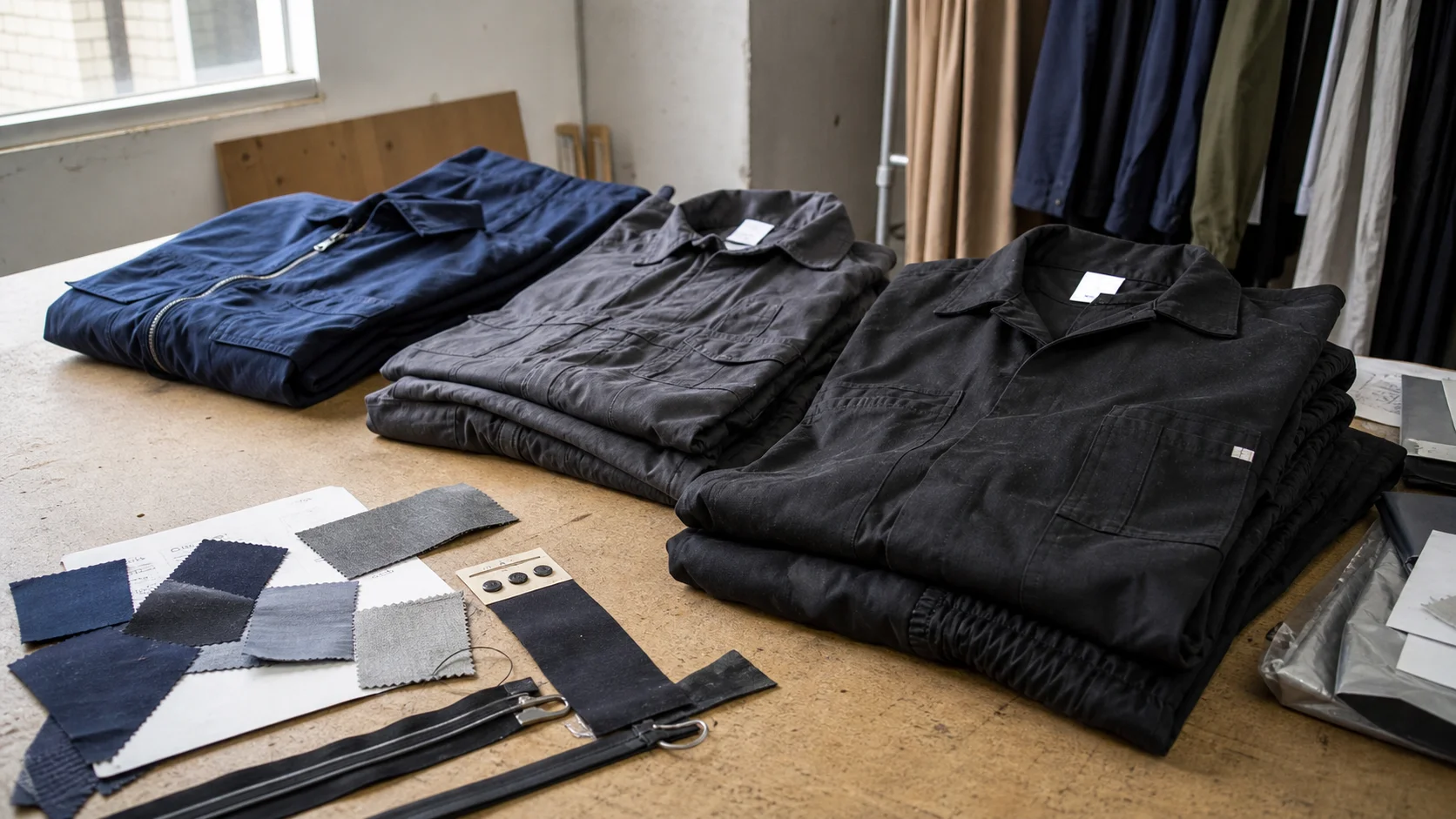
A practical scorecard for event staffing teams to compare bulk coverall suppliers on fit, durability, branding, lead times, and quality control.
Bulk Coverall Supplier Scorecard for Event Teams - Quality & Inspection manufacturing guide
Event staffing teams buy coveralls for a different operating environment than factories, construction crews, or laboratories. The garments may be worn for short assignments, but the usage is intense: fast onboarding, mixed body types, brand visibility, repeated laundering, outdoor weather exposure, crowd movement, and tight deployment windows. A weak supplier can turn a simple uniform order into a staffing problem.
A practical bulk coverall supplier scorecard helps procurement teams compare vendors on what actually affects event execution. Price matters, but it should not lead the evaluation. The right supplier must deliver consistent sizing, acceptable seam strength, shade consistency, correct trims, durable branding, and reliable packing. They also need to communicate clearly when fabric, trim, or production timelines are at risk.
This guide is written for event staffing teams, production agencies, venue operators, security coordinators, field marketing teams, and uniform buyers sourcing coveralls in bulk. It explains what to score, how to weight the criteria, where defects usually appear, and how to structure sample approval before committing to production.
Coveralls look simple until an event team has to dress 300 people in two hours. One missed size curve, one delayed logo panel, or one batch of stiff fabric can create visible problems on site. Staff may be walking, bending, lifting, scanning tickets, guiding guests, handling equipment, or standing outdoors for long periods. The uniform must support the job, not distract from it.
A scorecard creates structure. It prevents the buying decision from being driven only by the lowest quote or the fastest email reply. For bulk coveralls, the best supplier is usually the one that balances product consistency, production discipline, and practical communication. That supplier may not be the cheapest, but they reduce operational risk.
Event staffing teams should treat coveralls as both apparel and logistics equipment. The garment must fit real people, survive the shift, match the brand standard, and arrive in a packing format that makes distribution easy. A supplier scorecard keeps those requirements visible before the purchase order is issued.
Purchasing judgment: choose the supplier that reduces event-day uncertainty. A slightly higher unit cost can be justified if it lowers the risk of size shortages, late delivery, poor branding, or high defect rates.
Bulk coverall programs often fail because the buyer evaluates the garment as a generic workwear item. Event use is different. Staff turnover may be high, wearer measurements may be unavailable, and the garments may need to create a coordinated visual appearance across teams. The buying risk sits in the details.
Coveralls are less forgiving than T-shirts or vests because they cover torso, arms, hips, and legs. A wearer who can fit the chest may still find the rise too short or the inseam too long. If the size curve is not planned carefully, teams end up cutting cuffs, rolling sleeves, or swapping garments at check-in.
Event staff bend, crouch, reach, and carry. Crotch seams, underarms, pocket corners, and zipper bases are common failure points. A garment that looks acceptable on a hanger may split during the first shift if stitch density, seam allowance, or reinforcement is poor.
Logo placement mistakes are common when coveralls include chest embroidery, back printing, sleeve patches, or reflective tape. A small shift in placement may not affect function, but it can make the team look inconsistent in photos, broadcast coverage, or VIP areas.
A heavy poly-cotton twill may work for cool weather and durability, but it can be uncomfortable during summer outdoor events. A lightweight fabric improves comfort but may become transparent, wrinkle heavily, or tear more easily. The supplier should explain these tradeoffs instead of pushing one fabric for every use case.
Bulk cartons without size segregation create unnecessary work at the venue. Event teams often need garments packed by size, role, shift, zone, or staff group. Suppliers that understand event deployment can reduce check-in time through better labeling and carton planning.
A scorecard should be simple enough to use, but detailed enough to reveal differences between suppliers. The following model uses 100 points. Buyers can adjust the weightings based on order complexity, event importance, and delivery deadline.
Score Area Weight What to Check Buying Judgment Product Specification Control 20% Fabric weight, fiber content, shrinkage, color, seam type, trim quality, measurement tolerance High priority for repeat orders and branded programs Sample Quality and Fit 15% Size set accuracy, movement comfort, stitching, zipper function, pocket placement Reject suppliers that resist size-set sampling on large orders Branding Capability 10% Embroidery, screen print, heat transfer, woven patches, reflective tape alignment Important when garments are customer-facing or photographed MOQ and Scaling Flexibility 10% Minimum order quantity, size split flexibility, reorder terms, small top-up capability Useful for event teams with uncertain staffing numbers Lead-Time Reliability 15% Fabric availability, trim sourcing, sample timing, production slot, shipping method Critical when the event date cannot move Quality Inspection Process 15% Inline checks, final AQL inspection, measurement reports, defect classification Do not rely only on pre-production samples Packing and Logistics 10% Carton labels, polybags, size ratios, delivery destination, role-based packing Can save substantial event-day labor Communication and Documentation 5% Tech pack review, order confirmation, progress updates, issue escalation Low communication quality often predicts production troubleA supplier scoring below 70 should be treated as a risk unless the order is very basic and the deadline is forgiving. A supplier scoring 70 to 84 may be workable with tighter inspection controls. A supplier scoring 85 or higher is usually suitable for larger or more visible programs, provided pricing and timelines are also acceptable.
Teams that need structured manufacturing support can review broader production capabilities through Fabrikn services. For event uniforms, the strongest buying process usually combines specification control, sampling discipline, and inspection planning before production begins.
The supplier scorecard should not use vague descriptions such as “good quality fabric” or “durable zipper.” Those phrases create disputes later. A coverall specification should define measurable details wherever possible.
For reusable event coveralls, many buyers land in the 180-220 gsm poly-cotton twill range. It gives acceptable durability without becoming too heavy. For hot outdoor events, a lighter fabric may be justified, but the buyer should check opacity, seam strength, and shrinkage before approving production.
Trims affect both appearance and function. A coverall order should define zipper type, zipper length, zipper pull color, snap quality, button material, elastic width, thread color, label content, pocket shape, reflective tape grade if required, and any hook-and-loop closures. Generic trim approval creates room for substitution.
Coveralls need enough room for movement without looking oversized. Score the supplier on how clearly they can build and control measurements. Key points include chest, waist, hip, shoulder, sleeve length, inseam, torso length, thigh, cuff opening, and back rise. Torso length deserves special attention because it determines whether the garment pulls when the wearer reaches or bends.
Seam construction should match the expected use. Lockstitch seams may be acceptable for lighter-duty promotional wear, while overlocked and safety-stitched seams provide better durability. Bar tacks at pocket corners, zipper base, and stress points are a low-cost improvement for bulk event orders.
Minimum order quantity depends on fabric availability, customization level, size range, branding method, and whether the supplier is using stock patterns or custom development. Event staffing teams should ask for MOQ by style, color, size, and decoration. A low headline MOQ may hide restrictions that make the order hard to execute.
These ranges are typical, not guaranteed. Some suppliers can handle lower quantities if they have fabric in stock or are running similar production. Others will require higher quantities to justify cutting, pattern setup, dyeing, or trim procurement. The scorecard should reward suppliers who explain MOQ logic clearly instead of offering unrealistic commitments.
Unit price is shaped by fabric cost, garment complexity, labor time, decoration method, size range, wastage, packing requirements, inspection level, and freight. Larger sizes may increase consumption. Reflective tape, multiple pockets, reinforced seams, and branded trims also add cost.
For event teams, the cheapest coverall often becomes expensive if it creates distribution confusion or requires emergency replacements. A higher-priced supplier may be the better choice if they offer better size planning, clearer packing, or reliable inspection reports.
Purchasing judgment: compare suppliers using total event readiness, not unit price alone. Include sample cost, decoration setup, freight, inspection, rework risk, and reserve stock.
Sampling is the buyer’s best chance to catch issues before bulk production. A supplier that rushes from quote to production without disciplined sample approval is a risk, especially for custom coveralls or visible event roles.
For urgent stock-based programs, buyers may compress the process. That can work if the garment is already proven and only simple decoration is required. For custom event uniforms, skipping size set or pre-production approval is rarely worth the risk.
Fit approval should include movement checks, not only flat measurements. Ask wearers to reach overhead, crouch, sit, walk quickly, bend, and zip the garment fully. Check whether the back pulls, crotch strains, sleeves ride up excessively, or the zipper creates discomfort. If the coverall will be worn over base layers, test it that way.
Size grading should reflect the actual staffing population. A standard S to 2XL run may not be enough. Some teams need XS, 3XL, 4XL, short, or tall options. Not every supplier can support extended sizes at low MOQ, so this must be scored early.
Lead time is not one number. It is a chain of dependencies: quote confirmation, specification lock, sample production, sample shipping, approval, fabric purchase, trim sourcing, cutting, sewing, decoration, inspection, packing, freight, customs where applicable, and final delivery. A supplier that quotes “three weeks” without explaining the assumptions should be questioned.
Lead time can extend if the buyer changes artwork, approves samples late, adjusts size ratios after cutting, requests uncommon trims, or misses payment milestones. Suppliers should be scored on whether they identify these risks early.
When the event date is fixed, build a reverse calendar. Start with the staff distribution date, then add time for receiving, checking, sorting, contingency, freight, final inspection, packing, production, material preparation, and sampling. This prevents the common mistake of planning only to the factory completion date.
Quality inspection should be part of the buying plan, not an afterthought. Coverall defects can be functional, visual, or logistical. The buyer should define what is acceptable before production begins.
Many apparel buyers use AQL sampling to inspect bulk goods. A common approach is to classify defects as critical, major, or minor. Critical defects may include safety hazards, sharp objects, incorrect branding for a client-facing event, or severe construction failures. Major defects include unusable zippers, open seams, wrong measurements, or visible stains. Minor defects include small loose threads or slight cosmetic irregularities within agreed limits.
The exact AQL level should match the event risk. A low-visibility internal crew order may tolerate minor cosmetic issues. A public-facing event with media coverage should use stricter visual standards. The supplier should know whether inspection will include measurements, workmanship, shade, logo, packing, and carton count.
Measurement tolerance should be defined by point of measure. A common tolerance may be around 1 cm for smaller dimensions and 1.5-2 cm for larger dimensions, but this depends on fabric, garment type, and supplier capability. Coveralls need particular control at torso length, chest, waist, sleeve, and inseam. If tolerance is too loose, the size curve becomes unreliable.
If the coveralls will be reused, test shrinkage, colorfastness, seam durability, and logo performance after laundering. Heat transfers may crack or lift if the wrong application conditions are used. Embroidery may pucker if backing, stitch density, or fabric weight is not balanced. Screen printing can lose sharpness if the fabric surface is unsuitable.
Teams planning recurring programs can discuss inspection and production planning through Fabrikn’s contact page. Early review is especially useful when the order includes branding, extended sizing, or a tight event calendar.
Packing is often ignored during supplier selection, yet it directly affects the event team. A well-made coverall still creates problems if the warehouse or check-in team cannot identify sizes quickly.
Event staffing teams should require a packing list before shipment. The list should match the purchase order and carton labels. For multi-site events, each destination should have its own packing breakdown. If the supplier cannot provide accurate carton-level information, the buyer may need to add receiving labor and sorting time.
A usable scorecard should be completed at three points: before supplier shortlist, after sample review, and before bulk approval. The first version ranks suppliers based on documents, quotes, and communication. The second version adds evidence from samples. The final version confirms whether the supplier is ready for production.
Start with the job environment. Are staff working indoors or outdoors? Will the coveralls be worn for one day or reused? Is the garment primarily protective, decorative, or brand-facing? Will staff wear radios, scanners, or tool belts? Is the event photographed or broadcast? These answers determine fabric, fit, branding, and inspection requirements.
The technical brief should include style reference, fabric type, color standard, size range, estimated quantities, decoration method, pocket requirements, closure type, labels, packing instructions, delivery deadline, and inspection expectations. Suppliers cannot quote accurately from a photo alone.
Ask each supplier to quote against the same specification. If one supplier quotes a 160 gsm fabric and another quotes 220 gsm, the prices are not comparable. The same applies to embroidery versus print, stock sizing versus custom sizing, and bulk packing versus individual polybagging.
Do not approve samples based only on appearance. Measure them. Check movement. Test zipper function. Review seam strength. Confirm branding placement. Compare fabric to the approved standard. Record comments in writing so the supplier knows exactly what must change.
Once the pre-production sample is approved, it becomes the reference for bulk production. Keep one approved sample with the buyer and one with the supplier if possible. Any change to fabric, trims, measurements, or branding after this stage should trigger written approval.
The right questions reveal how much control the supplier has over the order. Short answers are not always a problem, but vague answers are. Event teams should look for suppliers that can explain constraints clearly.
Answers to these questions should be attached to the scorecard. That way, procurement, operations, and event managers can make decisions from the same information.
Branding method affects cost, lead time, appearance, and durability. The supplier should recommend a method based on fabric and event use, not only on logo artwork.
Branding Method Best Use Advantages Risks Embroidery Chest logos, name marks, premium staff uniforms Durable and professional Can pucker lightweight fabric and costs more for large logos Screen print Large back logos and simple graphics Good for volume and bold branding Requires color control and print curing checks Heat transfer Short runs, multi-color logos, names or numbers Flexible for variable designs May crack, peel, or feel heavy if poorly applied Woven patch Role identification, removable-style branding, vintage look Consistent and durable Extra sewing step and placement control required Reflective tape Night events, parking teams, safety visibility Improves visibility and role recognition Alignment, certification, and wash durability must be checkedIf the event has strict brand guidelines, approve actual decoration on the chosen fabric before production. Pantone references and digital artwork are not enough because fabric color, surface texture, and print method affect the final look.
Size planning is one of the most important parts of bulk coverall buying. Event teams often include temporary staff, contractors, volunteers, and supervisors. Exact measurements may not be available. The buyer must create a size curve with enough flexibility to avoid shortages.
A balanced size ratio depends on region, staff demographics, garment fit, and whether the coveralls are worn over clothing. A supplier may offer a standard ratio, but the event team should adjust it based on prior uniform issue data if available. If no data exists, order buffer stock in the most commonly requested sizes and include a small number of extended sizes.
For coveralls, it is usually safer to allow slightly more room than to run too tight. Oversized garments can look untidy, but undersized garments restrict movement and may be unusable. The tradeoff depends on the role. Customer-facing staff may need a cleaner silhouette. Setup or operations staff need more movement ease.
Some supplier behaviors should reduce the score immediately. Event teams often work under time pressure, but rushing into production with a weak supplier is rarely a good decision.
One red flag does not always mean the supplier must be rejected. It does mean the buyer should add controls or reconsider the order size. For a mission-critical event, several red flags should be enough to remove the supplier from the shortlist.
The best bulk coverall supplier for an event staffing team is not simply the one with the best sample or the lowest quote. It is the supplier that can repeat the approved sample across all sizes, deliver on the required schedule, pack the order correctly, and respond honestly when a constraint appears.
Use the scorecard as a decision tool, not a paperwork exercise. A supplier with strong production control but slightly higher MOQ may be better for a national event program. A supplier with stock garments and fast decoration may be better for a short-notice local activation. A fully custom supplier may be appropriate when brand color, fit, and repeatability matter more than speed.
Buyers should also consider whether they need a one-time order or a repeatable uniform platform. For repeat programs, invest more effort in pattern approval, fabric testing, and size curve analysis. The work pays back through smoother reorders and fewer event-day issues.
Teams evaluating long-term apparel partners can learn more about the company background through Fabrikn’s about us page. For bulk event uniforms, supplier fit is as important as garment fit.
Final purchasing judgment: approve the supplier that gives the clearest evidence of control. Good samples matter, but repeatable production, inspection readiness, and packing discipline matter more for event staffing teams.
The following template can be adapted for procurement review. Score each line from 1 to 5, then multiply by the weighting. A score of 1 means unacceptable or unclear. A score of 3 means acceptable with controls. A score of 5 means strong evidence and low risk.
Criteria Weight Supplier Score Evidence Required Fabric specification clarity 10% 1-5 GSM, fiber content, shade standard, shrinkage notes Construction and seam quality 10% 1-5 Sample review, seam type, stress-point reinforcement Fit and size range 15% 1-5 Measurement chart, size set, movement test Branding accuracy 10% 1-5 Artwork proof, logo sample, placement guide MOQ flexibility 10% 1-5 MOQ by color, style, size, decoration Lead-time credibility 15% 1-5 Production calendar and material status Inspection process 15% 1-5 AQL plan, measurement tolerances, defect categories Packing execution 10% 1-5 Carton plan, labels, size segregation, destination split Communication quality 5% 1-5 Clear written responses and issue escalation processKeep the scorecard with the purchase order, approved samples, artwork proof, packing plan, and inspection report. This creates a record for future reorders and helps new team members understand why a supplier was selected.
Get a free quote from Fabrikn — your trusted B2B clothing manufacturer with 10+ years of experience. MOQ as low as 200 pieces.
Get a Free Quote →A bulk coverall supplier scorecard is a structured evaluation tool used to compare suppliers on product quality, fit control, MOQ, lead time, branding accuracy, inspection process, packing, and communication. It helps event staffing teams make decisions based on operational risk, not only price.
Stock coveralls with simple branding may start around 50-200 units. Custom coveralls often fall around 200-1,000 units, depending on fabric, color, sizing, and decoration. Custom-dyed or highly branded programs can require 800-2,000 units or more. Actual MOQ depends on supplier capability and material availability.
Stock garment orders with logo decoration may take 1-3 weeks if inventory and decoration capacity are available. Custom programs often take 4-8 weeks. More complex programs with custom dyeing, size sets, multiple trims, and detailed packing can take 8-16 weeks. Buyer approval speed has a direct impact on the schedule.
The most important checks are sizing, torso length, seam strength, zipper function, logo placement, shade consistency, stains, label accuracy, and packing correctness. Event teams should also test movement comfort because coveralls can restrict reaching, bending, and walking if the pattern is wrong.
Stock coveralls are better for short deadlines, smaller teams, and basic branding. Custom coveralls are better when fit, brand color, pocket layout, trim selection, or repeatability matter. The tradeoff is speed and MOQ. Stock is faster but less controlled. Custom is more controlled but requires more planning.
Embroidery works well for durable chest logos, while screen printing is useful for large back graphics. Heat transfer can support short runs and multi-color designs but must be tested for adhesion and wash performance. The best method depends on fabric, logo size, budget, and whether the garment will be reused.
Coveralls should be packed in a way that supports distribution. Common options include individual polybags with visible size labels, cartons sorted by size, role-based packing, destination-based packing, and separated reserve stock. Carton labels should match the packing list and purchase order.
Size-set sampling checks whether the approved fit works across the full size range. Coveralls have more fit risk than many uniform items because torso length, rise, chest, hip, sleeve, and inseam all affect wearability. A medium sample alone does not prove that 2XL, XS, or tall sizes will fit correctly.