
An SEO outline for retail chain buyers planning bulk cut and sew uniform production, covering garment specs, fit consistency, decoration choices, QC...
Bulk Cut and Sew Uniforms for Retail Chains - Fabrikn production reference
Retail chains buying uniforms at scale need more than a garment supplier. They need a production setup that can repeat the same fit, color, trim, and decoration standard across many stores, often under a tight replenishment schedule. That is where bulk cut and sew production matters. It gives buyers a controlled way to build uniforms from approved fabric, trims, patterns, and decoration methods, instead of relying on off-the-shelf stock that may drift from one shipment to the next.
For chain operations, the business case is straightforward. A uniform program has to look consistent on day one and six months later. It has to survive repeated wash and wear. It has to support brand standards, labor requirements, and store-level practicality. That creates a sourcing job with real tradeoffs: lower unit cost usually requires larger volume and tighter specification control, while better customization adds sampling time, coordination, and inspection work. Buyers who understand those tradeoffs usually get fewer surprises during rollout.
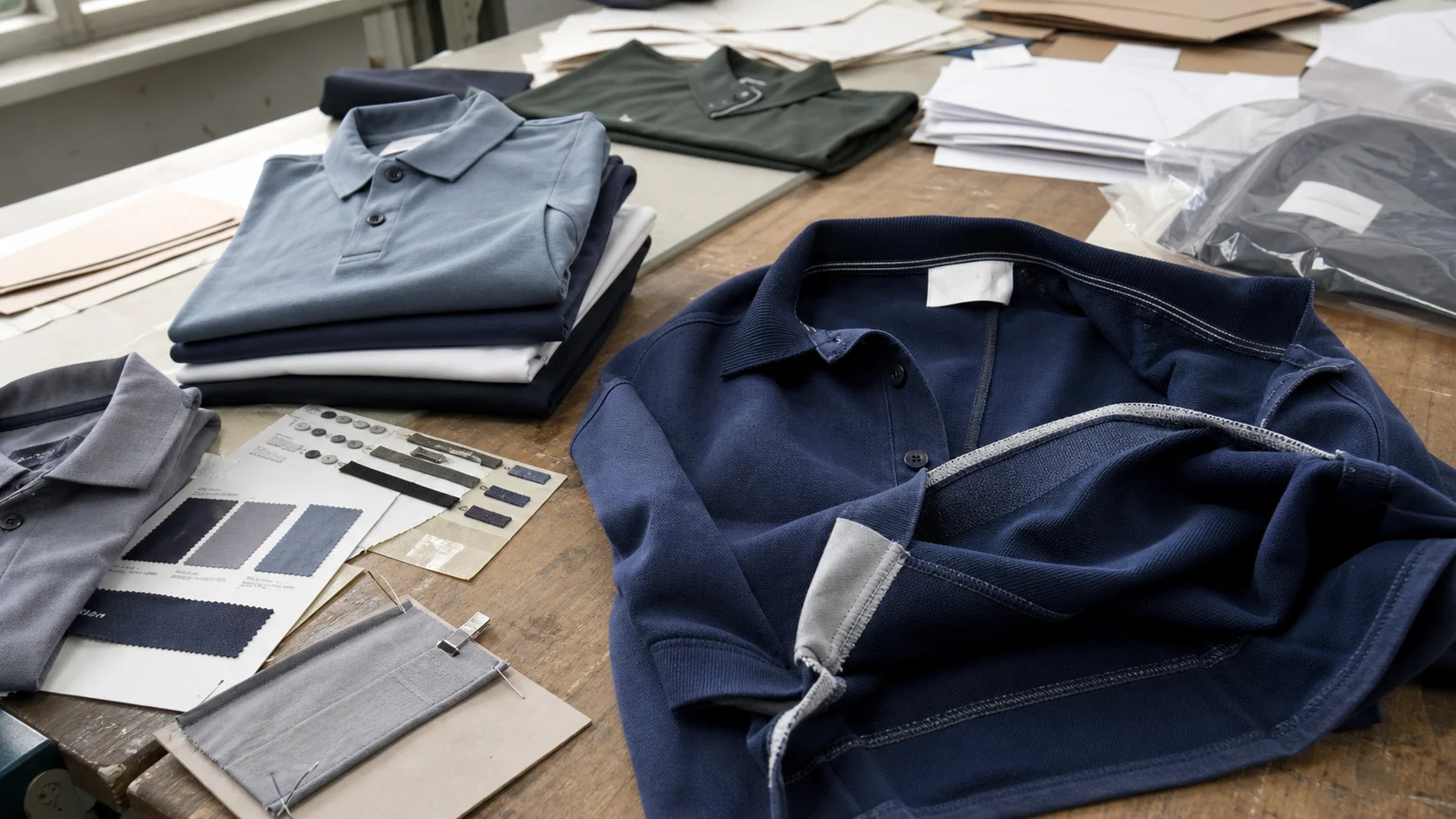
Bulk cut and sew production starts with fabric and trims, not finished blanks. The supplier cuts panels from approved rolls, sews them to a buyer-approved pattern, and applies decoration as specified. For retail chain uniforms, that usually means polos, tees, shirts, aprons, vests, outerwear, trousers, and task-specific pieces that need a controlled fit across multiple locations.
The strongest advantage is consistency. A buyer can lock down the exact fabric weight, yarn blend, collar construction, stitch density, button type, label placement, and logo application method. That level of control matters when stores are opening in waves or replacing worn uniforms on a recurring schedule.
Cut and sew is not the lightest sourcing path. It usually demands stronger preparation up front, including tech packs, size specs, artwork approvals, and pre-production signoff. The payback is that the finished goods are easier to standardize than mixed-stock programs assembled from whatever happens to be available in the market.
Retail chains have a specific problem: uniforms are operational assets, but they still carry brand value. A cashier shirt, floor-staff polo, or supervisor jacket must look aligned with the store image, yet remain practical enough for a full shift. Cut and sew production is a good fit because it balances branding, repeatability, and functional design.
There is a cost side to this as well. Custom production often carries higher sampling effort and a stricter minimum order quantity than blank decoration. That is acceptable when the chain has stable demand and a clear uniform standard. It is a poorer fit for highly volatile programs, where the style may change before the first reorder lands.
Retail buyers should treat the tech pack as the center of the program. Vague instructions tend to create avoidable variance. A supplier can only hold a line when the spec is specific enough to be measured.
Fabric choice affects comfort, appearance, print performance, and wash life. Common uniform options include cotton, polyester, poly-cotton blends, pique knits, jersey knits, twill, and brushed woven fabrics. For retail chain use, buyers often compare 180-220 GSM knits for polos and tees, or midweight woven cloth for shirts and aprons. Heavier fabrics usually improve opacity and durability, while lighter constructions help in warm environments and long shifts.
Key fabric details should include fiber content, GSM or oz/yd2, construction type, finish, shrinkage tolerance, color standard, and pilling or colorfastness targets. If the uniform will be washed frequently, ask for a tested shrinkage range and make sure the size chart reflects post-wash reality, not just cut size.
Trims can look minor on paper and cause real problems in production. Buttons, zippers, labels, drawcords, snaps, thread type, and heat-transfer components all need approval. A chain that wants a premium look may choose branded buttons or woven labels. A program that prioritizes speed and cost may use standard trims with a clean internal label system.
Unclear trim rules are a common source of rework. Buyers should confirm thread color, bartack placement, zipper gauge, snap strength, and any metal-free requirements before bulk cutting begins. Trims should also be checked for safety compliance if the garments are worn around food service, logistics, or customer-facing work where snagging and abrasion are realistic risks.
Pattern consistency matters more in bulk than it does in a one-off sample. A uniform that fits too loosely can look sloppy. One that fits too tightly can reduce mobility and shorten wear life. Buyers should ask for graded specs by size, including key points such as chest, body length, sleeve length, shoulder width, inseam, and rise where relevant.
The usual mistake is approving a pre-production sample without testing it on real staff shapes. A single fit model rarely reflects the workforce. The better practice is to check at least one size up and one size down around the core range before approving bulk.
MOQ depends on garment complexity, fabric sourcing, decoration method, and factory capacity. For many cut and sew uniform programs, a practical MOQ can range from 300 to 1,000 pieces per color or style, with some suppliers pushing higher on more complex constructions. Smaller runs are possible, but they often carry a higher unit cost or limited color flexibility.
Sampling usually follows a staged approval path. Buyers should expect a development sample, a fit sample, a pre-production sample, and then bulk production. For decorated uniforms, a print strike-off or embroidery sample may also be required. Skipping steps to save time often pushes the cost into correction work later.
Lead time depends on fabric availability, pattern complexity, decoration method, and how fast approvals move. A straightforward program with approved fabric might be ready in 30 to 60 days after signoff. A more complex rollout with custom-dyed fabric, multiple size sets, and print approvals can extend longer. Any back-and-forth on artwork, lab dips, trim sourcing, or fit changes adds time quickly.
For retail chain buyers, the biggest lead-time risk is not sewing capacity alone. It is slow approval discipline. Delays in artwork signoff, fabric matching, or sample comments often matter more than the factory’s calendar.
Because this article sits in Decoration & Printing, it is worth being specific about logo and brand application. The right decoration method depends on the fabric, use case, wash cycle, and brand presentation. There is no single best choice.
Embroidery is common for polos, woven shirts, aprons, and jackets. It has a durable, professional look, but dense stitches can stiffen lightweight fabrics and may distort very fine details. Screen printing works well on tees and some knits when the design is simple and volume is high. Heat transfer can support sharper detail and smaller placements, though buyers should validate wash durability before rolling it out across a chain.
Decoration placement should be locked before bulk cutting. A chest logo that sits 1 cm too low may pass a casual look test and still fail a chain standard. Buyers should approve artwork size, exact placement from seam points, thread colors or print references, and the approved garment size range. Logo scaling across sizes also needs attention. A mark that looks balanced on a medium may appear too small on an XL or too large on a youth size.
Decoration choice also affects procurement economics. Embroidery generally carries setup costs and longer machine time. Screen printing becomes more cost effective at larger quantities, but color separation and cure control need to be managed. Heat transfers can reduce setup complexity for variable programs, though they are more sensitive to application conditions and wash performance. The right answer depends on the chain’s volume, brand rules, and the expected replacement cycle.
Uniform programs fail in predictable ways. Fabric shade variation, size inconsistency, poor logo placement, and weak seams are the usual offenders. None of these are exotic problems. They are the result of weak specification control or inadequate inspection.
Color consistency is especially important in retail. If one shipment of navy polos reads slightly warmer than the last, the chain may still accept the order and then live with visible variation across stores. The best defense is a locked color standard, physical lab dips, and a shade tolerance agreed in writing.
Size drift is another common issue. If the factory does not control cutting markers tightly, the same nominal size can fit differently by batch. Buyers should request measurement tolerance tables and inspect at the pre-production stage, not after bulk is packed.
Inspection should pay attention to seam strength, stitch balance, puckering, loose threads, shrinkage, decoration placement, and carton labeling. Retail chain buyers should also check packaging by store allocation if the uniform program is distributed location by location. A good garment can still create problems if the packing list is wrong or size ratios do not match store demand.
Retail chains usually get better results when they treat uniform sourcing as a managed program rather than a one-time order. The workflow should be clear, documented, and repeatable.
Start with use case. Is this for front-of-house staff, stockroom teams, supervisors, or mixed roles? The answer drives fabric weight, fit, pocketing, decoration, and replacement frequency. A uniform for a customer-facing team should carry a cleaner finish than one designed for heavy back-of-house work.
Prepare measurements, artwork files, fabric references, trim list, packing requirements, and labeling instructions. If the chain needs region-specific variants, document them clearly. Confusion here leads to expensive rework later.
Use the sample steps to remove uncertainty. Comment on fit, construction, and decoration separately. It is easier to approve one variable at a time than to reinterpret a bundle of changes at the bulk stage.
Ask how the factory will control cutting, sewing, and inspection. Buyers do not need romantic stories. They need practical answers on line capacity, in-process checks, measurement control, and final packing checks.
Retail chains should plan for repeat orders and size-run adjustments. A uniform program that launches well can still fail on replenishment if the buyer did not secure the fabric base or pattern archive. Keep approval records, shade references, and size charts available for reorder cycles.
The main tradeoff in bulk cut and sew uniforms is control versus flexibility. Custom production gives the buyer control over fit, decoration, and quality standards, but it narrows the room for last-minute changes. That is acceptable when the brand wants a consistent look across many stores. It is less attractive when the chain is still testing its uniform direction.
Cost should not be the only filter. A cheaper garment with weak shrink control, fuzzy decoration, or poor wash durability can cost more in replacements and staff dissatisfaction. A slightly higher unit price is often justified if the garment lasts longer and reduces replenishment friction.
Buyers should also decide how much customization is truly necessary. Full custom cut and sew is the right answer when the chain needs a distinctive product or specific fit and function. A lighter customization route may be enough when only the logo and a few details differ from stock styles. The better decision is usually the one that matches the chain’s actual operating needs, not the one that sounds most tailored.
For retailers comparing cut and sew uniform options, it helps to work with a supplier that can handle both production and decoration planning without turning every detail into a separate project. That does not remove the buyer’s responsibility for specs and approvals, but it can reduce friction during sampling and bulk release.
Fabrikn outlines its broader manufacturing capability on the services page, which is the right place to start when assessing whether a uniform program fits the supplier’s process. Buyers who need a direct discussion can use the contact page to outline garment type, quantity, decoration method, and target delivery window. Background on the company is available on the about page for teams that want a quicker read on the business before opening a sourcing conversation.
Uniform buyers should enter that discussion with a clear brief. Include garment category, target MOQ, size range, fabric preference, decoration method, store count, and any compliance or packing requirements. A disciplined brief shortens the back-and-forth and improves quote accuracy.
Get a free quote from Fabrikn — your trusted B2B clothing manufacturer with 10+ years of experience. MOQ as low as 200 pieces.
Get a Free Quote →Many programs start around 300 to 1,000 pieces per style or color, depending on fabric, pattern complexity, and decoration. Smaller runs may be possible, but pricing usually rises and color flexibility can narrow.
Simple programs can run around 30 to 60 days after final approval if fabric is ready. Custom dyeing, complex patterns, or slow sample approvals can extend the schedule. Lead time is usually driven by approvals and material readiness as much as by sewing capacity.
It depends on the garment and use case. Embroidery is durable and common for polos and woven shirts. Screen printing is efficient for larger runs of tees and simple graphics. Heat transfer can work for detailed logos, but wash performance should be checked carefully.
Buyers should confirm fabric spec, trim list, size chart, decoration placement, artwork approval, shrinkage tolerance, packing instructions, and measurement tolerances. The pre-production sample should match the final bulk intent in every one of those areas.
Shade variation, size drift, weak seams, inconsistent decoration placement, and packing errors are the main risks. Final inspection should cover measurements, appearance, wash behavior, and carton labeling, not just the garment itself.
Cut and sew is better when the chain needs a specific fit, look, or repeatable uniform standard across many stores. Blanks can be faster for small or temporary programs. The better choice depends on volume, brand sensitivity, and how much control the buyer needs.