
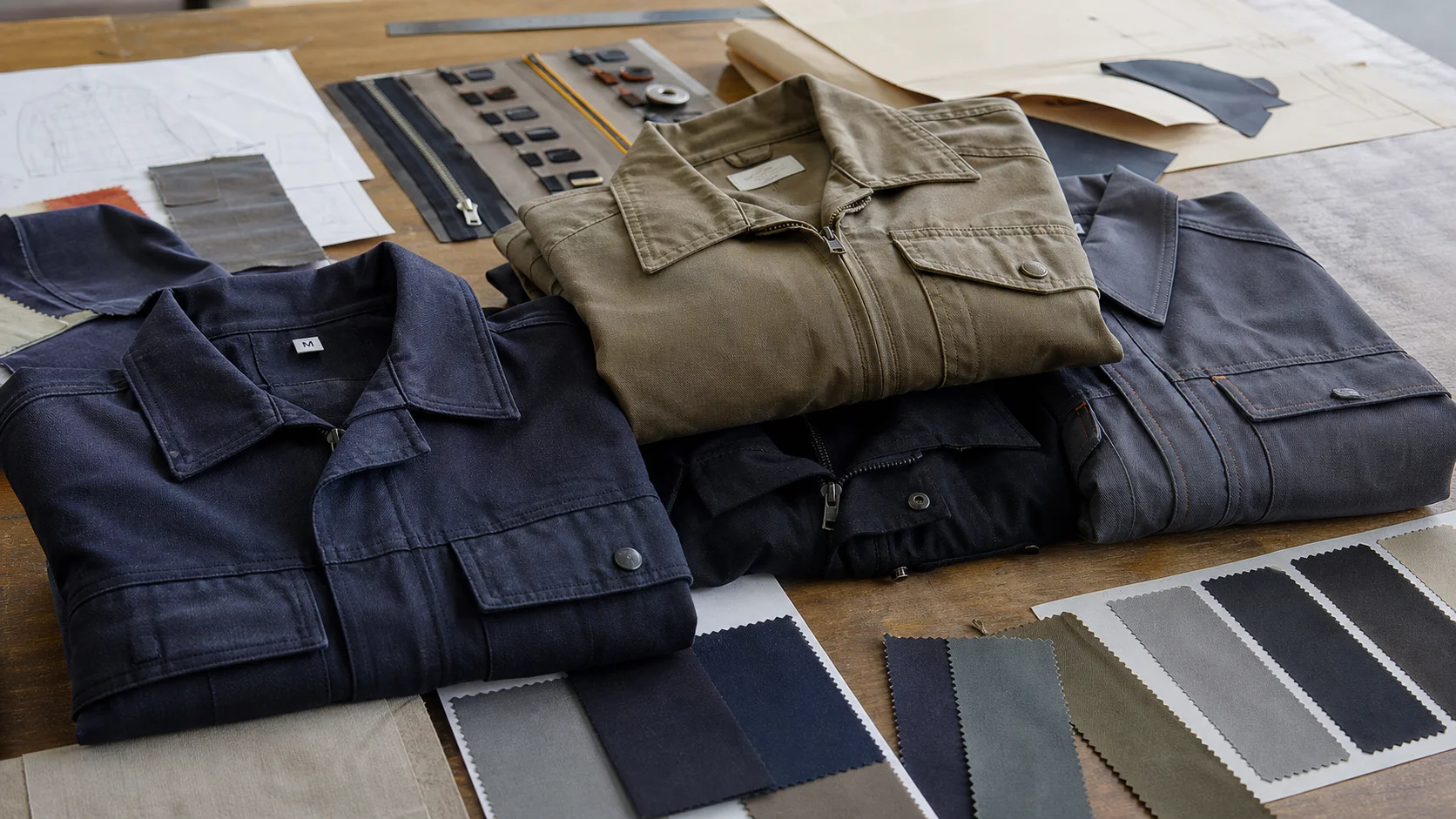
A product-specific breakdown of sourcing trims for bulk field jackets in resort uniform programs, covering hardware, closures, labels, reinforcement, and...
Category: Outerwear & Jackets
Bulk Field Jacket Trim Sourcing for Resort Buyers - Fabrikn production reference
Bulk field jacket trim sourcing is not a small back-office detail for resort uniform buyers. It directly affects garment appearance, staff comfort, replacement consistency, laundering performance, and total landed cost. A field jacket may look simple from a distance, but the trims determine whether it feels premium, functions reliably, and holds up through daily resort operations.
For resort uniforms, trims carry more risk than many buyers expect. A zipper that corrodes near salt air, snaps that loosen after repeated laundering, or drawcords that fray at the ends can make an otherwise acceptable jacket look poorly specified. If the jacket is guest-facing, the problem becomes more visible. Front desk teams, concierge staff, outdoor service teams, golf cart attendants, marina staff, and security teams all need a jacket that presents well while tolerating active use.
The sourcing challenge is that field jacket trims are rarely purchased as one item. Buyers are coordinating zippers, snaps, buttons, drawcords, stoppers, eyelets, labels, hook-and-loop closures, lining materials, pocketing, elastic, binding, thread, badges, embroidery backing, and sometimes removable hood systems. Each component has its own MOQ, approval process, color matching tolerance, and production lead time.
A practical sourcing review should not ask only, “Can the supplier make the jacket?” The better question is, “Can the supplier control the trim package consistently across first production, reorders, repairs, and seasonal staff changes?” Resort uniform programs often need repeatability more than novelty. If trims shift between orders, the uniform line starts to look fragmented.
For resort buyers, the safest trim package is not always the most expensive one. It is the one that balances appearance, durability, availability, and reorder control.
A field jacket for retail fashion can accept more styling variation. A resort field jacket needs to work as part of an operational uniform system. That distinction changes how trims should be sourced.
Resort staff may wear the same jacket during cool mornings, windy evenings, light rain, valet shifts, outdoor dining service, or guest transport duties. The jacket may be layered over shirts, polos, vests, or knitwear. It may be stored in lockers, washed by a commercial laundry, or cleaned by staff at home depending on the resort’s uniform policy. Each use case puts pressure on trims.
Typical resort field jacket requirements include:
Field jackets for resorts often sit between fashion outerwear and workwear. Too fashion-led, and the jacket may be expensive to reorder or difficult to maintain. Too workwear-heavy, and it can look industrial rather than hospitality-appropriate. Trim sourcing is where that balance is often won or lost.
Buyers reviewing outerwear suppliers can compare broader development options through Fabrikn’s services page, especially when the project requires coordination between garment construction, material sourcing, and bulk production planning.
A field jacket trim package should be documented item by item before bulk ordering. Vague tech packs create avoidable sampling delays and price revisions. Each trim should have a material description, size, color, finish, placement, testing requirement, and backup option where possible.
The center-front zipper is one of the most important trims on a resort field jacket. Common choices include resin coil, molded plastic, or metal zippers. Coil zippers are flexible and lighter, which helps with comfort and packing. Molded plastic zippers offer a more rugged look and can be suitable for casual resort outerwear. Metal zippers create a premium look but may add weight and corrosion risk, especially in coastal environments.
For resort uniforms, corrosion resistance and smooth operation usually matter more than decorative impact. If a metal zipper is preferred, buyers should request plating information, salt-spray guidance where relevant, and laundering recommendations. For outdoor or coastal resorts, matte plastic or anti-corrosion metal finishes may be safer than bright plated hardware.
Field jackets commonly use snaps at storm flaps, cuffs, pockets, and plackets. Snaps should be specified by cap diameter, post length, material, finish, and attachment method. A snap that looks right during sampling can still fail if the post length is unsuitable for the fabric thickness.
Buttons may be used for a more traditional field jacket look. They are easier to replace than snaps, but they require secure stitching and may slow dressing compared with snap closures. For resort uniforms, buttons can look refined, while snaps often perform better for active departments.
Waist and hood drawcords affect both fit and function. Cotton drawcords feel natural but may absorb moisture and shrink. Polyester drawcords are more stable and generally better for repeated laundering. Elastic drawcords help with adjustability but can lose recovery over time if quality is poor.
Stoppers should be easy to use with one hand, especially for staff moving between indoor and outdoor areas. Eyelets need secure setting and corrosion-resistant finishes. If the jacket will be used around children or in active service areas, dangling cords should be controlled to reduce snagging risk.
Field jackets often include flap pockets, hand pockets, inner pockets, and sometimes radio or key pockets. Pocket trims can include snaps, zippers, hook-and-loop tape, bartacks, binding, or reinforced pocket bags.
Hook-and-loop tape is practical but may collect lint and make noise. It can also abrade delicate fabrics during laundering. Zipped pockets are secure but add cost and sewing complexity. Snaps provide a clean appearance but must be tested for pull strength and fabric compatibility.
Resort buyers often prefer understated branding. Common branding trims include woven neck labels, size labels, care labels, sleeve badges, chest embroidery, leather-look patches, silicone patches, or tonal woven tabs.
Branding should be reviewed for wash durability, color migration, and guest-facing appropriateness. A badge that looks attractive on a showroom sample may feel too promotional when worn by every staff member across a property. Tonal or low-contrast branding often works better for premium resort environments.
These trims are less visible but can determine wearer comfort and durability. Lining may be polyester taffeta, mesh, brushed tricot, cotton-blend, or quilted depending on warmth requirements. Pocketing should be strong enough for keys, radios, pens, and phones. Binding can improve seam durability but adds cost and bulk.
Thread should match the fabric and use case. Polyester thread is common for outerwear because it has good strength and stability. Topstitch color should be reviewed carefully. Contrast stitching can look intentional, but it will make sewing inconsistency more visible.
Trim sourcing should not be separated from fabric selection. A field jacket made from cotton canvas, nylon taslan, polyester twill, stretch woven, or wax-look fabric will require different trim choices. Hardware weight, snap post length, zipper tape flexibility, drawcord texture, and label attachment all depend on the shell fabric.
Shell Fabric Type Trim Considerations Purchasing Judgment Cotton canvas or cotton twill Works well with snaps, buttons, metal-look hardware, and traditional labels. May shrink if not controlled. Good for classic resort styling, but confirm shrinkage and laundering behavior before bulk. Polyester or nylon woven Pairs well with coil zippers, lightweight snaps, elastic cords, and synthetic labels. Practical for easy care and weather resistance, but avoid cheap shiny trims that reduce perceived quality. Stretch woven Requires flexible trims and careful reinforcement at snaps, pockets, and zipper seams. Comfortable for active staff, but trim attachment points need testing to prevent distortion. Wax-look or coated fabric Needs compatible sewing, label placement, and hardware that will not damage coating. Attractive for upscale outdoor styling, but bulk consistency and cleaning instructions need extra control. Quilted or insulated shell Requires longer snap posts, stronger zipper planning, and binding decisions to manage bulk. Useful for colder properties, but trim testing is essential because thickness varies by panel.Color compatibility also matters. Matte black trims on navy can look sharp, but slightly different navy zipper tape may look like a mistake. Antique brass can look premium on olive or khaki, but it may not suit a modern resort palette. White or cream jackets need special attention because zipper tape, labels, drawcords, and pocketing can show through or discolor.
For buyers developing a new uniform outerwear program, early alignment with the manufacturer reduces sampling loops. A project discussion through Fabrikn’s contact page can help clarify whether the desired trim package is suitable for the target order volume and lead time.
MOQ is one of the main friction points in field jacket trim sourcing. Garment buyers often focus on garment MOQ, but trim MOQ can quietly drive cost and inventory decisions. A supplier may accept a 300-piece jacket order, while a custom zipper or branded snap supplier may require far higher quantities.
Typical MOQ ranges vary by supplier, region, finish, and customization level. The ranges below are practical reference points, not fixed rules.
Trim Type Typical MOQ Range Notes for Resort Buyers Stock coil zippers 100 to 500 pieces per color/length Best for small and mid-size uniform runs. Limited color and puller options. Custom zipper tape or pullers 500 to 3,000 pieces Branding increases MOQ and lead time. Keep reorder needs in mind. Metal snaps 1,000 to 10,000 sets Stock finishes are easier. Custom logo caps may require tooling or higher MOQ. Buttons 500 to 5,000 pieces Resin and corozo-look buttons may have color variation. Confirm spare buttons. Drawcords 500 to 3,000 meters Custom color matching can require higher MOQ. Tip finishing adds cost. Stoppers and cord locks 500 to 5,000 pieces Stock black or neutral colors are easiest. Custom colors may delay production. Woven labels 1,000 to 5,000 pieces Low unit cost but excess stock is common. Confirm label compliance needs. Silicone or rubber patches 500 to 2,000 pieces Tooling may apply. Test heat resistance and stitch attachment. Custom metal badges 500 to 2,000 pieces Can look premium but may create weight, corrosion, and laundering concerns.For resort uniform buyers, the cleanest purchasing route is often a stock-trim strategy with selective customization. A custom woven label and tonal embroidery may deliver enough brand identity without forcing custom zippers, custom snaps, and custom hardware across the whole garment.
If the jacket is part of a multi-year uniform program, higher trim MOQs may be reasonable. The extra inventory can support reorders, repairs, and size replenishment. If the jacket is for a one-season property launch or limited team, stock trims usually reduce financial risk.
Trim approval should happen in stages. Approving a full jacket sample without separately reviewing the trim package can hide problems until bulk production. A disciplined process saves time, especially when multiple departments need input.
The trim card should show actual zippers, snaps, buttons, labels, drawcords, stoppers, thread, lining, pocketing, and any branding trims. It should include supplier references or internal codes where available. Digital photos are useful, but physical review is better for hand feel, finish, weight, and color accuracy.
Zipper tape, drawcords, thread, rib, lining, and labels may all need color approval. Color should be checked under consistent lighting. Resort buyers should avoid approving trims from phone images alone because navy, olive, khaki, charcoal, and sand tones can shift significantly on screen.
The prototype confirms construction logic, trim placement, fit direction, and styling. At this stage, trims may be close substitutes if final trims are not yet available. The buyer should not treat prototype trims as bulk-approved unless they are clearly listed on the trim card.
The fit sample should use trims close to bulk quality when possible. Heavy zippers, snaps, and lining can change garment drape. If the first fit sample uses a lightweight substitute zipper and the bulk jacket uses a heavier metal zipper, fit and comfort may shift.
The pre-production sample should be made with approved bulk fabric and approved trims. This is the critical checkpoint before cutting bulk. Buyers should review not only appearance but also function: zipper pull, snap strength, pocket access, drawcord movement, cuff adjustment, and label comfort.
Field jackets often fail at the size range extremes. Larger sizes may need stronger pocket reinforcement, longer drawcords, or adjusted zipper lengths. Smaller sizes can look crowded if pocket flaps, badges, and hardware are not scaled appropriately. A size set review helps prevent these issues.
The top of production sample confirms that bulk trims are being used correctly on the production line. It is especially useful when trims are delivered in several batches or when replacement trims were approved close to production.
Bulk field jacket trim sourcing lead times depend on stock availability, customization, shipping mode, factory scheduling, and approval speed. Buyers should not assume all trims arrive together. One delayed component can hold the entire production run.
Typical lead-time references:
These timelines can compress or expand depending on order volume, season, supplier capacity, and freight choices. Outerwear production also competes with seasonal demand. A resort placing orders for cool-weather jackets close to peak outerwear production periods may face longer queues.
The main planning mistake is approving garment design before verifying trim availability. A buyer may select a particular antique nickel snap, custom cord stopper, or tonal zipper only to discover that it is out of stock or below MOQ. The safer workflow is to validate trims before finalizing the pre-production sample.
Another common risk is late branding approval. Logos, badge artwork, care label content, and department-specific embroidery need early sign-off. If a resort has several properties or brand standards teams involved, approval routing can add more time than the trim production itself.
Field jacket inspections should include trim-specific checks, not just measurements and general workmanship. Many defects are functional rather than visual, and they can be missed if the inspection checklist is too generic.
Resort buyers should request inspection criteria before production begins. If snap pull strength, zipper operation, color tolerance, and label placement are not defined, disputes become harder to resolve after bulk completion.
Basic performance checks may include wash testing, crocking review, seam strength checks, zipper cycle testing, snap pull testing, and visual inspection under consistent lighting. For coastal or high-humidity environments, corrosion risk deserves extra attention. It is better to downgrade a decorative metal trim than to manage widespread hardware discoloration after delivery.
Trim choices can move the jacket cost more than buyers expect. A field jacket with custom hardware, multiple branded components, lined pockets, specialty zipper pullers, and complex drawcord systems may cost significantly more than a clean stock-trim version.
The practical question is not “What is the cheapest trim package?” It is “Which trims affect daily performance and guest-facing appearance?” Spend where failure is visible or disruptive. Simplify where the feature is decorative and does not improve uniform function.
Trim Decision Worth Spending More? Reason Main zipper quality Yes High-use component. Failure can make the jacket unusable. Snap durability Yes Important for pockets, cuffs, and storm flaps. Poor snaps damage fabric. Custom branded zipper puller Sometimes Good for premium programs, but not necessary for every resort order. Decorative metal badge Sometimes Can elevate appearance but may add laundering and corrosion risks. Hidden pocketing fabric Yes, within reason Weak pocketing fails quickly when staff carry keys or devices. Custom drawcord color Rarely for small orders Stock tonal options often achieve the same result at lower risk. Premium care and size labels No, unless brand-critical Clear and compliant labels matter more than decorative label quality.For many resort buyers, the best value comes from a reliable stock zipper, corrosion-aware snaps, strong pocketing, clean woven labels, and controlled tonal branding. This combination looks professional without creating unnecessary MOQ and reorder problems.
Before placing a bulk field jacket order, resort buyers should ask direct questions. The goal is not to make sourcing complicated. The goal is to prevent vague assumptions from entering production.
Supplier communication should be documented. A simple trim sheet with codes, photos, quantities, placements, and approval dates is more useful than a long email chain. If several decision-makers are involved, the trim sheet becomes the shared reference point.
Buyers who want background on a manufacturing partner’s approach can review Fabrikn’s about page for company context before starting a sourcing discussion.
For bulk field jacket trim sourcing, resort uniform buyers should prioritize dependable performance over excessive customization. A resort jacket needs to look consistent across departments, survive routine use, and remain reorderable when new staff are hired or replacement sizes are needed.
The strongest trim strategy is usually a controlled hybrid: stock functional trims where reliability and availability matter, plus selective branded trims where the guest-facing value is clear. A custom neck label, tasteful embroidery, or tonal patch may be enough to align with brand standards. Custom snaps, custom zipper pullers, custom stoppers, and special dyed cords should be reserved for larger programs with stable reorder forecasts.
MOQ planning should happen before final sample approval. If the garment order is under 500 pieces, heavy customization can create waste and delays. For 500 to 1,500 pieces, selective custom trims become more practical. Above 1,500 to 3,000 pieces, custom hardware may be worth considering if the resort expects ongoing replenishment and has enough time for proper testing.
Lead time should be built around the slowest trim, not the fastest garment sewing slot. Custom hardware, color-matched drawcords, branded patches, and zipper pullers can all delay production. Buyers should lock trim decisions early, approve a physical trim card, and insist that the pre-production sample uses actual bulk trims.
Inspection should focus on functional failure points: zipper operation, snap setting, pocket strength, drawcord security, eyelet quality, label accuracy, and corrosion-sensitive hardware. These checks are especially important for resorts in coastal, humid, or high-laundry environments.
The purchasing judgment is straightforward: do not let decorative trim decisions compromise uniform dependability. A field jacket that performs reliably with clean, understated trims will usually serve a resort better than a heavily customized jacket that is difficult to reorder, repair, or maintain.
Get a free quote from Fabrikn — your trusted B2B clothing manufacturer with 10+ years of experience. MOQ as low as 200 pieces.
Get a Free Quote →The most important trims are the main zipper, snaps or buttons, pocket closures, drawcords, stoppers, eyelets, lining, pocketing, labels, and branding elements. Zippers and snaps deserve the most attention because they are high-use components and can make the jacket difficult to wear if they fail.
Stock trims may be available from around 100 to 500 pieces, while custom trims often require 500 to 5,000 pieces or more depending on the item. Custom snaps, zipper pullers, woven labels, and molded patches usually carry higher MOQs than basic stock components.
Custom branded hardware can work for larger, long-term uniform programs, but it is often unnecessary for smaller orders. It increases MOQ, lead time, and reorder complexity. Tonal embroidery, woven labels, or subtle patches may provide enough branding with lower sourcing risk.
Bulk production commonly takes around 4 to 10 weeks after fabric, trims, fit, and pre-production samples are approved. Custom trims can add several weeks before sewing begins. The true schedule depends on approval speed, material availability, factory capacity, and shipping method.
Coastal resorts should watch for corrosion, plating discoloration, zipper oxidation, eyelet staining, and hardware damage caused by humidity or salt air. Matte plastic, coated metal, or corrosion-resistant hardware may be safer than bright decorative metal finishes.
Yes. The pre-production sample should use approved bulk trims whenever possible. Substitute trims can hide problems with weight, color, snap strength, zipper function, and overall appearance. If substitutes are unavoidable, they should be clearly documented and rechecked before bulk production.
For a 300-piece order, stock trims with limited branding are usually the safest choice. Custom labels or embroidery may be practical, but custom zippers, snaps, or molded hardware can create MOQ waste and delay. Reorder availability should be confirmed before approving the final trim package.
Buyers can reduce problems by approving a physical trim card, defining inspection criteria, testing key trims before production, checking the top of production sample, and reviewing functional points during final inspection. Zipper movement, snap pull strength, pocket reinforcement, and label accuracy should be checked carefully.