
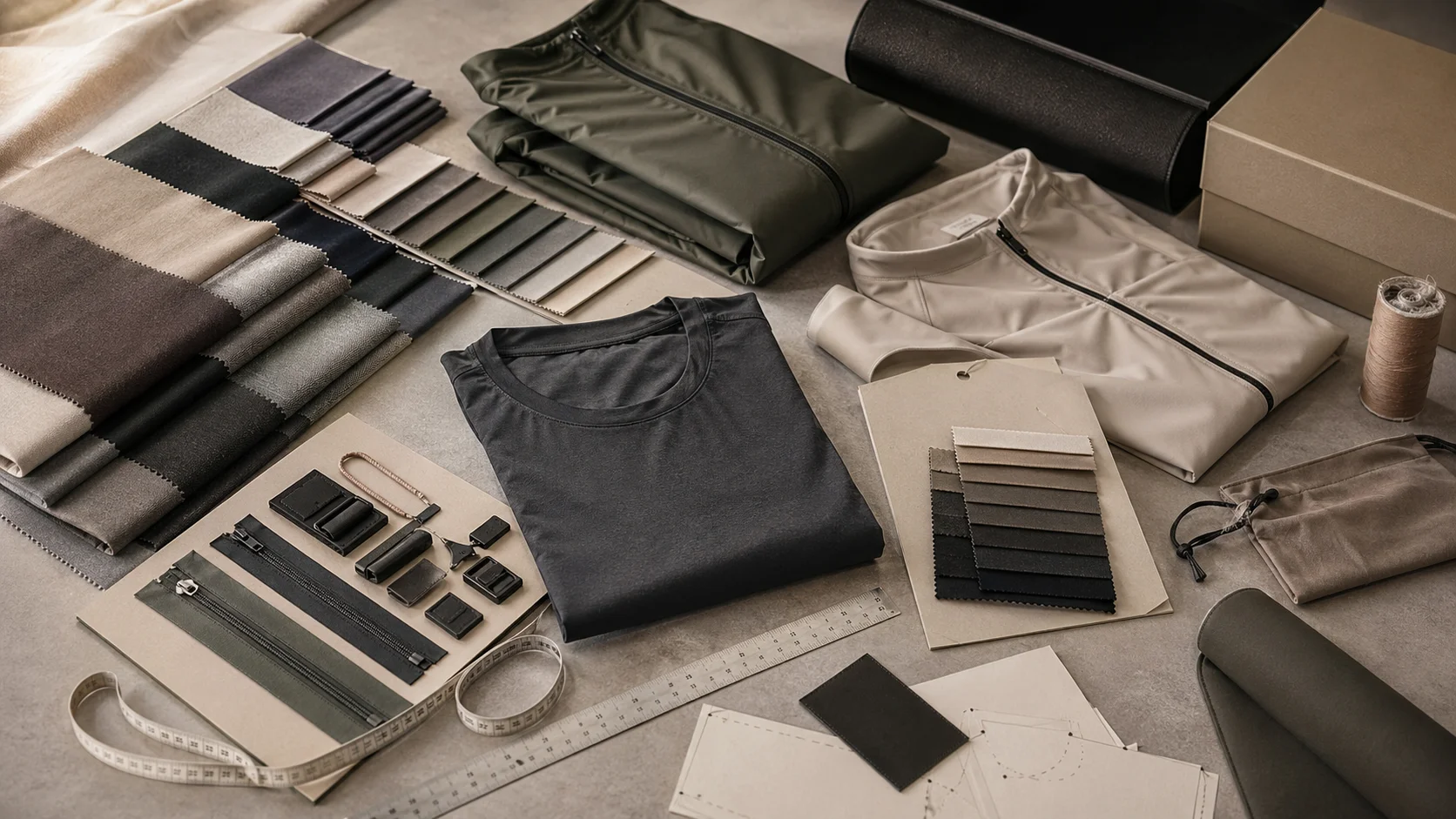
Bulk Garment Supplier Payment Terms for Fashion Brands compared by sample evidence, fabric or trim specs, MOQ, AQL terms, cost lines, delivery timing, and...
Fast answer: Bulk Garment Supplier Payment Terms for Fashion Brands: Tech Pack, Sample Gate, MOQ, and QC Terms should be judged by production evidence, not by a generic sourcing promise. The buyer needs sample proof, cost breakdowns, QC checkpoints, and delivery buffers in writing.
Ask for recent sample photos, measurement tolerances, fabric or print test assumptions, decoration test notes, packing examples, and a named inspection checkpoint. These details show whether the team can repeat an approved sample at bulk volume.
Separate garment cost, decoration, labels, packaging, sampling, testing, freight, and rush charges. Clear cost lines make it easier to reduce colorways, adjust size depth, or reserve more time for sampling.
For fashion brands, payment terms are more than a line item in a supplier agreement. They directly affect cash flow, production planning, inventory risk, and the strength of supplier relationships. Whether you are launching a new apparel label or scaling an established collection, understanding bulk garment supplier payment terms can help you avoid costly mistakes and make better sourcing decisions.
In the garment industry, payment terms are often negotiated around production milestones, order size, fabric sourcing, customization, lead time, and trust between buyer and manufacturer. A brand that understands how these terms work is better positioned to secure favorable pricing, keep production on schedule, and preserve working capital.
This guide explains the most common payment structures used by bulk garment suppliers, what influences those terms, and how fashion brands can negotiate in a way that supports both profitability and long-term supplier reliability. If you are currently evaluating manufacturing options, you can also explore Fabrikn’s services or reach out through the contact page to discuss your production needs.
Payment terms shape the financial rhythm of your business. In fashion, cash often leaves the business long before revenue comes back in. You may need to pay for design development, sampling, material sourcing, production deposits, shipping, customs, and warehousing before the first item is sold.
That makes supplier payment terms especially important. A well-structured agreement can:
On the other hand, poor payment terms can create pressure on cash flow, increase the chance of disputes, and slow down production. If a supplier requires too much payment too early, a growing fashion brand may struggle to fund marketing, fulfillment, or the next collection.
Understanding payment terms is not just about negotiating the lowest deposit. It is about balancing risk, trust, and operational stability for both sides.
Bulk garment suppliers use a few standard payment structures, though exact terms can vary widely depending on location, order size, product type, and brand history.
This is one of the most common arrangements in apparel manufacturing. The buyer pays 30% upfront as a deposit and the remaining 70% before shipment or after production completion, depending on the agreement.
The 30% deposit helps the supplier purchase raw materials and reserve production capacity. The 70% balance gives the factory assurance that the order will be completed and collected.
For many fashion brands, 30/70 is a practical starting point because it provides a balance between supplier protection and buyer cash flow management.
Some suppliers request 50% before production and 50% before shipment. This arrangement is more common for new buyers, custom products, or orders that involve expensive fabrics and trims.
From a supplier’s perspective, a higher deposit reduces risk. From the buyer’s perspective, however, it can tie up a large amount of capital before any finished goods are available.
Brands should consider whether the higher upfront payment is justified by the complexity of the order or the supplier’s level of risk.
Full advance payment is less common for established brands, but some suppliers request it for small orders, first-time customers, or highly customized work. It may also appear in cases where the supplier has limited credit exposure or where materials must be purchased in full before production can begin.
This term is the riskiest for buyers because the entire amount is paid before production starts. Unless there is a strong trust relationship, a detailed contract, and a proven supplier track record, 100% advance payment should be approached carefully.
A letter of credit is a banking instrument that provides payment security for both parties. The buyer’s bank guarantees payment to the supplier once specified conditions are met, such as shipment documents or inspection approval.
This method is more common in larger international orders and can help reduce counterparty risk. However, it usually involves bank fees, paperwork, and more complex compliance requirements.
Brands with higher order volumes may consider L/C terms when working with experienced suppliers and international logistics partners.
In some cases, especially with long-term partners, suppliers may agree to net terms such as net 15, net 30, or net 60 after delivery or invoicing. These terms are far more favorable for buyers because they allow the brand to receive and potentially sell inventory before paying the full balance.
That said, net terms are not typical for most bulk garment suppliers unless the brand has a strong payment history, significant order volume, or a well-established relationship.
Some manufacturers structure payments around production milestones, such as:
This approach can be useful for complex orders because it aligns payment with visible progress. It also helps both sides manage risk more transparently.
Payment terms are not random. They usually reflect the economics and risks of the transaction. Several factors affect how a supplier sets its terms.
Larger orders often come with more flexible terms because they create more business value for the supplier. A factory may be willing to reduce the deposit percentage or extend payment timing for a brand placing recurring high-volume orders.
Custom garments, technical sportswear, embroidered items, or products with multiple trims typically require more materials, more labor, and more planning. The more complex the product, the more likely the supplier is to ask for a higher deposit.
If the supplier must purchase expensive fabric or specialty components upfront, it may need stronger payment protection. Payment terms often reflect how much raw material risk the manufacturer is taking on before production starts.
Suppliers are more comfortable offering favorable terms to brands with a history of reliable orders and on-time payment. First-time buyers usually face stricter requirements than repeat customers.
Longer lead times can increase financial exposure for the supplier. If production takes several weeks or months, the factory may need a larger deposit to cover labor allocation and material holding costs.
Currency fluctuations, import/export regulations, banking systems, and local manufacturing norms can all influence payment expectations. In some markets, deposits are standard; in others, suppliers may be more open to extended terms.
Like many parts of apparel sourcing, payment terms are heavily influenced by trust. A strong relationship built over multiple seasons can lead to better terms, more flexibility, and faster problem-solving during production.
Negotiating payment terms does not mean pushing suppliers to accept unreasonable risk. The goal is to structure an agreement that supports production and protects your cash flow.
Suppliers are more likely to offer flexibility if they can see future volume. Share your growth plans, reorder expectations, and seasonal buying calendar. A clear forecast can make a supplier more willing to support your brand with better terms.
If you are a new brand, it may be difficult to secure net terms or low deposits immediately. Focus first on demonstrating professionalism, prompt communication, and reliable ordering behavior. Over time, trust can lead to improved terms.
If you want more favorable payment terms, consider what you can offer in return. This might include:
Instead of asking for all payment at the start or all payment at the end, propose milestone-based terms. This approach is often easier for both sides to accept because it spreads risk more evenly.
When your product specifications are precise, suppliers are less exposed to misunderstandings and costly revisions. Accurate tech packs, approved samples, and clear quality standards can make a supplier more confident in agreeing to flexible payment terms.
Verbal agreements can lead to confusion. Make sure all payment terms are documented in your purchase order, manufacturing agreement, or supply contract, including deposit amounts, due dates, late payment penalties, and shipment release conditions.
For brands looking to work with a manufacturing partner that values transparency, you can learn more about Fabrikn on the about us page.
Cash flow protection is one of the biggest priorities for fashion brands, especially during growth phases. The challenge is to preserve liquidity without damaging supplier confidence.
Align payment due dates with your launch schedule, sales cycles, and expected revenue. Avoid placing large orders if your cash flow is already tied up in inventory, paid advertising, or outstanding receivables.
If you are trying a new supplier, start with a smaller order before committing to a large production run. This can reduce risk while allowing both sides to build confidence.
Do not let one supplier absorb all your working capital. Spread production strategically across vendors and categories where possible so you are not overexposed to one payment schedule.
In some cases, you may be able to negotiate partial shipment release after partial payment or inspection. This can help you move inventory faster and reduce storage pressure.
Some brands use working capital loans, purchase order financing, or trade financing to bridge payment gaps. These tools can be useful, but they should be evaluated carefully because financing costs can reduce margins.
Not every payment request is reasonable. Fashion brands should watch for warning signs that may indicate weak supplier practices or elevated risk.
Any supplier that cannot explain why certain terms are needed may deserve closer scrutiny. Reliable manufacturers should be able to justify their payment structure clearly and professionally.
Strong supplier relationships often lead to better terms over time. The most successful fashion brands treat payment terms as part of a broader partnership strategy.
Suppliers value predictability. When they know your brand is organized and dependable, they are more likely to extend support through better payment structures, priority production, and faster turnaround.
Here is an example of a balanced payment structure for a mid-sized bulk garment order:
This structure works well because it gives the manufacturer enough capital to begin production while allowing the buyer to manage risk through inspection and progress checkpoints. For larger, repeat orders, a brand may eventually negotiate better terms such as a lower deposit or partial net payment after delivery.
Every business is different, so this is only a sample framework. The best payment plan is the one that reflects your cash cycle, supplier relationship, and production complexity.
Payment terms should never be evaluated in isolation. A supplier with slightly stricter terms but strong quality control, reliable communication, and dependable lead times may be a better partner than one offering low deposits but inconsistent performance.
When comparing suppliers, look at the full picture:
The right manufacturing partner helps your business scale more predictably. If you are currently exploring options, Fabrikn’s services page provides more information about our capabilities, and you can use the contact page to start a conversation.
Get a free quote from Fabrikn — your trusted B2B clothing manufacturer with 10+ years of experience. MOQ as low as 200 pieces.
Get a Free Quote →Common terms include 30/70, 50/50, milestone-based payments, letters of credit, and in some cases net terms after delivery. The exact structure depends on order size, product complexity, and supplier relationship.
Yes, especially if the brand has repeat orders, strong payment history, larger volumes, or clear production forecasts. New brands may have less leverage but can still negotiate milestone-based structures.
Deposits help suppliers buy materials, reserve production capacity, and manage financial risk. Since apparel production often involves upfront labor and raw material costs, deposits are a standard industry practice.
Full advance payment carries more risk for buyers. It can be appropriate in limited situations, but only when the supplier is highly trusted and the contract clearly protects the buyer’s interests.
For new brands, a balanced structure such as 30/70 or milestone-based payments is often more manageable than full prepayment. It reduces cash pressure while still giving the supplier enough security to begin production.
Share accurate forecasts, communicate professionally, provide precise product specifications, and pay on time. Suppliers are more likely to offer flexibility when they see reliability and long-term potential.
Yes. All payment terms should be written into your contract, purchase order, or supplier agreement to prevent disputes and ensure both parties understand the timeline, amount, and conditions.
Payment terms determine when cash leaves your business. More favorable terms can preserve working capital for marketing, logistics, and growth, while strict upfront terms can create strain before revenue is realized.
Understanding bulk garment supplier payment terms is essential for any fashion brand that wants to scale sustainably. The best deals are not always the ones with the lowest deposit; they are the ones that support strong production, manageable cash flow, and a healthy long-term supplier relationship.