
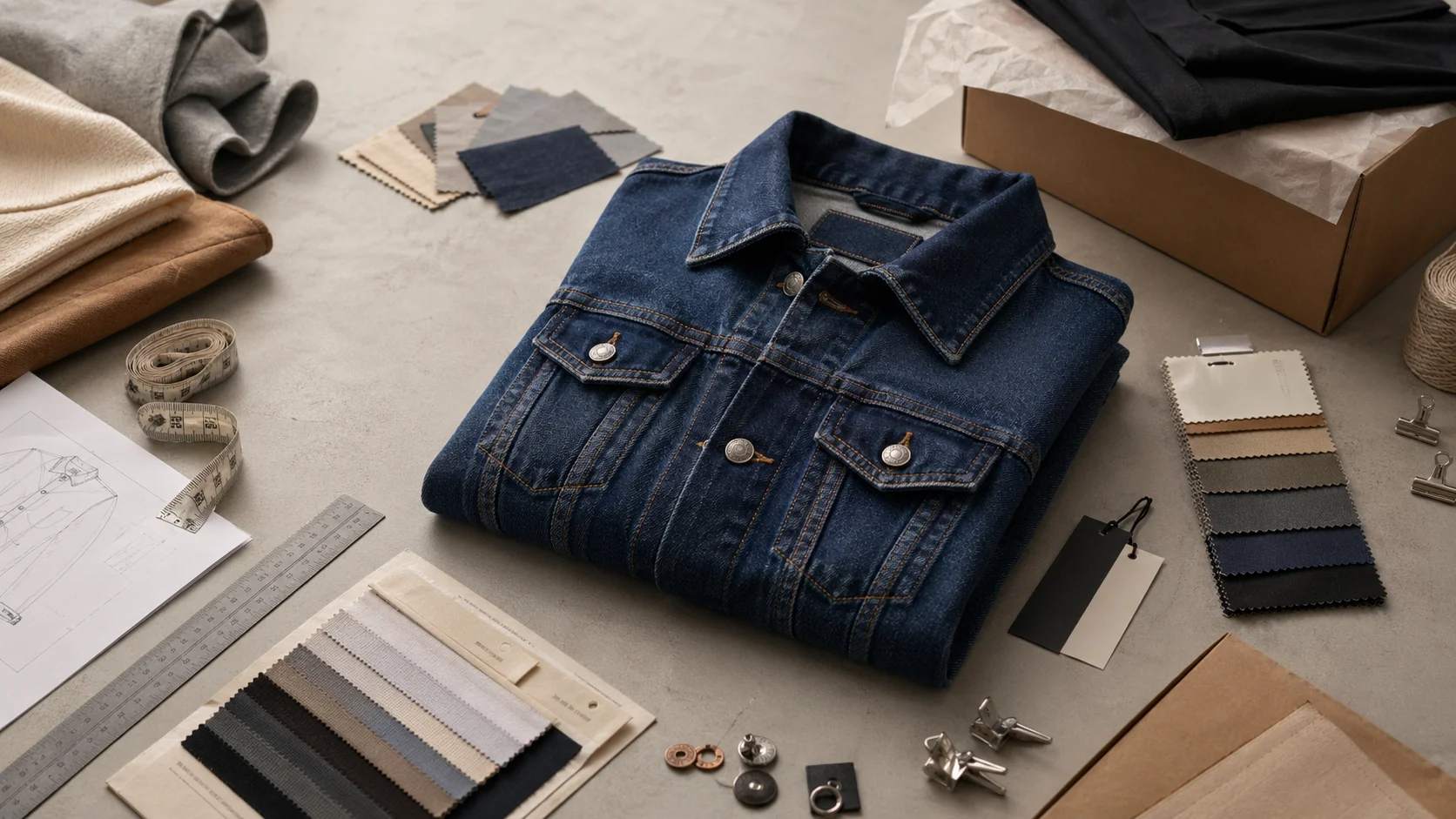
Plan bulk jacket orders for resort staff uniforms by aligning MOQ, size runs, decoration methods, and seasonal demand without overbuying or delaying deployment.
Bulk Jackets MOQ Planning for Resort Staff - Fabrikn production reference
Resort staff uniform programs live or die on consistency. Jackets sit in a difficult middle ground: they need to look branded, hold up to frequent laundering or seasonal storage, and still be practical for different departments. MOQ planning matters because jackets are one of the easiest uniform items to overbuy or underbuy. A weak forecast ties up cash in slow-moving inventory. A tight forecast can leave frontline teams short during peak occupancy or weather shifts.
For resort operators, the right jacket program starts with the actual use case. A front desk layer is not the same as a bell staff outer shell. A poolside jacket is not the same as a winter service coat. Decoration method, fabric weight, trim quality, and size spread all affect minimum order quantity, sample approvals, and lead time. The smart approach is to plan around function first, then decoration, then quantity.
MOQ is not just a factory constraint. It is a planning tool. For resort staff uniforms, jackets often sit in a narrower demand band than shirts or polos, which means the order quantity can be driven more by style variety than by headcount. A program with four departments, two genders, and three climate zones can quickly become a small-parts problem. Each variation adds cost, decoration setup, and risk of leftover stock.
MOQ planning also affects brand control. If a resort approves multiple jacket styles without a clear standard for fabric, color, and branding placement, the final result can feel fragmented across departments. That weakens the uniform program even if each individual piece is well made.
For jackets, the cheapest mistake is usually not the unit price. It is ordering the wrong mix of sizes, colors, and decoration methods for a property that changes staffing levels seasonally.
The cleanest jacket programs usually break into use cases instead of trying to force one style across every team. That keeps MOQ under control because the base shell can often be shared while decoration changes by role.
Where possible, keep the shell fabric and core construction consistent. Change the badge, embroidery, or print placement instead of changing the whole garment. That approach usually improves buying leverage and simplifies reorders. It also reduces the chance that a small department is stuck with a custom style that cannot be replenished later.
A practical program often starts with one hero style and one secondary style. That gives the property enough flexibility without multiplying SKUs. For a smaller resort, one jacket body in two colorways may be enough. Larger properties can justify separate options only if the job duties truly differ.
For sourcing support and broader garment program coordination, the service overview at Fabrikn services is a useful starting point.
MOQ varies widely by construction, fabric availability, and decoration method. A simple softshell jacket with a standard woven shell and one embroidery location may be feasible at a lower quantity than a fully lined jacket with custom zippers, woven labels, and printed heat-transfer branding.
Jacket Type Typical MOQ Range Main MOQ Driver Lightweight softshell jacket 100 to 300 pcs Fabric color, zipper trims, embroidery setup Fleece or knit jacket 150 to 400 pcs Material sourcing and size run planning Lined service jacket 300 to 800 pcs Pattern complexity, lining, and trim customization Weatherproof outerwear 500+ pcs Technical fabric minimums and testing requirementsThese are working ranges, not fixed rules. A factory may quote below these numbers if it already stocks the base fabric or can slot the style into an existing body. The price tradeoff is usually clear: smaller MOQs often carry higher unit cost, fewer customization options, or stricter color limits. Larger MOQs bring better pricing and better trim control, but they raise inventory risk.
MOQ also shifts with decoration. Embroidery usually handles lower quantities better than full garment printing because the setup is straightforward and durable on outerwear. Heat transfer can work well for smaller runs or more detailed branding, but it may not age as gracefully through heavy laundering and weather exposure. Screen printing on jackets can be cost-effective in volume, yet placement and fabric compatibility need more attention than buyers sometimes expect.
Because this is a decoration and printing category, branding decisions deserve early attention. Jackets create more decoration risk than flat-knit tops. Seams, panels, zippers, quilting, and water-resistant finishes all affect how a logo lands on the garment.
Embroidery is often the default recommendation for resort jackets because it looks stable and tends to age well. The tradeoff is needle damage on some technical fabrics and possible distortion on lightweight shells. Heat transfer offers sharper detail and can be placed where stitching would pucker the fabric, but buyers should ask for wash testing and stretch/recovery checks. Printed graphics can work on resort leisure jackets, though the brand team should treat them as a wear-and-care decision, not just a design choice.
Placement matters as much as method. Chest logos remain the most common, but sleeve branding or back neck marks may work better on jackets with busy front panels. Keep the decoration size appropriate to the jacket scale. A logo that looks balanced on a polo may feel oversized on a slim outer layer.
Before approval, ask for the exact artwork file format, thread color references, print method, and measured placement from key points such as shoulder seam or center front. These details prevent the usual mismatch between presentation mockup and final production.
Resort jacket programs should not move from sketch to bulk order in one jump. A sensible approval flow protects both brand consistency and the operating budget.
Sample timing matters. A fabric approval delay can push the entire order, especially when custom-dyed materials are involved. A trim change late in development can reset the schedule if the zipper tape, snaps, or lining are no longer compatible. Decoration samples deserve special care on jackets because placement errors are harder to hide than on simpler garments.
One common mistake is approving a sample that looks good on the table but has not been worn or layered properly. Resort staff often wear jackets over shirts, polos, or blouses. That means arm mobility, hem length, and cuff finish should be checked in motion, not only on a hanger. Ask for wear testing during the approval step, even if it is only a short internal fitting session.
If the order needs supplier coordination or sampling support, the contact page at Fabrikn contact is the direct route for a production inquiry.
Lead time for jackets depends on more than sewing time. Fabric sourcing, lab dips or color approval, trims, sample rounds, decoration setup, packing, and inspection all affect the calendar. Resort buyers should not treat jacket lead time as a fixed number. It changes with customization.
Typical production windows for standard uniform jackets often land in the 30 to 60 day range after all approvals, while more technical or heavily customized styles can run longer. Add sampling time before that. If custom fabric or imported trims are required, the schedule can stretch quickly. Seasonal demand is where this becomes painful. A property that waits until weather changes are visible is already late.
Lead time risk is highest when the order includes multiple sizes and department splits. The factory may be ready to sew, yet the approval of size breakdowns or logo placement is still pending. That creates idle time and increases the chance of rushed decisions. The safer approach is to lock the size curve early and give the production team a single version of truth.
MOQ planning improves when the technical spec is tight. Vague jacket orders generate avoidable back-and-forth. The buyer should define the shell fabric, lining, interlining if used, closure type, pocket layout, and decoration zones before asking for a firm quote.
Trim quality is often where low-bid jacket programs fail. A decent shell can be undermined by weak zippers, low-grade snaps, or inconsistent stitching. That matters in resort settings because staff uniforms are seen constantly. A broken puller or frayed cuff reads as a service issue, not only a garment issue.
Fabric choice should match the resort climate. Breathable lightweight styles suit warm-weather properties and indoor front-of-house teams. Heavier or brushed fabrics make sense for mountain or off-season use. Technical water-resistant fabrics can be worth the spend for outdoor roles, but only if the care and performance expectations are realistic.
Jackets create inspection risk in a few predictable places. The first is measurement drift across size runs. Outerwear can look acceptable in one size and awkward in another if grading is not managed properly. The second is decoration placement. A logo that shifts a few millimeters on a small chest panel can look visibly off-center. The third is trim consistency, especially where zippers, snaps, and lining colors are sourced from different suppliers.
Buyers should ask for inspection checks on overall measurement, stitch density, seam security, decoration accuracy, and packing ratio by size. If the jackets are destined for front-of-house staff, presentation inspection matters too. Creased packing, loose threads, or visible labeling errors can create unnecessary rework on arrival.
One practical control is to require a pre-shipment review against the approved sample and measurement sheet. That does not eliminate defects, but it catches the avoidable ones before cartons leave the factory. For higher-volume programs, third-party inspection can be money well spent because jacket defects are usually more expensive to sort after arrival than to fix before shipment.
The best jacket program is not the most complex one. It is the one that fits the property’s service model without creating dead stock or late replacements. Spend on the elements guests and staff actually notice: fit, hand feel, zipper reliability, and decoration durability. Save by standardizing bodies, reducing color variation, and limiting the number of custom trims.
For most resort staff uniform programs, embroidery on a stable jacket body is the lowest-risk path. It keeps the branding clean and usually survives wear better than delicate print applications. Printed jackets make sense when the brand needs a specific visual effect or a softer startup cost, but that choice should be made with care. The decoration method should support the environment, not just the art file.
Inventory discipline matters as well. A common mistake is over-ordering every size equally. Resort staffing rarely follows a flat distribution. Build the size curve from actual headcount, role mix, and replacement history. Keep a modest buffer on the most common sizes, then avoid padding the tail sizes unless there is a real operational need.
For background on company capabilities and sourcing approach, see Fabrikn about us.
Get a free quote from Fabrikn — your trusted B2B clothing manufacturer with 10+ years of experience. MOQ as low as 200 pieces.
Get a Free Quote →For many standard jacket styles, a working MOQ sits around 100 to 300 pieces for simpler constructions and 300 to 800 pieces for more customized or technical outerwear. The exact number depends on fabric, trims, and decoration method.
Embroidery is usually the safer default for durability and presentation. Printing can work for certain styles or lower-volume runs, but it needs more testing on wash performance and fabric compatibility.
A solid program usually includes fabric and trim approval, a fit sample, a decoration sample or strike-off, and a pre-production sample. Large or technical programs may need more than one fit round.
Orders should be planned well ahead of the season, especially if custom materials or decoration are involved. Standard programs may need 30 to 60 days of production after approval, plus sampling time before that.
Common choices include polyester blends, softshell, fleece, and nylon-based outerwear. The right choice depends on climate, job function, and whether the jacket needs wind or water resistance.
The biggest risk is mismatch between order quantity and actual role-specific need. Too much variation drives up MOQ and inventory. Too little planning creates shortages during peak periods.