
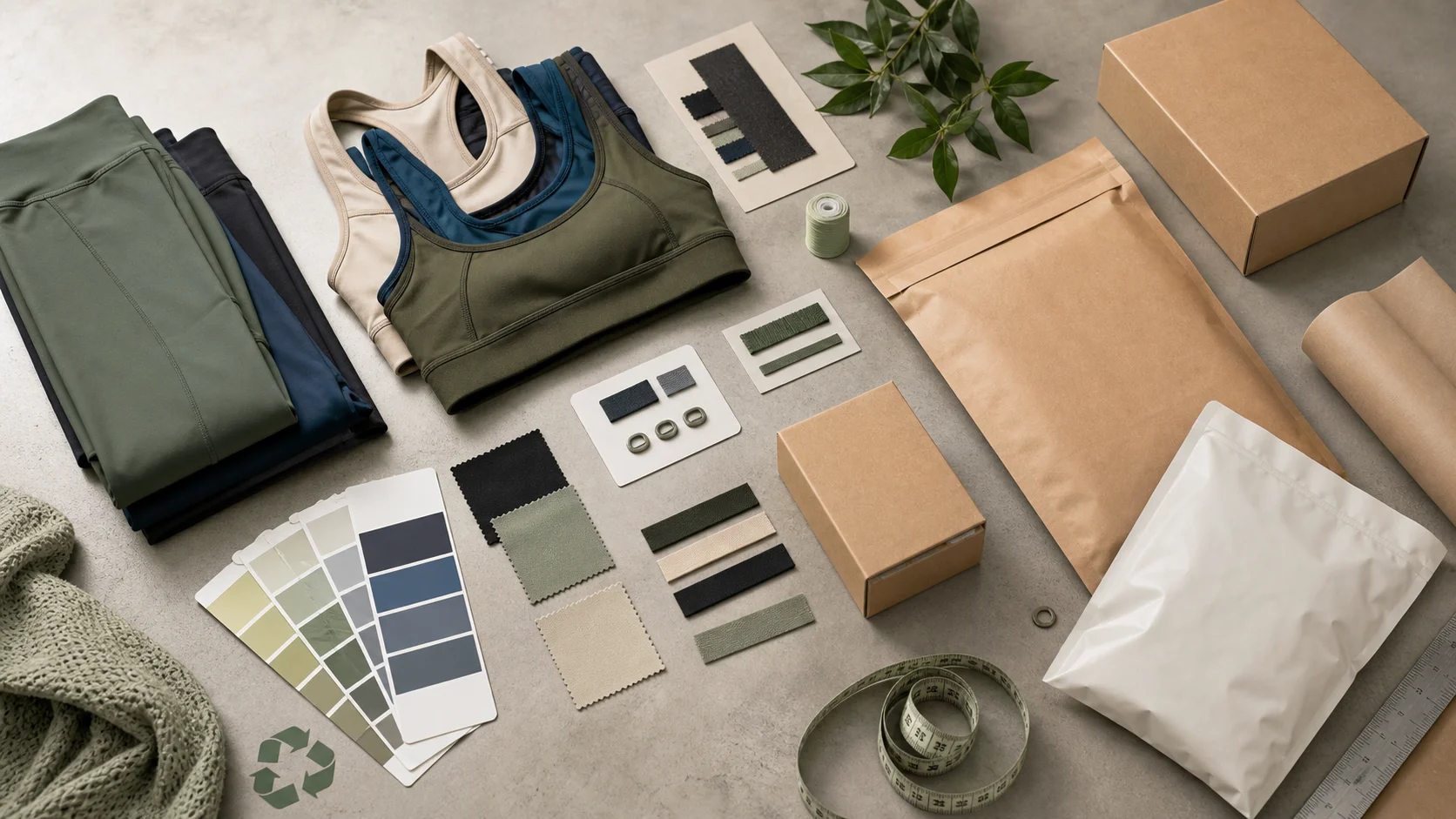
Plan bulk MOQ for corporate wellness activewear sets with a focus on set components, size curves, decoration constraints, sustainability choices, and...
Bulk MOQ Planning for Activewear Sets - Fabrikn production reference
Bulk MOQ planning for activewear sets in corporate wellness merchandise is a procurement problem first and a branding exercise second. The set has to look aligned, wear well across a mixed employee base, survive repeated laundering, and arrive in time for the wellness campaign or onboarding calendar. That is difficult to do if the order quantity is guessed too early or spec’d too loosely.
The practical approach is to plan around the factory’s minimum order quantity, then build a range that still allows size runs, color consistency, decoration control, and responsible fabric sourcing. Corporate wellness buyers often want matching tops and bottoms, or a coordinated tee plus legging, jogger, or shorts set. Each added component changes the math. The safest buying judgment is simple: keep the first run tight enough to control inventory risk, but broad enough to cover size distribution and reorders without restarting development.
For sustainable fashion programs, the order should also reflect the supplier’s material constraints. Recycled polyester, organic cotton, and certified elastane blends can all be sourced for activewear, but the available dye lots, yarn lead times, and trim availability affect MOQ more than many buyers expect. A low sticker price means little if the fabric is unstable, the logo process damages stretch recovery, or the inventory sits because the fit is off.
For broader manufacturing support, see Fabrikn’s services and contact page.
Corporate wellness merchandise is usually ordered for employees, field teams, partners, or event participants rather than for direct retail sell-through. That changes the order logic. The buyer is often balancing brand visibility, comfort, and budget control across a fixed date, with little room for last-minute replenishment.
Activewear sets also have wider fit sensitivity than simple tees or polos. A set that works for a small one-off rollout may fail when scaled across varied body types. When the assortment includes both men’s and women’s styles, or unisex sizing, the order structure should anticipate different grading needs. Sizes are not a minor detail. They are a material risk factor.
There is another issue: corporate wellness items are often gifted, which means returns and exchanges are costly or impossible. That makes pre-production approval, lab dips, fit sign-off, and size ratio planning more important than a standard promotional apparel order. The best MOQ plan is one that reduces surprise rather than chasing the lowest possible minimum.
MOQ is not one number. It is usually a bundle of requirements tied to fabric, color, style, and decoration. A factory may quote one MOQ for a basic set in stock fabric, a higher MOQ for a custom-dyed knit, and a different MOQ again if the logo uses special heat transfer, sublimation, or embroidered details. Set construction raises the threshold because the top and bottom need to match in hand feel, shade, and performance.
For corporate wellness merchandise, planning should start with three questions:
When the answer leans toward custom fabric, custom color, or multiple decoration methods, the MOQ rises and the lead time stretches. That is normal. Buyers should not treat it as supplier inflexibility. It is a production reality driven by knitting, dyeing, cutting, and finishing efficiency.
Actual minimums vary by supplier, but the ranges below are a practical reference point for bulk planning. They are most useful as a starting assumption, not a promise.
Activewear Set Type Typical MOQ Range Planning Note Basic stock-fabric tee and short set 200 to 500 sets Best for simple wellness programs with limited sizing complexity Custom-color performance tee and legging set 300 to 800 sets Custom dye and tighter shade control can raise reject risk Branded jogger set with contrast trims 500 to 1,000 sets More trims and sewing steps increase line setup demands Recycled-fabric premium set 300 to 1,500 sets Certifications, yarn sourcing, and testing can affect minimums Fully custom design with multiple SKUs 1,000 sets and above Small split runs may be inefficient unless the factory is set up for themThese ranges show the tradeoff clearly. The lower the MOQ, the easier it is to test demand and reduce storage risk. The higher the MOQ, the better the fabric economy and unit cost may be, especially if the program needs a premium finish. The right answer depends on whether the set is a one-time internal campaign or a repeatable company standard.
Fabric spec is where many activewear projects become expensive. A casual description such as “polyester stretch fabric” is not enough. The supplier needs measurable details that control performance and consistency.
Useful spec points include fabric composition, weight, knit structure, stretch percentage, recovery rate, pilling resistance, and moisture management. For corporate wellness merchandise, common choices include recycled polyester and elastane blends, organic cotton blends for softer hand feel, and nylon-spandex constructions for a smoother premium finish.
Typical purchase decisions look like this:
Trim requirements matter just as much. Elastic, drawcords, zippers, labels, heat transfer graphics, and packaging inserts all affect lead time. A low-risk bulk plan uses trims that are already proven in the supplier’s normal production flow. Custom zippers or specialty reflective trims can be justified, but they should be approved early.
Good MOQ planning begins with sample discipline. Buyers sometimes rush straight to bulk pricing, then discover that the fit, logo placement, or fabric hand feel needs another round of revisions. That is where time and budget disappear.
A practical sample path usually includes the following steps:
Each step reduces risk, but each step also adds time. Buyers planning corporate wellness launches should not undercount this. A factory can often move faster on a repeat style with locked specs and approved fabric, yet a first-time activewear set with custom artwork and sustainability requirements needs a more deliberate calendar.
The most common mistake is approving a sample that is visually close but technically incomplete. If the stretch, shrinkage, seam strength, or colorfastness is not measured, the bulk order is still exposed. For activewear sets, that exposure is usually visible after wash testing or in employee wear trials.
Lead time in activewear is affected by more than sewing capacity. The real schedule is tied to fabric booking, dyeing, trim sourcing, sample approval, bulk cutting, decoration, inspection, and shipping. One delay in the chain usually pushes the rest.
Typical lead time for a simple stock-fabric activewear set may fall in the 30 to 60 day range after approval. Custom fabric or custom-dyed programs can stretch to 60 to 120 days, sometimes longer if certification documents or testing are required. Decorative complexity adds more friction. Embroidery, multi-location prints, or reflective applications can slow both production and inspection.
Corporate buyers should also account for internal approval delays. Procurement, HR, sustainability, marketing, and brand teams often review the same garment. The result is not a manufacturing delay, but it still affects the launch date. A supplier cannot recover a late sign-off that arrives after the fabric has already been booked or after the bulk order window closes.
Sustainable fashion is not only about recycled content. In bulk activewear planning, the more useful question is whether the product is designed to reduce waste across the whole order cycle. That means right-sizing the MOQ, choosing durable materials, and avoiding overcomplicated decoration that shortens garment life.
A credible sustainable approach for corporate wellness merchandise usually includes:
There is a tradeoff worth stating plainly. The most sustainable option on paper is not always the best commercial option. A recycled fabric with weak recovery or an unstable dye lot can create more waste than a slightly less ambitious material choice that performs reliably. Buyers should push for sustainability, but not at the expense of product integrity.
Fabrikn’s about page can provide more context on the company’s positioning and production approach.
Activewear sets bring a specific set of inspection risks. Seam slippage, uneven stretch, off-shade panels, logo cracking, skipped stitches, and measurement drift can all show up late in production. The more components in the set, the more opportunities for mismatch.
The highest-risk checkpoints are usually fabric shade consistency, sizing tolerance, waistband recovery, seam alignment, and decoration placement. If the order includes both top and bottom pieces, buyers should specify how matching is judged. A top and bottom that look close in isolation may still appear mismatched under daylight or retail-grade lighting.
Inspection should also reflect the intended use. Corporate wellness garments are often worn during movement, not just for office gifting. That makes comfort and performance defects more visible. A set that passes a basic visual check can still fail in motion if the crotch seam, armhole, or waistband construction is weak.
The lowest unit cost is rarely the cheapest outcome if the fit is inconsistent or the fabric cannot survive repeated wear. In activewear, quality failures show up fast and they are difficult to hide.
Waste reduction begins with demand planning. Estimate who will actually receive the set, what size ratios are realistic, and whether the program needs a narrow or broad fit profile. A cautious buyer uses historic company sizing data where available. When that data does not exist, a small pilot run or pre-order survey is usually better than a large guess.
For activewear sets, the most practical waste-reduction tactics are straightforward:
Reorder planning matters as well. If the business expects another wellness wave, it is often smarter to keep the pattern, fabric standard, and artwork structure repeatable. A repeat program lowers development waste and usually improves supplier pricing discipline. It also reduces the chance that a second order drifts away from the approved fit or finish.
Supplier selection should be based on whether the factory can manage the full order profile, not just whether it can quote a low MOQ. A supplier that handles sportswear well may still be a poor fit if it cannot document fabric sourcing or if its quality system is too loose for corporate gifting standards.
For many buyers, the right supplier is not the one that says yes to everything. It is the one that identifies where the risk sits before production starts. That is especially valuable in sustainable fashion projects, where material claims, certifications, and durability expectations must all survive scrutiny.
Get a free quote from Fabrikn — your trusted B2B clothing manufacturer with 10+ years of experience. MOQ as low as 200 pieces.
Get a Free Quote →A practical starting range is often 200 to 500 sets for simple stock-fabric programs, with higher minimums for custom fabric, premium trims, or multiple colorways. The exact MOQ depends on fabric type, decoration, and whether the supplier is producing a repeat style or a first-time development.
Two-piece sets require better matching across fabric, shade, and fit. The factory also has more cutting, sewing, and quality control steps. If the pieces are made from different fabrics or have different trims, the production complexity rises again.
At minimum, buyers should expect a development sample, a fabric approval step, a decoration check, and a pre-production sample. Fit sample and size set approval are strongly recommended for activewear sets because stretch garments expose measurement errors faster than casual apparel.
Recycled polyester blends are often the most practical choice for performance-led corporate wellness items. Organic cotton blends can work for lighter activity or leisure wear. Nylon-spandex can be strong on feel and recovery, though it may sit at a higher price point and require tighter supplier control.
Common risks include inconsistent sizing, poor seam strength, shade variation, logo cracking, and weak stretch recovery. Buyers should also check wash performance, since activewear is usually judged after repeated use rather than at delivery only.
Use realistic size ratios, keep the design simple, limit colorways, and lock approval earlier in the process. A small pilot order or employee survey can help avoid overbuying the wrong sizes or the wrong style.
A good first step is to review the supplier’s production services, ask for the contact channel, and confirm whether the factory can support the target fabric and MOQ structure. Fabrikn’s services, contact-us, and about-us pages are the relevant starting points for that conversation.