
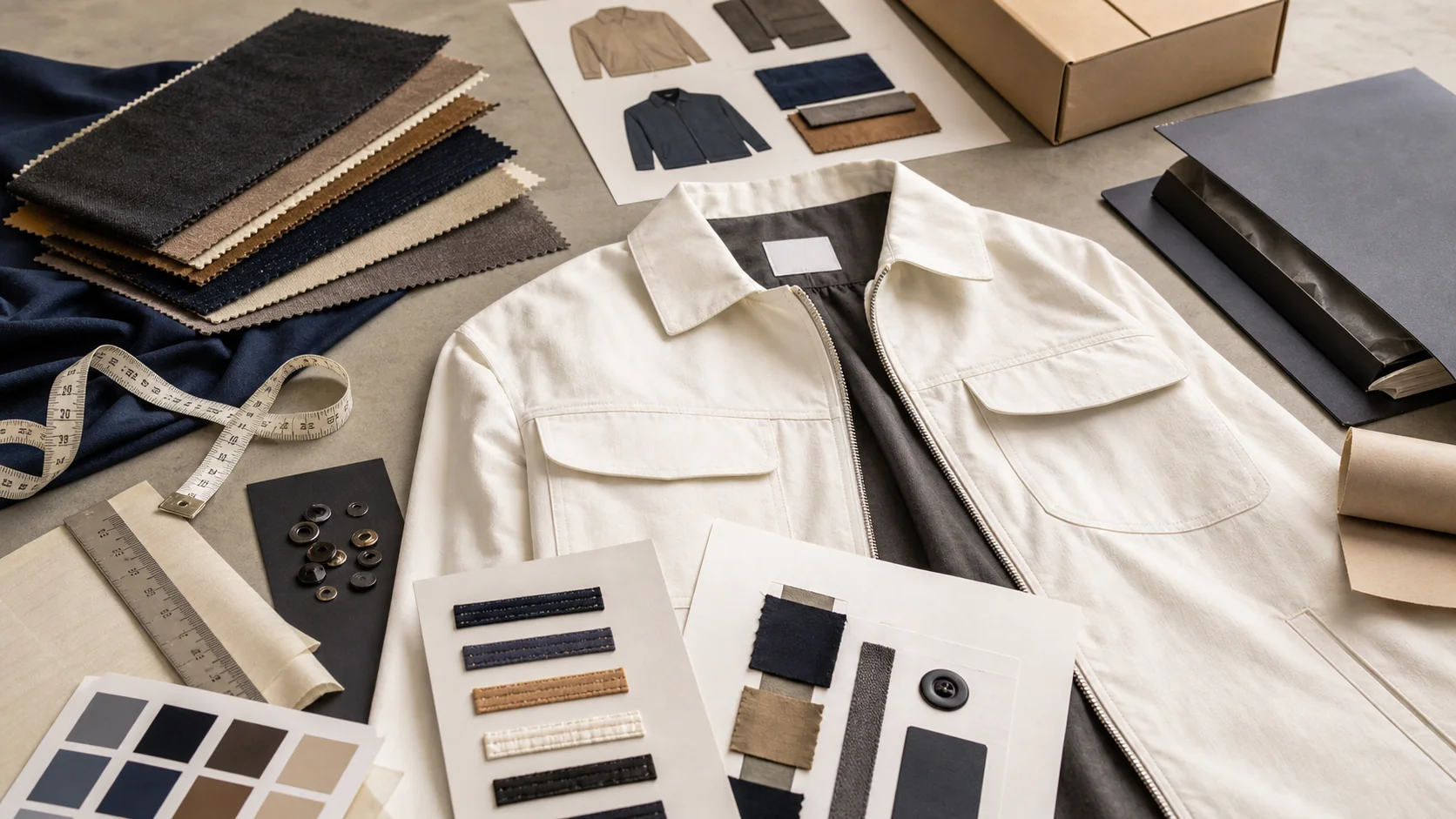
A focused outline for promotional merchandise distributors comparing MOQ thresholds, decoration options, size runs, lead times, and sampling details for...
Bulk Puffer Jackets MOQ for Distributors - Fabrikn production reference
For promotional merchandise distributors, bulk puffer jackets sit in a tricky but profitable part of the outerwear market. They are bulky enough to affect freight and storage, technical enough to expose quality problems, and standardized enough that buyers often assume every supplier can quote the same way. That assumption causes trouble. MOQ for bulk puffer jackets is shaped by fabric availability, fill type, size breakdown, branding method, and whether the order is built from stock base styles or a custom program.
This guide breaks down how MOQ works for distributors sourcing puffer jackets for corporate gifting, retail promotions, winter campaigns, sports programs, and resale bundles. The focus is practical: what suppliers usually ask for, where hidden costs appear, what to check before approving samples, and where a low MOQ can help or hurt the final margin.
MOQ, or minimum order quantity, is the lowest order volume a supplier will accept for a given style, fabric combination, or decoration method. In puffer jackets, MOQ is rarely one number across the whole program. A supplier may quote one MOQ for shell fabric, another for lining, another for embroidery, and another for a custom color. That is normal. Distributors should treat MOQ as a set of constraints, not a single box to tick.
For bulk puffer jackets, MOQ usually reflects production efficiency. Cutting and sewing an insulated jacket takes more setup than a basic tee or cap. The supplier must source shell fabric, lining, zipper tape, pullers, elastic, snaps, and insulation. If the jacket uses custom dyeing or specialized trims, those components may have their own minimums. The more the design deviates from the supplier’s base pattern, the higher the MOQ tends to be.
There is no universal MOQ, but distributors can use broad ranges as a purchasing starting point.
Program Type Typical MOQ Range Notes Stock-style puffer jacket with logo decoration 50 to 200 pieces per color/style Usually the easiest route for promotional orders and faster turnaround Semi-custom puffer jacket 300 to 500 pieces per style May allow custom labels, selected trims, or limited fabric changes Fully custom puffer jacket 500 to 1,000+ pieces per style MOQ rises with new pattern work, custom fabric, special fill, or unusual grading Packable or lightweight promotional puffer 100 to 300 pieces Often lower than heavy insulated styles, but still dependent on trim and print method Premium retail-grade puffer with technical fabric 500 to 1,500+ pieces Technical shells, water resistance, and advanced insulation usually raise the commitmentThese figures are useful only as a planning range. A supplier offering lower MOQ may offset it with higher unit pricing, fewer size runs, fewer decoration options, or a longer development calendar. A distributor should calculate the landed cost, not just the factory quote. Freight can erase the benefit of a small MOQ quickly, especially on bulky outerwear.
Shell fabric is one of the main MOQ drivers. Standard woven polyester, recycled polyester, or nylon fabrics are easier to source in manageable quantities. Custom yarn-dyed shells, specialty finishes, or laminated fabrics often require larger fabric mill minimums. A fabric with a durable water-repellent finish may also need a minimum dyelot that pushes the jacket MOQ higher.
Fill choice changes both cost and ordering rules. Polyester padding is common and often easier to source at lower MOQs. Down or down-alternative fills can increase compliance, documentation, and material minimums. Distributors should check whether the supplier can keep fill weight consistent across sizes, because a weak fill spec can distort the final jacket appearance and reduce perceived quality.
Screen print, embroidery, woven patches, heat transfer, and silicone branding do not behave the same way on a puffer jacket. Embroidery is common for left-chest marks, but thick insulation and quilting can make placement uneven. Heat transfer can work well on smoother panels, though it is not always the best option on heavily textured shells. If the order includes multiple decoration positions, MOQ and setup fees usually rise.
Each additional color can force a split of fabric, trims, and finished goods. A single-color run is simpler. Multi-color assortments create more inventory risk for the distributor and more handling on the factory side. Size ranges matter as well. A standard S to 2XL ratio is easier than an extended run that includes youth, tall, or plus sizes.
Promotional buyers often ask for custom polybags, inserts, hangtags, carton labels, or retail-ready folding. These are not minor details. Custom packaging can trigger separate MOQs for printed materials and add approval steps that extend lead time. If the jackets are being shipped directly to a campaign warehouse or retail DC, packaging specs should be locked before production starts.
Distributors should not treat jacket sampling as a courtesy stage. It is where most expensive mistakes can be prevented. A clean approval process usually includes the following steps.
For many programs, a supplier may quote a sample charge that is credited back only after the bulk order lands. That credit is not guaranteed, so it belongs in the margin calculation. Lead time for samples can run from 7 to 21 days, depending on fabric availability and how many revisions are needed. If the distributor is working under a promotion deadline, sample discipline matters more than ever. Rushing approval is one of the easiest ways to accept dimensional drift, color mismatch, or decoration failure.
Lead time for bulk puffer jackets depends on more than sewing capacity. Fabric booking, lab dips, trim sourcing, sample approval, and inspection scheduling all affect the calendar. A basic stock-style jacket can move faster, but custom outerwear often needs 45 to 90 days after final sample approval. Some programs run longer if fabric mills are backed up or if the order requires testing for colorfastness, water resistance, or fill performance.
Distributors should ask a supplier whether the timeline is counted from artwork approval, sample approval, deposit receipt, or purchase order confirmation. Those dates are not interchangeable. A vague lead time usually hides one of two problems: either the supplier has not secured materials, or they are assuming the buyer will approve quickly. Neither assumption is safe.
Shipping method also changes the schedule. Air freight can rescue a tight launch, but it undermines the economics of a bulky jacket program. Sea freight is usually better for margin, yet it needs more buffer time. If the jackets are intended for holiday campaigns, the purchasing calendar should move backward from the in-market date, not from the PO date.
Puffer jackets look straightforward on the surface. The details behind them are not. A distributor should confirm the following specifications before quoting a customer.
For promotional merchandise distributors, one of the biggest traps is overspecifying a jacket for a short-term campaign. A heavy-fill, technical-shell puffer may be attractive on paper, but it can become difficult to price competitively. For branded giveaways, a clean, moderate-weight style often sells better than a feature-heavy build that strains the budget.
Branding can make or break a puffer jacket program. The jacket itself may be the headline item, but the decoration often determines whether the order is treated as promotional or premium. Embroidery is durable and usually the default choice for chest logos, though it can distort on quilted panels if the placement is not carefully planned. Heat transfer can preserve detail, but it may not hold up as well under abrasion or repeated laundering. Woven labels and patches add a more retail feel, yet they increase sourcing complexity.
Low MOQ decoration options usually come with limitations. A distributor might get a small-volume embroidery program, but not on every panel location. A transfer may be available in limited color counts. A custom woven badge might be possible only if the supplier can combine it with an existing base jacket and keep the run efficient. The right choice depends on the use case. For short promotional campaigns, a straightforward logo application is usually the smarter commercial move. For resale or brand-building, a more refined decoration package may justify the higher minimum.
It is worth checking whether the decoration is applied in the same facility that assembles the jacket. If not, the program may carry extra handoff risk, extra lead time, and more opportunities for color or placement mismatch.
Puffer jackets deserve stricter inspection than many buyers expect. The main risk is not always visible from a distance. A jacket can look acceptable on a hanger and still fail in use or after compression.
Inspection should include more than a quick visual check. A distributor should request measurement tolerances, seam standards, and an agreed AQL approach before shipment. For promotional jobs, a small defect rate may be accepted commercially, but outerwear defects are expensive to correct after distribution. Rework and returns can cost more than the initial margin on the order.
The best puffer jacket order is not always the one with the lowest MOQ. That is the wrong purchasing lens. A distributor should balance the minimum with total program economics: sample cost, freight, storage, decoration, packaging, and the risk of leftovers after the campaign. Lower MOQ is useful when the brief is uncertain, the budget is tight, or the customer is testing demand. Higher MOQ is often better when the artwork is approved, the spec is stable, and the jacket can be sold through more than one channel.
There is a simple commercial test worth using. If the order needs special fabric, custom fills, and complex decoration, the MOQ should be justified by stronger margins or a larger repeat potential. If the customer wants a fast promotional drop with uncertain volume, a stock base jacket with light branding is usually the safer decision. That keeps the buyer from overcommitting to a style that may not repeat next season.
Distributors also need to think about inventory strategy. Puffer jackets are not like light promotional goods that can be tucked away in a small warehouse corner. They take space, and unsold size runs can become a storage problem. When in doubt, lean toward a tighter color assortment, a manageable size curve, and a clean decoration plan.
If you are building a puffer jacket program for a client or reseller channel, it helps to work with a supplier that can manage development, trimming, and production with clear checkpoints. The right partner should be able to discuss fabric options, branding methods, packing requirements, and realistic MOQ boundaries before the order is placed.
For background on services, see fabrikn.com/services/. For company information, see fabrikn.com/about-us/. For direct quote requests or order questions, use fabrikn.com/contact-us/.
Get a free quote from Fabrikn — your trusted B2B clothing manufacturer with 10+ years of experience. MOQ as low as 200 pieces.
Get a Free Quote →For promotional distributor programs, a realistic MOQ is often 50 to 200 pieces for stock-style jackets with decoration, 300 to 500 pieces for semi-custom work, and 500 or more for fully custom builds. The exact figure depends on fabric, trims, fill type, and branding method.
Usually yes, but the size ratio must fit the factory’s production plan. Standard runs such as S to 2XL are easier than extended or irregular size mixes. Very small quantities in larger or specialty sizes can add cost.
They require more materials, more sewing steps, and more component coordination. Shell fabric, lining, insulation, zippers, labels, and packing all need to be aligned. Custom fabrics or finishes can raise minimums further.
Many orders land in 45 to 90 days after final approval, though stock-based programs can move faster and custom programs can take longer. Lead time depends on fabric availability, sample approval speed, and shipping method.
At minimum, the buyer should review the fabric hand feel, construction quality, measurements, decoration placement, and zipper function. For custom programs, a pre-production sample is the safer checkpoint before mass sewing begins.
The main risk is trading lower minimums for higher unit cost, weaker material options, or less control over fit and finish. A low MOQ can be useful, but it should not hide poor jacket quality or expensive freight.
Bulk puffer jackets can work well for distributors when the order is built around a clear spec and a realistic minimum. The strongest programs usually start with a stable base style, modest decoration, and a tight approval process. That combination keeps the order commercially workable and reduces the chance of receiving outerwear that is hard to sell, hard to store, or hard to defend after delivery.