
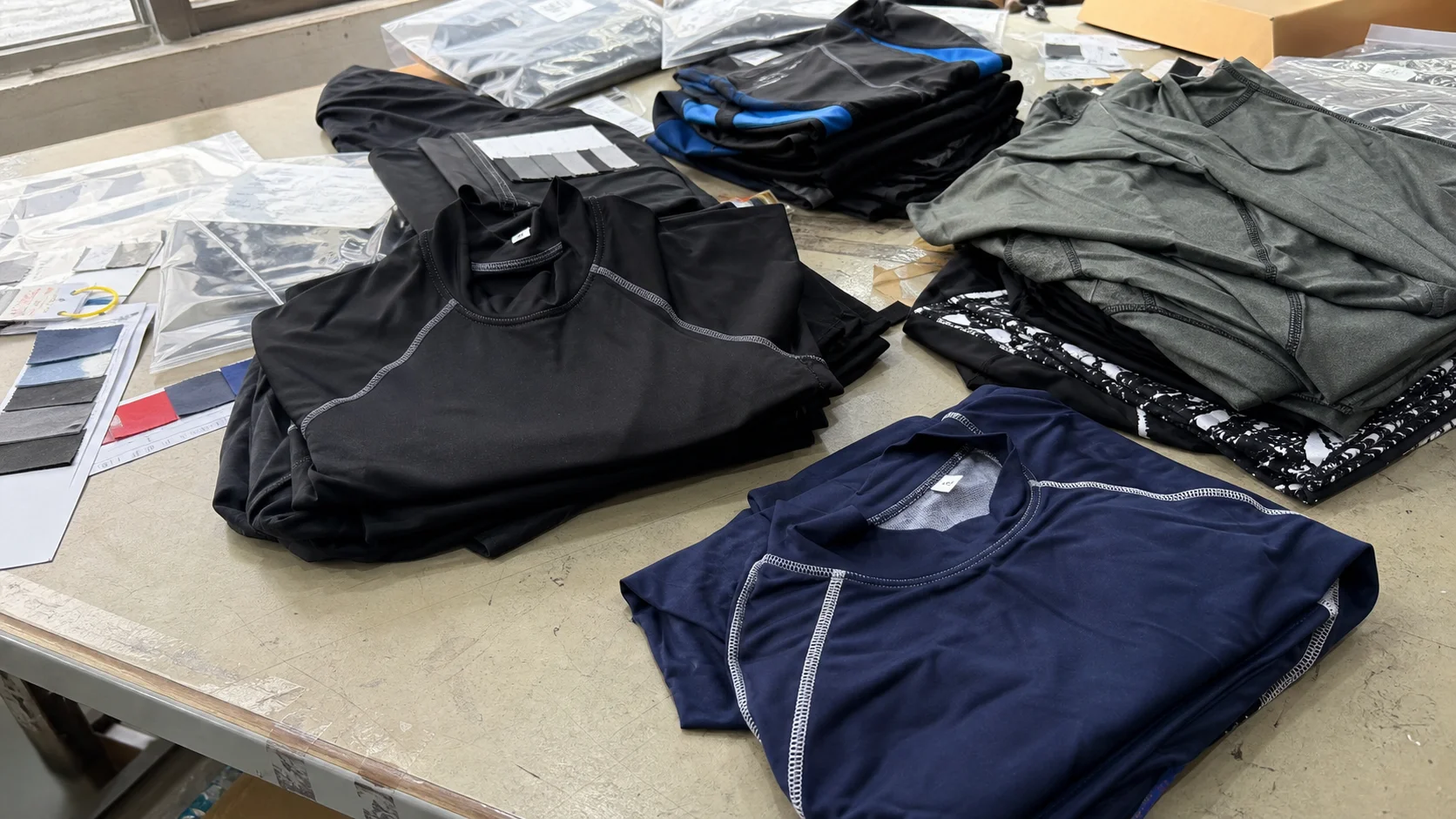
A product-specific outline for facilities managers reviewing rash guard size grading before bulk ordering, with focus on fit distribution, grading rules,...
Bulk Rash Guard Size Grading Review for Facility Buyers - Activewear & Teamwear manufacturing guide
Bulk rash guard size grading is one of the most practical buying issues for facilities managers ordering activewear, aquatic uniforms, training apparel, or teamwear. A rash guard can look correct in a catalog image and still fail in daily use if the sizing is inconsistent across adult, youth, staff, and participant groups. For facilities, the issue is not just comfort. Poor grading can create inventory waste, high exchange rates, complaints from users, and operational friction at the point of distribution.
Facilities managers often buy rash guards for swimming schools, surf programs, aquatic centers, resorts, gyms, camps, clubs, and recreation programs. These buyers usually need a garment that works across many body types rather than a narrow retail fashion fit. That changes the sourcing discussion. The best rash guard for a facility is not always the tightest, most technical, or most aggressive athletic cut. It is the one that fits the intended user base reliably, performs after repeated washing, and can be reordered with minimal variation.
Size grading is the system used to scale a garment from one size to the next. In rash guards, it affects chest width, body length, sleeve length, armhole, neck opening, shoulder width, hem sweep, and sometimes panel shaping. The challenge is that stretch fabrics can hide poor grading in a sample fitting. A medium sample may seem acceptable, but the extra-small can become too tight at the neck, while the 3XL can become too long in the sleeve or loose at the hem. Bulk buyers should review grading before the purchase order is locked, not after cartons arrive.
Purchasing judgment: for facility programs, consistent fit across the size range is usually more valuable than a highly sculpted performance fit that only works for a narrow user profile.
A careful size grading review helps a buyer prevent the most common problems: undersized youth garments, adult sizes that jump too sharply, tight neck openings, sleeves that twist after washing, and unisex cuts that do not suit the user population. It also gives the manufacturer a clearer production target. Vague instructions such as “standard adult sizing” or “regular fit” leave too much room for interpretation, especially when sourcing from different factories or comparing quotes from multiple suppliers.
Retail rash guards are often designed around brand identity, target demographics, and seasonal style. Facility rash guards are different. They are operational garments. They may be used as swim uniforms, instructor tops, camp issue apparel, safety identifiers, rental garments, or branded teamwear. A facility order must fit many users quickly, often with limited time for individual try-ons.
This is why facilities managers should treat size grading as a procurement control point. The garment must be easy to issue, easy to reorder, and predictable when mixed with previous stock. A rash guard that fits well only after a customer tries three sizes is not efficient for a facility. A clean grading system reduces returns, avoids excessive spare stock, and helps staff distribute sizes with confidence.
Facility buyers also face budget pressure. A low unit cost can be attractive, but poor grading often moves the cost elsewhere: additional replacements, rushed reorders, storage of unusable sizes, and staff time spent resolving fit complaints. In bulk activewear and teamwear, the cheapest quote may be acceptable only if the size spec, fabric behavior, and quality control process are clearly documented.
For buyers who need support building a specification package, Fabrik’s apparel manufacturing services can be reviewed at https://fabrikn.com/services/. A supplier discussion is more productive when the buyer already understands the size range, intended use, fabric requirement, and logo method.
A rash guard grading review should start with the base size. Most adult ranges use medium or large as the base sample size. Youth ranges may use size 8, 10, or 12 depending on the market. The base size matters because every other size is scaled from it. If the base is wrong, the whole order becomes difficult to correct.
Facilities managers should ask for a graded size chart before approving bulk production. This chart should show the actual garment measurements, not only body measurements. Body measurements tell the user what size may fit them. Garment measurements tell the manufacturer what to produce. Both can be useful, but they are not interchangeable.
Grading increments should be practical. A typical adult rash guard may grade by roughly 4 cm to 6 cm in chest circumference between sizes, though the exact increment depends on fit type, fabric stretch, and target market. Youth increments are usually smaller. Extended sizes need special attention because simply increasing all points evenly can create a garment that is too long, too loose at the sleeve, or poorly balanced at the neck.
A common problem in bulk rash guard manufacturing is over-reliance on chest grading while ignoring vertical proportions. Larger sizes may need more width, but not every user needs the same increase in sleeve length. For facility programs, a moderate body length increase is often safer than aggressive length grading. Long garments can be useful for coverage, but excessive length can bunch under wetsuits, life vests, or uniforms.
Measurement Point Why It Matters Common Bulk Order Risk Chest Width Controls main fit and size perception Garments feel one size too small after washing Neck Opening Affects comfort and ease of dressing Users reject garment even if body fit is acceptable Sleeve Length Supports coverage and mobility Long sleeves become excessive in larger sizes Body Length Prevents ride-up during activity Short grading exposes midsection during movement Armhole Supports shoulder rotation Tight armholes restrict swimming and trainingBefore reviewing size grading, the buyer must define the intended fit. Rash guards are commonly sold as compression fit, athletic fit, or relaxed fit. These labels are not standardized across factories. One supplier’s athletic fit may be another supplier’s compression fit. A written fit definition is safer than relying on a label.
Compression rash guards are close-fitting and designed to sit tightly against the body. They are common in surf, combat sports, and performance training. This fit can work well when users expect a tight garment and are familiar with technical activewear. It is less forgiving for facility-wide distribution because many users will size up or reject the fit.
For bulk facility buying, compression fit increases the risk of exchanges. It also requires better fabric recovery, stronger seams, and more accurate grading. If the fabric has poor stretch recovery, the garment may bag out after use. If the seams are not suitable for high stretch, they may pop at stress points. Compression fit can be appropriate for specialist programs, but it should not be selected casually just because it looks professional in product photos.
Athletic fit is usually close but not skin-tight. It is often the best compromise for teamwear and active facility programs. It gives a clean branded appearance while allowing more body variation than compression fit. For long-sleeve rash guards used in swim schools, camps, and outdoor programs, athletic fit often works better than true compression.
The tradeoff is that athletic fit still needs careful grading. The chest, bicep, and neck must have enough tolerance to accommodate users who are between sizes. In bulk orders, a slightly more forgiving athletic fit often reduces complaints without making the garment look oversized.
Relaxed fit is useful when rash guards are issued broadly, worn over swimwear, used by guests, or distributed without try-on. It is also practical for mixed adult groups and modest coverage requirements. The risk is that too much ease can create drag in water, fabric cling when wet, and a less polished appearance.
Purchasing judgment: if the garment is for staff uniforms, a controlled athletic fit usually looks better. If it is for guest issue, rentals, camps, or broad public programs, relaxed facility fit may reduce operational problems.
A proper rash guard tech pack should include more than a flat size chart. It should show measurement points, tolerance, construction notes, fabric specifications, print placement, label requirements, and packing instructions. Facilities managers do not need to become pattern makers, but they do need enough documentation to prevent supplier assumptions.
The most useful size chart is a “points of measure” chart. It lists each measurement point and the target value for each size. It should also include tolerance, such as plus or minus 1 cm for key measurements. Tolerance should be realistic. Stretch fabric garments cannot always be measured with the same precision as woven shirts, but loose tolerances create quality disputes.
Raglan sleeve rash guards are common because they support shoulder movement and reduce seam pressure at the top of the shoulder. Set-in sleeves can look more like a T-shirt but may restrict movement if the armhole is not well shaped. Panel seams can improve fit, but they add sewing complexity and inspection points. For a facility order, the simplest construction that meets the performance need is often the safest production choice.
Logo placement also affects sizing. A chest logo on a small size may look proportionally large, while the same logo on a 3XL may look too small. Buyers should specify whether logo size stays constant across all sizes or scales for youth and adult ranges. Scaling artwork adds complexity and may increase setup requirements, but it can improve appearance across a wide size run.
If a buyer needs help clarifying these production details, the company background and manufacturing focus can be reviewed at https://fabrikn.com/about-us/. A strong supplier discussion should connect design intent with measurable production requirements.
Fabric is central to rash guard sizing. Two garments with the same measurement chart can fit differently if the fabric stretch, weight, recovery, and surface finish are different. This is why buyers should not approve size grading without confirming the actual bulk fabric or a close production-quality substitute.
Common rash guard fabrics include polyester-spandex and nylon-spandex blends. Polyester-spandex is widely used for printed rash guards because it handles sublimation printing well and generally offers good color clarity. Nylon-spandex can feel smoother and more premium, but it may be more expensive and less suitable for certain print methods. Fabric weight commonly falls around 180 gsm to 250 gsm for many rash guard programs, though lighter or heavier options exist depending on use.
Spandex content is often in the range of 8% to 20%. Higher spandex can improve stretch, but it does not automatically mean better performance. Recovery matters. A fabric that stretches easily but does not return well can lose shape after repeated use. Facilities with frequent laundering should be cautious about very soft fabrics that feel good in the sample room but degrade quickly under operational washing.
UPF 50+ is often requested for sun-protection rash guards, but buyers should ask how the rating is supported. A claim without testing may be acceptable for low-risk promotional use, but it is weak for programs marketed around sun protection. Chlorine resistance is another area where expectations should be clear. Standard activewear fabric may not perform like dedicated chlorine-resistant swim fabric. If the rash guard will be used heavily in pools, fabric testing and care instructions matter.
Fabric shrinkage must also be considered. Synthetic stretch fabrics usually have lower shrinkage than cotton, but heat exposure, finishing, and laundering can still affect dimensions. A pre-production sample should be washed and measured before final approval. For facilities, this wash test is not optional if the order will be repeatedly laundered by staff or commercial laundry providers.
Purchasing judgment: never approve a bulk size chart based only on an unwashed sample if the rash guards will be washed frequently. Measure before and after laundering.
Minimum order quantity depends on fabric, color, print method, size range, and factory setup. For bulk rash guards, typical MOQ ranges may start around 100 to 300 pieces for simpler stock-fabric programs, especially when using existing colors and standard patterns. Custom fabric colors, sublimation prints, private-label trims, or broad size ranges can push MOQs toward 500 to 1,000 pieces or more. These are general ranges, not guarantees. Each supplier will price according to production efficiency and material sourcing.
Facilities managers should be careful when comparing MOQ offers. A low MOQ may use stock fabric, limited colors, simplified trims, or digital print methods. That can be perfectly acceptable. A higher MOQ may be required for custom-dyed fabric, specialized UPF claims, or exact branding requirements. The right choice depends on risk, budget, and reorder needs.
Not every order will require every sample stage, but size set sampling is strongly recommended for wide facility size ranges. At minimum, buyers should review the smallest, base, and largest sizes. For youth and adult combined programs, one youth base and one adult base may not be enough. A youth small, youth large, adult medium, and adult 2XL can reveal grading problems early.
Lead times vary. A simple order using available fabric and standard trims may be possible in roughly 4 to 8 weeks after approvals. Custom fabric, custom dyeing, sublimation artwork, lab dips, trims, and size set revisions can extend timelines to 8 to 14 weeks or longer. Peak season capacity, holiday schedules, shipping method, and inspection booking also affect delivery. Buyers should separate sampling time from bulk production time in their internal planning.
Order Type Typical MOQ Range Lead-Time Factors Stock fabric, simple logo 100-300 pieces Fabric availability, logo method, size range Sublimated custom print 200-500 pieces Artwork approval, print strike-off, panel matching Custom color fabric 500-1,000+ pieces Lab dips, dyeing, fabric testing, shade control Private-label program 300-1,000+ pieces Labels, packaging, trims, repeat-order planningRushed orders are possible in some cases, but size grading should not be the step that gets skipped. A delayed but correct order is usually less damaging than a fast order with a high percentage of unusable sizes. If a facility has a fixed program launch date, the safer approach is to simplify the design, use stock fabric, limit trims, and prioritize fit approval.
Inspection for rash guards should focus on fit consistency, seam durability, measurement tolerance, print quality, shade consistency, and packaging accuracy. Stretch garments require careful handling during measurement. If inspectors stretch the fabric while measuring, the results may look larger than the actual garment. If garments are measured in a relaxed but uneven state, results can vary. The measurement method should be defined in advance.
Common inspection risks include twisted sleeves, uneven cuffs, neck binding distortion, skipped stitches, poor coverstitch tension, loose threads, print cracking, dye migration, and incorrect size labels. Sublimated rash guards can also show white grin-through when stretched if the print penetration is poor or the fabric is stretched beyond its intended range. Cut-and-sew panel alignment matters for printed designs, especially when logos cross seams.
Seams are especially important. Rash guards experience stress at the shoulder, underarm, side seam, and cuff. Flatlock seams are often used for comfort and reduced bulk, while overlock plus coverstitch constructions are also common. The best choice depends on garment design, price point, and intended use. Buyers should ask for seam type confirmation rather than assuming all rash guards are made the same way.
For facility buyers, packing errors can be as disruptive as sewing defects. A carton marked adult large that contains mixed medium and large sizes can slow distribution and create inventory confusion. If garments are issued by location, department, class, or team, the packing plan should be included in the purchase order. Bulk packing may reduce cost, but individual polybags with size stickers can save time during distribution.
Inspection standards should be agreed before production. Some buyers use AQL inspection levels for bulk apparel, while smaller orders may rely on internal spot checks. Either way, the buyer should specify critical defects. Wrong logo, wrong size label, major measurement deviation, open seams, and severe print defects should not be treated as minor issues in a facility uniform program.
Size grading review is only useful if the buyer also orders the right size ratio. A technically correct size chart cannot fix poor size distribution. Facilities managers should review historical issue data where available. If previous rash guard or T-shirt orders show heavy demand for large and XL, that pattern should guide the new order. Guessing based on a generic size ratio often creates excess stock in small sizes and shortages in middle sizes.
For adult unisex rash guards, many facility orders lean toward medium, large, and XL. Youth programs may vary sharply by age group. Staff programs may require more extended sizes than guest programs. Women’s-specific fit can improve comfort for some users, but it adds inventory complexity. A unisex fit is easier to manage but may be less ideal for diverse body shapes.
Buying every size in equal quantities is rarely efficient. A more sensible approach is to place more units in core sizes and fewer units at the extremes, unless the user population suggests otherwise. Extended sizes should not be ignored, but they should be planned based on need rather than simply added as an afterthought. The pattern for extended sizes may also require separate grading attention instead of automatic scaling.
Facilities with multiple locations should consider whether each location needs a full size run or whether central inventory can support replenishment. Full size runs at every site improve availability but increase dead stock. Centralized inventory reduces waste but may slow issue speed. The right structure depends on program urgency, storage capacity, and how often users need replacements.
Buyers preparing a new rash guard program can discuss order scope, size range, and production requirements through https://fabrikn.com/contact-us/. A clear inquiry should include estimated quantity, target delivery date, size range, fabric preference, logo method, and whether the garment is for staff, guests, youth programs, or resale.
Before approving bulk rash guard production, facilities managers should confirm the full specification package. The goal is not to create paperwork for its own sake. The goal is to reduce ambiguity before fabric is cut. Once cutting begins, size grading changes become expensive or impossible.
A strong purchase order should attach or reference the approved tech pack, measurement chart, sample approval comments, artwork file, packaging instruction, and inspection requirements. Verbal approvals are risky. Email approvals are better, but a consolidated document is easier for production teams to follow.
Buyers should also clarify what happens if bulk production falls outside tolerance. Will the supplier repair, replace, discount, or remake? These terms are easier to discuss before production than after shipment. A practical supplier will not promise perfection, but they should be willing to define measurable acceptance standards.
Every rash guard sourcing decision involves tradeoffs. A tighter fit may look sharper but increases exchange risk. A relaxed fit is easier to issue but may perform less well in water. Sublimation allows strong branding but requires careful artwork control and may have higher setup complexity. Stock fabric reduces lead time but limits color precision. Custom-dyed fabric improves brand matching but increases MOQ, timeline, and shade-control risk.
For many facility buyers, the best value comes from a balanced specification: reliable polyester-spandex fabric, moderate athletic fit, clear graded measurements, simple seam construction, durable logo method, and a realistic size ratio. This may not be the most premium garment on paper, but it often performs better operationally than an overdesigned product with too many variables.
Price should be evaluated with the full program in mind. Ask what is included in the quote: sampling, labels, packaging, artwork setup, testing, freight, duties, and inspection. A low FOB unit price may not be the lowest landed cost. A slightly higher unit price can be justified if it includes better size control, stronger fabric, more reliable packaging, and easier reorder consistency.
Decision Lower-Risk Choice Tradeoff Fit Athletic or relaxed facility fit Less compression performance Fabric Tested stock polyester-spandex Limited custom color options Branding Simple logo placement Less all-over design impact Size Range Core sizes plus planned extended sizes More inventory planning required Sampling Size set before production Longer approval timelineFor facilities managers, the strongest rash guard order is built around measurable fit control rather than generic size labels. Start with the user group, select the correct fit type, confirm fabric behavior, approve a graded size chart, and test the garment after washing. Then place the order using a size ratio based on real usage data wherever possible.
Do not treat size grading as a technical detail that belongs only to the manufacturer. It is a buying decision. It affects user satisfaction, inventory accuracy, reorder success, and the actual cost of the program. A supplier can advise on pattern and production, but the facility buyer must define how the garment will be used and what fit outcome is acceptable.
The safest commercial path is usually a controlled athletic or relaxed fit, clear tolerances, approved size set samples, and realistic lead time. Compression fits, custom colors, all-over prints, and complex trims can all work, but they require stronger sampling discipline. If the program has no room for delays or exchanges, simplify the product and protect the fit.
Get a free quote from Fabrikn — your trusted B2B clothing manufacturer with 10+ years of experience. MOQ as low as 200 pieces.
Get a Free Quote →Size grading is the process of scaling a rash guard pattern from one size to another. It controls garment measurements such as chest width, body length, sleeve length, neck opening, and hem width. For facility buyers, grading matters because the garment must fit consistently across a wide user group.
A moderate athletic fit or relaxed facility fit is usually the safest choice for broad distribution. Compression fit can work for specialist sports or performance programs, but it increases the chance of exchanges and wearer complaints if users are not expecting a tight garment.
Typical MOQs may start around 100 to 300 pieces for simpler stock-fabric orders. Custom prints, custom colors, private labels, and broad size ranges may require 500 to 1,000 pieces or more. Actual MOQ depends on the supplier, fabric, trims, and production method.
Polyester-spandex and nylon-spandex are common choices. Polyester-spandex is widely used for sublimation printing and teamwear. Nylon-spandex can feel smoother but may cost more and may not suit every print method. Buyers should confirm gsm, stretch, recovery, UPF claims, and colorfastness.
Approving every size is ideal for high-risk or large programs, but at minimum the buyer should review the smallest size, base size, and largest size. For youth and adult combined orders, separate youth and adult size checks are recommended.
Simple orders using stock fabric may take roughly 4 to 8 weeks after approvals. Custom fabric, custom dyeing, sublimation artwork, size set revisions, and testing can extend timelines to 8 to 14 weeks or longer. Sampling time should be planned separately from bulk production time.
Common risks include measurement variation, tight neck openings, skipped stitches, twisted sleeves, poor seam recovery, print defects, shade inconsistency, wrong size labels, and packing errors. Stretch garments should be measured carefully using a defined method.
Historical issue data is the best guide. If that is not available, buyers should weight the order toward core sizes and buy fewer units at the extremes, while still supporting extended sizes. Equal quantities in every size often create dead stock.
UPF 50+ is useful for outdoor aquatic programs, camps, resorts, and sun-protection positioning. Buyers should ask how the claim is supported and whether testing is available. A UPF claim without documentation may be weak for formal sun-protection programs.
A rash guard tech pack should include a graded measurement chart, fabric specifications, construction details, seam type, artwork placement, label instructions, packaging requirements, tolerances, and sample approval notes. Clear documentation reduces production mistakes and fit disputes.