
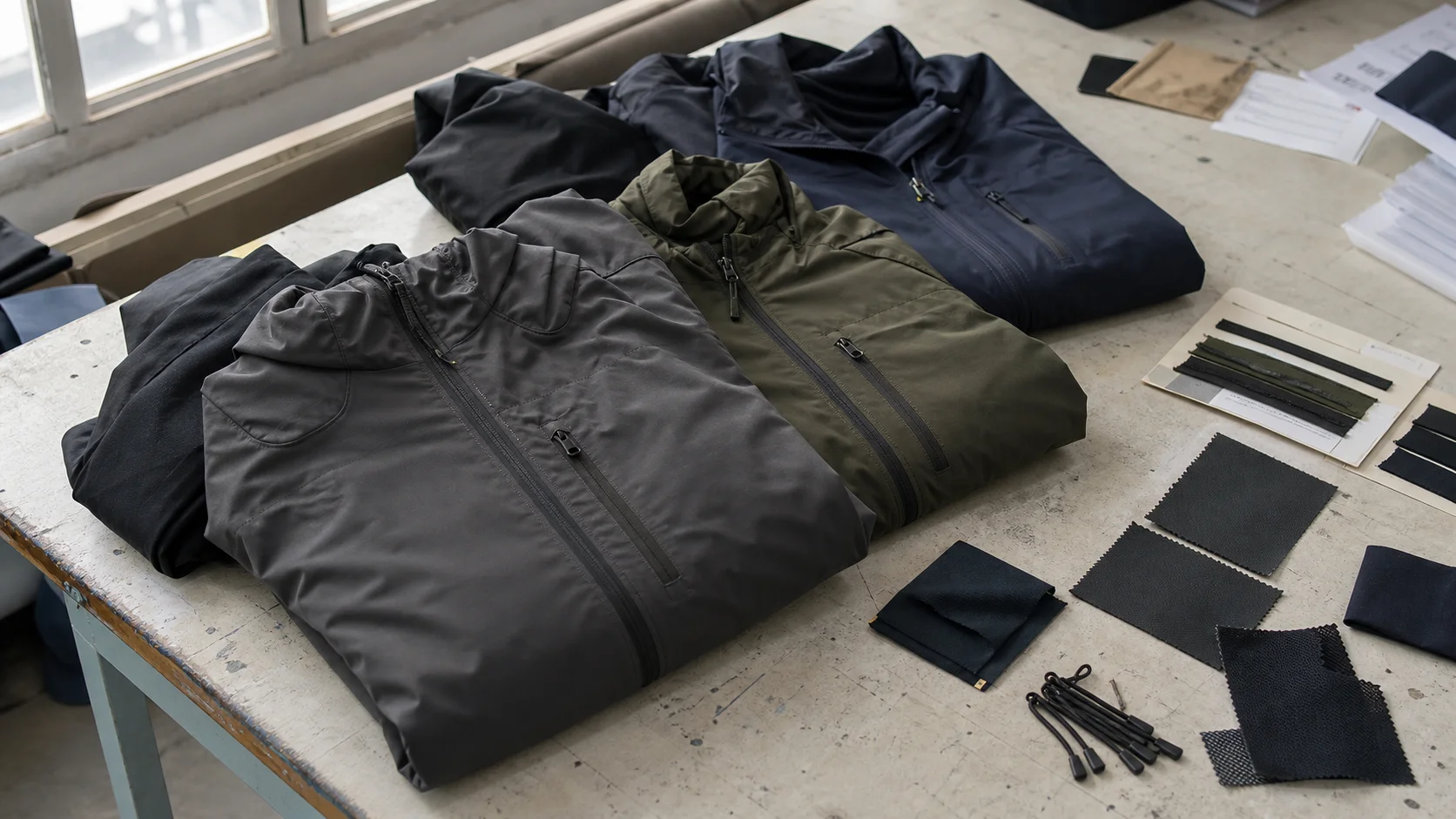
A focused outline for startup apparel brands sourcing bulk jackets with screen printing, covering jacket styles, print considerations, sampling, pricing, production workflow, and launch planning.
Bulk Screen Printed Jackets for Startup Brands - Fabrikn production reference
Bulk jackets with screen printing are a practical category for startup apparel brands that want stronger perceived value than basic T-shirts without moving straight into highly technical outerwear. A jacket carries a higher ticket potential, gives more room for branding, and often performs well in seasonal launches, teamwear drops, merch programs, and retail capsules.
For a young label, that matters. A well-developed jacket can raise average order value and make a brand look more established. Screen printing also remains one of the more scalable decoration methods for bulk production when artwork placement, fabric behavior, and curing conditions are handled correctly.
That said, startup buyers should be realistic. Jackets are not an easy beginner product if the brand expects low quantities, several colorways, and multiple print placements while still targeting tight margins. Outerwear has more moving parts than knit basics: shell fabric, lining, zippers, snaps, rib, drawcords, labels, packing method, and print compatibility all affect cost and production stability.
The best purchasing decision is usually not the most complex jacket. It is the jacket your supplier can reproduce consistently, with acceptable print quality, at a quantity level that still makes commercial sense.
Brands evaluating private label production can review broader manufacturing capabilities on https://fabrikn.com/services/ before building a product brief.
In sourcing terms, bulk screen printed jackets usually refer to custom-produced or customized outerwear units made in production quantities rather than one-off decorated blanks. The exact offer can vary, so buyers should separate three common models:
Each model serves a different stage of brand growth. A true private label program gives more control over fit, materials, and branding, but it usually needs a higher MOQ and more development time. A stock-body approach reduces risk for startups that need a faster launch and lower commitment.
Buyers should not assume the phrase “custom jacket” always means fully custom pattern development. In many factories, it may mean a standard silhouette with selected color, fabric, logo print, and label swap. That can still be the right commercial choice if the target is speed and manageable MOQ.
Startup brands often make the mistake of choosing a jacket for visual impact first and production practicality second. A better sequence is to define the use case, target retail price, and print plan before locking the silhouette.
Coach jackets are often one of the easier entry points. They usually offer clean print zones on the back and chest, a relatively simple construction, and broad market appeal. Windbreakers can also work well, but lightweight coated fabrics may create print adhesion challenges if the ink system is not matched carefully to the shell surface.
Bomber jackets can deliver stronger fashion value, but the construction is more demanding. Rib quality, zipper selection, sleeve setting, and lining control all matter. A cheap bomber tends to look cheap immediately, even before the first wear test.
Work jackets can support bold graphics and higher durability, though heavier fabrics raise unit cost and freight weight. Track jackets are often easier to wear across seasons, but print clarity depends on the fabric texture and stretch behavior.
The tradeoff is simple: the more technical or layered the jacket, the narrower the margin for production error.
Screen printing remains popular because it scales well for bulk orders and can deliver durable, vivid graphics at a controlled unit cost. Still, jackets are not flat cotton tees. Fabric texture, coating, seams, pockets, and panel breaks can all limit artwork size and placement.
Plastisol is often the safer commercial route on synthetic or tightly woven shells because it can provide reliable coverage. Water-based systems may feel softer, but the result depends heavily on the substrate. On many jackets, especially polyester-based shells, softness is less important than adhesion, coverage, and wash stability.
Buyers should be cautious with oversized artwork near zippers, welt pockets, flaps, elasticated sections, or heavily curved seams. Those areas complicate print registration and may distort the image. Large back prints usually work best on panels with enough flat area to sit properly on the platen during printing.
Another point that gets missed: jacket color affects print strategy. Dark shells may require an underbase, which adds cost, thickness, and possible curing sensitivity. Bright synthetic fabrics can also create dye migration risk, especially on polyester. If the factory does not manage temperature and ink chemistry properly, the print can discolor after curing or during storage.
The print is only one part of the result. The base jacket must be specified correctly or the whole product becomes harder to sell, return, or reorder.
Typical shell weights may range from around 90 to 140 gsm for lightweight windbreakers, roughly 120 to 180 gsm for coach jacket shells, and 240 gsm upward for sturdier canvas or twill work jackets. These numbers vary by finish and end use, but they are useful starting points when comparing quotes.
Unlined jackets are simpler and often more startup-friendly. Linings improve comfort and shape, but they also add material cost, sewing time, and inspection points. A fully lined jacket with zip pockets and custom trims may look attractive in a tech pack, yet it can push the product out of the startup’s commercial range very quickly.
Weak trims will undermine the product faster than a minor fabric compromise. A noisy zipper, loose snap setting, or poor rib recovery turns a decent-looking sample into a disappointing bulk order. Startup brands should prioritize trim consistency over novelty details unless the retail price clearly supports those upgrades.
MOQ is one of the first pressure points in bulk jacket sourcing. Many startup brands hope to develop several jacket styles in very low quantities, but factories usually need a certain volume to make outerwear production efficient.
These are not fixed rules. MOQ moves with fabric sourcing, number of colors, print screens, trim customization, and whether the supplier already has a pattern and base block in use.
Sampling is where startup brands should slow down and make better decisions. A standard development sequence may include:
The pre-production sample matters more than the early proto. It should represent the actual production standard as closely as possible, including shell fabric, lining, trims, labels, measurements, and print placement. If the startup approves a pre-production sample with unresolved issues, the factory will often treat that sample as the bulk reference.
This is also the right stage to confirm carton packing ratio, folding method, polybag labeling, and barcode needs. Those details sound minor until they create warehouse receiving problems later.
Brands that need guidance on production planning and development steps can start with https://fabrikn.com/about-us/ to understand the company background before moving into a sourcing discussion.
Lead times for bulk screen printed jackets depend less on one headline number and more on how many variables are still unsettled when the order is placed. Startup buyers often hear a target production window and assume it covers everything from design to shipment. It usually does not.
Several factors can extend the schedule:
Jackets usually have more dependencies than T-shirts or fleece basics. If one trim arrives late, sewing may stall. If print tests fail on the actual shell, the factory may need a different ink system or a revised curing process. A sourcing plan with no buffer is fragile from the start.
The most reliable purchasing approach is to lock the style, size spec, print file, fabric composition, trim list, and packaging before the bulk deposit is paid. Every late change raises the chance of delay or unplanned surcharge.
Jackets combine apparel QC risks with print QC risks, which is why inspection discipline matters. A startup brand does not need a perfect product standard on paper. It needs a realistic, defendable standard that the factory and inspector can follow consistently.
Inspection should cover both garment workmanship and print performance. For startup orders, at minimum, the buyer should confirm measurement spec tolerance, placement standard, print hand-feel expectation, wash test method, packaging requirement, and acceptable defect threshold before bulk output is complete.
A reasonable control point is a pre-production review followed by inline inspection during sewing or printing, then a final random inspection before shipment. If the order is meaningful for the brand’s launch calendar, skipping inspection to save cost is usually the wrong trade.
Private label branding on jackets does not need to be excessive to look credible. Startups often get better results by focusing on a few clean brand touchpoints rather than adding every available trim customization.
The judgment here is simple: invest first in the details customers actually see and retail teams actually handle. Neck label, hangtag, print quality, and packaging consistency usually matter more than a fully custom zipper pull on a first production run.
Compliance should not be treated as a minor detail. Fiber content, care instructions, country-of-origin marking, and size identification requirements vary by market. A startup brand should confirm labeling expectations before approving care labels for bulk.
The unit cost of bulk screen printed jackets moves quickly because the category sits at the intersection of outerwear construction and graphic decoration. Buyers should understand what is actually driving the quote instead of treating the jacket as a single line item.
A larger back print with underbase on a polyester shell is not a small add-on. It can materially change print cost and production handling. In the same way, a move from unlined to fully lined construction is not just a modest upgrade. It alters material consumption, sewing time, and QC complexity.
Startup brands should compare cost reductions based on commercial impact. Good cost-saving moves can include:
Bad cost-saving moves usually include dropping fabric quality too far, using unstable low-grade snaps or zippers, skipping wash testing, or approving a sample with visible workmanship problems. Those savings often come back as returns, markdown pressure, or failed reorders.
Factories produce better outcomes when the brief is commercial, specific, and consistent. A startup brand does not need a complicated presentation. It needs a complete one.
Including the target retail price helps the factory judge whether the construction plan is commercially realistic. Many startup brands leave that out, then receive quotes for a product that cannot hit margin. Clear price positioning leads to better recommendations on fabric and trim balance.
If the next step is supplier discussion, the most efficient route is to compile the brief, artwork, and quantity plan before reaching out through https://fabrikn.com/contact-us/.
Bulk screen printed jackets can be a strong category for startup apparel brands, but only when the product is developed with discipline. The commercial upside is clear: higher perceived value, broader branding surface, and stronger seasonal storytelling than many entry-level apparel items.
The risk is just as clear. Jackets bring more complexity in materials, trims, fit, printing, and quality control than simpler garments. Startups that chase too many features too early often end up with slow development, inflated cost, and uneven bulk quality.
The better path is usually focused and practical. Start with a jacket silhouette the factory can produce well. Keep the print plan clean. Use stable fabrics and trims. Approve samples carefully. Set realistic MOQ and lead-time expectations. Inspect the order before shipment.
In private label apparel, good sourcing is rarely about choosing the most ambitious product on the first run. It is about choosing the most repeatable product that still builds the brand.
Get a free quote from Fabrikn — your trusted B2B clothing manufacturer with 10+ years of experience. MOQ as low as 200 pieces.
Get a Free Quote →For startup programs, a typical MOQ may start around 100 to 300 pieces for stock-body customized jackets, while fully private label cut-and-sew jackets often begin around 200 to 500 pieces per style. The exact requirement depends on fabric sourcing, colorways, print placements, and trim customization.
They can be, especially if the brand wants a higher perceived value product than a basic tee. The safer route is to begin with a simpler silhouette such as a coach jacket or lightweight work jacket rather than a highly technical outerwear style.
Common options include polyester, nylon, cotton twill, canvas, and selected poly-cotton blends. The best choice depends on the jacket style and print method. Polyester and coated shells need careful ink selection to reduce adhesion problems and dye migration risk.
Sampling may take 2 to 6 weeks, and bulk production often takes 4 to 8 weeks after approvals, with extra time needed for fabric sourcing, trim customization, inspection, and shipping arrangements. Any late design or artwork changes can extend that schedule.
At minimum, the brand should approve the size spec, fabric composition, color, trim list, label set, print placement, print method, packaging details, and a pre-production sample that reflects the intended bulk standard.
The most common issues include measurement inconsistency, zipper or snap problems, puckering, print misplacement, cracking, dye migration, and color variation between units. Those risks are manageable when sampling, wash testing, and inspection are handled properly.