
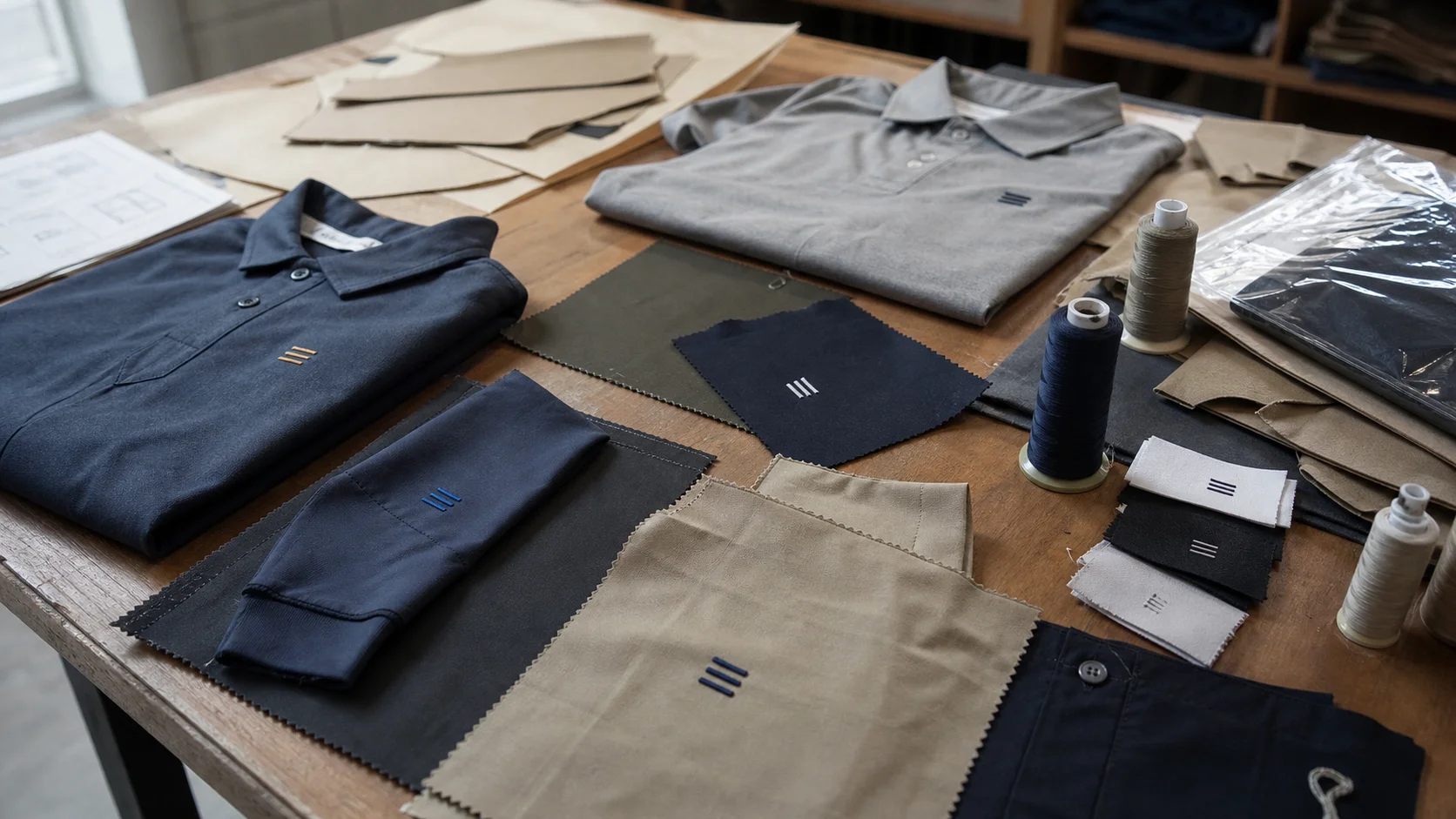
A focused outline for procurement teams sourcing private label uniforms with screen printing for event staffing, covering garment specs, print execution,...
Private Label Screen Printed Uniforms for Event Buyers - Fabrikn production reference
Event staffing procurement has a different pressure profile than standard corporate apparel buying. The uniform needs to look clean on the floor, match campaign branding, arrive on time, fit a wide size run, and hold up through setup, guest-facing activity, and breakdown. In many programs, buyers also need the merchandise to align with sustainability targets, which makes fabric choice, dyeing, packaging, and reorder planning more important than they used to be.
That is where private label uniforms with screen printing become a practical sourcing option. Instead of buying generic blank garments and decorating them later, event buyers can build a more controlled apparel program around their own specifications. The result is usually better consistency in fit, fabric weight, branding placement, labeling, and packaging. It also gives procurement teams more leverage over quality standards and replenishment planning.
For event agencies, venue operators, brand activation teams, hospitality groups, and large-scale conference organizers, private label screen printed uniforms can solve several procurement problems at once. They can standardize appearance across multiple event teams, support sponsor branding, and make staff uniforms feel less disposable. That last point matters. In sustainable fashion, the strongest gains often come from extending usable life and reducing one-off ordering rather than relying on a single “green” material claim.
Buyers comparing options should treat private label uniform sourcing as an operational decision, not just a branding one. A cheaper blank tee with rushed local printing may look attractive for a short-term event, but it often creates uneven color matching, inconsistent print hand feel, and avoidable stock shortages in extended sizes. A structured private label program costs more upfront in development time, yet it generally improves repeatability and reduces last-minute procurement risk.
If you are reviewing suppliers for upcoming projects, it helps to start with a clear understanding of how custom development, screen printing, and sustainable sourcing fit together. Buyers looking for broader production support often begin by reviewing a manufacturer’s services, then move into sampling and costing once garment and branding requirements are defined.
Private label uniforms are garments produced under the buyer’s brand or program identity rather than sold as ready-made stock. In event staffing procurement, that usually includes customized base garments such as T-shirts, polos, sweatshirts, lightweight jackets, aprons, caps, or utility overshirts, combined with branded print artwork and custom labels.
A typical private label uniform program may include:
The key procurement benefit is control. A private label order gives the buyer a better chance of keeping every unit aligned across different event dates or locations. Stock blanks can still be useful for very small runs or emergency top-ups, but they rarely provide the same stability in fabric shade, seam quality, label presentation, or print consistency over time.
Event buyers should also separate “private label” from “fully bespoke.” Many suppliers can offer semi-custom development using existing patterns and tested fabrics, then add custom printing and labels. This route is often the best balance for procurement teams that want brand ownership without carrying the cost and delay of fully new pattern development.
Screen printing remains one of the strongest decoration methods for event uniforms because it handles volume efficiently and produces durable branding when the process is managed correctly. For logos, staff identifiers, sponsor marks, and bold chest or back graphics, it is still the most commercially practical option in many categories.
There are clear reasons buyers continue to choose it:
The tradeoff is setup. Screen printing involves screen preparation, color separation, and production calibration. That makes it less flexible for frequent artwork changes on small unit counts. If every event date needs new names, localized sponsor lists, or individualized staff IDs, hybrid decoration planning may make more sense. Still, for repeated event uniforms with stable artwork, screen printing is usually the procurement-friendly choice.
Buyers should pay attention to ink system selection. Water-based inks can support a softer hand feel and are often preferred for sustainability positioning, but they can behave differently depending on fabric composition and color depth. Plastisol remains common because it is stable and widely understood in production, though it may create a heavier print hand. Neither option is automatically right. The decision depends on the garment fabric, color, artwork coverage, wash expectations, and brand feel target.
In the Sustainable Fashion category, event uniforms deserve more scrutiny than they often receive. Many staffing garments are produced quickly, worn briefly, and replaced too often. That model creates waste through over-ordering, poor forecasting, and low-spec product choices that do not survive reuse.
A better sourcing strategy starts with durability and realistic wear cycles. If the uniform will be reused across multiple events, the buyer should prioritize fabric stability, print performance, and size continuity over purely lowest-cost sourcing. A garment that can be reissued several times usually delivers a better sustainability outcome than a cheaper piece that loses shape after limited wear.
Practical sustainability considerations include:
Buyers should also be careful with sustainability claims that sound strong but lack operational value. A recycled fiber story does not offset poor fit, short wear life, or inconsistent replenishment. In real procurement terms, the most credible sustainable uniform program is one that gets worn longer, reordered accurately, and produced with fewer avoidable rejects.
That is why supplier communication matters. A manufacturer should be able to explain fabric sourcing options, testing limits, and how print choices affect wear life. Buyers who need a deeper view of a supplier’s production approach often review the company’s about page and then move into direct technical discussions before requesting development.
Procurement problems usually start before production. Event buyers often move too late, approve artwork too slowly, or underestimate size and replenishment complexity. A private label uniform program runs more smoothly when planning starts from operational use, not just design mood boards.
Begin with these questions:
Those answers shape the product architecture. A hospitality check-in crew may need premium polos or overshirts with subtle branding. A street activation team may perform better in heavier cotton tees or cotton-poly jerseys with bolder back prints. A backstage operations team may need darker colors, more forgiving fabrics, and print placements that do not interfere with equipment use.
Good procurement teams also simplify where possible. Too many style variants weaken order volume per SKU and make production control harder. In most event programs, one core top style, one layering option, and one accessory category can cover the majority of use cases. Complexity should be added only when the operational need is real.
Private label apparel gets easier to manage when technical details are documented early. Many sourcing delays come from vague requests such as “premium cotton tee” or “soft print.” Those descriptions are not enough for costing, sampling, or quality control.
For event uniforms, common fabric choices include:
Heavier fabric usually gives a more substantial hand feel and can improve perceived quality on the event floor. It also raises cost, weight, and sometimes heat retention. Lightweight fabric may suit high-activity teams but can reveal underlayers, distort after wear, or show print grin on stretched areas. Buyers need to balance appearance, comfort, and durability instead of treating GSM as a simple premium marker.
Screen print approvals should define:
Dark body colors often need an underbase for bright logo visibility. That improves opacity, but it can make the print thicker. Large front graphics on heavyweight garments may still feel acceptable, while the same print on lighter tees can feel stiff. This is a classic sourcing tradeoff: visual impact versus softness.
Trim specifications are small on paper but important in execution. Buyers should confirm:
For event uniforms, printed neck labels can reduce bulk and improve comfort, though they may not suit every fabric or brand presentation target. Woven labels look more formal but add cost and application time. Neither choice is universal. The right decision depends on the product tier and wear environment.
MOQ expectations for private label screen printed uniforms vary by factory setup, fabric source, and development complexity. Buyers should expect a more flexible MOQ for styles built on existing garment blocks and stock-supported fabrics, while fully custom dyed or newly patterned items usually require higher volume.
Typical ranges in the market often look like this:
Program Type Typical MOQ Range Notes Semi-custom T-shirt with screen print 100 to 300 pieces per color/style More feasible when using existing fabric and fit blocks Custom polo or overshirt 200 to 500 pieces per style Depends on fabric sourcing and trim customization Fully bespoke multi-style uniform program 300 to 1000+ pieces total Higher volume usually needed to stabilize costingThese are not fixed rules. Some suppliers can go lower, especially on repeat programs, and some will require more. Buyers should treat very low MOQ promises with caution if they also expect custom dyeing, multiple print placements, or broad size curves. Something usually gives, either in cost or in consistency.
A disciplined sample process reduces expensive mistakes. Most event uniform programs should pass through these stages:
Skipping the pre-production sample is one of the most common procurement errors on deadline-driven event orders. A digital mock-up does not reveal shrinkage behavior, print hand feel, seam puckering, collar roll, or label application issues. Those details become visible only when the garment is made in near-final conditions.
Lead times depend on several moving parts:
For repeat styles using approved fabrics and settled artwork, production may move relatively quickly. New developments with custom dyeing and multiple trims usually need more time. Buyers should also build buffer time for sample corrections. Rush production often increases the risk of shade variation, print misregistration, and packing errors, which are far more disruptive for events than for ordinary retail replenishment.
Event uniform buyers should inspect for function, not just appearance on a hanger. A garment can pass a quick visual check and still fail in real use.
Common quality risks include:
Screen printing needs close inspection, especially on dark garments and large artwork areas. Buyers should watch for pinholes, fuzzy edges, off-center placement, under-cured ink, and poor opacity. Print quality can look acceptable in packed cartons and fail once garments are stretched on body. That is why random in-line and final inspection checks matter.
Measurements also deserve more attention than many event buyers give them. Staff uniforms need broad size accessibility, and grading inconsistency can create immediate operational issues on event day. A size set approval helps, but production measurement tolerance still needs monitoring. If a supplier treats size control casually, the reorder risk is high.
A reasonable quality approach often includes fabric testing, print adhesion or wash checks where relevant, inline production review, and final random inspection before shipment. The right inspection standard depends on order value and event criticality, but buyers should not rely on visual trust alone.
Choosing a supplier for private label screen printed uniforms is not only about price. Procurement teams should assess whether the supplier can manage the specific combination of product development, print execution, and event-driven delivery.
Useful evaluation points include:
Buyers should ask direct questions about what is done in-house and what is outsourced. There is nothing inherently wrong with outsourced printing or finishing, but it adds coordination points. More handoffs usually mean more room for delay or error if the supplier’s control process is weak.
It is also worth checking how the supplier handles documentation. A reliable partner should be able to work from a proper tech pack, confirm measurements, and record approved references for repeat orders. In event procurement, repeatability is often more valuable than a slightly lower opening quote.
When a sourcing team is ready to discuss a project in detail, the fastest path is usually a direct inquiry through the supplier’s contact page with style count, estimated quantity, target timeline, artwork needs, and sustainability preferences clearly listed.
There is no single cheapest route that also protects quality, timing, and sustainability. Buyers need to understand which choices increase value and which simply add cost.
Areas that commonly raise unit price include:
Not every upgrade is worth paying for. For short-duration staffing, premium trims may add little operational value. On the other hand, moving from a very light tee to a more stable midweight jersey can materially improve appearance, lifespan, and staff confidence. Buyers should spend where the wearer and event guest will actually notice the difference.
Sustainable materials also require judgment. Organic cotton and recycled blends can be smart choices, but only if they meet performance needs and stay inside budget discipline. A strong sustainable program is not built by specifying every premium option at once. It is built by selecting the right improvements in fabric, packaging, and reusability without making the order commercially fragile.
The best private label uniform programs are not one-off successes. They are repeatable systems. If the same organizer, venue group, or activation agency will buy again, the goal should be to reduce decision fatigue and preserve specification accuracy.
Best practices include:
That last point is often overlooked. If the base uniform can stay consistent while event-specific messaging shifts to a smaller print area or accessory, buyers gain more reorder flexibility. This approach can reduce obsolete stock and support better sustainability outcomes over a full event calendar.
There is also value in narrowing the approved color palette. Too many body color changes weaken scale efficiency and complicate stock planning. For many event staffing programs, consistency is a stronger commercial asset than constant visual reinvention.
Private label screen printed uniforms are a practical solution for event staffing procurement when buyers need control over branding, fit, quality, and repeatability. They require more planning than buying blank garments, but they usually return that effort through stronger consistency and lower operational risk.
From a sustainable fashion perspective, the best uniform program is rarely the one with the loudest marketing claim. It is the one built on sensible fabric selection, durable print execution, realistic MOQ planning, careful sample approvals, and a structure that supports reuse and accurate replenishment. Event buyers who source this category well do not just purchase apparel. They build a system that keeps staff presentation sharp while limiting waste, surprises, and avoidable reorders.
For procurement teams, that is the real advantage of private label development: better control where it counts, and clearer tradeoffs before production starts.
Get a free quote from Fabrikn — your trusted B2B clothing manufacturer with 10+ years of experience. MOQ as low as 200 pieces.
Get a Free Quote →The main advantage is control. Buyers can specify fit, fabric, print placement, labels, packaging, and branding standards instead of relying on generic blanks. This usually improves consistency across teams and repeat orders.
Yes, in most medium to large volume programs. Screen printing offers solid durability, strong color impact, and efficient unit economics when artwork remains stable. It is less efficient for highly variable or personalized graphics.
Many semi-custom programs start around 100 to 300 pieces per style or color, while more customized products often require 200 to 500 pieces or more. Exact MOQ depends on fabric source, trim requirements, and development complexity.
Buyers can improve sustainability by choosing durable fabrics, reducing over-ordering, planning reusable styles, simplifying SKUs, selecting sensible packaging, and building repeat programs that avoid unnecessary redevelopment and waste.
The most important checkpoints are the proto sample, print strike-off, size set, and pre-production sample. These steps help catch fit, shade, print, and construction issues before bulk manufacturing begins.
Common risks include print cracking, poor opacity on dark garments, inconsistent logo placement, fabric shade variation, shrinkage, seam twisting, and incorrect size ratio packing. Inspection should cover both visual and measurement standards.