
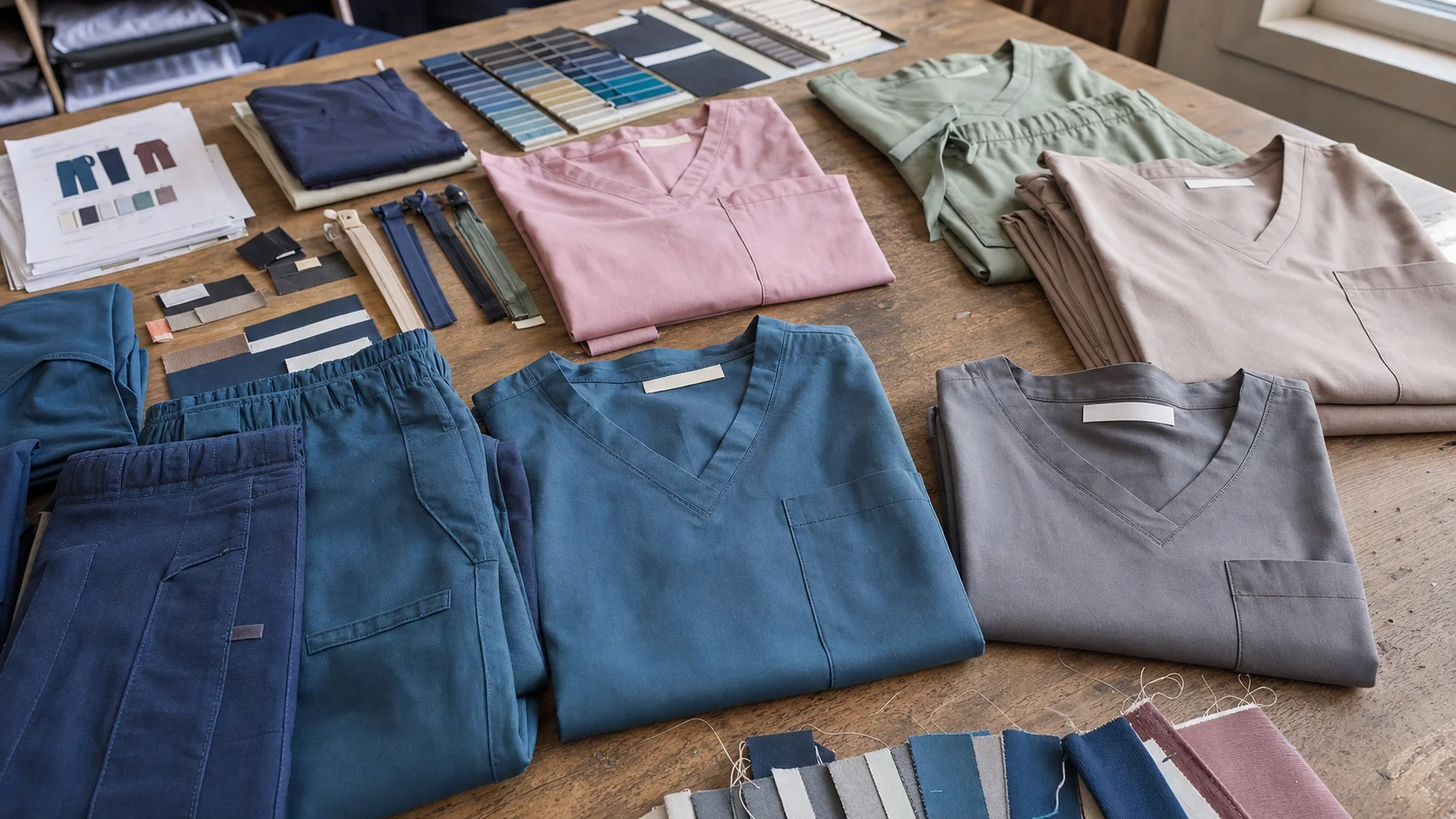
A sourcing-focused outline for gym program buyers using a factory release checklist to control bulk scrub specs, MOQ risk, decoration approvals, packing...
Bulk Scrubs Release Checklist for Gym Buyers - Fabrikn production reference
Bulk scrubs are not only for clinics. Many gym, wellness, recovery, spa, physiotherapy, and sports therapy programs use scrub-style uniforms for staff who handle bodywork, assessment, recovery sessions, cleaning zones, nutrition counters, or hybrid health services. For gym program buyers, the main sourcing challenge is not simply finding a low unit price. The real work is making sure the factory releases the right garment, in the right fabric, with consistent sizing, clean branding, correct packaging, and no surprises at delivery.
This bulk scrubs factory release checklist is written for buyers managing gym uniform programs, multi-location rollouts, or recurring staff replenishment orders. It focuses on MOQ, cost, sourcing, approval gates, production controls, and inspection risks. It is not a design inspiration guide. It is a purchasing control document in article form.
Gym buyers often source scrubs differently from hospital procurement teams. A hospital may have fixed departments, regulated color coding, and long-term vendor contracts. A gym program may be rolling out new recovery services, rebranding staff uniforms, opening locations, or building a premium wellness experience around trainers, therapists, and service staff.
That makes the factory release stage especially important. A scrub order can look straightforward on a quotation sheet, then fail during use because the pocket layout is wrong, the fabric traps heat, the top shrinks after washing, the logo placement varies, or the size ratio does not match the staff mix. These are not small issues when uniforms are part of a customer-facing program.
A good release checklist prevents the buyer from approving a shipment based only on color and price. It forces the factory and buyer to lock the garment, the measurements, the decoration, the packing method, and the inspection standard before bulk production moves too far.
For gym environments, comfort matters as much as appearance. Staff may bend, stretch, spot members, wipe equipment, move treatment tables, or work in warm facilities. A scrub set that works in a quiet reception area may not work for recovery staff or trainers who are physically active. The release checklist should reflect the actual wearing conditions, not only the product photo.
Before asking factories for bulk scrub pricing, gym buyers should define the program structure. This is where many cost and MOQ problems begin. A buyer may request “scrubs with logo” but fail to specify whether the order covers front-desk wellness staff, physiotherapy staff, massage and recovery staff, cleaning support, or all of them.
Start with role mapping. Decide who will wear the scrubs, where they will wear them, how often they will be laundered, and whether the garment must match other uniforms in the gym. If the scrubs are for a premium wellness zone, the fabric handfeel and color consistency may matter more than the lowest MOQ. If the scrubs are for high-turnover staff or cleaning teams, durability and replenishment cost may matter more.
A practical sourcing brief should include the following:
Buyers who need development support can review the broader manufacturing service structure at Fabrikn services. For custom uniforms, the value is usually in controlling the specification early, not negotiating defects after production.
MOQ is one of the first commercial filters in bulk scrub sourcing. Typical MOQ ranges vary by factory setup, fabric availability, color, decoration method, and whether the buyer uses stock fabric or custom-developed material.
Order Type Typical MOQ Range Best Use Case Buyer Caution Stock-color scrub set 100-300 sets per style/color Small gym groups, pilot programs, quick replenishment Limited color control and possible fabric lot changes Custom color using available fabric base 300-800 sets per color Branded wellness programs or multi-location rollout Lab dip approval and fabric dye lot risk Custom fabric blend or finish 800-2,000+ sets per fabric/color Large chain programs or long-term uniform platforms Higher development cost and longer lead time Logo-only decoration on blank scrubs 50-200 pieces depending on supplier Short-term trials or event uniforms Less control over fit, fabric, and reorder consistencyThese ranges are typical planning references, not fixed rules. A factory may accept a lower MOQ if fabric is already in stock, if the style is simple, or if the buyer pays a surcharge. A supplier may require a higher MOQ when the color is custom dyed, when trims are custom made, or when the order is split across too many sizes.
The key tradeoff is simple. Lower MOQ usually gives flexibility but less control and a higher unit cost. Higher MOQ usually gives better unit economics and more customization, but it increases inventory risk. Gym buyers should not chase the lowest MOQ if they already know the program will repeat. A slightly higher first order can make sense when it secures fabric continuity, approved patterns, and a cleaner reorder path.
Bulk scrub cost is shaped by more than fabric weight. Buyers should break down cost drivers before comparing quotes. A scrub set with stretch fabric, multiple pockets, contrast binding, embroidery, and store-by-store packing is not comparable to a basic blank set in stock fabric.
The main cost drivers include:
A realistic cost review should ask what is included in the quoted price. Are labels included? Are hangtags included? Is logo embroidery included? Are cartons included? Is fabric testing included? Is pre-shipment inspection included? A low quote may exclude several items that appear later as add-on charges.
For buyers comparing sourcing models, the company background and service scope can be reviewed through Fabrikn about us. The purchasing decision should consider factory capability, development discipline, and communication clarity, not only the first price sheet.
Fabric is the largest practical decision in a gym scrub program. Traditional medical scrubs often use polyester-cotton blends because they are durable, washable, and cost controlled. Gym and wellness programs may need a softer, stretchier, more athletic feel. That preference can improve wearability, but it also raises the need for clear testing standards.
Common fabric options include:
For gym program buyers, the fabric specification should not stop at composition. It should include GSM or fabric weight, construction, stretch direction, shrinkage tolerance, colorfastness to washing, colorfastness to perspiration, pilling resistance, and seam slippage expectations. If the garment will be washed frequently, the buyer should require wash test results or approve samples after laundering.
Trims also need control. Drawcords, elastic waistbands, snaps, zippers, woven labels, care labels, neck tapes, and logo patches can all create production risk. Cheap elastic may twist or lose recovery. Poor drawcord tips may fray. A zipper pocket may look useful but become a failure point if the zipper is low quality. Gym buyers should prioritize trims that survive repeated washing and movement.
Component Specification to Lock Common Risk Main fabric Composition, weight, color, finish, stretch, shrinkage tolerance Shade variation, shrinkage, poor recovery, pilling Thread Color match, strength, fiber type Seam breakage or visible mismatch Elastic waistband Width, recovery, softness, wash durability Rolling, twisting, loss of stretch Drawcord Material, length, tip finish, color Uneven length or fraying Labels Brand label, size label, care label, country label Incorrect fiber content or missing compliance informationFit problems are common in bulk scrub orders because many buyers underestimate the importance of size ratio. A gym uniform program may include front desk staff, trainers, therapists, and support staff with different body types and movement needs. Ordering mostly medium sizes because it feels balanced can leave the program short in the sizes staff actually need.
The factory release checklist should include a confirmed size chart and a purchase ratio. If the order includes men’s and women’s fits, each fit should have its own measurement chart. If the buyer chooses unisex scrubs, they should understand the compromise. Unisex fit reduces SKU complexity and MOQ pressure, but it may create fit complaints for some wearer groups. Men’s and women’s fits improve wearer satisfaction, but they increase pattern work, sampling time, and inventory complexity.
Key measurement points for scrub tops usually include chest, shoulder, body length, sleeve opening, bicep, hem, armhole, and neck drop. Key measurement points for scrub pants usually include waist relaxed, waist extended, hip, rise, inseam, thigh, knee, leg opening, and total length. Tolerances should be agreed before bulk production. Common tolerances may range from 0.5 cm to 1.5 cm depending on measurement point and garment type.
Gym buyers should request a size set before release if the order is large enough or if the fit is custom. A size set helps confirm grading across sizes, not just the sample size. Many issues only appear outside the base size, especially rise depth, shoulder width, sleeve opening, and pant length.
Branding is where many scrub orders lose consistency. A gym logo may look clean on a digital mockup but distort when embroidered on stretch fabric. Heat transfers may look sharp at first but need wash testing. A woven patch may feel premium but can irritate the wearer if placed poorly.
The buyer should approve the decoration method based on use, wash frequency, fabric type, and brand standard. Embroidery is durable and familiar, but it can pucker lightweight fabric. Heat transfer is clean and flexible, but quality depends on film type, bonding temperature, and wash resistance. Silicone or rubber patches add a modern look, but they add cost and may require higher MOQ.
Before bulk release, lock the following decoration details:
A good practical rule is to approve a physical decorated sample, not only a digital mockup. Digital mockups are useful for alignment, but they do not show puckering, handfeel, edge lift, thread density, or color behavior under facility lighting.
Sample approval should be structured. Rushing from one attractive sample into bulk production is a common buying mistake. For bulk scrubs, each sample stage answers a different question.
Sample Stage Purpose Buyer Decision Fit sample Confirms pattern, movement, silhouette, and basic construction Approve fit, request revisions, or change style direction Fabric swatch or lab dip Confirms color, handfeel, weight, and finish Approve color and fabric base before cutting Proto sample Shows style interpretation and early construction Identify design and measurement changes Size set Checks grading across selected sizes Approve size range or adjust grading Pre-production sample Represents final fabric, trims, labels, decoration, and packing Release or hold bulk productionThe pre-production sample is the critical release sample. It should match the approved specification in fabric, color, trim, stitching, logo, label, measurement, and packaging. If a factory says the pre-production sample is “similar” because final trims are not ready, the buyer should treat that as a conditional approval at most. Bulk production should not be fully released until final materials are verified.
Wash testing should be part of sample approval for gym scrubs. At minimum, buyers should check shrinkage, seam twisting, color bleeding, logo durability, and waistband performance after laundering. A garment can look acceptable before washing and fail after three to five wash cycles.
The factory release checklist is the buyer’s last control point before bulk production. It should be written, shared, and confirmed. Verbal approval is not enough for a multi-size, multi-location uniform order.
Buyers preparing an order can contact a manufacturing team through Fabrikn contact us to clarify development, MOQ, or bulk release requirements. A strong release process reduces the chance of expensive corrections after cutting or shipment.
Pre-shipment inspection should not be treated as a formality. Bulk scrubs have predictable failure points, and the inspection plan should target them. If the buyer only checks carton count and general appearance, important defects may pass unnoticed.
Common inspection risks include:
For a gym rollout, carton sorting errors can be as disruptive as sewing defects. If one location receives the wrong size mix, local managers may not be able to uniform staff on launch day. Location packing should be checked against the approved packing list, not assumed from carton labels.
The inspection standard should define sampling method and defect categories. Many apparel buyers use AQL-based inspection, but the selected level depends on order size, risk, and buyer tolerance. Critical defects may include safety hazards, wrong branding, wrong fiber content label, or serious contamination. Major defects may include visible sewing defects, measurement out of tolerance, wrong shade, or decoration failure. Minor defects may include small thread ends or slight cosmetic issues within agreed limits.
Lead time depends on fabric availability, sample approvals, decoration method, order size, factory capacity, and shipping route. A simple stock-fabric order may move faster than a custom-dyed, multi-size, decorated scrub program. Buyers should separate development lead time from production lead time.
Stage Typical Time Range Key Dependency Tech pack and quote review 3-10 working days Completeness of buyer brief Fabric sourcing or lab dip 7-21 working days Stock fabric versus custom color Fit sample or proto sample 7-20 working days Pattern complexity and sample room capacity Size set and pre-production sample 10-25 working days Revision count and trim readiness Bulk production 25-60 working days Quantity, fabric, decoration, and factory schedule Shipping Varies by mode Air, sea, courier, customs, and destination handlingThese ranges are planning references. Peak season, holidays, fabric mill delays, failed lab dips, decoration rework, and late payment can extend timelines. Buyers should build a buffer, especially for opening dates, staff training dates, or promotional campaigns.
Reorder planning deserves attention from the first purchase. If the program will continue, ask the factory how long it can maintain the approved fabric and trim source. Stock fabrics may change between lots. Custom colors may require a fresh dye lot. Labels and patches may have their own MOQ. The buyer should keep approved samples and production records to compare reorders against the first bulk run.
Good sourcing is not about saying yes to every customization. It is about choosing which details genuinely support the gym program. A premium recovery clinic inside a high-end gym may benefit from a modern stretch scrub with refined branding. A large staff uniform program may be better served by a durable stock fabric with controlled logo placement and simple reorder rules.
Use the following tradeoffs to make better purchasing decisions:
Decision Lower-Cost Route Higher-Control Route Purchasing Judgment Fabric color Use stock color Custom dye to brand shade Use stock color for pilots; custom dye for long-term branded programs. Fit Unisex pattern Separate men’s and women’s fits Unisex reduces SKUs; separate fits improve wearer satisfaction. Branding Simple embroidery Custom patch or multi-position decoration Keep decoration simple if staff wash garments frequently. MOQ Small stock order Larger custom production Small order is safer for testing; larger order supports consistency. Packing Bulk carton packing Staff kit or location packing Location packing costs more but reduces launch-day sorting problems.Buyers should be strict about the items that affect daily use: fit, fabric comfort, wash durability, and size availability. They can be more flexible on details that do not affect function, such as a secondary trim color or optional decorative pocket. The wrong priorities often create expensive uniforms that still fail the wearer.
A practical release decision should answer four questions. Is the garment wearable for the staff role? Is the specification clear enough for repeat production? Is the cost justified by the program scale? Is the inspection plan strong enough to catch likely defects? If the answer is no to any of these, bulk release should wait.
Use this condensed checklist before authorizing bulk scrub production for a gym program:
The strongest gym scrub programs are not necessarily the most expensive. They are the programs with clear specifications, realistic MOQ planning, controlled sampling, and disciplined release approval. A buyer who manages those details before production will usually avoid the most common cost traps: wrong sizing, inconsistent color, decoration failure, late delivery, and difficult reorders.
Get a free quote from Fabrikn — your trusted B2B clothing manufacturer with 10+ years of experience. MOQ as low as 200 pieces.
Get a Free Quote →A typical MOQ may range from 100 to 300 sets for stock-color scrubs, 300 to 800 sets for custom color programs, and 800 to 2,000 or more sets for custom fabric or special finishes. The exact MOQ depends on fabric availability, decoration, size split, and factory capacity.
Unisex scrubs reduce SKU complexity and can help control MOQ, but they may not fit all staff well. Separate men’s and women’s fits improve wearer satisfaction but add sampling, grading, and inventory complexity. For small pilots, unisex may be practical. For long-term staff programs, separate fits are often worth reviewing.
There is no single best fabric. Polyester-cotton blends are durable and cost controlled. Polyester-rayon-spandex blends feel softer and allow better movement. Nylon-spandex woven fabrics can feel more athletic but usually cost more. Gym buyers should prioritize wash durability, comfort, opacity, stretch recovery, and color consistency.
Most custom scrub programs should approve at least a fit sample and a pre-production sample. Larger or more complex programs should also use fabric lab dips, decoration samples, and size sets. Bulk production should not be released until the final sample reflects actual fabric, trims, labels, logo, and packing.
The most common risks are measurement inconsistency, shade variation between tops and pants, wrong size labels, poor logo placement, embroidery puckering, heat transfer peeling, weak waistband elastic, and incorrect carton allocation. Gym buyers should inspect both garment quality and packing accuracy.
A stock-fabric order may be faster, while a custom fabric or custom color order can take longer. Development, sampling, lab dips, production scheduling, decoration, inspection, and shipping all affect lead time. A practical planning range from development to shipment can run several weeks to a few months, depending on complexity.
Yes. The safest cost reductions usually come from using stock fabric, limiting color count, simplifying pocket construction, choosing one decoration position, and avoiding unnecessary custom trims. Cutting cost through weak fabric, poor elastic, or skipped sampling usually creates higher risk after delivery.
A factory release checklist should include commercial terms, final tech pack, size chart, fabric and trim approvals, logo approval, pre-production sample approval, packing instructions, inspection standard, shipping terms, and written rules against unapproved substitutions.