
A practical outline for hotel procurement teams auditing needle control policies, broken-needle procedures, metal detection records, and inspection...
Hotel procurement teams buying bulk scrubs usually focus on price, GSM, color consistency, and delivery timing. Needle policy audit is easier to overlook, yet it matters when a hotel group is sourcing uniforms at scale. A weak needle control process can lead to garment damage, broken stitching, safety complaints, or costly rework after delivery. For buyers managing housekeeping, spa, wellness, and back-of-house apparel, the audit should be treated as part of quality assurance, not an afterthought.
This guide explains how hotel buyers can review a bulk scrubs needle policy during sourcing, sample approval, and final inspection. It covers what a practical policy should include, where the risks usually appear, and which questions procurement teams should ask before placing a repeat order. If your team is comparing suppliers, you can also review the services page to understand how a production partner may support inspection, development, and bulk order control.
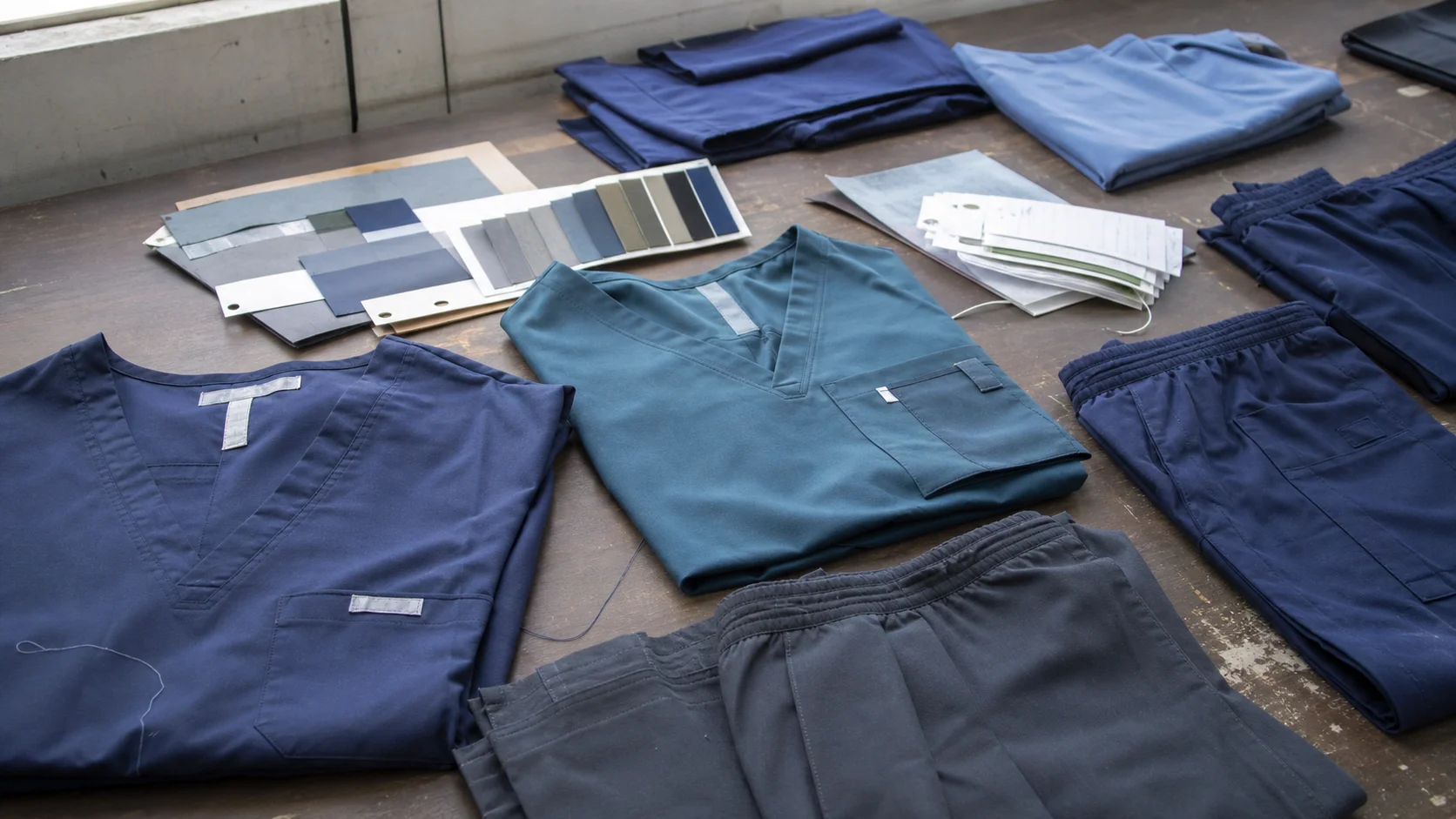
Bulk Scrubs Needle Audit for Hotel Buyers - Fabrikn production reference
In apparel manufacturing, a needle policy sets out how a factory tracks, stores, changes, counts, and controls needles used in sewing and finishing. In a scrub order, that policy is not just a factory housekeeping matter. It affects whether a production line can consistently deliver clean seams, secure topstitching, and safe garments with low defect rates.
For hotel buyers, a needle policy audit is a review of whether the supplier can control needle-related risk throughout the order. The concern is not theoretical. A broken or unaccounted needle can cause garment damage, rejected cartons, guest complaints if uniforms are issued to staff, or in rare cases, safety exposure if metal fragments remain in finished garments. Buyers sourcing large uniform programs should treat the audit as part of the quality and compliance file.
Bulk scrubs for hotel operations often go into housekeeping, spa, wellness, laundry handling, maintenance, and back-office teams. These garments are washed often, worn hard, and expected to keep a neat appearance. Poor needle control can show up in several ways: skipped stitches, popped seams, loose bartacks, broken thread tails, damaged fabric, or repairs that are not obvious until after delivery.
There is also a brand issue. Hotel groups usually want staff uniforms to look identical across sites. If a supplier has weak needle discipline, consistency drops. One carton may look fine while another shows seam distortion or weak reinforcement. That kind of variation creates avoidable replacement cost and strains the procurement team’s credibility.
For bulk uniform programs, a needle policy should be judged by traceability and discipline, not by the supplier’s verbal assurance alone.
A useful needle policy is practical and documented. It should be specific enough for the factory to follow and specific enough for the buyer to verify. A vague statement that “needles are controlled” is not enough.
The supplier should keep needles in a controlled location, issue them by line or operator, and record where they are used. Storage should reduce the chance of mixed sizes or untracked replacement. If the factory uses multiple product types in the same production floor, segmentation matters.
If a needle breaks, the factory should stop the machine, record the incident, search for all fragments, and inspect the affected work area and garment parts. A credible procedure should state who authorizes line restart and how the broken needle is logged.
The policy should define when needles are replaced. Some factories change needles after a set number of sewing hours, after a style change, or when the needle shows wear. For scrub orders with stretch fabric, topstitch detail, or heavy pocket construction, needle wear can quickly affect seam quality.
Some suppliers use metal detectors as a final risk control. Others use needle detection devices or manual search procedures. The method depends on the product and factory setup, but the buyer should know exactly what is used, when it is used, and how exceptions are handled.
A good policy assigns responsibility. Operators, line leaders, quality staff, and supervisors should know the action steps after breakage or replacement. If nobody can explain the process during audit, the policy is likely not embedded in daily production.
Sample approval is the first practical checkpoint. Buyers often review fabric shade, fit, pocket placement, and stitch density, but the needle policy should also be discussed before bulk cut-and-sew starts. That is especially important when the scrub design includes multiple stitch lines, logos, or functional pockets.
Ask the supplier to explain how the sample was sewn. Was the same needle type used for the final bulk run? Was the sample made on a dedicated line or a mixed line? If the sample looks good but the factory cannot explain how the needle was controlled, the approval is incomplete.
At this stage, request photos or a brief process note if available. Buyers do not need an elaborate report for every style, but they do need enough evidence to judge whether the production process is repeatable. If your team wants to compare supplier capability, the about us page may help frame how the business presents its manufacturing focus and quality approach.
Needle-related defects often increase after production moves from sample to bulk. The reasons are predictable. Operators work faster, machines run longer, and style changes happen under schedule pressure. If the factory is running several categories at once, a needle issue can be missed until the end of the line.
For bulk scrubs, the risk is higher when the garment has:
Buyers should ask whether the supplier uses one needle type across all operations or changes by machine and fabric. The wrong needle type can cause skipped stitches, fabric runs, or visible holes, especially on finer woven scrub fabrics or brushed blends.
An effective audit is not limited to paperwork. It should include production-floor observation, line control review, and finished-goods inspection. Hotel procurement teams may not visit every factory in person, but the same logic should guide third-party inspections and supplier qualification.
Fabric and trims should be reviewed before cutting. If the mill cloth has weak construction or inconsistent finish, the sewing process will not solve the problem. A needle policy cannot compensate for poor base material. Ask whether the supplier checks fabric width, defects, shade banding, and trim compatibility before sewing begins.
Needle incidents often show up after cutting if pattern shapes or notches are inaccurate. On the line, inspectors should verify that needle replacement logs exist, operators are using the right needle count, and broken needle incidents are recorded. If the factory cannot show a current logbook or digital record, the control may be informal.
In-line quality checks should include seam inspection, stitch tension, and visual review for needle holes or skipped stitches. For hotel uniforms, appearance matters almost as much as durability. A small defect rate can still create a significant issue when orders are measured in hundreds or thousands of pieces.
Final inspection should include carton review, size ratio verification, seam strength checks where appropriate, and a policy check on metal detection or needle search if required by the buyer. Do not assume the factory’s standard packing process includes needle risk closure. Ask for the sequence.
Needle policy cannot be separated from garment specification. The fabric and trims determine what the machine needs to do. If the spec is too loose, the factory may choose tools that are convenient but not ideal for consistency.
Spec element Why it matters for needle control Buyer should confirm Fabric composition Poly-cotton, stretch blends, or performance fabrics react differently to needle penetration Fiber mix, weight, finish, and wash performance GSM or fabric weight Heavier fabrics may require stronger needles; light fabrics may show holes more easily Target GSM and acceptable tolerance Stitch type Lockstitch, overlock, coverstitch, and bartack each create different risk points Stitch map and machine allocation Trims Snaps, elastic, drawcord tips, labels, and embroidery affect needle wear Trim spec sheet and approved suppliers Finish and wash cycle Uniforms must hold shape after repeated laundering Wash test results and care instruction alignmentFor hotel buyers, the practical judgment is simple. The more complex the scrub construction, the more disciplined the needle policy must be. A basic pull-on scrub set may need less process complexity than a fashion-forward uniform with contrast piping, embroidery, and stretch panels.
Needle policy controls can affect lead time. A factory that changes needles by style, records incidents properly, and performs final detection may take slightly longer than one that runs a looser process. That delay is often worth it if the order is large or the brand risk is high.
Procurement teams should build the following dependencies into the schedule:
If any of those steps are compressed, risk rises. A rushed approval chain often means the supplier makes production assumptions that the buyer never intended. Once bulk cutting begins, mistakes are harder and more expensive to correct.
MOQ, or minimum order quantity, affects how seriously a supplier treats the audit process. Smaller runs can sometimes receive more attention per piece, while larger runs may benefit from standardized controls. That does not mean one is better than the other. It means the buyer should align the order size with the factory’s operational discipline.
Typical MOQ ranges for bulk scrubs vary widely by supplier, fabric, and customization level. A basic stock-style scrub program may start around 300 to 500 sets per style or color, while customized hotel programs with embroidery, special trims, or multiple size runs may require 500 to 1,000 sets or more. The real issue is not the number alone. It is whether the supplier can hold needle control consistently at the planned volume.
If a supplier accepts a low MOQ but has weak documentation, that can be worse than a larger MOQ with stronger process control. Buyers should judge the tradeoff carefully. When reliability matters more than unit price, the stronger process is usually the better commercial choice.
Hotel procurement teams should not leave the needle audit to the quality department alone. Commercial buyers and sourcing managers should also ask direct questions during quotation and sample review.
These questions are useful because they reveal whether the supplier understands process control or is simply trying to win the order. A capable factory should answer clearly and without hesitation. If the response is vague, the buyer should press for written clarification before confirming production.
One common mistake is treating the needle policy as a compliance checkbox rather than a production-control issue. Another is assuming that a passed sample means the bulk order is safe. A neat sample can still hide weak line discipline, especially if the sample was produced under special attention.
Buyers also sometimes ignore fabric behavior. They approve a stylish scrub design without checking whether the material can tolerate the chosen stitch structure and needle size. That leads to unnecessary holes, seam distortion, or repair rates that appear only after the first wash cycle.
A third mistake is relying on verbal reassurance. Procurement teams should ask for a documented process or at least a written quality commitment. Even a short note is better than nothing. In bulk apparel, traceability is part of control.
Use this checklist when reviewing a bulk scrubs supplier:
If your team is still evaluating suppliers, you may want to contact the production team directly through the contact us page to request a quality discussion, sample review, or order-specific inspection terms.
For hotel procurement, the best supplier is not always the cheapest or the fastest. The better choice is the one that can keep the same standard from sample to bulk to final packing. Needle policy is one small but telling part of that discipline.
If a supplier has clear needle logs, a sensible replacement routine, trained operators, and a documented search process, that supplier is usually safer to scale. If the supplier cannot explain those basics, the order may still look acceptable at first, but the risk of hidden defects rises as volume increases.
That is the tradeoff buyers should recognize. A stronger policy may add some process time and possibly a modest cost, but it often reduces returns, replacements, and reputational problems later. For hotel uniforms, that is usually the better commercial result.
Get a free quote from Fabrikn — your trusted B2B clothing manufacturer with 10+ years of experience. MOQ as low as 200 pieces.
Get a Free Quote →It is the factory’s documented method for issuing, tracking, replacing, and controlling sewing needles during production. In bulk scrubs, it helps reduce seam defects and the risk of stray metal fragments.
Yes, especially for large uniform programs. Even if the product is simple, a weak needle-control process can create quality issues, rework, and delivery problems.
Many suppliers start around 300 to 500 sets per style or color for basic programs. Customized orders may require 500 to 1,000 sets or more, depending on fabric, trims, and embroidery.
It depends on the product and buyer requirements. Some programs require it, while others rely on a documented needle search and breakage control procedure. The key is to agree the method in writing.
Buyers should approve fabric, fit, stitch quality, trim details, and the planned production method. If the factory uses a different needle or machine setup for bulk, that difference should be disclosed before production starts.
Use a clear specification sheet, ask for needle-control documentation, inspect in-line and final goods, and confirm rework rules before bulk sewing begins. Written approvals matter more than verbal promises.
Review the about us page for company positioning, the services page for production support, or the contact us page to request a sourcing discussion.