
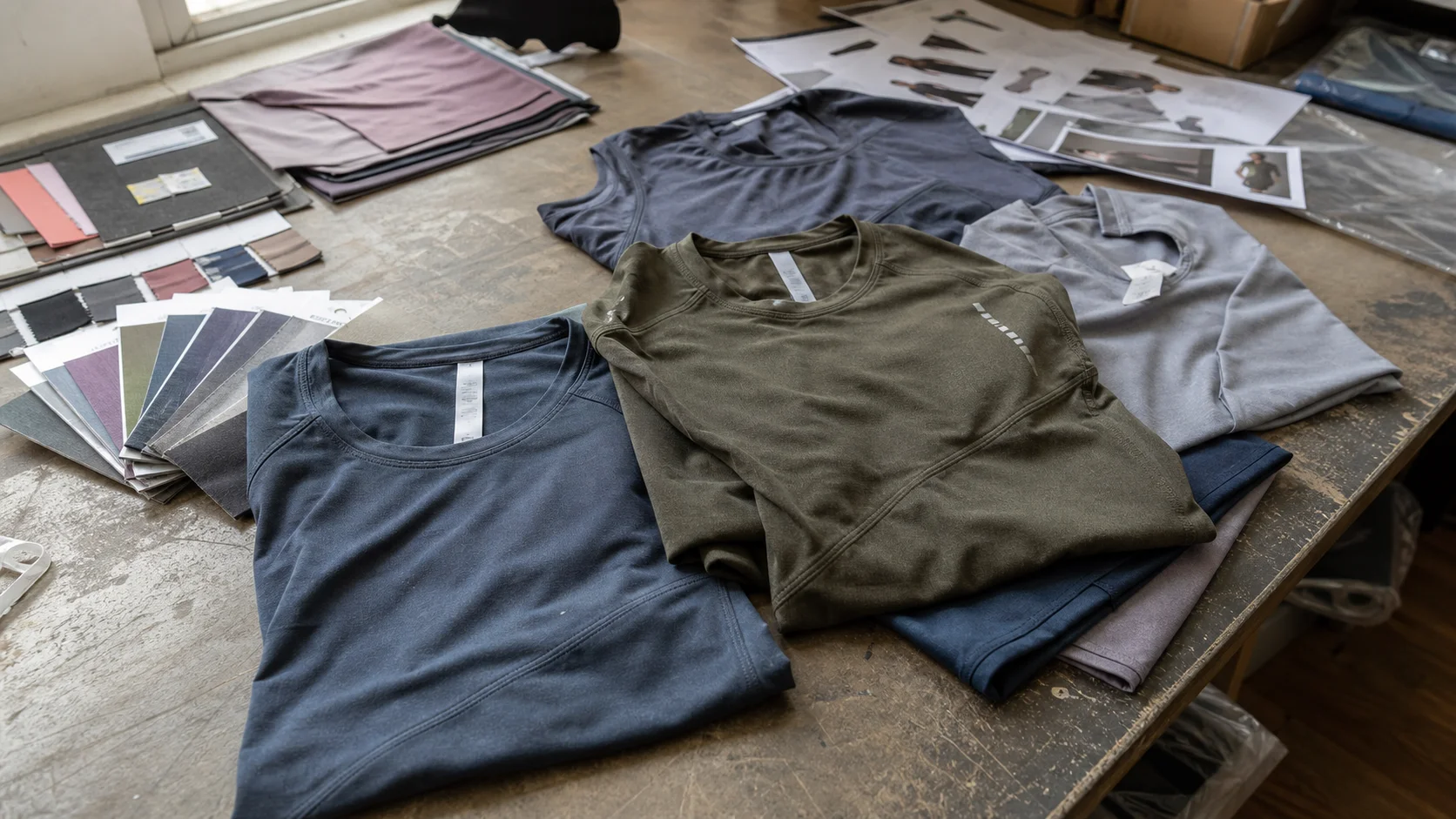
A practical SEO outline for nursing school buyers who need bulk scrubs that hold size, fit, and appearance after repeated washing and drying.
Bulk Scrubs Shrinkage Testing for Nursing Programs - Fabrikn production reference
Bulk scrubs shrinkage testing matters because nursing programs buy for consistency, not novelty. Students, instructors, and clinical partners expect uniforms to look the same after repeated laundering, and a fabric that shrinks unpredictably creates sizing complaints fast. In bulk programs, small fabric changes become large operational problems: misfit across size runs, rushed reorders, altered hem lengths, and extra exchanges that consume time and budget.
For nursing school programs, shrinkage is not a minor quality note. It is part of the buying decision. Programs that test shrinkage before placement can reduce fit risk, preserve garment appearance, and avoid avoidable cost in replacement stock. The right approach is practical: define the fabric, set an acceptable shrinkage range, test before bulk approval, and verify performance after wash cycles that reflect real student use.
Nursing school uniforms have a different purchase profile from general promotional apparel. Students wear scrubs frequently, wash them often, and rely on them for a clean, professional appearance through a training cycle that can run for months or years. That means shrinkage affects both comfort and compliance. If pants tighten after laundering or tops shorten at the hem, the garment no longer fits the program’s intended standard.
Shrinkage also distorts size planning. A program may order across a full size curve, but if a cotton-rich fabric contracts more than expected, the usable fit range narrows. For school buyers, that creates a second-round issue: exchanges and late fills. A dependable shrinkage test gives the buyer a clearer basis for approving the fabric before the order moves into bulk production.
There is another cost that gets overlooked. When garments shrink unevenly, the program can end up with students wearing visibly different silhouettes even when the labels match. That weakens the uniform look. In activewear and teamwear, uniformity is part of the value proposition, and nursing programs are no exception.
Before approving a bulk scrub order, buyers should test more than one item. Fabric shrinkage is the main concern, but the full garment can behave differently depending on construction and finish. A sensible pre-buy review usually includes the following:
The key point is simple: fabric test results alone are not enough. A scrubs program should verify the actual garment in the construction it will be purchased in, because stitching, panel layout, and trim placement all influence the final result.
Shrinkage data is useful only when it reflects the garment buyers will actually issue. A lab result on fabric swatches can support the decision, but it should not replace full-garment wash testing before bulk release.
Bulk scrub shrinkage testing should begin with a clear wash standard. Buyers often ask suppliers to test using a repeatable home-laundry or commercial-laundry method, depending on how students are expected to care for the garments. The important part is consistency. If the wash method is not controlled, the results are hard to compare across samples.
A typical testing workflow looks like this:
For nursing programs, buyers usually care most about fit consistency after the first wash, then stability over several additional cycles. First-wash shrinkage is common in many textiles, but it should stay within a predictable range. A garment that keeps changing after repeated laundering is a poor fit for institutional purchase.
In practical sourcing terms, the buyer should ask for test samples from the same bulk fabric lot whenever possible. Lab dips, knit lots, and finishing variations can alter shrinkage behavior. A sample made from an early development roll may not reflect the bulk run if the mill changes yarn, finishing chemistry, or heat-setting parameters later in production.
Shrinkage begins with fiber choice, but the full specification matters. Nursing program scrubs are often made from cotton blends, polyester blends, or performance knits designed for easy care. Each has tradeoffs.
Spec Area What It Affects Buying Note Fiber content Natural shrink tendency, moisture handling, drying behavior Cotton-rich fabrics usually need tighter shrinkage control than higher-polyester blends. Fabric weight Drape, opacity, perceived durability Very light fabrics may feel comfortable, but they can show fit changes more clearly after laundering. Knit or woven construction Dimensional stability, recovery, ease of movement Knit scrubs often need stronger recovery checks; wovens need tighter seam and panel verification. Finishing process Heat-set stability, hand feel, surface appearance Finishing choices can reduce or worsen shrinkage, so the buyer should confirm the exact finish used in bulk. Elastic and drawcord trims Waist recovery, comfort, fit retention Trim quality is critical in pants; weak elastic can fail even when the fabric itself is stable. Thread and stitching Seam durability, panel distortion Poor thread choice can cause seam puckering or tension change after wash cycles.Fabric blends are often chosen to reduce shrinkage, but the buyer should not assume a blend automatically solves the problem. A polyester-rich fabric can still distort if the finishing is poor or the pattern is not balanced. A cotton blend can perform well when the yarn, knitting, and heat setting are managed correctly. The specification must be looked at as a system.
For nursing school programs that need a more premium hand feel, the tradeoff is usually between comfort and stability. Softer fabrics may be more pleasant in wear, but they can be less forgiving after frequent laundering. Buyers should decide which matters more for their use case, then set the test standard accordingly.
Bulk scrub orders usually sit in the middle ground between retail-size complexity and institutional rigidity. Minimum order quantities vary by factory, fabric, and print or embroidery requirements, but a common range for custom scrub programs is roughly 300 to 1,000 pieces per color or style. Some suppliers may go lower for stock fabrics, while fully customized programs often need a higher commitment.
Lead times depend on sampling, fabric availability, testing, and production scheduling. A straightforward repeat order may move faster, while a new nursing school program with custom color, branded trim, or embroidery can take longer. A realistic planning window for a new bulk scrub run is often 6 to 12 weeks after sample approval, though delays in fabric development or lab testing can extend that.
The tradeoff is straightforward. Lower MOQ improves flexibility, but it can raise unit cost. Higher MOQ can improve pricing, but it creates risk if shrinkage testing has not been completed or if the school expects size changes after student try-ons. In practice, the right answer is to approve shrinkage performance before the buyer commits to the full run.
Programs should also factor in replacement stock. If the nursing school expects annual intake or mid-year enrollment changes, it is wise to reserve some units from the same lot. That helps maintain consistency if a reorder is needed later.
Bulk inspections often reveal issues that were not obvious in sampling. Shrinkage can be one part of the problem, but not the only one. The most common risks are predictable and worth checking early.
A buyer should not only ask whether the garment shrinks, but how it shrinks. A controlled 2 percent change may be acceptable if the pattern was built for it. An irregular 2 percent change across different panels is a different matter. That kind of distortion makes the product harder to manage in an institutional program.
Inspection should also confirm whether shrinkage is repeatable. A one-time result from a single sample means little if the bulk fabric lot differs. The better practice is to ask for a size-set sample, then verify at least one pre-production sample after fabric confirmation and before mass cutting.
Buyers often focus on size charts, but shrinkage testing is what tells you whether the size chart will still be true after laundry. In a nursing program, that is the difference between a neat uniform policy and a constant exchange desk.
Nursing school buyers should start with a technical spec sheet, not a color conversation. The sheet should define fabric composition, weight, finish, construction type, seam type, trim details, label method, and acceptable shrinkage tolerance. Without that, the order can drift during quoting and sampling.
A strong buying process usually follows this sequence:
That sequence protects the program from the most common sourcing mistake: approving on visual appearance alone. Scrubs can look correct on arrival and still perform poorly after care. The buyer should insist on proof, especially when the order is for an entire cohort or a program with strict appearance standards.
Branded programs may also want embroidery or logo placement. Those additions do not cause shrinkage by themselves, but they can expose it. If the garment shrinks unevenly, the logo may shift off balance or sit too close to a seam. That is another reason to evaluate full garments after laundering.
When sourcing bulk scrubs for a nursing program, the manufacturer should be able to support development, testing, and production documentation. A practical supplier should discuss fabric sourcing, sampling steps, measurement tolerances, and production controls in plain terms. That is more useful than broad claims about quality.
For teams evaluating a supplier relationship, it helps to ask whether the manufacturer can handle:
For more on manufacturing support, see the services page. Background on company capability is available on the about us page, and direct sourcing inquiries can go through the contact us page.
The right supplier relationship should reduce uncertainty, not add it. If the vendor cannot explain how shrinkage will be measured, what tolerance will be accepted, or what sample cycle is required before bulk approval, that is a warning sign. In institutional apparel, clarity is part of the product.
The best shrinkage strategy is conservative. Nursing school programs should not buy to the edge of the fit range and assume laundry will be forgiving. They should buy fabrics with stable finishing, test the real garment, and leave some room in the size system for normal wear and care. That approach costs a little more in development, but it saves money later by reducing returns and replacements.
Programs that need the lowest possible unit cost may be tempted to accept a fabric with looser stability. That can work only when the care instructions are tightly controlled and the school is ready to absorb more size variation. Most nursing programs are better served by a slightly more stable fabric and a clear approval process. Uniform programs run on predictability.
Get a free quote from Fabrikn — your trusted B2B clothing manufacturer with 10+ years of experience. MOQ as low as 200 pieces.
Get a Free Quote →Acceptable shrinkage depends on the fabric, construction, and intended use. Many institutional buyers look for low single-digit shrinkage after the first wash and stable performance after repeated cycles. The key is to define the tolerance before sampling, then test against that standard.
Full garments are better because shrinkage can behave differently once seams, panels, and trims are added. Fabric swatches are useful for early screening, but they should not replace finished-garment testing before bulk approval.
That depends on the school’s laundry assumptions. A basic program may review the first wash and several repeat cycles, while a stricter institutional standard may require more. The testing method should match real wear and care conditions as closely as possible.
Polyester-rich blends and well-finished performance fabrics often offer better dimensional stability than cotton-rich options. Even so, the final result depends on yarn quality, finishing, garment construction, and wash conditions. Fabric content helps, but it does not guarantee performance.
Sample approval can take one or more rounds depending on fit, color, shrinkage, and trim feedback. A simple program may approve quickly, while a custom nursing school order with embroidery or special colors may need several review steps before bulk release.
Buyers should ask for fabric composition, weight, finishing method, target shrinkage tolerance, sample approval steps, MOQ, lead time, and inspection method. Those details are more important than a general promise of quality.
Not reliably. Some post-production finishing can improve stability, but once bulk garments are made, the buyer has limited control. It is better to verify shrinkage before cutting and sewing than to try to fix it after the fact.
Bulk scrubs for nursing programs should be treated as a technical purchase. Shrinkage testing, sample approval, and clear fabric specs are not optional extras; they are the backbone of a program that needs repeatable fit and dependable appearance. Buyers who test early and specify carefully usually avoid the most expensive mistakes later.