
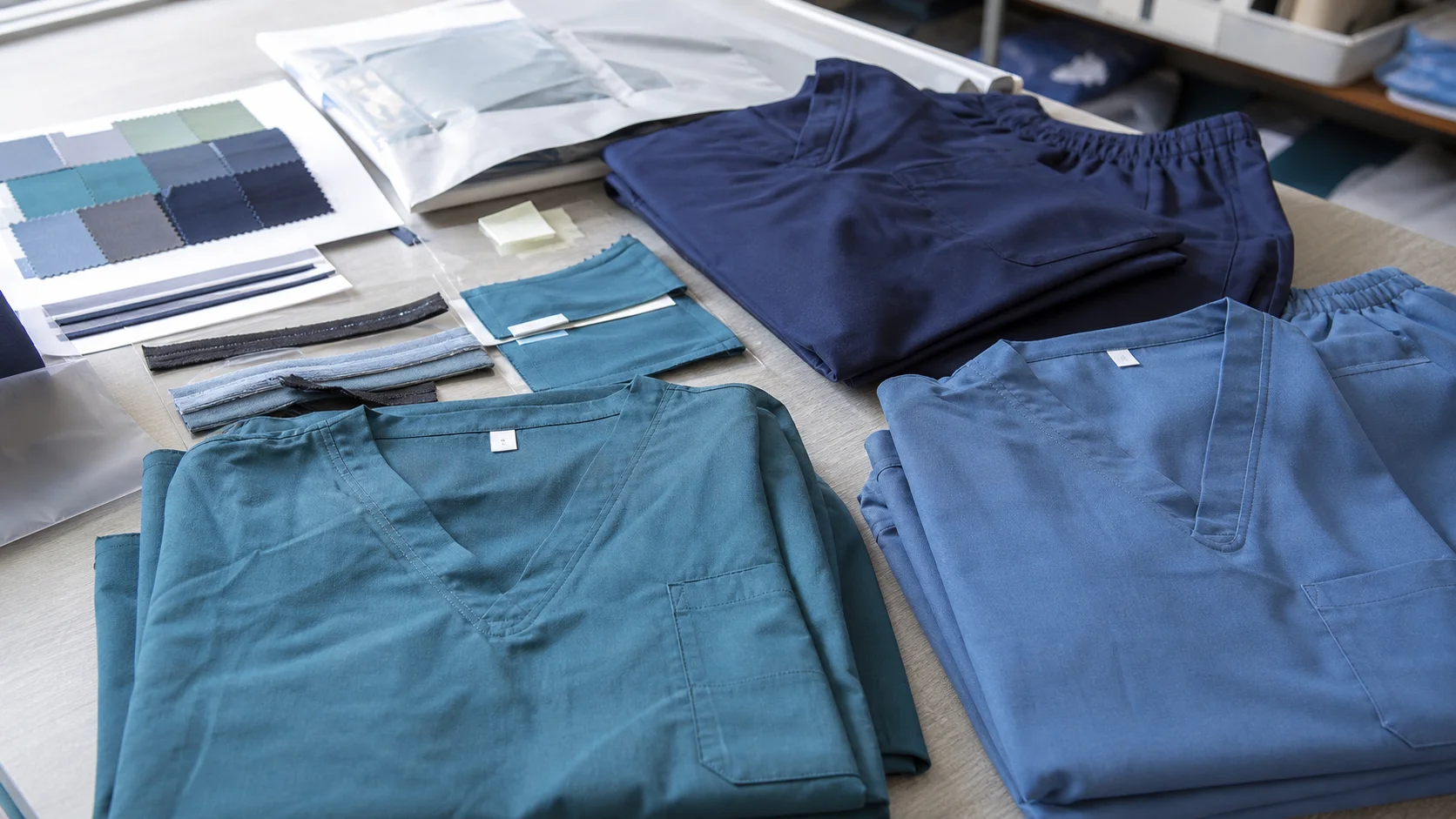
A quality-and-inspection framework for evaluating bulk scrub trim in pharmacy operations, from stitch security and closure performance to laundering...
Category: Quality & Inspection
Bulk scrubs look straightforward until trim choices start driving returns, fit complaints, and inspection failures. For pharmacy operations teams, trims are not cosmetic details. They affect comfort during long shifts, wash performance, brand consistency, and the probability that a large order clears incoming inspection without rework.
This review focuses on bulk scrubs trim sourcing for pharmacy operations teams: what to specify, where quality slips, how to judge supplier claims, and where the tradeoffs usually land. The goal is not to overcomplicate the purchase. It is to reduce avoidable risk before a bulk order is cut, sewn, packed, and shipped.
If you are coordinating a program across multiple stores, clinics, or distribution sites, the trim package should be treated as part of the product specification, not an afterthought. Good trim control helps keep the whole program stable. Weak trim control creates size drift, seam failure, color inconsistency, and preventable rejects.
Bulk Scrubs Trim Review for Pharmacy Buyers - Fabrikn production reference
In apparel sourcing, trim covers the non-body materials that hold the garment together and shape its function. For scrubs, that usually includes elastic, drawcords, zippers, snaps, buttons, labels, piping, reflective tape in some programs, thread, hangtags, and care labels. Some programs also treat pocket reinforcement, bartacks, and hem tape as trim-related details because they influence durability and inspection outcomes.
For pharmacy buyers, the trim review matters because scrub programs often get ordered in bulk, across multiple sizes, and with relatively tight re-order windows. A small spec change in a waistband or pocket edge can make a difference in comfort and wear rate. A weak zipper or low-grade elastic can create a wave of complaints after the first laundry cycle.
That is why trim sourcing should be reviewed alongside fabric, construction, and packing. Treating trims as a separate line item without quality control often leads to mismatched expectations between procurement, operations, and the supplier.
Pharmacy teams need scrubs that are durable, easy to launder, and comfortable enough for long shifts with frequent movement. Trim design plays into all three. A waistband that twists after washing can become a recurring fit issue. Pocket edging that frays weakens the garment and creates a poor impression in front-facing roles. Labels that scratch or shrink can turn a usable garment into a return.
Bulk orders amplify the cost of inconsistency. If one production lot uses softer elastic and another uses a firmer substitute, the same size can fit differently. If trim colors vary from run to run, replenishment stock may no longer match the original issue. In a pharmacy environment, that kind of inconsistency is a real operational problem because uniform appearance often matters for staff presentation and patient trust.
Trim review also affects service life. Good fabric with weak trim is still a weak product. A scrub top may survive repeated laundering, but if the stitching around the neck label, pocket corners, or drawstring eyelets fails, the garment leaves circulation early. The direct cost is replacement. The hidden cost is extra handling in inventory and uniform distribution.
Elastic is one of the highest-risk trims in scrub pants and waist-adjusted styles. The supplier should identify the elastic width, composition, recovery rate, and shrink tolerance after wash. Lower-cost elastic can lose tension early or roll inside the casing. That leads to fit complaints even when the base garment is otherwise acceptable.
For bulk programs, ask whether the elastic is fully encased, exposed at any seam, or combined with a drawcord. Fully encased elastic usually lasts better in repeated wash cycles. Exposed elastic can be cheaper or easier to sew, but it may age faster if laundering is aggressive.
Drawcords should be reviewed for thickness, tip finish, colorfastness, and snag resistance. Flat cords can be more comfortable under aprons or utility belts. Round cords sometimes hold up better under repeated tightening. The tradeoff is often between comfort and durability. If the program serves staff who move through high-contact environments, snag resistance is usually the safer choice.
The cord channel matters as much as the cord itself. A good cord in a poorly finished channel can twist, disappear into the waistband, or create uneven tension. That is a sourcing issue, not a wear issue alone.
Some scrub styles use zippers at the fly, chest pocket, side vent, or front closure. Zipper type should be specified by size, tooth material, puller design, and locking behavior. Cheap zippers can separate, jam, or lose pull tabs during laundering. If a zipper is decorative rather than functional, say so in the spec. That avoids substitution risk.
For pharmacy buyers, metal versus coil zipper is a practical decision. Coil zippers are often lighter and more flexible. Metal zippers can feel sturdier but may add weight and can be less comfortable if placed close to the body. The right answer depends on garment style, wash standard, and comfort target.
Snaps and buttons need pull-strength and wash durability testing. A closure that passes a one-time hand check may fail after laundering if the attachment is weak. Snap plating quality also matters. Low-grade finishes can discolor, corrode, or irritate skin contact points.
If a style uses front snaps for easier donning and doffing, the supplier should confirm whether they are ring snaps, spring snaps, or another type. The difference affects holding force and failure risk. A closure that is too weak can pop open in use; one that is too stiff can frustrate staff and slow daily wear.
Woven labels, printed neck labels, heat-transfer labels, size tabs, and brand marks should be reviewed carefully. Labels can scratch, fade, or shrink relative to the body fabric. In some programs, a soft printed label is the safer choice for comfort. In others, a woven label may be preferred for perceived quality and brand durability.
Care labels deserve attention too. If garment care instructions are unclear or inconsistent, laundering mistakes increase. That becomes a quality issue across the entire program. Label placement should avoid high-friction areas that create discomfort or premature wear.
Thread is often ignored in sourcing discussions, but it is central to durability. The supplier should identify thread type, count, tensile strength, and color match. Thread choice affects seam strength, seam pucker, and how well a garment survives hot wash cycles. Poor thread can break before the fabric does.
Bartacks at pocket corners, belt loops, vent points, and stress seams are worth specifying. In bulk scrub programs, these small reinforcements often separate a serviceable garment from a weak one. They also improve the odds of passing inspection on first submission.
Decorative trims can help with brand differentiation, but they add complexity. Piping must be color-consistent and securely attached. Binding must not curl, fray, or distort after wash. The more decorative the trim, the more likely it is to introduce quality variation or increase lead time.
In a pharmacy setting, a restrained trim package often wins. Clean lines, functional pockets, and stable reinforcement usually provide better long-term value than visually busy details.
Trim materials should be selected based on laundering behavior, user comfort, and supplier consistency. Cotton-rich components may feel more natural but can shrink more than synthetic alternatives. Polyester-based trims often retain shape better, though they can feel firmer or less breathable. Elastic blends vary widely and should not be accepted on description alone.
Trim Element Common Choice Tradeoff Buyer Check Waist elastic Polyester or latex-blend elastic Lower cost may reduce recovery over time Ask for wash-cycle recovery data and width spec Drawcord Flat polyester cord Comfortable, but may slip if channeling is weak Check cord tip finish and pull test performance Zipper Coil zipper Flexible, but cheap units can jam Confirm zipper brand class or equivalent standard Labels Printed heat-transfer label Comfortable, but print can fade if poor quality Review wash durability and placement Thread Polyester thread Good strength, but must match fabric behavior Ask for tensile and colorfastness detailsFabric and trim should be evaluated together. A stretch fabric with rigid trim can create poor movement. A soft body fabric with stiff binding can create a quality mismatch that staff notice immediately. The best procurement decision is usually the one that keeps the full garment balanced, not the one that optimizes a single line item.
For teams looking for broader production support, the sourcing and inspection scope can be aligned through Fabrikn services. If a program requires structured communication on sampling, approvals, and order coordination, the team can also use Fabrikn contact for the next step. Background on the company and its approach is available on Fabrikn about.
Bulk scrub orders usually depend on fabric minimums, trim minimums, and decoration requirements. A supplier may quote a low MOQ for the garment body and a higher MOQ for custom trim colors or branded labels. That is common, and buyers should not assume every component follows the same minimum.
Typical MOQ ranges vary by supplier and complexity, but practical ranges often start around 300 to 500 pieces per style for basic programs and move higher when custom trims, multiple colors, or special packaging are involved. If a private-label label pack, custom zipper puller, or unique tape color is added, the effective MOQ can rise even if the garment itself is simple.
Lead time also depends on the trim package. Stock elastic and standard labels can keep the program moving. Custom-woven labels, special metal trims, and branded packaging can add sourcing time before cutting even begins. For a bulk order, plan around the slowest component, not the fastest one.
Sample approval should move in stages. First, review the tech pack or spec sheet. Next, approve lab dips or color standards if relevant. After that, review a pre-production sample that includes the actual trim combination. Only then should bulk production proceed. If the supplier sends a sample without the final trim package, treat it as incomplete.
Fit sample, size set, and wash test are separate checkpoints. A sample can look correct on the table and still fail after wash. Trim behavior after laundering is what matters for most pharmacy programs because staff are not wearing showroom garments. They are using garments through repeated operational cycles.
Inspection should look beyond overall appearance. Trims create failure points that are easy to miss in a quick visual check. A solid inspection plan usually includes these checks:
Incoming inspection should also check dimensional stability after washing if the program has strict laundering requirements. Shrinkage can alter how trim sits on the garment. A waistband that twists, a pocket mouth that puckers, or a label that curls may not stop the garment from being worn, but those signs usually predict future complaints.
Inspection risk increases when the supplier substitutes a trim component without written approval. That substitution may be small in cost terms and large in performance terms. Buyers should require advance notice for any material change, including thread supplier changes, zipper source changes, or label method changes.
A useful supplier review is less about polished presentation and more about technical clarity. The quote should identify the fabric content, trim specs, construction details, size range, packaging method, and testing assumptions. If the trim section is vague, the quote is not ready for approval.
Ask direct questions about the following:
A supplier that answers clearly is easier to manage. A supplier that treats trim details as secondary may still make a usable garment, but the risk profile is higher. For pharmacy buyers managing staff uniforms at scale, that risk is usually not worth accepting without a price or timing advantage that clearly offsets it.
Price should never be judged in isolation. A slightly more expensive scrub with stable trim can be cheaper over the life of the program than a low-cost option that triggers replacements, returns, or stock inconsistency. The correct decision depends on total program cost, not unit price alone.
Suppliers may change a trim source when a component is short. If the substitute is equivalent on paper but different in hand feel or wash behavior, the issue may only appear after delivery. Written approval controls are essential.
Trim color can drift from one production batch to another. That is especially visible on dark garments, contrast piping, and branded labels. If visual consistency matters, require shade approval against a reference sample.
Pocket corners, waistband openings, and zipper ends are common failure points. Weak bartacks or poor seam settings can cause early breakdown even when the rest of the garment is sound.
Scratchy labels, stiff waistbands, and bulky seams create comfort issues. These are not minor concerns. In a pharmacy setting, comfort affects compliance, and compliance affects how often the garments are actually worn.
Trim placement may look correct in one size and awkward in another if the grading is poorly executed. This is common with pockets, labels, and waist components. Ask to review a size set rather than approving only a base size sample.
A strong spec sheet reduces ambiguity. It should include each trim item with enough detail that a second supplier could reproduce the garment without guessing. At minimum, specify the following:
The more important the trim, the more important the language. A note that says “good quality elastic” is not enough for a bulk order. Procurement language should be measurable where possible. Even simple details like width, placement, and allowable tolerance reduce the chance of an avoidable dispute.
In bulk scrub sourcing, trim is where low-cost garments often stop being inexpensive. The unit price may look fine, but the cost of inconsistency shows up later in replacements, dissatisfaction, and inspection rejects.
For pharmacy operations teams, the safest trim strategy is usually the simplest one that still meets comfort and branding needs. Keep the number of custom components low unless there is a clear business reason to add them. Standardized elastic, standard labels, and proven closure types reduce sourcing complexity and shorten the path from sample to bulk release.
If branding matters, put the effort into one or two visible details rather than layering multiple decorative trims. A clean logo label, a consistent color code, and reliable pocket construction usually create a stronger result than heavy decoration. This is especially true for garments that will be washed often and replaced on a schedule.
Where should buyers spend more? On trims that affect durability and fit. Where can they save? On decorative details that do not affect use. That priority order is usually the most defensible approach for pharmacy uniforms because staff notice function first and branding second.
Teams that want a managed path from specification to delivery can work through a sourcing partner with clear quality controls, such as Fabrikn services. For teams that are still defining the program and need a direct conversation about scope or production fit, the simplest starting point is Fabrikn contact.
Bulk scrubs trim sourcing is a quality exercise, not just a buying exercise. The body fabric may win the first impression, but trim quality decides whether the garment stays in service, stays consistent, and stays within the expectations of pharmacy operations teams.
For bulk orders, the best result usually comes from clear trim specs, modest customization, staged sample approval, and honest inspection criteria. Suppliers should be asked to prove trim performance before production, not explain problems after delivery. That approach protects both cost and continuity.
Get a free quote from Fabrikn — your trusted B2B clothing manufacturer with 10+ years of experience. MOQ as low as 200 pieces.
Get a Free Quote →Elastic, drawcords, zippers, snaps, labels, thread, and seam reinforcement matter most because they affect fit, comfort, and durability. Pocket bartacks and label placement also matter more than many buyers expect.
Basic programs can sometimes start around 300 to 500 pieces per style, but custom trim colors, branded labels, or special packaging can raise the MOQ. The real minimum depends on each component, not just the garment shell.
Yes. A pre-production sample that includes the final trim package is the safest checkpoint. Fit samples and wash tests should be reviewed separately where possible.
Loose elastic, weak bartacks, poor zipper operation, scratchy labels, and trim color mismatch are common. Substituted trims without approval are also a recurring risk.
Only when they support a real branding or functional need. Decorative trims add complexity, lead time, and inspection risk. In pharmacy programs, simple and durable usually performs better over time.
Trim type, size, placement, color standard, attachment method, performance expectation, approved sample reference, and substitution rules should all be documented clearly.