
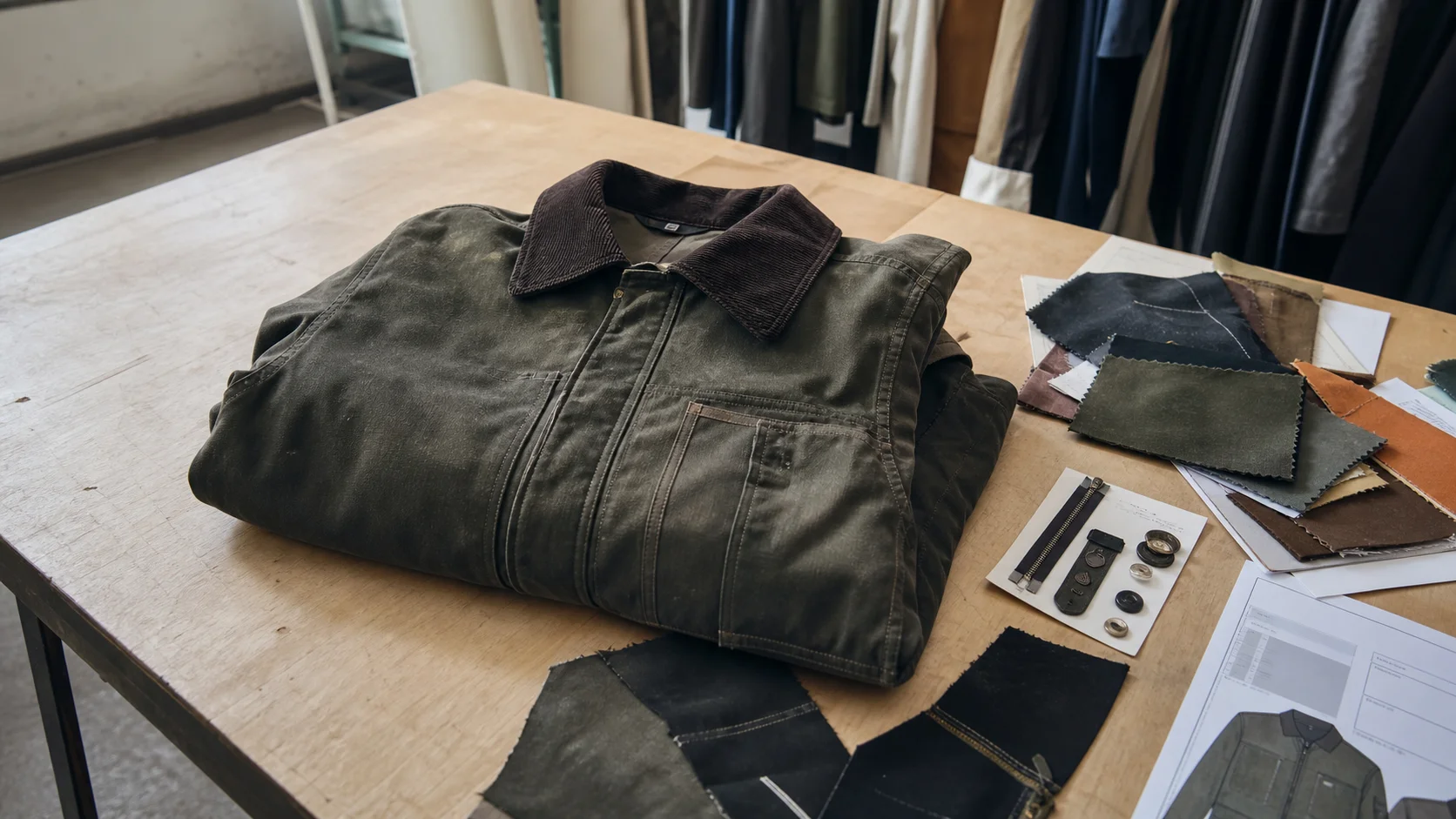
Practical breakdown of bulk seam strength jackets moq for resort outerwear distributors, covering MOQ, cost, timeline, quality checks, and supplier tradeoffs.
Bulk Seam Strength Jackets Moq For Resort Outerwear - Fabrikn production reference
Resort outerwear buyers tend to focus on style first, then discover the hard part is keeping the garment durable enough for repeated wear, packing, travel, and light weather exposure. For distributors sourcing bulk seam strength jackets MOQ for resort outerwear, the real purchase question is not just how many units a factory will accept. It is whether the supplier can produce a jacket that holds seam integrity, looks premium after decoration, and lands at a commercial MOQ that fits a resort account without creating excess stock risk.
In this category, seam strength is not a niche technical detail. It directly affects returns, customer satisfaction, and the brand’s perceived quality. A resort jacket may look simple on a hanger, yet its construction has to tolerate repeated opening and closing, salt-air humidity, baggage compression, and occasional laundering. Weak stitching, poor seam finishing, or the wrong thread choice can turn a profitable bulk order into a complaint-heavy program.
Resort outerwear usually sits in a practical middle ground. It is lighter than performance mountain gear, yet it still needs to behave like a dependable layer. Buyers commonly specify windbreakers, lightweight hooded jackets, packable shell jackets, and soft utility pieces for hospitality retail, destination merchandising, and distributor-led promotional programs. In all of these, seam performance matters because the garment is handled more often than most people assume.
Seam failure usually starts in predictable places: armhole joins, side seams, pocket openings, hood attachment points, zipper tape seams, and cuff transitions. These are stress zones where a poor sewing plan shows up fast. If the program includes embroidery or heat-applied graphics, the surrounding stitch density and backing method also matter because decoration can stiffen or weaken the area if not planned properly.
Resort outerwear buyers should think in terms of use case. A jacket for beachfront retail does not need the same seam configuration as a technical storm shell, but it still needs enough stitch security, seam finishing, and thread stability to survive frequent guest use. That balance is where sourcing judgment matters.
MOQ is rarely a single number. In practice, it depends on fabric availability, color count, print or embroidery method, pattern complexity, and whether the supplier is cutting from stock material or booking a custom mill run. For bulk seam strength jackets MOQ for resort outerwear, typical starting points often fall in these ranges:
Those ranges are practical, not guaranteed. A buyer can sometimes lower MOQ by reducing options. One fabric, one main color, one zipper choice, and one decoration method usually creates a more workable program than a fully customized matrix. A common mistake is asking for a low MOQ while also requesting custom lining, contrast piping, branded zip pulls, specialized seam tape, and multiple logo placements. Each extra detail adds setup cost and often pushes the supplier to demand more units.
Distributors should also separate true MOQ from sampling thresholds. A supplier may accept 200 finished jackets for production but still require a higher minimum for custom lab dips, specialty trims, or printed linings. Clarify whether the MOQ applies to the same color, same fabric, same decoration, and same size ratio. That detail often decides whether the quote is realistic.
Seam strength starts with the material stack, not just the stitch line. A jacket built with light woven nylon, polyester taffeta, or blended shell fabric can perform well if the sewing plan matches the fabric’s behavior. Buyers should ask for clear specs before approving a bulk run.
Specification Area What to Confirm Why It Matters Shell fabric Fiber content, GSM, coating, finish, shrinkage tolerance Controls drape, durability, and seam slippage risk Lining Weave type, weight, colorfastness, hand feel Affects comfort and how seams sit inside the garment Thread Poly thread type, ticket size, tensile strength Influences seam breakage and abrasion resistance Needle and stitch density Needle size, SPI target, seam type Controls puncture damage and stitch security Seam finishing Overlock, binding, flat-fell, taped seams where relevant Reduces fraying and improves long-term stability Closures and trims Zippers, snaps, cord ends, pullers, labels Weak trims can fail before the garment body doesFor resort outerwear, lighter construction is often preferred, but light construction should not mean fragile construction. A buyer may accept a softer hand feel in exchange for lower bulk and easier packing. That tradeoff is reasonable if the seam allowance is adequate and the thread spec is not cut too fine. The strongest programs usually keep the design simple enough to sew consistently at scale.
Seam allowance is worth confirming in writing. Some styles can tolerate narrow allowances, while others need more margin around shoulder seams, pocket entries, or hood joins. If the jacket uses decorative topstitching, the supplier should confirm whether the topstitch is purely aesthetic or part of the seam security structure. That distinction matters when loading a bulk order.
Buyers sourcing distributor programs should expect a disciplined sample process. A fast quote is useful, but a controlled approval cycle is what protects the bulk order. In most jacket programs, the development path includes a tech pack review, fabric and trim confirmation, proto sample, fit sample, revised sample, and production pre-production approval. Some programs may combine steps, but the sequence should still be clear.
A practical sample flow looks like this:
Resort outerwear buyers should not rush the sample stage. A jacket can look correct on paper while still failing in practical areas such as zipper waves, puckering at the pocket, twisting side seams, or decoration interference near the placket. The cost of one extra sample round is usually lower than the cost of repairing a full bulk run.
If the program includes decoration, sample approval should include a wash or handling check where possible. Even a basic stress check can reveal whether embroidery backings are too stiff, transfers crack under seam tension, or prints sit too close to the edge of a seam allowance. That is especially important for distributor orders that may be resold across multiple resort accounts with different expectations.
Lead time is rarely driven by sewing alone. For bulk seam strength jackets MOQ for resort outerwear, the schedule depends on fabric booking, trim procurement, sampling, lab testing, decoration setup, and factory capacity. When a buyer wants a lower MOQ, lead time can become less predictable because the supplier may be waiting to consolidate materials or slot the order into a production line built around larger runs.
Key lead-time variables include fabric availability, color matching, zipper sourcing, custom label approval, and the complexity of the seam construction. A straightforward shell jacket in stock fabric may move faster than a lined or taped style with multiple logo placements. Custom woven labels, branded zipper pulls, and special hangtags also add time, especially if artwork changes during development.
A cautious buyer should ask for a schedule that separates sample timing from bulk timing. Production lead time does not begin when the quote is accepted. It begins after the supplier has approved the final sample, locked materials, and confirmed the order quantity. If any of those inputs are still changing, the schedule is only an estimate.
Inspection for resort outerwear should focus on both appearance and construction. A jacket that passes basic visual checks can still fail in wear if the seam structure is weak or the decoration creates hard spots. Inspection points should be chosen to match the order’s intended use and price level.
One common risk in bulk jacket orders is over-reliance on the top sample. The first approved sample may be excellent, but bulk production can drift if the line changes operators, thread lots, or sewing sequence. Distributors should ask how in-line checks are handled and whether final inspection includes seam pull testing or at least a close review of high-stress seam areas.
Another risk is mixing decoration with construction. Embroidery near seam junctions can tighten the fabric and distort panel shape. Heat-applied logos can behave differently depending on shell coating and lining content. Print placement that overlaps a seam allowance can lead to edge lift or cracking. The safest approach is to confirm logo zones before cutting begins.
Because this topic sits in Decoration & Printing, buyers should treat the graphic method as part of the garment engineering. For resort outerwear, the most common branding methods include embroidery, woven patches, heat transfer, screen print on selected panels, and debossed or printed labels. Each one has a different effect on seam performance, appearance, and MOQ.
Embroidery is often preferred for a premium look, but it adds density and can pull on lighter fabrics. Heat transfers are cleaner on lightweight jackets, yet they may be more sensitive to wash and abrasion if poor-grade films are used. Screen printing can work well on stable panels, though it is less forgiving on seams, textured shells, or coated fabrics. Woven badges and patches give flexibility, but buyers should still confirm edge finishing and attachment method.
For smaller distributor runs, decoration MOQ can become the real limiter rather than jacket MOQ itself. A supplier may agree to 200 jackets, then require 300 or 500 pieces for a custom print setup or a special embroidery sequence. Buyers should ask for decoration-specific minimums separately from garment minimums. That prevents surprises after sample approval.
Choose decoration that matches the fabric and the seam structure, not just the brand mood board. A cleaner logo method is usually better than a more ambitious one that risks puckering, cracking, or delayed production.
A distributor-friendly supplier is not just a factory with low prices. It is a partner that can handle repeat orders, controlled variations, and practical communication. For bulk seam strength jackets MOQ for resort outerwear, the best suppliers are usually the ones that ask good questions early: fabric intent, decoration method, target retail or wholesale price, requested MOQ, and expected repeat volume.
Distributors should look for suppliers that can explain seam construction in plain language. If a vendor cannot clearly discuss seam type, reinforcement zones, stitch density, or seam finishing, the risk rises. A capable supplier will also distinguish between what can be done cheaply and what should not be compromised.
Fabrikn’s service structure is a useful reference point for buyers building a sourcing workflow. The services page is the right place to evaluate support around product development, production coordination, and decoration execution. For supplier background and positioning, the about-us page helps set expectations before commercial discussions. When the order is ready to move, the contact-us page is the direct path to start the inquiry process.
When comparing vendors, do not chase the lowest MOQ if the supplier cannot hold a stable spec. A slightly higher MOQ from a more disciplined source is often cheaper than a low MOQ program that produces inconsistent seams, delayed rework, and poor retail presentation.
Bulk jacket sourcing always involves tradeoffs. Lower MOQ improves cash flow and reduces inventory exposure, but it can limit customization and raise unit cost. Higher MOQ can improve price, color consistency, and material efficiency, but it increases exposure if the resort order does not repeat. Buyers should decide where they want flexibility and where they need consistency.
For resort outerwear distributors, the strongest programs are usually narrow in scope. One silhouette, one fabric family, one decoration method, and one or two colorways is a sound starting point. That keeps seam engineering manageable and gives the supplier a realistic production plan. A complicated launch with multiple fabrics and trim options may look attractive in a presentation, yet it usually creates more failure points than value.
Pricing should also be judged against quality risk. If a supplier cuts corners on seam allowance, thread quality, or finishing time to hit a very low price, the savings may vanish after returns or replacements. In outerwear, especially branded outerwear, the hidden cost of poor seam strength is rarely small.
Distributors should also plan for reorder behavior. A resort account may start with a modest opening buy and then reorder only if the first shipment performs well. A supplier who can repeat the same jacket with consistent seams and stable decoration is usually more valuable than one who quotes the lowest initial MOQ but cannot keep the style stable for the second order.
Get a free quote from Fabrikn — your trusted B2B clothing manufacturer with 10+ years of experience. MOQ as low as 200 pieces.
Get a Free Quote →Typical MOQ ranges often start around 100 to 300 pieces for stock-fabric styles and rise to 300 to 800 pieces for custom fabric or more complex branded programs. Final MOQ depends on fabric, trims, decoration, and color options.
Shoulders, side seams, armholes, hood joins, pocket openings, and zipper attachment zones usually deserve the most attention. Those points carry the highest stress and often show construction issues first.
Yes. Embroidery, heat transfer, and print placement can all influence fabric tension and seam performance. Decoration should be planned around seam allowances and stress zones.
One to three sample rounds is common, depending on complexity and how complete the initial tech pack is. More changes in fit, decoration, or trim usually mean more rounds.
Seam puckering and inconsistent stitch quality are common issues, especially when light fabrics are combined with dense decoration or when production starts before the sample standard is fully locked.
Start with the product specification, then confirm MOQ, sample flow, decoration method, and lead-time constraints. If the program needs a supplier discussion, the fastest next step is usually the contact-us page.
For distributor programs in resort outerwear, the best outcome comes from disciplined specs, realistic MOQ planning, and a supplier that treats seam strength as a production requirement rather than a marketing phrase. When those pieces line up, the jacket sells better, ships cleaner, and holds up longer in the market.