
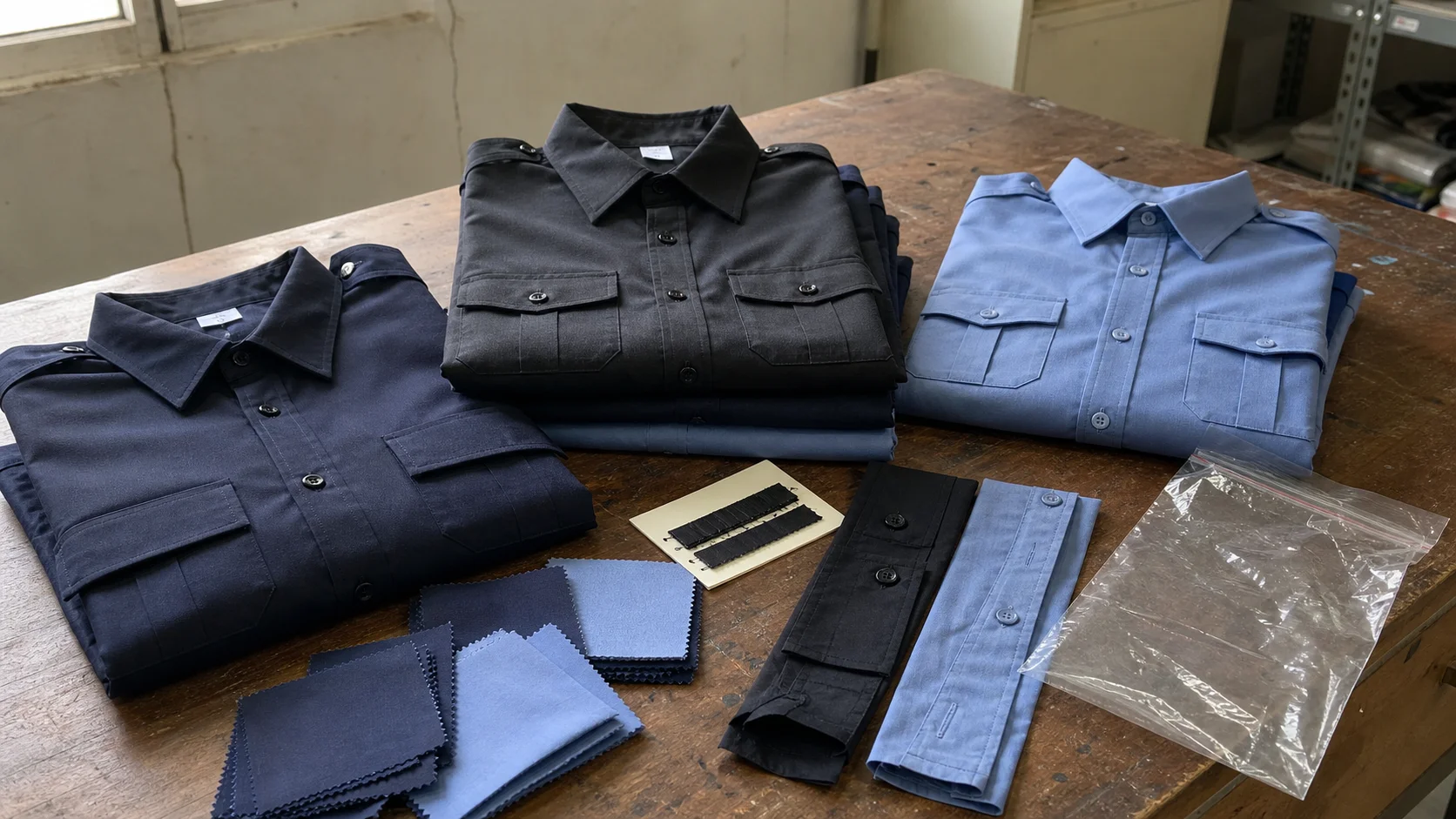
A detailed outline for foodservice buyers evaluating bulk sustainable chef coats, with a focus on colorfastness testing, fabric durability, compliance, and procurement decisions.
Bulk Sustainable Chef Coats with Colorfastness Testing - Fabrikn production reference
Bulk sustainable chef coats with colorfastness testing have moved from a niche request to a practical procurement requirement across foodservice. Restaurant groups, hotel kitchens, catering operations, institutional dining programs, and culinary schools all face the same pressure points: uniform consistency, replacement planning, laundry durability, and growing sustainability expectations from management teams and end customers.
Chef coats are not decorative garments in a commercial kitchen. They are workwear. They face repeated industrial washing, stain treatment, heat exposure, friction at cuffs and plackets, and frequent contact with oils, sauces, cleaning agents, and bleach alternatives. Buyers who focus only on recycled content or a low unit price often miss the operational reality. If the coat loses color quickly, shrinks beyond tolerance, twists after wash, or breaks down at stress seams, the sustainability claim becomes secondary to replacement cost.
That is why colorfastness testing belongs in the same conversation as sustainable fabrics and responsible sourcing. Procurement teams are not just buying a green story. They are buying garments that need to survive real laundry cycles without looking prematurely aged.
For foodservice buyers, the strongest purchasing position usually comes from balancing four factors:
A supplier that can discuss all four in detail is generally more useful than one that only promotes eco-friendly fabric headlines. Buyers looking to compare development options can review broader production support at https://fabrikn.com/services/.
In chef coat sourcing, sustainability should be defined in practical terms, not vague branding language. A sustainable chef coat program usually combines material choices, manufacturing controls, garment longevity, and reorder discipline.
The most common fabric directions for chef coats include organic cotton, recycled polyester blends, and occasionally lyocell or other regenerated cellulosic fibers in lighter-weight hospitality uniforms. In commercial kitchens, 100% cotton can still be requested for comfort and heat tolerance, but blends often perform better on wrinkle resistance, shape retention, and service life.
Typical options include:
There is a tradeoff here. Higher cotton content can improve comfort and reduce a synthetic feel, but it may also increase wrinkling, absorb stains more readily, and create a higher risk of shade shift after repeated washing if dyeing and finishing are not tightly controlled. Higher polyester content often improves color retention and dimensional stability, but buyers should verify recycled content claims and fabric breathability.
A serious sustainable sourcing review should also cover:
Longevity matters more than many buyers initially expect. A chef coat that lasts materially longer can reduce total environmental load per wear, even if the initial unit cost is higher. That does not excuse weak sustainability documentation, but it is an important purchasing judgment. The lowest-price “eco” option is not automatically the most responsible one if replacement rates are high.
Company background and sourcing scope also matter when assessing manufacturing partners. Buyers can review general capabilities and positioning at https://fabrikn.com/about-us/.
Colorfastness testing is one of the most useful quality controls in chef coat development because these garments are washed often and judged visually every day. Fading, staining transfer, collar edge discoloration, and contrast panel bleeding can make uniforms look old long before the garment is physically worn out.
For foodservice procurement, the most relevant tests typically include:
Dark colors such as black, navy, charcoal, deep red, and some saturated greens usually need extra caution. These shades are often more vulnerable to visible crocking, wash-down appearance changes, or inconsistent shade reproduction between lots. White chef coats avoid dye fastness issues but create different risks around whiteness retention, chlorine response, and stain-release performance.
Different markets and buyers may work to different standards, but procurement teams generally want clear pass criteria before bulk approval. A supplier should be able to state what test method is being used, what grade target applies, and whether the result covers bulk fabric or only an early lab dip stage.
The practical issue is simple: lab dips can look acceptable, pre-production fabric can test adequately, and the final garment can still fail if trims, threads, contrast piping, labels, or finishing chemicals were changed. For that reason, colorfastness should be checked at the right stages, not only once.
Buying judgment: colorfastness testing is most valuable when linked to the exact approved fabric, shade, finish, and trim package that will go into production. Early test reports are useful, but they should not replace bulk-stage verification.
Sustainable chef coats still need to function like professional uniforms. A clean tech pack or specification sheet reduces avoidable mistakes and helps suppliers quote accurately.
Common chef coat fabric weights range from about 180 to 250 gsm, depending on silhouette, climate, and price tier. Lighter fabrics may improve comfort in hot kitchens but can become too transparent, wear out faster at elbows and side seams, or feel less substantial. Heavier fabrics usually hold structure better, though they can increase heat retention.
Useful fabric details to define include:
Trim performance is often overlooked. Buttons, snaps, sewing thread, labels, collar stand interlining, mesh panels, and piping can all create failures even when the body fabric is acceptable.
Chef coats benefit from reinforced stress areas, clean seam finishing, and balanced stitch density. Underarm vents, thermometer pockets, apron loops, pen divisions, and hidden plackets can all add functional value, but each added feature increases manufacturing complexity and creates another possible defect point.
That creates a direct tradeoff. More design detail can improve end-user satisfaction, yet it also raises cost, extends sampling time, and increases the chance of inconsistency between size runs. For large hospitality rollouts, simpler construction often produces more stable bulk quality.
Foodservice procurement works best when development gates are clear. Too many uniform orders move from concept to bulk without enough technical alignment, then the buyer ends up settling disputes on color, shrinkage, or finishing after goods are already packed.
The biggest breakdown usually happens when one approval is treated as covering all later stages. A fit sample does not approve bulk shade. A lab dip does not approve garment wash performance. A pre-production sample made in substitute fabric does not approve the actual fabric lot.
Buyers should ask direct questions:
For programs with multiple stakeholders, it helps to keep approvals centralized. Uniform projects become slow and error-prone when culinary teams, marketing teams, and procurement teams all approve different sample versions.
Teams that need to move from sampling to quotation or production discussion can use https://fabrikn.com/contact-us/ as a direct starting point.
Bulk sustainable chef coat purchasing is heavily shaped by MOQ and lead-time realities. These vary by fabric source, dyeing method, trim customization, embroidery, and whether the order uses stock-supported materials or fully custom development.
For custom chef coats, buyers commonly encounter MOQ ranges such as:
These are typical market ranges, not fixed rules. Some suppliers can work below them by using stock fabric or charging surcharges. The tradeoff is that lower MOQ flexibility often limits fabric choice, color precision, or cost efficiency.
Lead times depend on several linked steps:
A practical planning range for custom orders is often 45 to 90 days after full approval, though it can move shorter or longer depending on complexity and season. Buyers should be wary of lead-time promises that ignore fabric booking or testing schedules. Fast quoting is common. Reliable delivery is harder.
There are several ways a bulk chef coat quote can be pushed down, but not all of them are safe:
Procurement teams should identify which savings are acceptable and which are false economy. In most cases, shaving a small amount from unit price is not worth it if the result is early replacement, visible fading, or inconsistent staff appearance across locations.
Decision Area Lower-Cost Option Likely Tradeoff Stronger Procurement Choice Fabric Lighter gsm Less durability, possible transparency Balanced weight for kitchen use Color Approval Visual only Greater shade risk in bulk Lab dip plus retained bulk standard Testing Fabric stage only Trim and garment risks missed Fabric and pre-production verification MOQ Very low custom quantity Higher cost or limited options Consolidated order planningBulk sustainable chef coats can fail in predictable ways. Buyers do not need to inspect everything equally. They need to inspect the points most likely to create replacement claims or user dissatisfaction.
A practical inspection plan often includes:
For large multi-site rollouts, carton accuracy deserves more attention than it usually gets. A perfect garment is still a problem if the size mix shipped does not match the approved buy plan.
Purchasing judgment: if the program uses dark or branded chef coats, spend more control effort on shade, crocking, and logo performance. If the program uses white coats, focus harder on fabric hand, opacity, stain-release finish, and post-wash appearance.
Buyers should evaluate suppliers on operational discipline, not just presentation. The right supplier for bulk sustainable chef coats is not necessarily the one offering the broadest catalog. It is the one able to translate procurement requirements into stable production controls.
Reliable suppliers tend to provide structured answers on specs, approvals, and exceptions. They flag risk before production rather than after delivery. They also distinguish between what is standard, what is optional, and what will affect price or lead time.
A weaker supplier often agrees too quickly, especially on low MOQ, short lead time, and broad customization all at once. In apparel manufacturing, that combination usually means one of three things: hidden cost later, substitutions during production, or quality inconsistency at shipment.
Procurement teams should prefer clarity over easy promises. If a supplier explains that a certain recycled blend improves color retention but raises MOQ, that is useful information. It helps the buyer make a real tradeoff decision.
Bulk sustainable chef coats with colorfastness testing are a practical uniform category, not a marketing add-on. Foodservice procurement teams need garments that support sustainability goals while standing up to washing, stain treatment, and daily kitchen wear. That means material selection alone is not enough.
The strongest purchasing outcome usually comes from combining sensible fabric choices, realistic MOQ planning, disciplined sample approvals, and clearly defined testing requirements. Colorfastness matters because visual presentation affects perceived quality long before a garment fully wears out. If coats fade, bleed, or lose consistency across locations, replacement costs rise and the sustainability value weakens.
Buyers should treat chef coat development like any other performance apparel program: define the spec carefully, test the right stage, inspect predictable failure points, and choose suppliers that speak clearly about tradeoffs. In this category, durability and responsible sourcing should support each other. When they do, the result is a more stable uniform program and a lower-risk procurement decision.
Get a free quote from Fabrikn — your trusted B2B clothing manufacturer with 10+ years of experience. MOQ as low as 200 pieces.
Get a Free Quote →Typical MOQs often start around 150 to 300 pieces per style and color for simpler developments, with 300 to 500 pieces being common for more customized programs. Fully custom fabrics or branded trims can push minimums higher.
Chef coats are washed frequently and exposed to heat, friction, perspiration, and stain treatment. Colorfastness testing helps reduce the risk of fading, bleeding, crocking, and uneven appearance during service life.
There is no single best fabric for every kitchen. Organic cotton offers comfort and a natural hand feel, while recycled polyester/cotton blends usually provide better wrinkle resistance, dimensional stability, and color retention. The right choice depends on laundry conditions, budget, and wear expectations.
Most custom programs should include at least a lab dip or shade approval, a proto or fit sample, and a pre-production sample in final fabric and trims. Size-set samples are also useful when fit consistency across staff sizes is important.
Yes, but only when the garment is engineered correctly. Buyers should review fabric weight, blend ratio, seam construction, trim quality, shrinkage tolerance, and wash-related test performance rather than relying on sustainability claims alone.
One common mistake is approving too early without linking fabric, color, trims, testing, and final bulk production. A sample that looks good at one stage does not guarantee that the delivered order will perform the same way.